Parkinson's Movement Therapy: What It Involves and How to Start
November 25, 2026

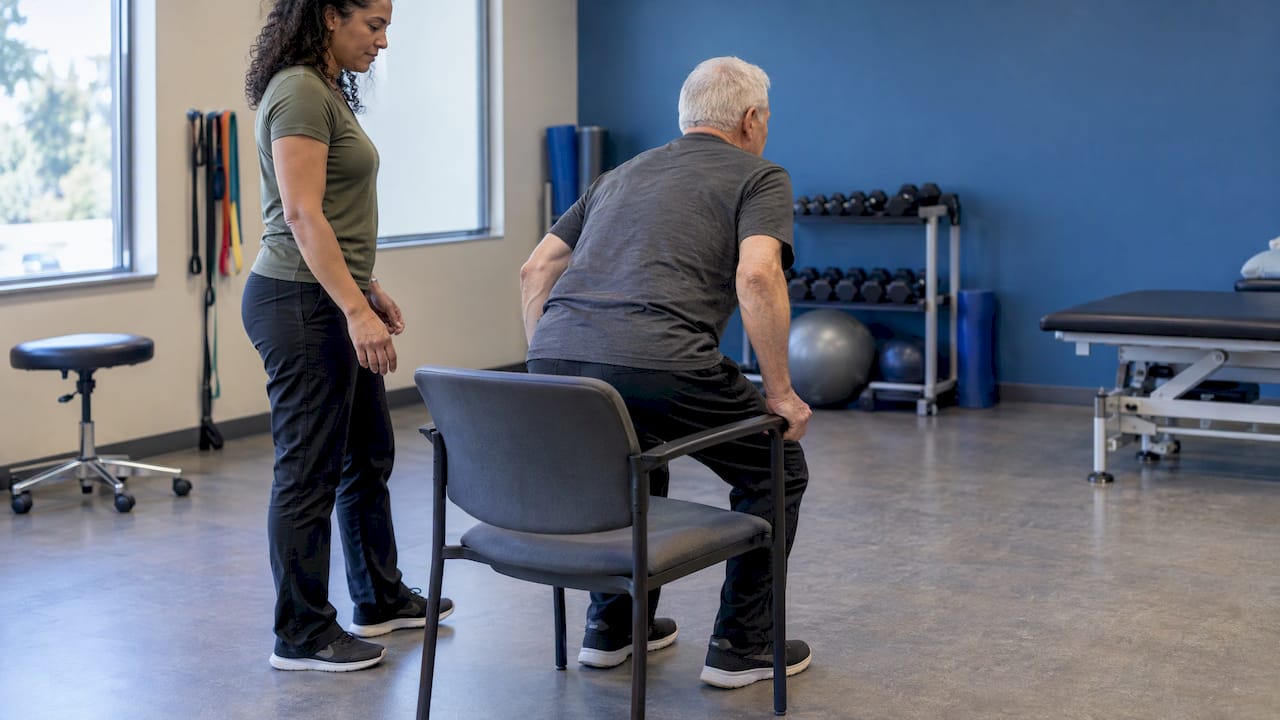
Parkinson’s movement therapy is a structured, supervised exercise program built around the way Parkinson’s affects your walking, balance, posture and daily tasks. It is not a single technique. It combines aerobic activity, strength work, balance and gait training and movement cues, matched to your abilities, your medication timing and your stage. The research is encouraging, and the best results come from starting early, staying consistent and having a program that changes as you do. If you live in the Meridian area and want a brain-based evaluation to begin with, our Brain Health Consultation is where we start.
Parkinson’s changes how the brain sends movement signals. Steps get smaller, balance becomes less automatic, muscles feel stiff, and tasks that used to run on autopilot, like turning in a hallway or getting out of a chair, need conscious attention. Movement therapy trains those skills directly, over and over, so they become more reliable.
According to the Parkinson’s Foundation, a physical therapist can design exercise routines that target your specific motor problems, give you feedback and education, answer questions about safety and self-management, and help with walking, balance, posture, pain, getting around your home and community, and fear of falling. The same fact sheet says physical therapy can help at every stage of the disease, and that a baseline evaluation with routine re-evaluations is recommended.
A good program usually has these parts:
The strongest single document is the American Physical Therapy Association’s clinical practice guideline, published in 2021. It gives strong, high-evidence recommendations that physical therapists use moderate- to high-intensity aerobic exercise, resistance training, balance training, external cueing, community-based exercise, gait training and task-specific training for people with Parkinson disease. Flexibility exercise is also included, with a lower level of evidence behind it.
Here is what each type is shown to do, according to the same guideline:
A 2020 meta-analysis of 191 trials with nearly 8,000 participants found that conventional physiotherapy improved motor symptoms, gait and quality of life. Dance, Nordic walking, martial arts, and balance and gait training improved motor symptoms, balance and walking, while exergaming (movement-based video games) improved balance and quality of life, and hydrotherapy improved balance.
A 2017 review in Nature Reviews Neurology reported that at least four weeks of gait training or eight weeks of balance training can produce positive effects lasting three to twelve months. The Parkinson’s Foundation also reports that people who stayed in exercise programs longer than six months showed functional balance and mobility gains compared with people in programs lasting two or ten weeks.
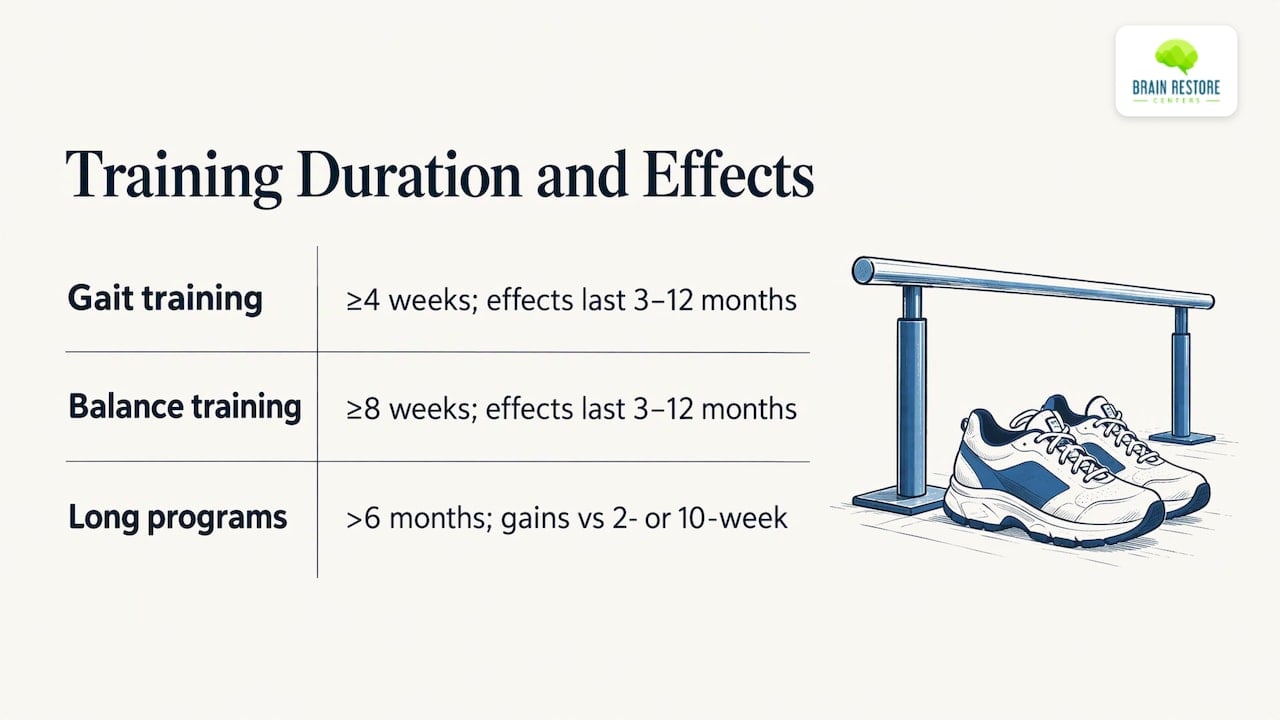
The practical takeaway is simple: movement therapy works like training for any other skill. It pays off when it becomes a habit rather than a short course.
The Foundation’s Parkinson’s Outcomes Project found that people who began exercising earlier in the disease, for at least 2.5 hours per week, saw a slower decline in quality of life than those who started later. Its 2025 Fitness Counts guide goes further on balance: do not wait until you think there is a problem, and talk with your therapist now about beginning a program. If you want a plain-language look at balance work for older adults, this guide to balance training for seniors is a helpful companion.
In February 2026, the Parkinson’s Foundation and the American College of Sports Medicine (ACSM) announced updated exercise recommendations after a three-year review. The review focused on time management, exercise dose and intensity, and adapting to disease progression, and it stresses intentional, creative exercise across four areas.
The weekly target in the ACSM and Parkinson’s Foundation infographic is 150 minutes (2.5 hours) of moderate-to-vigorous exercise. It breaks down like this:
| Type of exercise | How often | What it looks like |
|---|---|---|
| Aerobic | 3 days a week, at least 30 minutes | Brisk walking, running, cycling, swimming, dancing, interval training |
| Strength | 2 to 3 non-consecutive days, at least 30 minutes | Major muscle groups, 2 to 3 sets of 8 to 10 repetitions |
| Stretching | 2 to 3 days a week, daily is most effective | Gentle, sustained stretches |
| Balance, agility and multitasking | 2 to 3 days a week, daily if possible | Multidirectional stepping, weight shifting, turning, yoga, tai chi, dance, boxing |
If you are not active right now, the Foundation says starting with low-intensity exercise such as walking is beneficial, and you can build toward more vigorous activity as you tolerate it. It adds that the most important factor is doing exercise regularly, so choose activities you enjoy and can stick with.
People often ask which activity is “best.” The evidence supports many of them, and the 2020 meta-analysis authors note that more work is needed to compare them directly. That is good news for you: pick the one you will actually do. If boxing appeals, this starter plan for boxing after 50 shows what a short, beginner-friendly session can look like. Share it with your therapist first so the intensity and footwork match your balance.
When steps shrink or your feet seem glued to the floor, an outside signal can help your brain restart the movement. The Michael J. Fox Foundation describes four common external cueing types used in Parkinson’s physical therapy:
Cueing is one of the skills that is easiest to learn with a trained observer. Someone watching can tell which cue works for you, in which room, at what point in your medication cycle.
No two people with Parkinson’s move the same way, so no two plans should match. The Foundation’s 2025 draft exercise guidelines advise tailoring exercise to your ability, medication status and disease stage after a health screening. They suggest considering a Parkinson’s-specialized physical therapist for a functional evaluation, and scheduling sessions during “on” medication periods, when your medication is working well.
Stage matters for how much of the evidence applies to you. The APTA guideline covers adult idiopathic, typical Parkinson disease, and most of the studies it reviewed included people in early-to-mid stages (Hoehn and Yahr stages 1 to 3). Its authors note that the recommendations may not generalize to advanced stages 4 and 5, and that the final judgment on any procedure must weigh your safety, preferences and circumstances. In practice, that means the plan should be built around you, and rebuilt when you change.
Other things a plan should account for, per the draft guidelines:
People with Parkinson’s are twice as likely to fall as the general older population, according to the Parkinson’s Foundation. Falls can come from freezing, leg weakness, dizziness, drops in blood pressure, shuffling steps, trouble multitasking and changes in visual-spatial awareness. Safe routines are designed around those risks.
The ACSM guidance suggests that you:
The Foundation’s walking strategies are easy to remember:
The APTA guideline reports that aerobic exercise does not cause harm when therapists screen for conditions, such as heart problems, that would rule out moderate- to high-intensity effort. Minor muscle and joint injuries occurred in some studies but mostly resolved, so build duration and intensity gradually. Cycling may be a safer choice than treadmill walking if your fall risk is high or you experience freezing. Talk with your neurologist or primary care doctor before you increase intensity, especially if you have heart disease, dizziness on standing or new symptoms.
Movement is not only about muscles. Balance, timing, attention and the ability to do two things at once all depend on brain networks. That is why we approach movement and brain health together. If your balance has felt less stable and you are not sure why, our article on why balance declines with age explains the brain-based reasons. If you want to understand how we support people living with neurodegenerative conditions, read how neurofeedback supports neurodegenerative patients. For a sense of how structured balance work is organized, our guide to balance training exercises walks through the principles we use.
You do not need a perfect plan to start. You need a safe first step and a routine you can repeat.
If you want a brain-focused starting point close to home, we offer a Brain Health Consultation through our Brain Restore Program, along with Progressive Focused Rehab and neurofeedback at our Meridian clinic. Our aim is to help you understand how your brain is functioning and build a personalized plan you feel confident following. Dr. Chad Woolner’s Restoring Brain Health book is another way to learn about our approach before your visit.
You can book an appointment online whenever you are ready.
When someone is told they have Parkinson’s, the first question is usually about what they can still do. We want the answer to be: a great deal, and more if you start now.
The research is clear that regular, intentional movement matters, and that it works best when it is personal. Your stride, your balance, your medication timing and your goals are not the same as anyone else’s. That is why we care about understanding how your brain is working before we build a plan. Our team brings over 50 years of combined clinical experience and a multidisciplinary approach, and our patients have left us more than 400 five-star reviews.
Our Brain Restore Program, Progressive Focused Rehab and neurofeedback are designed to work together, so movement, attention and brain function are addressed as one picture. We find that people feel hopeful when they have a clear plan and a team beside them. If you are in Meridian or the Treasure Valley, we would be glad to meet you and help you take the next step.
Chad
It is a shorthand some programs use for weekly exercise habits. The research behind the current recommendations is expressed in minutes and days instead: 150 minutes of moderate-to-vigorous exercise per week, split across aerobic, strength, stretching and balance work. Ask your therapist how to turn that into a schedule that suits your medication timing.
The recommendations do not exclude anyone with tremor. Walking, cycling, swimming, dancing, tai chi, yoga and boxing all appear in the 2026 ACSM and Parkinson’s Foundation guidance. Choose activities where you feel steady, hold something stable during balance work, and ask your therapist to adjust weights, bands and grips for you.
Avoid exercising when your medication is not working well, rushing, carrying objects while walking and pushing through freezing or dizziness. Do not increase intensity suddenly. Stop, breathe and reset if you start to shuffle or freeze, and tell your doctor about new dizziness or falls.
Yes, though the evidence is strongest for early-to-mid stages, and plans need more support and supervision as the disease progresses. A functional evaluation helps set safe goals for where you are now, and it can be repeated as things change.
Questions about your next step?
Our Meridian team can help you understand the evaluation process and which care options may fit your needs.
Schedule a ConsultationPrefer to speak with our team? Call 208-639-1397