Numbness in Feet: Treatment Options by Cause
November 17, 2026

The right treatment for numb feet depends on what is irritating or damaging the nerves, so the first step is finding the cause. Blood sugar, a pinched nerve in the lower back, a vitamin shortage, poor circulation and a compressed nerve at the ankle can all feel the same from the inside. Each one is treated differently. Below you will find the warning signs that need urgent care, how the cause is identified, the main treatments, and how to keep numb feet safe while you recover. At Brain Restore Meridian, we look at the whole picture: the nerves in your feet, the spine that feeds them and the brain that reads their signals.
Most foot numbness builds slowly, but some patterns should never wait. According to MedlinePlus, go to a hospital or call 911 if numbness or tingling comes with weakness or an inability to move, or appears just after a head, neck or back injury. The same page lists loss of bladder or bowel control, confusion or loss of consciousness (even briefly), slurred speech, a change in vision and difficulty walking.
Put simply, call for help if:
Those last symptoms can point to pressure on the spinal nerves and need emergency evaluation the same day. If none of this describes you, the numbness is still worth a visit. Gradual numbness, numbness on both sides, numbness that comes and goes, or numbness limited to the toes all call for a scheduled appointment rather than waiting it out.
Numbness is a sign that signals between your feet and your brain are not traveling normally. The MedlinePlus list of causes is long. It includes sitting or standing in one position for a long time, nerve injury, pressure on spinal nerves from a herniated disk, reduced blood supply, shingles, abnormal calcium, potassium or sodium levels, vitamin B deficiencies (B1, B6, B12 and folic acid), certain medicines, alcohol, and autoimmune diseases that attack nerves.
In day-to-day practice, the causes people most often hear about fall into a few groups.
When the long nerves that serve both feet are affected, the result is called peripheral neuropathy. Typically it starts in the toes and balls of the feet, on both sides, and creeps upward. Diabetes is the best-known cause. The American Academy of Family Physicians reports that diabetic peripheral neuropathy occurs in up to 50% of people with diabetes. Other triggers include B12 deficiency, an underactive thyroid, alcohol, chemotherapy and some medications.
The nerves that reach your feet exit the spine in the lower back. A herniated disc or narrowed spinal canal can press on them. This pattern often shows up on one side, sometimes with back or leg pain that shoots below the knee. If this sounds like you, the numbness is a spine problem first and a foot problem second.
A nerve can also be squeezed closer to the foot. Tarsal tunnel syndrome involves a nerve at the inside of the ankle. Morton’s neuroma is a thickened nerve between the toes, often linked to tight or narrow shoes. These tend to cause numbness in a specific part of the foot rather than the whole thing.
When blood supply to the feet drops, the nerves are starved of oxygen, and numbness, coldness or color changes can follow. If your feet are often cold or pale as well as numb, your clinician will want to check circulation. Everyday habits that support blood flow, such as walking, are covered in this guide on how to improve blood flow naturally.
Numbness can also originate higher up. Stroke is the urgent example above. Concussion and other brain injuries can alter how the brain processes sensation and balance, and neurological conditions can change how signals are interpreted. If your foot symptoms arrived alongside brain fog, dizziness, balance trouble or memory changes, tell your clinician about all of them together. They belong to one story.
A good evaluation is mostly detective work, and it is not as invasive as people fear. The National Institute of Neurological Disorders and Stroke describes the usual path: a medical history, physical and neurological exams, blood tests, and sometimes imaging or nerve testing.
Here is what each piece tells you.
| Step | What it looks for |
|---|---|
| History and symptom pattern | One foot or both, constant or intermittent, worse at night, linked to back pain or certain shoes |
| Physical and neurological exam | Reflexes, strength, balance, how well you feel light touch, vibration and temperature |
| Blood tests | Diabetes, vitamin deficiencies, kidney or liver problems, other metabolic disorders, infections and signs of abnormal immune activity |
| Spine imaging (MRI or CT) | Pinched nerves, herniated disks, spinal stenosis and other structural causes |
| Nerve conduction studies and EMG | How well nerves and muscles carry electrical signals, mostly when the cause is unclear |
A 2026 JAMA review of peripheral neuropathy notes that most people are diagnosed from symptoms, an exam and blood tests (fasting glucose or hemoglobin A1C, vitamin B12 level and a monoclonal protein study). Nerve conduction testing and electromyography are used when no clear cause emerges, and skin biopsy is rarely needed.
If you have diabetes, screening should be routine. According to a review of painful diabetic neuropathy in PubMed Central, people with type 2 diabetes should be screened at diagnosis and then every year, and people with type 1 diabetes five years after diagnosis and then yearly.
There is no single “numbness in feet treatment.” There is a treatment for the reason your feet are numb. MedlinePlus puts it plainly: your provider should find and treat the cause, and doing so may make symptoms go away or stop them from getting worse.
The NINDS page states that managing diabetes and keeping blood glucose at safe levels may help reduce or even eliminate the symptoms of diabetic neuropathy. This is the foundation, whatever else you add. Your primary care doctor or endocrinologist directs this part.
A B12 deficiency, thyroid problem or other metabolic issue shows up on blood work. Correcting it is the treatment, and your doctor guides the plan. For nerve damage caused by autoantibodies, NINDS notes that intravenous immunoglobulin (IVIg) is a common treatment, which is directed by a neurologist.
If imaging and your exam point to a disc pressing on a nerve, the goal is to take pressure off that nerve and restore healthy movement in the spine. This is where our clinic’s work fits most directly. Our Disc Restore Program™ starts with an Initial Disc Evaluation, and our chiropractic care begins with an Initial Chiropractic Evaluation. We also offer spinal decompression and low level laser therapy as part of our restorative services.
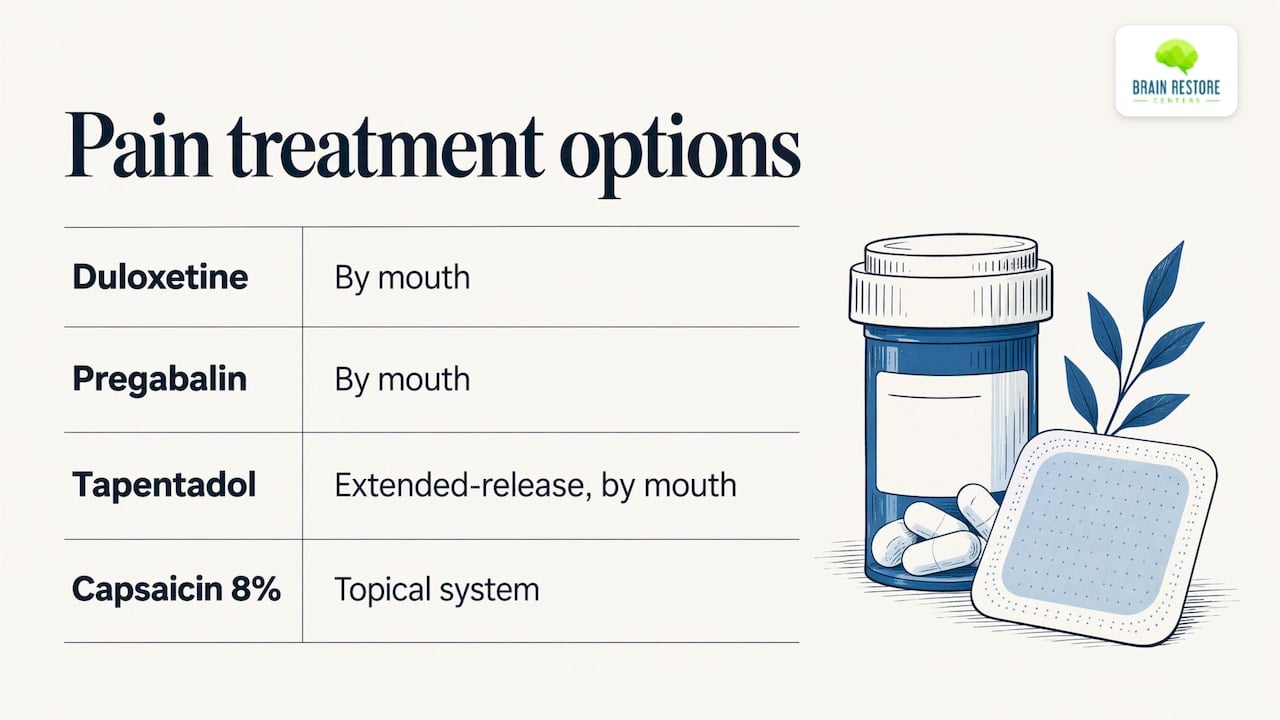
Some people have numbness plus burning, stabbing or electric pain. For painful diabetic neuropathy, the PubMed Central review says four options are FDA-approved: duloxetine, pregabalin and extended-release tapentadol by mouth, plus a capsaicin 8% topical system. The review also names tricyclic antidepressants, gabapentinoids and SNRIs among guideline-recommended first-line oral choices.
The AAFP adds that these drugs treat pain and do not restore sensation, and that response should be monitored because side effects are common. The goal of drug therapy is to reduce pain, not remove it entirely. A prescriber weighs your other conditions, sleep, mood, current medicines and cost. Never start, stop or combine these medications on your own: that decision belongs with your doctor or pharmacist, who can check interactions with what you already take.
The AAFP reports low- to moderate-quality evidence for exercise and for neuromodulation, including transcutaneous electrical nerve stimulation. Movement is a gentle place to start. Walking, cycling, water exercise and strength training all help blood return from the legs, as long as you choose what you can tolerate and check your feet afterward.

Foot strength and balance matter too. When feet feel less, the brain gets weaker information about where they are, and balance can suffer. Our podcast episode on proprioception in foot health and balance explains this body-position sense in plain language.
Home habits do not replace a diagnosis, but they prevent the injuries that numbness hides. The CDC advises checking your feet every day, even when they feel fine, for cuts, redness, swelling, sores, blisters, corns, calluses or changes to skin and nails. Use a mirror for the soles, or ask a family member to look.
A simple daily routine:
Walking around your home barefoot is the habit most people forget. Slippers or house shoes protect skin you may not be able to feel.
If you spend long stretches sitting, change position often. MedlinePlus lists staying in one position too long as a simple cause of temporary numbness, and shifting, standing and walking usually clears it. Numbness that keeps coming back after position changes is a sign to get checked.
A focused visit gets you answers faster. Before you go, write down:
This list helps tell a spine problem from a body-wide nerve condition, and it gives your clinician what they need to choose the right tests.
Numb feet are rarely a foot problem alone. In our experience at the clinic, the most useful question is not “what do I put on my feet?” but “where is the signal breaking down?” It might be in the lower back, in the body’s chemistry, or in how the brain and nervous system are processing information.
That is why we think in terms of the whole nervous system. Our team combines chiropractic care, spinal decompression, low level laser therapy, progressive focused rehab and brain-based therapies such as neurofeedback, so that your care can be planned around your particular cause rather than a one-size approach.
If you are also dealing with brain fog, a past concussion, anxiety or poor sleep, we want to hear about it. Those pieces often matter, and you deserve a plan that accounts for all of them. We have also written about neuropathy and natural relief approaches if you want to read more about how we think about nerve health.
Chad
If your numbness is gradual and you are ready to find out why, our team can begin with an evaluation matched to what you are experiencing. For back-related nerve symptoms, that means the Initial Disc Evaluation. For brain-related symptoms such as brain fog or concussion recovery, it means a Brain Health Consultation. You can also read about our neuropathy care before you call.

We are in Meridian, Idaho, and we serve patients across Ada and Canyon counties. When you are ready, schedule your appointment.
Not always, but it points to a different set of causes. Numbness in both feet often suggests a body-wide issue such as diabetes, a vitamin deficiency or another form of peripheral neuropathy. One-sided numbness more often points to a pinched nerve in the back or a compressed nerve in the leg or foot. Either way, numbness affecting both sides of the body is a reason to schedule a visit.
Sometimes. When the cause is found and treated, symptoms may go away or stop getting worse, as MedlinePlus describes. Keeping blood glucose in a safe range may reduce or even eliminate symptoms of diabetic neuropathy, according to NINDS. How much improvement you see depends on the cause and how early it is addressed, which is why early evaluation matters.
Most people start with a history, a physical and neurological exam and blood tests. Spine imaging is added if a disc or narrowed canal is suspected. Nerve conduction studies and EMG are used when the cause remains unclear, according to NINDS and JAMA.
Be careful. Reduced feeling means you may not notice a burn, so avoid heating pads and hot water bottles, test bath water with your hand or elbow, and do not soak your feet. The CDC recommends washing daily in warm, not hot, water and drying completely, particularly between the toes.
Questions about your next step?
Our Meridian team can help you understand the evaluation process and which care options may fit your needs.
Schedule a ConsultationPrefer to speak with our team? Call 208-639-1397