Panic Attack Treatment Without Medication: What Works
November 17, 2026

You can treat panic attacks without medication, and the strongest evidence points to a combination: calming skills for the moment an attack starts, a structured therapy such as cognitive behavioral therapy (CBT) that changes how your brain and body react over time, and steady lifestyle habits that lower your baseline stress. If the attacks keep coming back, the next step is an evaluation that rules out medical causes and looks at how your nervous system is working. That is the kind of brain-health evaluation we do at our Meridian clinic.
This guide walks through each layer in plain language, so you know what to try tonight, what to build over the coming weeks, and when it is time to get a full evaluation.
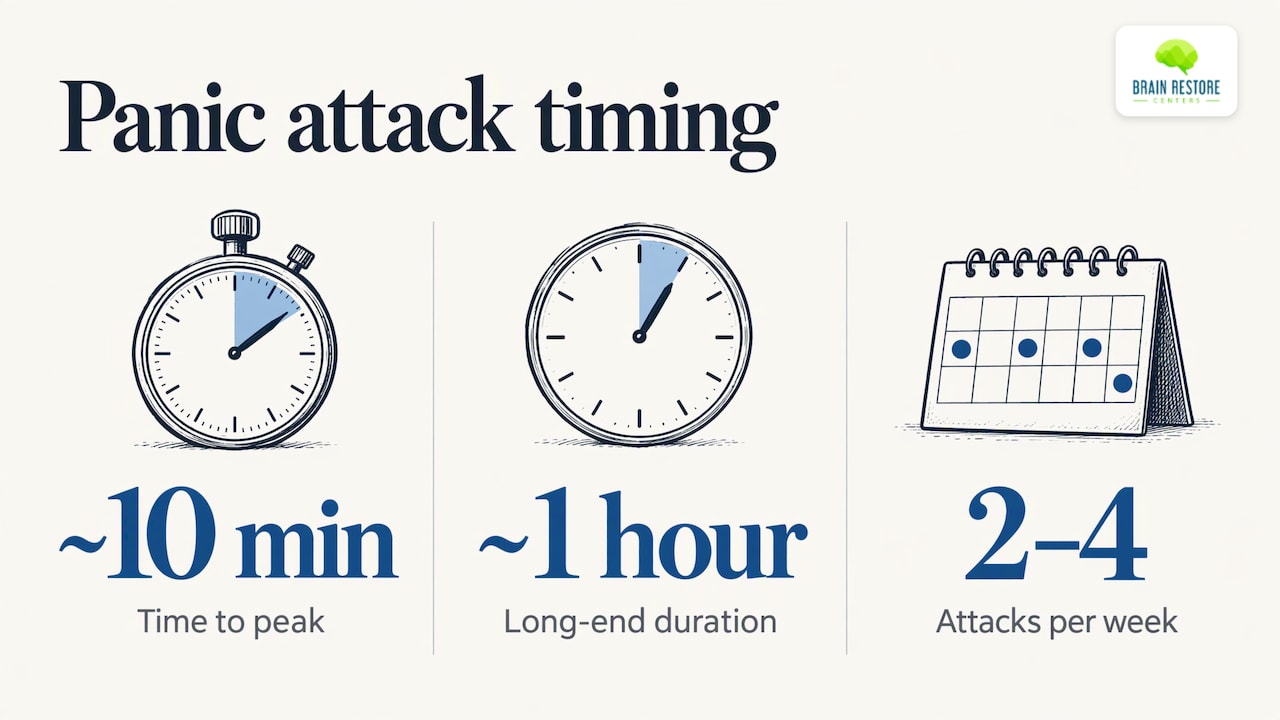
A panic attack is a sudden surge of intense fear that peaks fast. Clinical guidelines describe the onset as rapid, reaching its peak within about 10 minutes, with an attack lasting around an hour at the long end. People often also live with anticipatory anxiety, the worry about when the next one will strike. A 2023 clinical practice guideline notes that a typical patient with panic disorder may have two to four attacks per week.
Common symptoms include a pounding heart, shortness of breath, chest tightness, dizziness, tingling and a sense that something terrible is about to happen. The Merck Manual explains that although these sensations feel alarming, panic attacks themselves are not dangerous. It also says severe or persistent symptoms should be evaluated by a doctor.
One attack does not mean you have panic disorder. Panic disorder is the pattern: repeated, unexpected attacks plus ongoing fear of more. That pattern is what treatment aims at, and it is very treatable.
Before you decide a medication-free plan is right, find out what you are treating. Harvard Health advises seeing your doctor or a mental health professional if you think you are having panic attacks. They can determine whether you have an anxiety disorder such as panic disorder, and identify or rule out medical conditions such as heart or thyroid problems.
Call 911 or go to an emergency room if you have chest pain, pressure or trouble breathing and you have never been told it was panic. Do not assume. Once a clinician has confirmed that your symptoms are panic, you can approach them with much more confidence, and that confidence is part of the treatment.
The goal in the moment is not to fight the attack. It is to send your body a clear signal that you are safe. Most attacks resolve on their own within half an hour, so even a small shift can make the wait feel manageable.
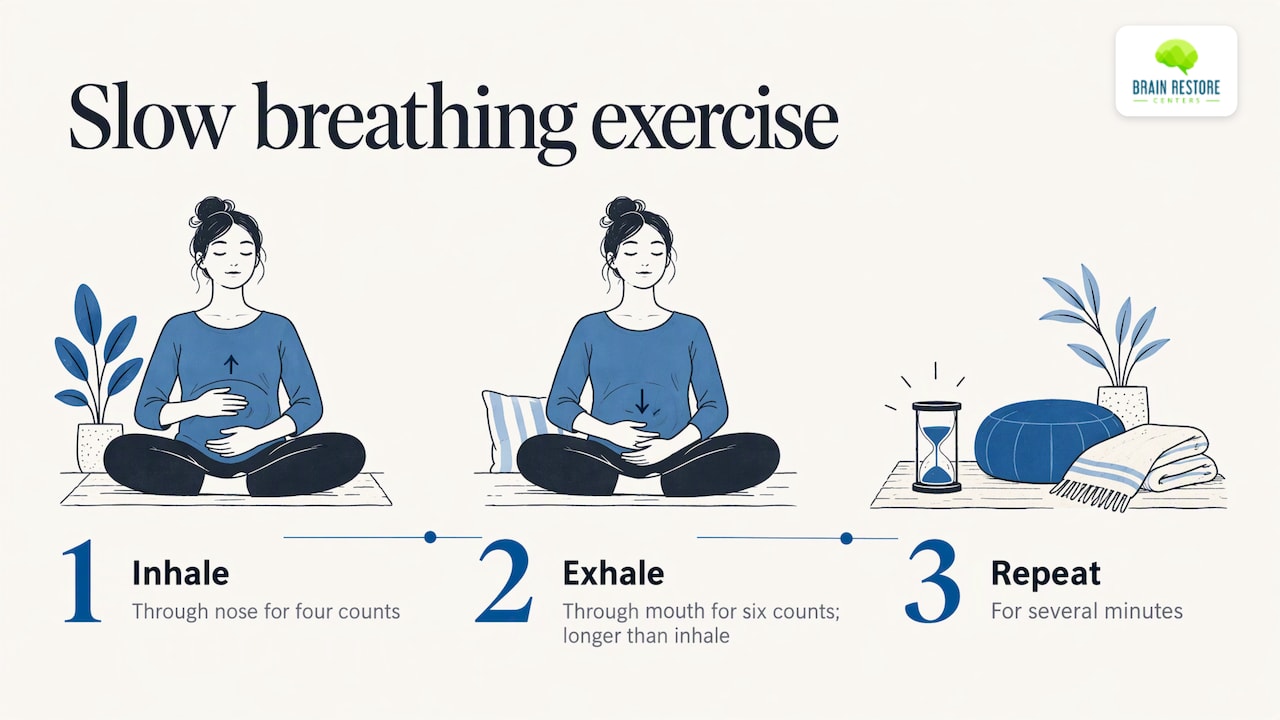
Panic speeds up your breathing, which adds to dizziness and tingling. Clinical guidelines state that deep breathing exercises, consciously slowing your respirations into regular, slow, deep breaths, have been shown to reduce anxiety and panic symptoms. Harvard Health suggests placing a hand on your belly so you can feel it rise and fall.
Try this: breathe in through your nose for a count of four, then out through your mouth for a count of six. Keep your exhale longer than your inhale. Repeat for several minutes.
NAMI describes two simple options too. In “Bunny Breath,” you take three big sniffs through the nose, then release the breath, repeating five to seven times. In “Be A Cobra,” you use a yoga pose with a long exhale. Both are meant to help your body understand it is safe.
Harvard Health recommends grounding techniques: redirect your focus to an object or task, repeat a calming phrase, or picture a safe, peaceful place. Grounding keeps you present and attuned to your body, and focusing on the here and now gives you a sense of control instead of leaving you absorbed in frightening thoughts.
A practical version: name five things you can see, four you can touch, three you can hear. Hold a cold glass of water and notice the temperature. Press your feet into the floor. If you like guided imagery, this walkthrough of hypnosis for panic attacks covers imagery techniques you can try at home.
Say it plainly: “This is a panic attack. It is uncomfortable, it is not dangerous, and it will pass.” Guidelines for clinicians say reassurance and explaining the brief nature of the episode are central during an attack, and you can give yourself the same message.
If you try these strategies and still feel unsafe, NAMI notes you can reach the 988 Suicide & Crisis Lifeline by phone or text at 988, any hour of any day.
Stay calm and stay with them. Speak slowly, suggest breathing together, and offer a simple grounding task like naming objects in the room. Do not tell them to “just relax.” Tell them it will pass, and that you are not going anywhere.
Coping skills help you get through an attack. Treatment changes how often attacks come. Without medication, the main route is psychotherapy, and the evidence here is strong.
The National Institute of Mental Health calls CBT the “gold standard” psychotherapy for panic disorder. It teaches you different ways of thinking, behaving and reacting to the feelings that come before or during an attack. NIMH explains that attacks can become less frequent once you learn to react differently to the physical sensations of anxiety and fear.
Harvard Health describes the same idea: CBT teaches coping behaviors you can use before and during an attack, and you learn to reframe your thoughts so attacks lessen in frequency and severity over time.
This sounds technical, but the idea is simple. You deliberately and safely bring on the body sensations of panic, such as a racing heart from brisk exercise or dizziness from spinning in a chair, so your brain learns those sensations are harmless. The American Family Physician review says interoceptive exposure is the most beneficial component of CBT for panic disorder. This is done with a trained therapist guiding you, not alone.
The same review states that psychotherapy is as effective as medication for treating panic disorder, and that CBT appears to be the most effective of the psychotherapies studied. So choosing therapy first is a well-supported decision, not a lesser one.
Clinical guidelines also list other long-term options, including interpersonal therapy and mindfulness therapy, which can be used to treat panic disorder.
Think of these as the foundation that makes everything else work better. NIMH states that a healthy lifestyle can help combat panic disorder, and recommends enough sleep and exercise, a healthy diet and support from family and friends. It is clear that this supports treatment rather than replacing it, which is why it works best alongside the therapies above.
Harvard Health reports that research suggests breathing exercises, meditation, light or moderate exercise and muscle relaxation can help prevent panic attacks when practiced regularly. Clinical guidelines add the advice to eliminate stimulants and get adequate sleep and daily exercise.
A realistic starting list:
If you want more on gentle approaches, see our article on natural solutions for anxiety and depression.
Some people do everything right and still find panic returning, especially when it overlaps with brain fog, poor sleep, a past concussion or long-term stress. In those cases it makes sense to look at how the brain itself is regulating arousal.
Neurofeedback is one approach we use for this. It works like exercise for your mind: sensors read your brainwave activity while you watch or listen to feedback, and your brain practices settling into calmer patterns. Our article on neurofeedback for anxiety relief explains what a session feels like. If you wonder how long it takes, our guide to neurofeedback session counts covers early and lasting results.
Brain-based care does not replace the basics in this article. It adds a way to support the nervous system while you build skills, and it fits with the sleep, breathing and movement habits above. If your attacks began after a head injury, our guide to managing post-concussion headaches may also help you connect the dots.
When someone walks into our clinic after months of panic attacks, they are rarely only afraid of the attack. They are afraid of what it means about their brain. The first thing we want them to know is that this is a nervous system that has learned to sound the alarm too easily, and a nervous system can learn new patterns.
That is why we look at the whole picture. Sleep, stress, past head injuries, inflammation and brain activity can all feed into how reactive you feel. Our Brain Restore Program is built around a personalized plan that combines neurofeedback with supportive therapies, so you are not guessing which piece matters most for you.
The skills in this article are real tools, and we encourage you to start using them today. If you want a deeper look at why your attacks keep happening, we are here to walk through it with you, step by step.
Chad
If panic is shaping your days, you do not have to figure out the cause alone. Our Brain Health Consultation is the starting point of the Brain Restore Program. Our team brings over 50 years of combined clinical experience, and our patients have left us more than 400 five-star reviews. The program is designed to give you a personalized plan for restoring brain health, whether you are dealing with anxiety, brain fog or recovery after a concussion.
You can book an appointment online at our Meridian, Idaho clinic.
Yes, for many people. The American Family Physician review states that psychotherapy is as effective as medication for panic disorder, and CBT appears to be the most effective type. Skills practice and healthy routines support that progress.
Attacks peak within about 10 minutes, and most resolve on their own within half an hour, according to a 2023 clinical practice guideline. Slow breathing and grounding can make that window feel shorter.
The Merck Manual and NAMI both state that panic attacks are not dangerous, even though chest pain and shortness of breath feel frightening. If symptoms are severe or persistent, or you have never been evaluated, see a doctor to rule out heart or thyroid problems.
Sleep, exercise, a healthy diet and support from people you trust all help, and Harvard Health notes regular breathing, meditation and muscle relaxation can help prevent attacks. NIMH says lifestyle supports treatment, so pair it with a structured therapy.
See your doctor or a mental health professional if you think you are having panic attacks, especially if they repeat or you start avoiding places and activities. If you feel unsafe, call or text 988 at any hour.
Questions about your next step?
Our Meridian team can help you understand the evaluation process and which care options may fit your needs.
Schedule a ConsultationPrefer to speak with our team? Call 208-639-1397