Brain Injury Mood Changes: What's Normal and When to Get Help
November 25, 2026


If you or someone you love has been snappier, sadder, more anxious or more tearful since a head injury, you are not imagining it, and you are not “just being difficult.” Mood and emotional changes are a recognized part of concussion and traumatic brain injury (TBI), and they have physical, brain-based causes. Most are manageable, and many ease as the brain heals. When they linger past a few weeks, a thorough brain-focused evaluation can show what is driving them and what to do next. That is the work we do at our Meridian, Idaho clinic.
The CDC’s list of social and emotional symptoms of mild TBI and concussion includes anxiety or nervousness, irritability or being easily angered, feeling more emotional, and sadness. The National Institute of Neurological Disorders and Stroke (NINDS) adds that mood changes or swings, agitation, and feeling anxious or depressed can all be part of the picture, and that frustration and irritability tend to develop during recovery.
In everyday terms, this can look like:
Irritability is especially common. A fact sheet from the Model Systems Knowledge Translation Center (MSKTC), a federally funded brain injury research program, reports that up to three-fourths of people with TBI have irritability and up to half have problems with anger. It can also be sudden and unpredictable, and it can be triggered more easily than before the injury.
None of this means your personality has changed for good. It means your brain is working harder than usual to regulate itself.
Emotions are produced by networks in the brain, and an injury can disrupt them. Several things tend to stack on top of one another.
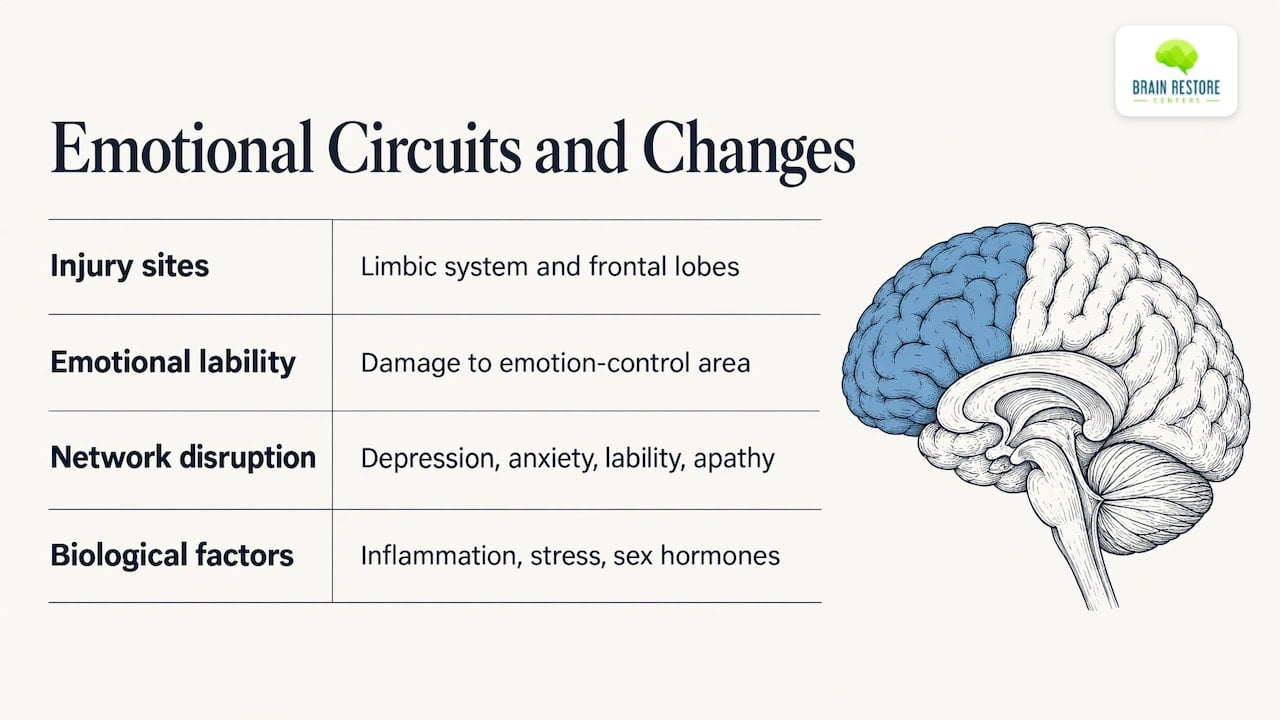
The American Association for Behavioral and Cognitive Therapies (ABCT) explains that social, emotional and behavioral changes come from injury to brain tissue, including the limbic system and frontal lobes, the areas that help you read situations and steer your reactions. MSKTC notes that mood swings, called emotional lability, are often caused by damage to the part of the brain that controls emotions and behavior, and that sudden crying or laughing may not match how you really feel.
A 2023 review in Nature Reviews Neurology describes how TBI can lead to depression, anxiety, emotional lability and apathy through disruption to brain networks and chemical messaging. A 2025 review of the biology behind these effects points to inflammation, stress and sex hormones, and changes in how brain cells communicate. If you are curious how hormones influence emotions generally, this overview of how estrogen shapes your mood is a good starting point.
Mood does not change in isolation. The MSKTC irritability fact sheet lists slowed thinking, poor memory, pain, fatigue, poor sleep, and sensitivity to light or noise as common contributors. When processing is slower, everyday tasks take more effort, and frustration builds fast. The Department of Defense’s Traumatic Brain Injury Center of Excellence says pain, poor sleep quality and fatigue can aggravate changes in behavior, mood and personality.
This is good news in one sense. Every one of those contributors is something you can address. Our guides on concussion sleep problems, headaches after concussion and concussion dizziness walk through them. Neck problems can also feed symptoms, which we cover in how the cervical spine affects concussion symptoms.
MSKTC also points out that after TBI it can be hard to notice you are getting upset until the feeling has grown large, and that the injury can affect how you interpret other people’s actions, so you may assume anger or bad intentions that are not there. Knowing this helps families respond with patience instead of taking an outburst personally.
The adjustment is real. Frustration over lost independence, time away from work, feeling isolated or misunderstood, and getting tired easily all show up in MSKTC’s list of causes of temper outbursts. ABCT adds that pre-injury factors such as coping style and earlier anxiety or depression matter too. Having a history of either does not mean you will have a hard recovery. It means your care plan should include your emotional health from the start.
The honest answer is that it varies, and the timeline depends on the injury, your health history and how much support you have.
The CDC’s concussion fact sheet says concussion symptoms are part of the normal healing process, with most people feeling better within a couple of weeks. A 2018 review of prolonged postconcussive symptoms notes that recovery may take six months or longer for some people, and that research following mild TBI patients found functional impairment in up to 33% at 3 months and 22% at 1 year. The CDC adds that recovery may be slower in older adults, young children, and people who have had a prior concussion.
Two timing points are worth knowing:
Use the following as your guide.
| Situation | What to do |
|---|---|
| Symptoms have not eased 2 to 3 weeks after a mild TBI or concussion, or they worsen once you return to normal activities | Talk with a healthcare provider, as the CDC advises |
| A sad, anxious or “empty” mood, hopelessness, guilt, restlessness or appetite changes last longer than two weeks or get in the way of daily life | Contact a healthcare provider, per the TBICoE fact sheet |
| New mood swings or unusual irritability that appear weeks after the injury | Mention them at your next visit, as NINDS suggests |
| Thoughts of harming yourself, or fear that you or someone else is in danger | Call or text 988, the Suicide and Crisis Lifeline, or call 911 right away |
After any head injury, sudden severe headache, repeated vomiting, worsening confusion, seizures or increasing drowsiness are emergencies. Go to the emergency room.
The most encouraging finding is that emotional symptoms respond to support. A few well-documented steps:
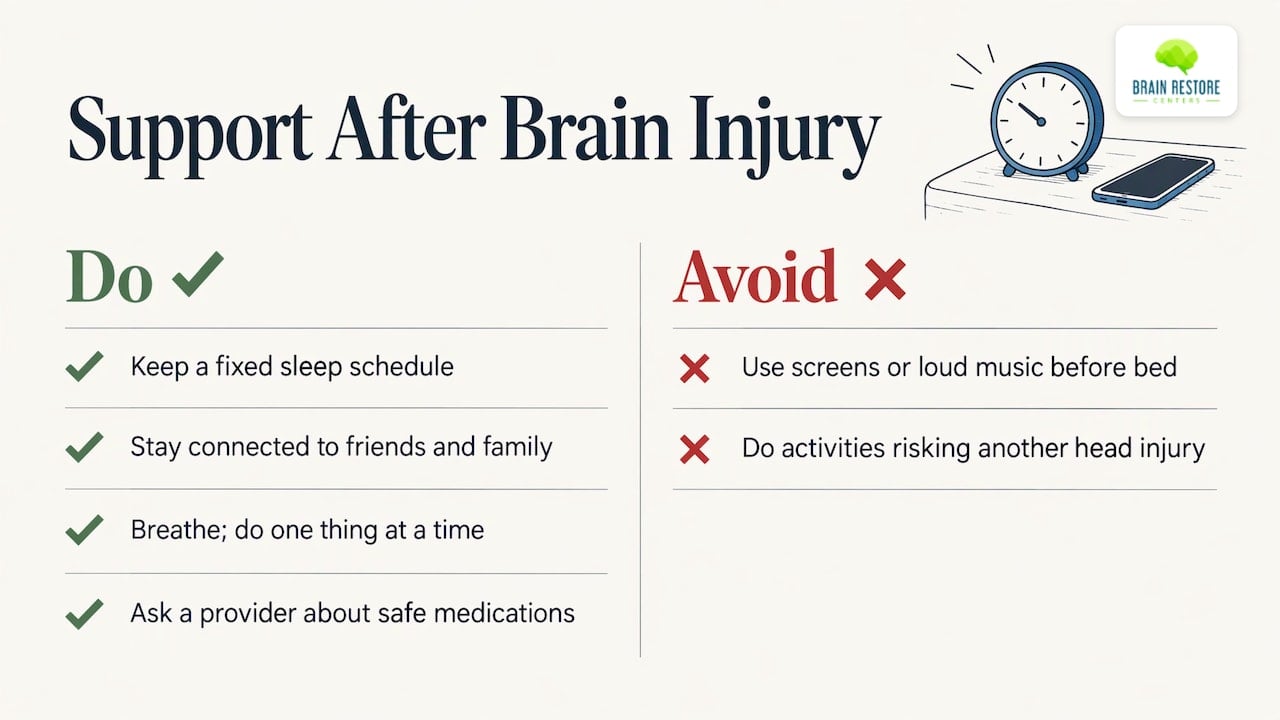
Protect the basics. The CDC recommends a fixed sleep schedule, limiting screen time and loud music before bed, staying connected to friends and family, and avoiding activities that risk another head injury. It also suggests asking a provider about safe medications for symptoms.
Use simple coping tools. TBICoE suggests breathing exercises, which have been found to decrease the body’s reaction to stress, doing one thing at a time to avoid feeling overwhelmed, and seeing recovery as a process in which symptoms keep improving.
Learn what is brain-based. ABCT says it can be very helpful for survivors to understand emotional and behavioral changes as brain-based. That shift takes away a lot of shame.
Consider structured therapy. ABCT reports that cognitive behavioral therapy (CBT), social skills training and mindfulness-based stress reduction are used for emotional and behavioral changes after TBI, and that CBT soon after a mild TBI is well tolerated and may help people at risk for lingering symptoms.
Tell the people around you. Share the MSKTC points above with family. When they know irritability is a symptom and not a character flaw, home gets calmer.
Our article on emotional dysregulation treatment options goes deeper on regulation strategies, and return to work after TBI covers pacing the stress of getting back to your routine.
Researchers reviewing prolonged postconcussive symptoms emphasize that several factors can contribute at once: psychological factors such as coping style and mood or anxiety disorders, neck injury, and changes in brain physiology such as blood flow regulation and microscopic white matter damage. Their conclusion is that the weight given to each should shift with how long symptoms have lasted.
That is why a single approach rarely covers everything. Someone whose irritability comes from poor sleep, neck pain and an overtaxed brain needs a plan that touches all three. The CDC’s own note that post-concussive symptoms are believed to occur most commonly in people with multiple concussions or earlier depression and anxiety points the same way: your history shapes your plan.
When someone sits down with us after a concussion, the first thing they often say is, “I don’t feel like myself.” We take that seriously. Mood is not a separate problem sitting next to the injury. It is one of the ways the brain tells us it is under strain.
That is why our approach is multidisciplinary. We look at brain function, the neck and spine, sleep, pain and metabolic health together, because emotional symptoms rarely have one cause. Our neurofeedback, laser therapy, hyperbaric oxygen therapy, chiropractic care and progressive rehab are designed to work as parts of one personalized plan, not isolated treatments.
We also believe the brain can adapt. Neurofeedback is a way of giving your brain practice at steadier patterns, a bit like exercise for your mind. Our team brings over 50 years of combined clinical experience to each plan, and our patients have left more than 400 five-star reviews.
If you are carrying frustration, worry or sadness you did not have before your injury, you deserve answers and a plan, and hope is realistic.
Chad
If your emotional changes have lasted beyond the first few weeks, or they are affecting your family, work or sleep, our Brain Restore Program in Meridian is built for exactly this. It begins with a Brain Health Consultation, where we listen to your story and look at the factors that may be keeping your symptoms going. Our care includes neurofeedback, low level laser therapy, hyperbaric oxygen therapy and progressive focused rehab, matched to you.
You can learn more about the Brain Restore Program or book an appointment at our Meridian clinic. If you are in crisis, call or text 988 first.
Yes. The CDC lists irritability, sadness, feeling more emotional and nervousness or anxiety among common concussion symptoms. Most people improve within weeks. If swings continue beyond 2 to 3 weeks or worsen, talk with a healthcare provider.
Yes. NINDS advises people with a mild TBI to watch for new mood swings or unusual irritability even when they appear several weeks after the injury. Late-appearing changes are worth mentioning to your provider, not waiting out.
The injury can affect brain areas that manage emotion, and pain, poor sleep, fatigue, slowed thinking and sensory overload add to it. MSKTC also notes anger can build quickly because it is harder to notice that you are getting upset. Naming the cause often makes the feeling easier to manage.
Sometimes it eases as you heal, but it should not be left unaddressed. Symptoms such as a persistent sad or empty mood, hopelessness or guilt lasting more than two weeks call for a conversation with a healthcare provider. Therapies such as CBT are used for emotional changes after TBI.
Learn that irritability and sudden emotion are symptoms, keep routines predictable, and encourage rest and consistent sleep. Stay connected, as the CDC recommends, and go to appointments together if the person wants that.
Questions about your next step?
Our Meridian team can help you understand the evaluation process and which care options may fit your needs.
Schedule a Brain Health ConsultationPrefer to speak with our team? Call 208-639-1397