Post-Stroke Cognitive Therapy: What Helps and Where to Start
November 9, 2026

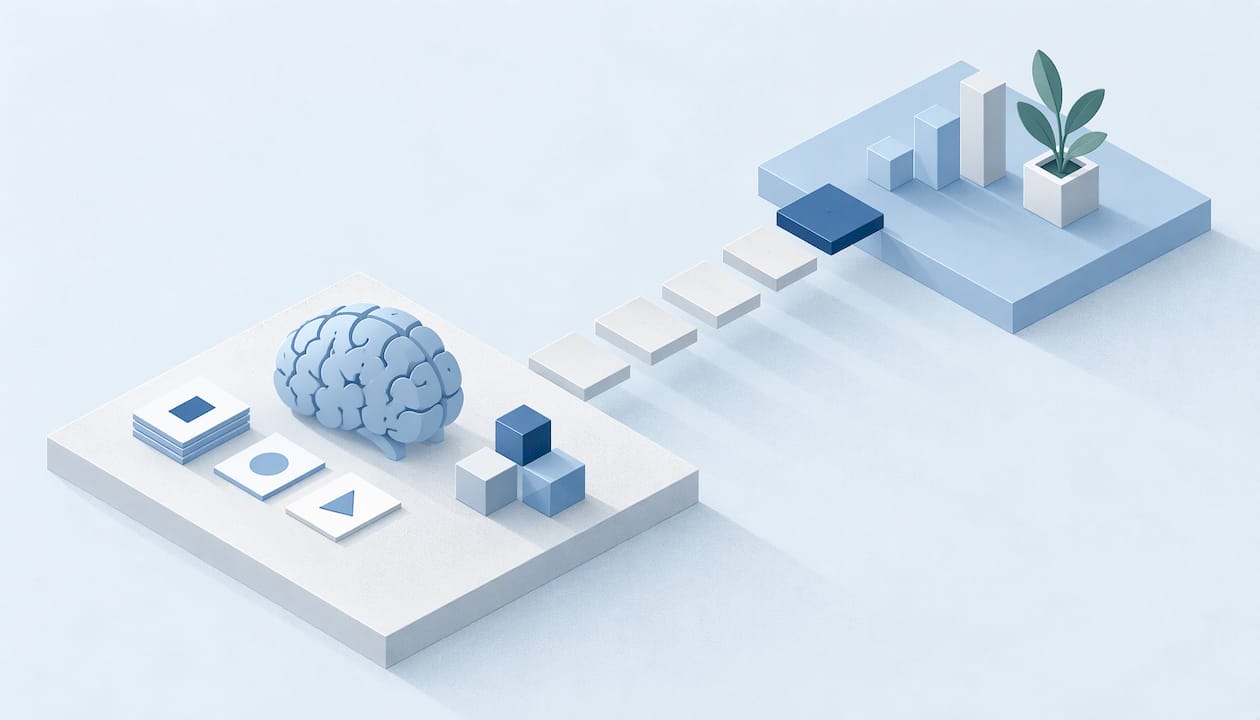
Post-stroke cognitive therapy is a structured set of exercises and strategies that helps you rebuild or work around problems with memory, attention, planning and thinking after a stroke. It is usually led by speech-language pathologists, occupational therapists or neuropsychologists, according to a 2023 review of cognitive rehabilitation, and it can begin in the hospital and continue for months or years. If you or someone you love feels foggy, forgetful or overwhelmed since a stroke, that is a recognized part of recovery, and there is a lot that can be done about it.
A stroke can affect more than movement. The American Stroke Association lists poor concentration, forgetfulness, confusion and trouble processing information, planning, reasoning and following conversations among the typical changes. Some people also lose track of where they are or find it hard to make judgments.
The pattern depends on where the stroke happened. A review of cognitive dysfunction after stroke describes aphasia (language impairment) as one of the most common deficits, affecting from 15% to a third of patients. It also describes hemispatial neglect, a failure to notice things on one side, in more than 40% of people with a right hemisphere stroke. Working memory, attention, learning, calculation, visual perception and executive function can all be affected too.
A 2022 review in Stroke notes that these deficits can strongly shape functional outcome. That is why they deserve attention alongside strength and walking.
Cognitive changes often show up in ordinary moments:
None of this means you are not trying hard enough. These are symptoms to describe to your care team so they can be assessed.
Assessment is the starting point for any plan. The American Stroke Association describes a process that includes medical history, physical and neurological exams, early cognitive screening and, when needed, formal neuropsychological testing. Screening tools such as the Montreal Cognitive Assessment (MoCA) are common.
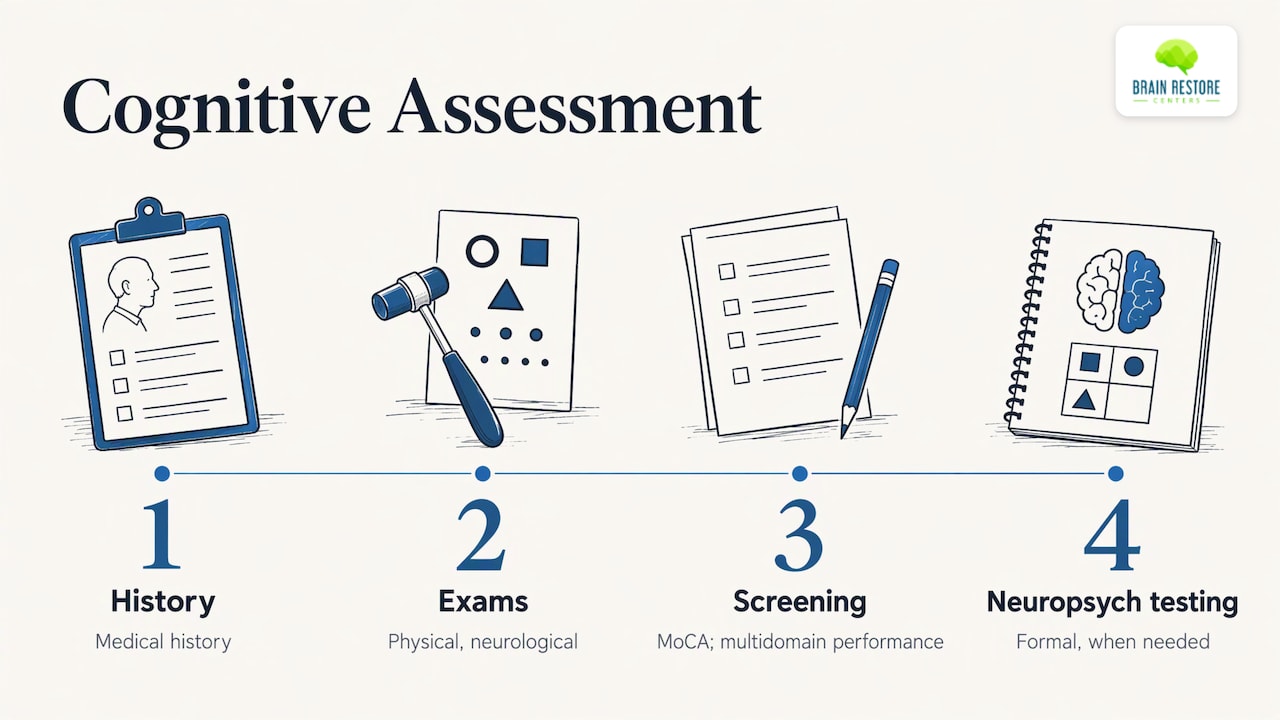
The 2026 AHA/ASA rehabilitation guideline goes further. According to Medscape’s report on the guideline, it expands recommendations for cognitive assessment, including brief, multidomain, performance-based tools for overall cognition, executive function and perception. Performance-based means you are watching how someone does a task, not only asking how they feel.
Bring a family member to these visits if you can. They often notice changes you do not.
Cognitive rehabilitation addresses attention, memory and executive functioning, along with their effect on daily life and safety. The 2023 review of post-stroke cognitive rehabilitation describes two broad approaches:
Most good plans use both. Think of restorative work as exercise for your mind and compensatory work as the tools that make daily life smoother while that exercise does its job.
The same review notes that cognitive assessment and intervention fall within the scope of speech-language pathologists, occupational therapists and neuropsychologists. The 2026 guideline recommends a coordinated team, which may include neurologists, rehabilitation nurses, occupational and physical therapists, speech-language pathologists, social workers, psychologists and recreational therapists.
The reason is practical. Everyday life asks for several abilities at once. Returning to work, for example, can involve physical skills alongside communication, memory, concentration, emotional adjustment and confidence. One specialist rarely covers all of that.
The Washington State Department of Health’s brain injury rehabilitation guideline states that cognitive rehabilitation has been found effective for mild to severe brain injury in the post-acute period and up to a year or more after injury. Its practice recommendations include:
Structured therapy does the heavy lifting, but daily activities reinforce it. Ask your therapist to tailor these to your level:
Start with 10 to 15 minutes and stop before you are drained. If a task feels easy, make it slightly harder. If it brings frustration or exhaustion, make it simpler and rest.
The 2026 guideline recommends broader use of nonpharmacologic cognitive rehabilitation, including computer-based games for executive dysfunction. A 2025 meta-analysis of 19 trials with 875 participants found moderate- to high-quality evidence that computerized cognitive training improved general cognition, attention, executive function and quality of life after stroke. Short-term, high-frequency training worked better than long-term, low-frequency training.
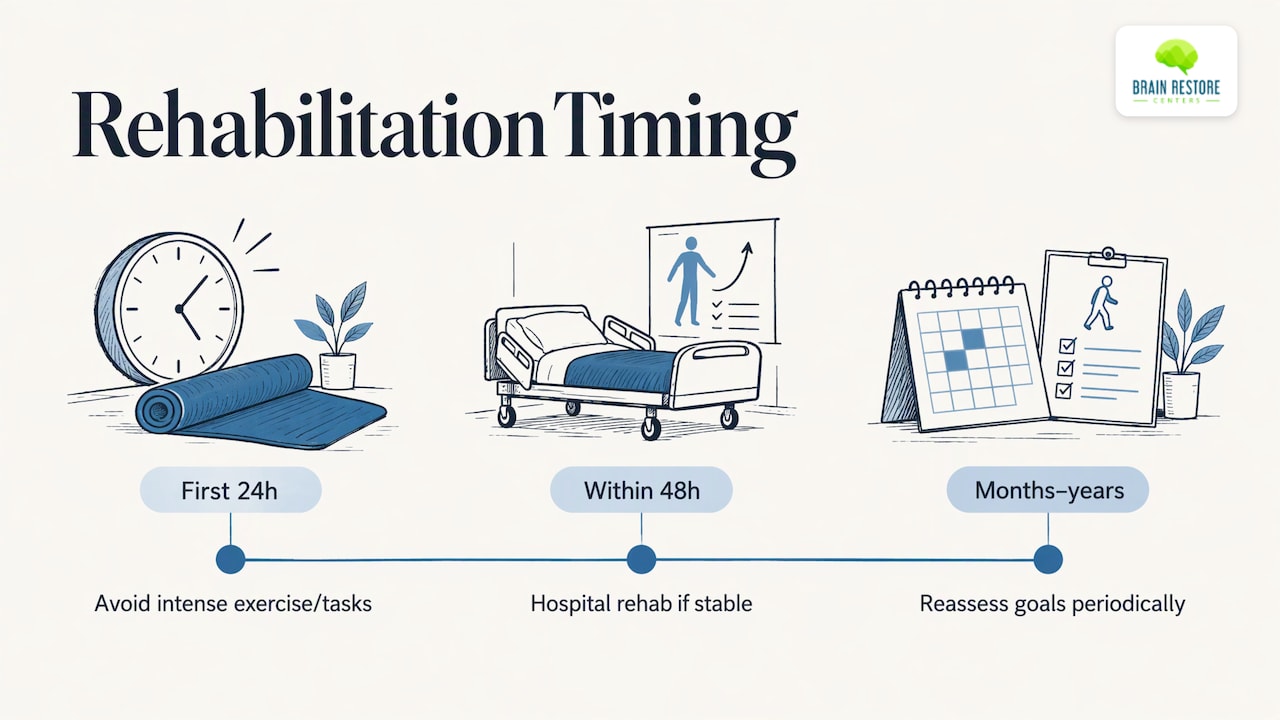
Earlier than most people expect. The 2026 AHA/ASA guideline recommends starting rehabilitation in the hospital as soon as you are medically stable, ideally within 48 hours. The Merck Manual says the same about beginning rehabilitation once stable. The guideline also advises avoiding moderate- to high-intensity exercise and task practice in the first 24 hours, because people mobilized before 24 hours were less likely to have a good outcome.
For moderate-to-severe stroke, the guideline recommends transfer to an inpatient rehabilitation facility when feasible, since outcomes are generally better there.
Starting early does not mean stopping early. Recovery can continue for months to years without a clear endpoint, so the guideline calls for periodic reassessment of goals, progress and skills. If you are months or years past your stroke and still struggling, a fresh evaluation is reasonable. Your plan should change as your needs change.
Honest answers help you set realistic goals. A 2022 meta-analysis of 64 randomized trials with 4,005 participants found that multiple-component interventions improved general cognitive function and memory compared with standard care. The same analysis found that cognitive rehabilitation alone and occupational-based interventions alone did not significantly improve cognitive function on the measures used. The authors urged caution because of bias risk and differences between studies.
What does that mean for you? Programs that combine several elements tend to make more sense than any single exercise. Skills also need to carry into real life. A 2025 trial in chronic stroke survivors found that working memory training produced gains in the trained skills but did not improve everyday instrumental activities beyond non-adaptive training. The researchers pointed to the value of realistic, multimodal rehabilitation.
In practice, that favors therapy that:
Mental fatigue is one of the most frustrating parts of recovery. The 2026 guideline adds a section on poststroke sleep and fatigue, recommending cognitive-behavioral therapy as potentially beneficial. It also discusses light therapy, though research there is still early.
Things you can do today, alongside your care team:
For more on this topic, our guide to mental fatigue treatment explains how we think about pacing and recovery.
The 2023 review emphasizes that a family member or support person is not only beneficial but essential to carrying new strategies into daily life, and that their participation in therapy sessions is strongly encouraged. Ask a family member to attend sessions, learn the strategies and cue you gently at home.
The guideline also calls for monitoring depression and anxiety and supporting caregivers. Recovery is a family effort, and caregivers need care too.
Cognitive changes and balance problems often travel together, and fatigue raises fall risk. Pairing your thinking work with balance training for seniors, approved by your physician or physical therapist, is a sensible way to stay active safely.
At our clinic, we meet many people who feel they are not themselves anymore. The words change: brain fog, slow thinking, losing words, trouble keeping up. The worry underneath is the same.
What we believe is that recovery is rarely about one exercise. It is about understanding how your brain is working today, choosing the right mix of supports, and measuring progress as you go. That is why our approach to brain health combines assessment with personalized, brain-based therapies such as neurofeedback and progressive focused rehab, guided by a multidisciplinary team.
We work alongside your stroke team, not in place of it. Acute care, hospital rehabilitation and your physician’s guidance come first. When you are ready for added support with focus, memory, mental stamina or day-to-day function, we help you build a plan that fits your goals and your pace.
You do not have to settle for “this is just how it is now.” Let’s find out what your brain needs next.
Chad
If you live in the Treasure Valley and want help understanding where your thinking skills stand, our Brain Restore Program begins with a Brain Health Consultation. We look at your history, your symptoms and your goals, and then talk through options that may include neurofeedback and progressive focused rehab. Please keep your physician and rehabilitation team informed of anything you start.
Ready to talk? You can book an appointment online, or learn more on our home page.
Use this checklist at your next appointment:
We have written more on related topics if you want to go deeper: what neurological rehabilitation involves, cognitive dysfunction treatment and a staged plan for returning to work after brain injury. The work-return guide is written around TBI, but many of its pacing ideas apply to stroke recovery as well.
Many people improve, and recovery can continue for months to years. The 2026 AHA/ASA guideline describes recovery as ongoing, with no clearly defined endpoint. How much you regain depends on the stroke and your health, so your care team can give you the clearest picture.
Brain exercises are one tool. Cognitive therapy is a guided program that starts with assessment, sets goals and combines practice with strategies for daily life. A therapist adjusts the difficulty as you progress and checks that skills carry over to real tasks.
Start with your physician or stroke team. Speech-language pathologists, occupational therapists and neuropsychologists provide cognitive assessment and intervention. A brain health clinic can add further support alongside that care.
Short and frequent usually works better than long and tiring. Many people start with 10 to 15 minutes, then build up as stamina improves. A 2025 analysis found short-term, high-frequency computerized training worked better than long-term, low-frequency training. Your therapist can set the right amount for you.
Questions about your next step?
Our Meridian team can help you understand the evaluation process and which care options may fit your needs.
Schedule a Brain Health ConsultationPrefer to speak with our team? Call 208-639-1397