
Functional Medicine Weight Loss: What It Is and What to Expect
October 27, 2026

Functional medicine weight loss means looking beyond calories and willpower to ask why your body is holding on to weight, then building a plan around your answers. A good practitioner reviews your history, sleep, stress, medications, hormones and blood sugar, and pairs that with nutrition, movement and, when it is appropriate, prescription medication. It is not a shortcut, and it is not a detox. It is a more thorough way to find what is getting in your way.
If you have tried to lose weight more than once and felt that your effort never matched your results, you are not imagining the difficulty. Below, we walk through what the approach involves, what the evidence supports, what a first visit looks like and how to judge whether a plan is sound.
Obesity is a complex chronic condition, not a character flaw. The CDC describes it as shaped by health behaviors, stress, health conditions, medications, genes and environment. That list matters, because only some of it is within your control on any given day.
The VA/DoD clinical practice guideline names the contributors that clinicians see most often: physical inactivity, high-calorie processed diets, poor sleep, long-term stress, conditions like PCOS and hypothyroidism, and medications such as some psychiatric drugs and steroids. If two or three of those apply to you at once, a standard “eat less, move more” plan is working against a lot of resistance.
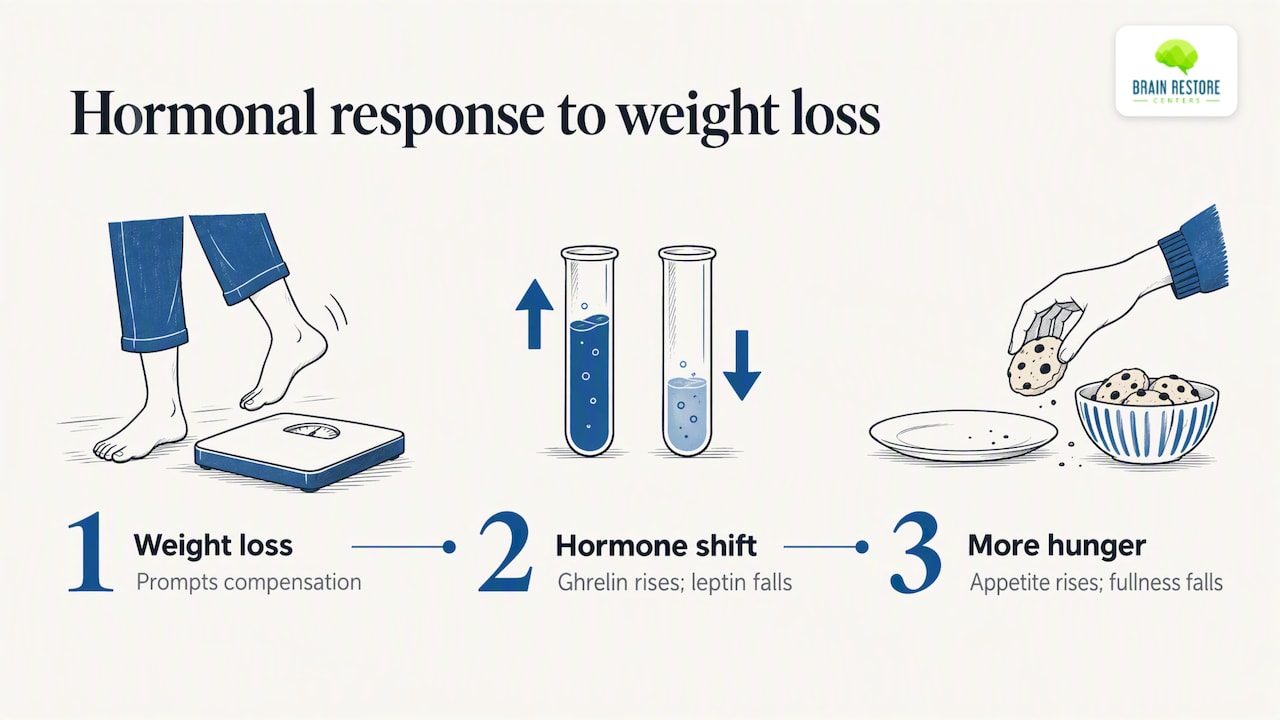
Your biology pushes back, too. The same guideline explains that when you lose weight, the body responds with compensatory hormone changes: ghrelin rises and leptin falls, which increases appetite and reduces the feeling of fullness. That is why hunger often gets louder as you succeed, and why a plan that ignores it tends to fail around month three.
We talk with patients about this early, because it changes the story they tell themselves. The goal is not to push harder. It is to work with your physiology and remove the obstacles we can find.
Functional medicine is a whole-person approach. Instead of asking only “how much do you weigh,” it asks “what is happening in this person’s body, life and history that makes weight hard to lose.” The major U.S. endocrinology consensus points the same direction: the American Association of Clinical Endocrinology supports person-centered, complication-centered obesity care within a biopsychosocial chronic-care model, rather than a single-minded focus on BMI.
In practice, a functional approach usually explores these areas:
One caution: you will see some sites promise that gut healing, detoxing or a specific supplement stack is the key. The research behind those claims is much thinner than the research behind sleep, nutrition and activity. A trustworthy plan puts the proven basics first and treats the rest as supporting steps.
A weight-focused assessment should feel like a conversation about your life, not a number on a scale. Washington State University’s medical education guidance says a thorough weight-focused history reviews your weight history, diet, activity, sleep, obesity-related conditions, previous attempts, motivation, emotional eating, mental health, medications that may promote gain, and psychosocial factors.
Expect questions like these:
BMI is useful as a screening tool, but the Obesity Medicine Association states that it should not be the sole basis for diagnosis because it does not measure body fat or account for individual variation. A good evaluation therefore looks at the whole picture: waist, blood pressure, blood work, symptoms and how you function. If you want a plain-language explanation of why BMI alone can mislead, this overview of BMI as a screening tool connects it to how weight affects movement and joints.
Labs should answer a clinical question. Depending on your history, your clinician may order tests for thyroid function, blood sugar and insulin markers, cholesterol, vitamin levels or hormones. Those choices come from your symptoms and risk factors. Be wary of any provider who orders a very large panel for everyone, or who sells supplements tied to every result. Ask what each test is for and what you would do differently depending on the answer.
The most useful way to think about a plan is in layers. The foundation is lifestyle care, and the layers above it depend on your health and goals.
The VA/DoD provider guide defines comprehensive lifestyle intervention as a combination of behavioral, nutritional and physical-activity components. The Obesity Medicine Association’s algorithm adds that lifestyle care includes nutrition, behavior-change and exercise counseling, and sleep assessment.
In real terms, that can look like:
The NCCIH also notes that yoga, meditation and particularly mindful eating may be useful as complements to other weight-loss interventions. They are add-ons, not replacements.
If your evaluation finds an underactive thyroid, sleep problems, depression or a medication effect, treating that is part of the weight plan. This is where functional and conventional medicine overlap most, and where working with a team that communicates matters.
Here we want to be direct. Medication is a legitimate tool, not a failure. In its June 2026 guideline, the American College of Physicians identifies semaglutide and tirzepatide as first-line pharmacologic options for nonpregnant adults with obesity (BMI of at least 30), and for adults with overweight (BMI 27 to below 30) who have specified comorbidities, when used with lifestyle modification. The same ACP statement says lifestyle measures such as better nutrition and more physical activity remain essential, and that with physician oversight these medications can help people lose weight safely.
Whether you are a candidate depends on your health history, other medications and risks. That decision belongs to a licensed prescriber who knows you. Comprehensive plans, according to the Obesity Medicine Association, are individualized and may combine medication, surgery, behavioral health interventions and dietary changes. A functional medicine practice that refuses to discuss medication, or one that pushes it for everyone, is not following that principle.
No supplement or food has been shown to act like these medications. The NCCIH warns that rapid-weight-loss supplements may be ineffective, dangerous and untested, and notes that the FDA banned ephedra and has found products tainted with prescription drugs. If a product promises “natural Ozempic” results in weeks, treat that as a reason to walk away.
What you can do naturally is improve the things that influence hunger and fullness: protein and fiber at meals, regular sleep, strength training, stress management and fewer ultra-processed foods. Those steps are modest on their own, but they add up, and they make any later treatment work better.
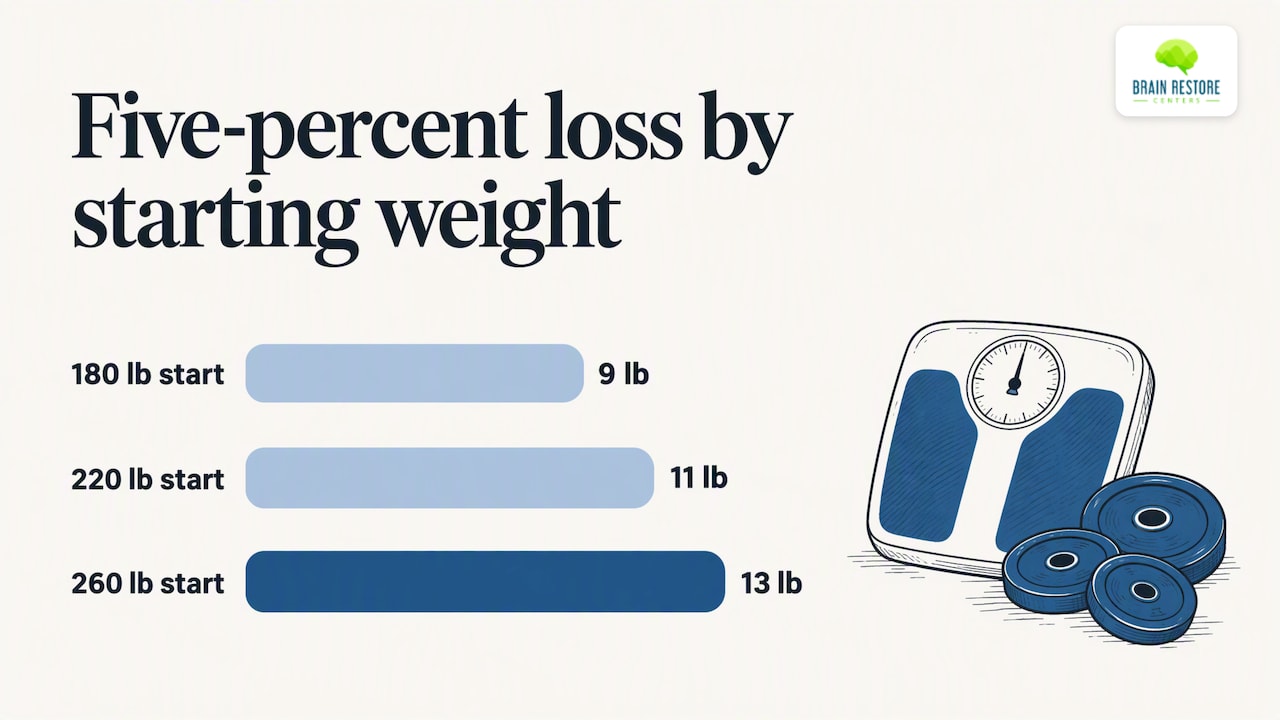
An obesity panel presented to the American College of Physicians says an initial goal of 5% weight loss is expected in 6 to 8 months, with lifestyle intervention typically producing 1 to 2 pounds per week.
Here is what that means in numbers. At 220 pounds, 5% is 11 pounds. That may sound small, but it is a meaningful first milestone, and it is the pace that tends to be sustainable.
| Starting weight | 5% loss | Typical timeframe |
|---|---|---|
| 180 lb | 9 lb | 6 to 8 months |
| 220 lb | 11 lb | 6 to 8 months |
| 260 lb | 13 lb | 6 to 8 months |
The guidance is also clear that this is long-term work. The American Association of Clinical Endocrinology describes obesity as a chronic disease that requires long-term treatment, and says care should optimize health, not focus only on weight or BMI. The VA/DoD provider guide adds that treatment should be individualized by severity, comorbidities, functional impact and patient preferences, with shared decision-making and ongoing adjustment.
So measure more than the scale. Better energy, steadier blood sugar, improved sleep, less pain, lower blood pressure and clearer thinking all count as progress.
We see weight as one signal from a body that is trying to tell us something. When someone comes in saying “I do everything right and nothing works,” we believe them, and we start by looking for what is in the way.
Our clinic brings together functional medicine, chiropractic care, laser therapy, spinal decompression and rehabilitation, with more than 50 years of combined clinical experience on the team. That mix matters for weight. A person whose knee or back pain keeps them from walking, whose brain fog makes meal planning feel impossible, or whose thyroid and hormones are out of balance needs more than a meal plan. Panels of obesity specialists describe multidisciplinary care as leading to improved outcomes, and we agree with that from what we see in our own patients.
We also think the best plan is one you can picture living with in five years. That means small, specific changes, honest conversation about medication when it fits, and regular check-ins so the plan changes as you do. If you want to see how coaching can complement medical care, this piece on functional medicine and coaching gives another angle on where daily accountability helps.
Most of all, we want you to leave feeling that your body is not working against you. It is working with the information it has, and together we can give it better information.
— Chad
If you live in the Meridian or Boise area and want a structured evaluation, our Metabolic Reset Weight Loss Program begins with a Metabolic Evaluation, so your plan starts from your own history and findings. Pain or chronic symptoms that make exercise difficult can be addressed through our Health Restore Program and our chiropractic care services. Some patients also ask about non-invasive options for stubborn areas, which we describe on our fat reduction page. To start, you can book an appointment online.
Not every practice that uses the label offers the same quality of care. Use these checks before you commit:
See your physician promptly before starting if you are pregnant, have diabetes, take blood thinners or have a heart condition, and tell any provider about every supplement you use, since some interact with medications.
Often, yes, particularly if hidden contributors like poor sleep, stress, a thyroid problem or a medication effect are part of the picture. The approach works best when it combines a thorough evaluation with proven lifestyle care, and with medication when your clinician judges it appropriate. No provider can promise a specific result.
Coverage varies by plan and by what is billed, so call your insurer before you book. Ask whether the evaluation, lab work and any medication are covered. Our team can tell you how our services are billed when you call or book.
With lifestyle care, 1 to 2 pounds per week is typical, and a first target of 5% over 6 to 8 months is common in clinical guidance. Faster loss is not automatically better, and rapid-loss products carry real risks.
Not necessarily. Many people make meaningful progress with lifestyle care and treatment of contributing conditions. If your BMI and health history meet the criteria, a prescriber may discuss medication as an option alongside lifestyle changes.
The terms overlap heavily. Both look at the whole person and combine conventional and complementary tools. What matters more than the label is whether the plan is individualized, evidence-based and followed over time.
Questions about your next step?
Our Meridian team can help you understand the evaluation process and which care options may fit your needs.
Schedule a ConsultationPrefer to speak with our team? Call 208-639-1397