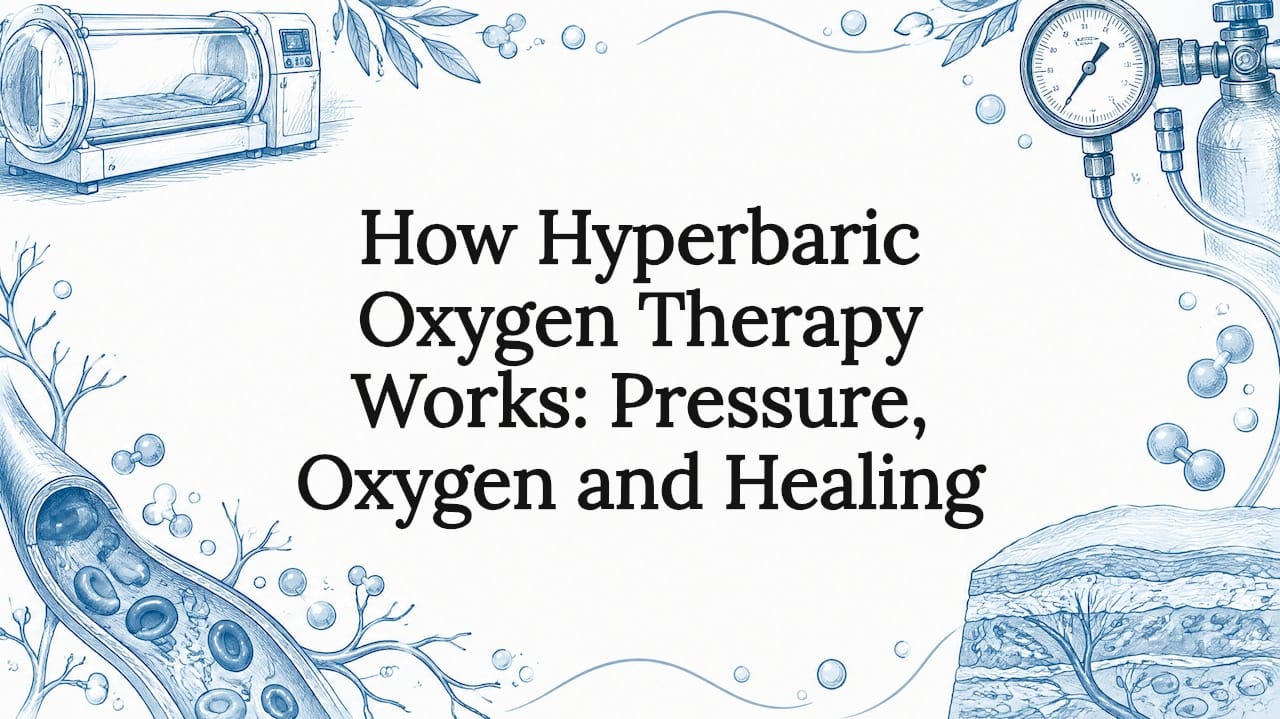
How Hyperbaric Oxygen Therapy Works: Pressure, Oxygen and Healing
October 26, 2026

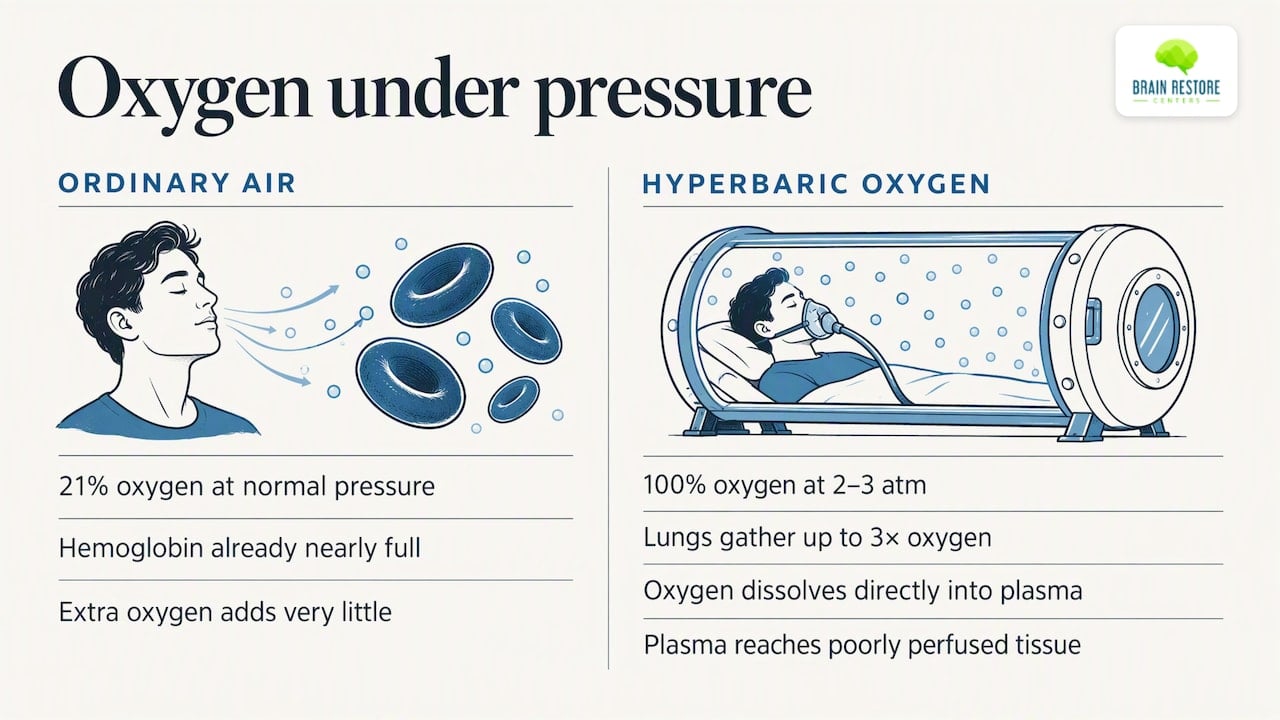
Hyperbaric oxygen therapy (HBOT) works by combining two things: 100% oxygen and air pressure higher than normal. You rest inside a sealed chamber and breathe pure oxygen while the pressure is raised. That pushes far more oxygen into your blood plasma than you can take in at normal pressure, so tissue that is injured or short on oxygen receives more of what it needs to repair itself.
That is the short answer. The longer one matters, because HBOT is a well-established medical treatment for some conditions and still under study for others, including several that brain-health patients ask us about. Below, we walk through the physics, the body’s response, a typical session, the risks and the honest state of the evidence.
The air you breathe is about 21% oxygen, according to Harvard Health. In a hyperbaric chamber, you breathe 100% oxygen while the surrounding pressure is increased. MedlinePlus explains that this lets your lungs gather up to three times more oxygen than they would at normal pressure.
To see why that matters, think about how oxygen normally travels. Almost all of it rides on hemoglobin inside red blood cells. Hemoglobin is already close to full when you breathe regular air, so breathing more oxygen at normal pressure adds very little.
Pressure changes the picture. Under higher pressure, oxygen dissolves directly into the liquid part of your blood, the plasma. A peer-reviewed overview in PMC describes pure oxygen at increased pressure, generally 2 to 3 atmospheres, as producing raised oxygen levels in both the blood (hyperoxemia) and the tissue (hyperoxia). The physics behind it is covered in the Hyperbaric Physics chapter on NCBI Bookshelf.
Dissolved oxygen has a practical advantage. Plasma can travel where red blood cells struggle to go: past swollen tissue, narrowed vessels or damaged areas with poor circulation. Oxygen-rich plasma reaches tissue starved for oxygen, which is how Johns Hopkins describes the benefit for wounds.
Researchers describe several overlapping effects. Think of them as different ways the same extra oxygen helps a struggling area.
Healing is energy-hungry. Cells that make collagen, build new blood vessels and fight bacteria all need oxygen. When injury or disease cuts off the supply, repair stalls. Raising the dissolved oxygen level gives those cells fuel again. This is the main logic behind HBOT for slow-healing wounds.
Some white blood cells use oxygen to kill bacteria. In low-oxygen tissue they work poorly. Higher oxygen levels help them do their job, and certain bacteria that thrive without oxygen struggle in an oxygen-rich environment. That is why HBOT is used alongside antibiotics and surgery for specific serious infections.
Pressure and oxygen together can shrink swelling in some settings. In carbon monoxide poisoning, high-pressure oxygen helps push the gas off hemoglobin so blood can carry oxygen again.
The overview in PMC also discusses how repeated exposure may trigger cell-signaling changes linked to new blood vessel growth and reduced inflammation. These mechanisms are an active area of research, and much of what we know comes from lab and animal work, so they should not be read as proof of benefit for any one condition.
Understanding the process takes away much of the uncertainty. Here is what most sessions involve.
Pressure levels vary. The Undersea and Hyperbaric Medical Society (UHMS) defines a hyperbaric session as breathing physician-prescribed medical-grade oxygen at a pressure of at least 2.0 ATA. The number of sessions depends on the condition and the protocol your physician sets.
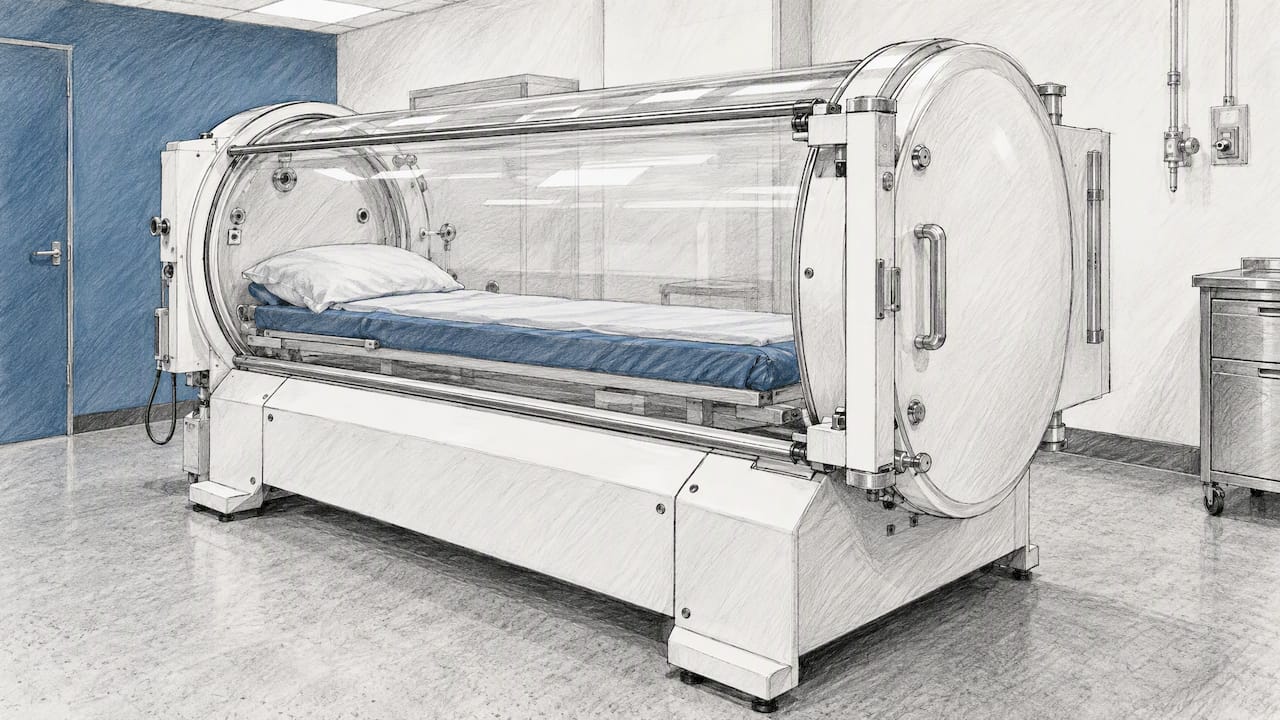
A monoplace chamber holds one person, who breathes the oxygen that fills the chamber. A multiplace chamber holds several people, who breathe oxygen through a mask or hood. The treatment principle is the same, and the NCBI physics chapter covers both designs.
This is the part of the conversation we think patients deserve to hear plainly. HBOT has clear, accepted uses. It also gets promoted for conditions where the science has not caught up.
Harvard Health notes that HBOT is FDA-approved for a defined list of conditions. The UHMS maintains its list of accepted indications, which includes carbon monoxide poisoning, decompression sickness and refractory osteomyelitis (a stubborn bone infection). Wound-care centers also use it for certain diabetic foot ulcers and radiation injury.
Many people reading this want to know what hyperbaric oxygen does to the brain. The honest answer is that the research is still developing.
A U.S. evidence brief on HBOT for traumatic brain injury and PTSD describes HBOT as explored for people with persistent symptoms, which means it is being studied, not settled. Across studies, results have been mixed. Some show trends toward better specific cognitive measures, such as verbal memory, but pooled analyses have not found a consistent short-term benefit compared with control groups. Protocols differ widely in pressure, session length and frequency, which makes it hard to identify an optimal regimen. A review of HBOT in adults with mental illness reached a similarly cautious place.
Harvard Health also warns that claims about HBOT for conditions like dementia or depression lack rigorous scientific support. We agree with the principle behind that caution: you should be told which uses are established and which are experimental before you commit time and money.
If you want to read more on our own pages, we cover the benefits with the strongest evidence, what is known about mental health and HBOT for concussion.
HBOT is generally safe when it is delivered at the prescribed pressure in an accredited facility. Possible side effects include:
Tell your care team before treatment if you have a cold or congestion, a history of lung disease or collapsed lung, ear surgery, a fever, or if you are pregnant. Do not bring lighters, electronics, petroleum-based products or other flagged items into the chamber.
We see patients who have been told, or have read online, that a chamber will fix their foggy thinking or lingering concussion symptoms. We understand the hope behind that. Living with brain fog, memory slips or slow recovery after a head injury is exhausting, and you deserve real answers.
Here is how we think about it. The brain is complex, and symptoms like fatigue, poor focus or anxiety rarely have one cause. That is why our clinic combines several tools under one roof: neurofeedback, low level laser therapy, functional medicine, chiropractic care, progressive rehab and hyperbaric oxygen therapy. Oxygen delivery is one piece of brain health. Sleep, inflammation, nutrition, posture, how your brain regulates its own activity and how you move all matter too.
So we start with evaluation, not a chamber. We look at your history and symptoms and build a plan around what you need, and we are straightforward that evidence for HBOT is strongest in its established medical uses and still emerging for conditions like TBI. We would rather set expectations honestly and track your progress than promise a result no one can guarantee. You should always be able to ask us why a therapy is in your plan and what we are measuring to know whether it helps.
— Chad
Because research on HBOT for brain-related symptoms is mixed, many patients do best when oxygen therapy is one part of a personalized program, not the whole program. A plan might look like this:
| Goal | Approaches that may be combined |
|---|---|
| Brain fog, memory concerns | Brain health consultation, neurofeedback, functional medicine review |
| Concussion recovery | Symptom-guided rehab, neurofeedback, photobiomodulation, HBOT where appropriate |
| Neck, back or disc pain | Spinal decompression, chiropractic care, progressive rehab |
| Inflammation and metabolic health | Functional medicine, nutrition, targeted programs |
If you are curious about the light-based option, our article on photobiomodulation for brain injury answers common science questions. For how brain training works, see our guide to how many neurofeedback sessions people need.
If you live in the Meridian, Idaho area and want to know whether hyperbaric oxygen therapy belongs in your care, we can help you sort that out. Our Brain Restore Program starts with a brain health consultation so we can understand your symptoms and goals before recommending anything. You can read about everything we offer, including hyperbaric oxygen therapy, on our main site, or schedule an appointment directly.
Whether you choose us or another provider, these questions protect you:
A good provider answers these without hesitation. Research emphasizes that protocols vary so widely that clear, individualized planning matters.
It raises the amount of oxygen dissolved in your blood plasma, which increases oxygen delivery to tissue. That supports healing, helps white blood cells fight some infections and can help clear carbon monoxide from the blood. Effects depend on the condition being treated and the protocol used.
The chamber is sealed and slowly pressurized, typically to about two to three times normal air pressure. You breathe 100% oxygen, either filling the chamber or through a mask or hood. At the end, pressure is lowered gradually so your body adjusts comfortably.
Not yet for most brain-related uses. Evidence for chronic mild TBI and PTSD is mixed, with some promising trends but no consistent benefit across pooled studies, per the NCBI evidence brief. Talk with a physician about your specific situation before relying on it.
Most people feel only ear pressure during pressurization, which eases with swallowing or yawning. Tell the chamber operator right away if the pressure becomes painful so they can slow or pause the process.
It depends on the condition and on your physician’s protocol. Established uses follow set courses, while investigational uses vary widely between studies. You can read our overview on how many HBOT sessions people typically need and discuss a plan at your evaluation.
Questions about your next step?
Our Meridian team can help you understand the evaluation process and which care options may fit your needs.
Schedule a ConsultationPrefer to speak with our team? Call 208-639-1397


