QEEG Boise: Brain Mapping, Providers & What to Expect
July 28, 2026

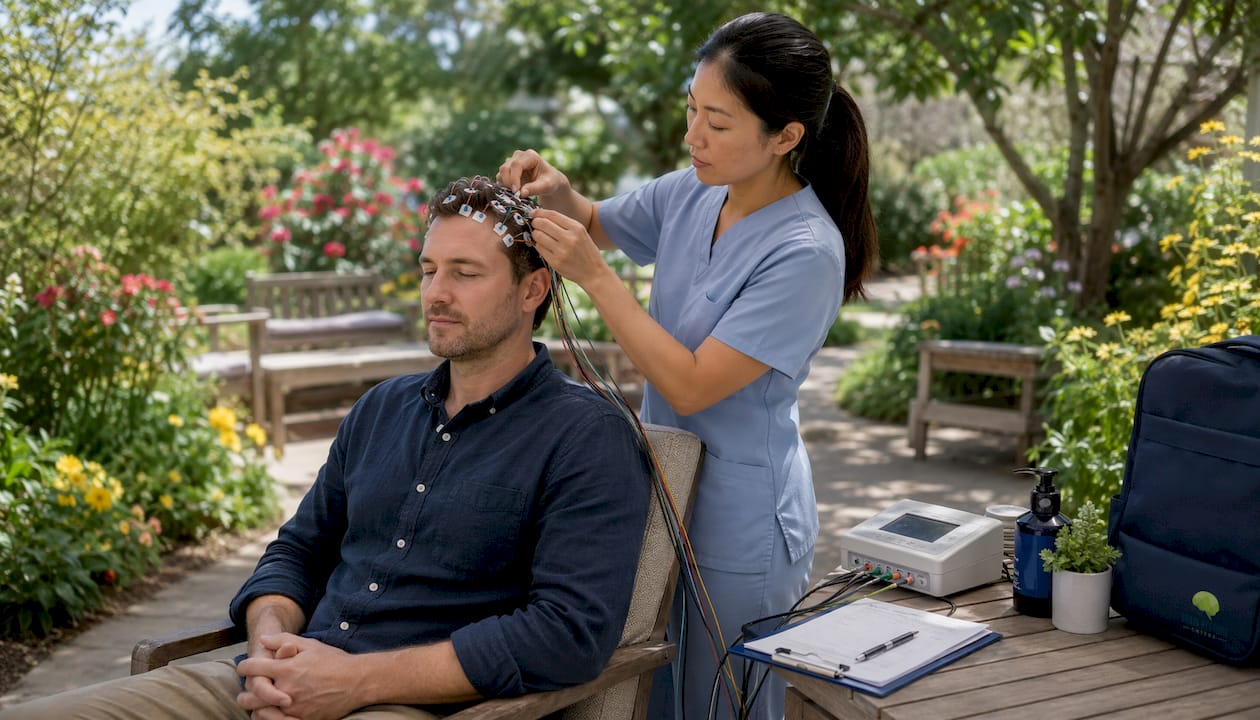
Quantitative EEG (qEEG) is a noninvasive brain-mapping test that records your brain’s electrical activity and compares it against normative databases, giving clinicians a data-driven foundation for personalized neurofeedback. If you’re in the Boise area and want to explore this, Brainrestoremeridian in Meridian, Idaho offers qEEG assessments and neurofeedback as part of a multidisciplinary brain health program. You can reach them by phone or through their online contact form to request a consult before committing to a full assessment.
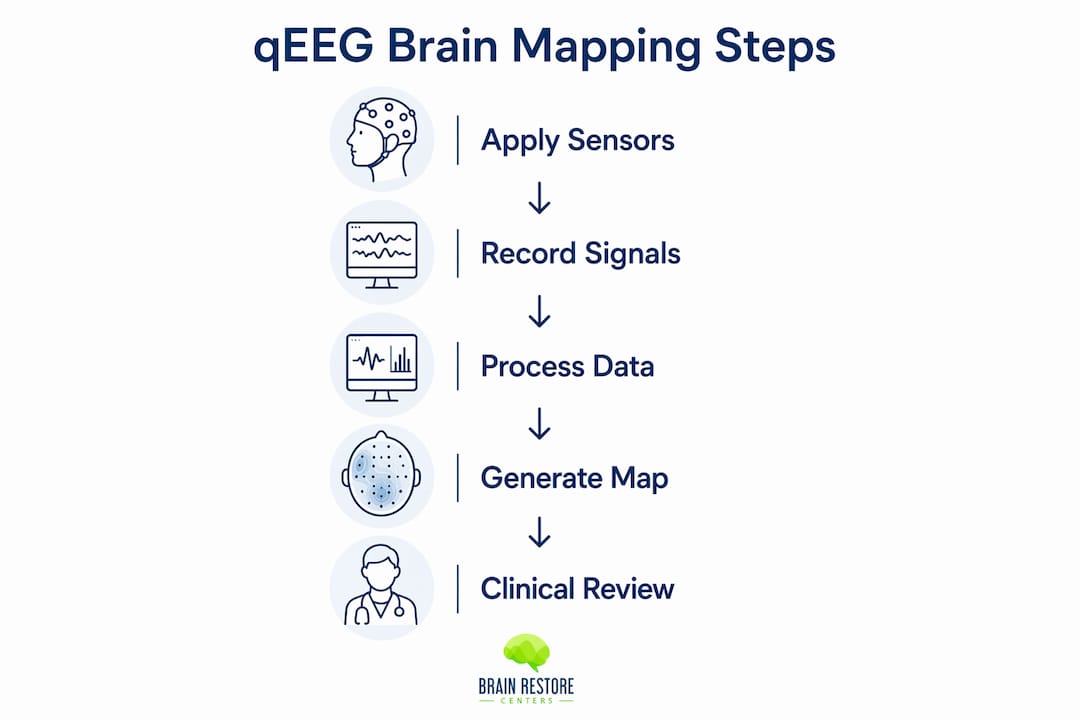
qEEG starts with a passive recording of your brain’s electrical signals through sensors placed on your scalp. No electrical current enters your brain. The equipment listens only. A fitted elastic cap holding around 20 sensors collects data while you sit quietly, sometimes with eyes open and sometimes closed, occasionally during simple tasks. The whole recording portion typically takes 30–60 minutes.
Once recorded, the raw data is processed into a brain map that shows activity across specific frequency bands. Clinicians then compare your individual patterns to a normative database of healthy brains at similar ages. Deviations from that norm become the clinical targets for neurofeedback training.
| Recorded Signal | What It Represents | Clinical Relevance |
|---|---|---|
| Delta waves (slow) | Deep sleep and recovery processes | Excess while awake may suggest TBI or cognitive fatigue |
| Theta waves | Drowsiness, inward focus | Elevated in frontal areas often linked to attention difficulties |
| Alpha waves | Relaxed, alert wakefulness | Asymmetry or suppression may relate to mood and anxiety patterns |
| Beta waves | Active thinking, concentration | Excess high-beta often associated with anxiety or hyperarousal |
| Coherence patterns | Communication between brain regions | Disrupted coherence may reflect post-concussion or learning challenges |
One important note: qEEG is a clinical input, not a standalone diagnosis. A skilled clinician reads the map alongside your history, symptoms, and other assessments before designing a treatment plan.
qEEG brain mapping helps clinicians identify patterns associated with a range of conditions. The list below reflects the most common reasons people in Boise seek this type of assessment.
Realistic goals include improved self-regulation, better attention and sleep quality, and reduced symptom burden. Neurofeedback is not a cure. Think of it as structured exercise for your brain’s regulatory systems, with measurable progress over time. Both pediatric and adult patients are commonly referred by primary care physicians, mental health providers, and rehabilitation specialists. For pediatric developmental concerns, child development assessments can complement a qEEG evaluation.
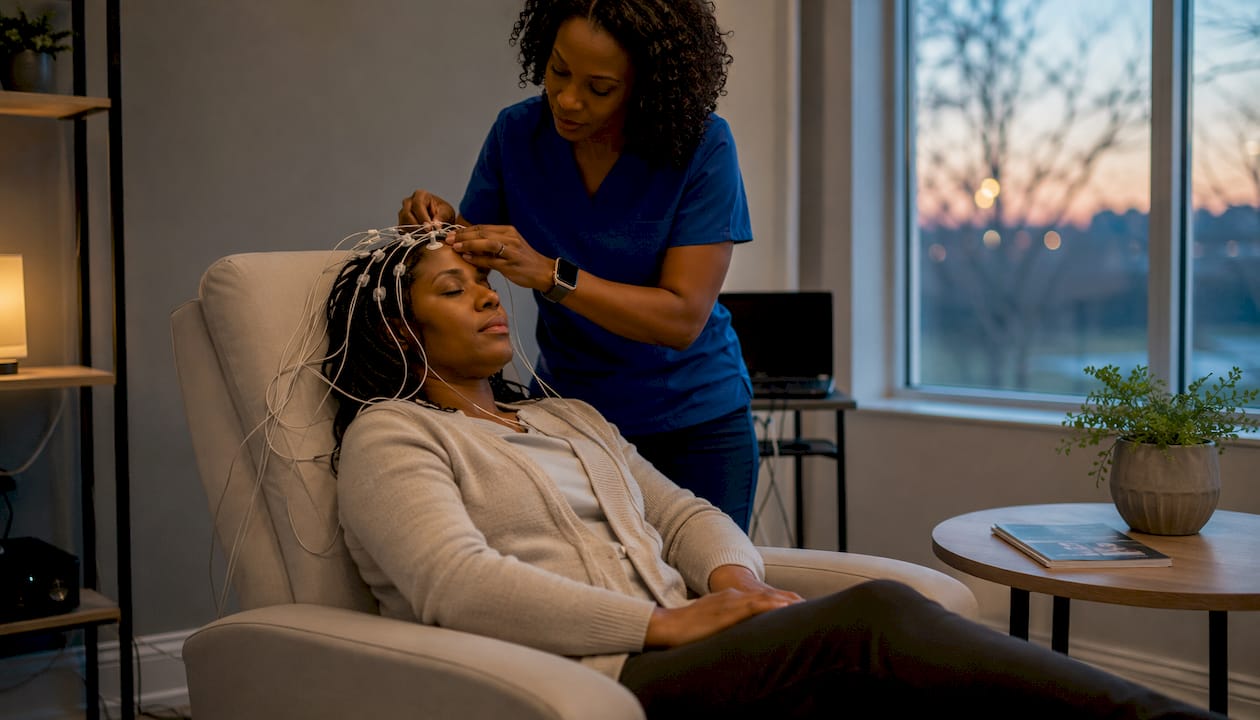
Your first visit typically begins with a detailed intake: medical history, current medications, sleep patterns, and your primary concerns. That context shapes how the clinician interprets your brain map. The qEEG recording itself follows, with a staff member fitting the sensor cap, applying a small amount of conductive gel to each electrode site, and guiding you through the recording conditions.
After the recording, the clinician processes the data and produces a written report. This report identifies deviations from normative patterns and proposes specific neurofeedback training targets. You’ll review this together before any treatment begins, so you understand what the map shows and what the proposed plan addresses.
A neurofeedback session itself is straightforward. You sit comfortably, sensors are placed on one or two scalp sites, and you watch a screen or listen to audio that shifts in real time based on your brainwave activity. When your brain moves toward the target pattern, the feedback rewards you. Sessions typically run 20–60 minutes. Progress is tracked through symptom rating scales, clinician observation, and repeat qEEG assessments at appropriate intervals.
Most patients begin with a more intensive block of sessions, then taper to a maintenance schedule as gains consolidate. Clinicians generally recommend continuing training for 5–10 sessions beyond initial symptom improvement to reduce the risk of regression. Some Boise-area providers also offer remote neurofeedback options, allowing you to train from home under clinician supervision, which can be a practical fit for busy schedules.
The cost structure for qEEG assessments and neurofeedback usually involves two separate components: a one-time qEEG assessment fee and per-session or package pricing for the neurofeedback training that follows. Specific pricing varies by clinic and is not publicly listed for most Boise-area providers, so confirming costs directly when you book is the most reliable approach.
Insurance coverage is inconsistent. Many plans treat neurofeedback as out-of-network or do not cover it as a primary benefit. Before your appointment, contact your insurer and ask specifically about:
Many clinics offer package pricing that reduces the per-session cost for patients paying out of pocket. Some also offer a free or low-cost initial phone consult, which is a practical way to ask about payment options before committing. Brainrestoremeridian can walk you through what to expect financially when you call or submit a contact form.
Preparation matters more than most patients realize. Poor data quality from avoidable artifacts can affect the accuracy of your brain map. Follow these steps before your appointment.
Avoid the night before and morning of your scan:
Logistics to handle before you arrive:
Pro Tip: Bring a brief written note about recent major stressors, significant sleep disruptions, or any medication changes in the past two weeks. Small behavioral shifts can alter baseline recordings, and this context helps your clinician interpret the map accurately rather than chasing artifacts.
Preparation instructions from clinical qEEG providers consistently emphasize clean, dry hair and a medication list as the two most impactful steps.
qEEG is noninvasive and painless. The sensors record electrical activity; they do not send any signal into your brain. There is no radiation, no sedation, and no known physical risk from the recording itself. Neurofeedback, when delivered by a trained clinician, carries a low risk profile. Some patients report temporary fatigue or mild headaches after early sessions as their nervous system adjusts, but serious adverse effects are rare.
The evidence base varies by condition. ADHD and insomnia have the most consistent research supporting neurofeedback as a meaningful intervention. Anxiety and PTSD show promising results in multiple studies, though the literature is more heterogeneous. Evidence for chronic pain and some mood disorders is more mixed, and research is ongoing. Experts consistently frame neurofeedback as a learning-based self-regulation process, not a one-time medical cure. Outcomes vary across individuals, and the number of sessions needed differs based on the condition, severity, and how consistently you train.
Outcomes are tracked through validated symptom scales, clinician observation, and repeat qEEG assessments when clinically appropriate. This measurement approach is what separates evidence-informed neurofeedback from generic wellness claims. For patients managing cognitive conditions, long-term neurofeedback benefits are an active area of clinical interest.
The quality of your qEEG experience depends heavily on the clinician interpreting the map. A brain map is only as useful as the expertise behind it.
What to prioritize:
Questions to ask before booking:
Red flags to watch for:
You can verify clinician credentials through the IQCB practitioner directory, which lists certified qEEG professionals by location.
Brainrestoremeridian, located in Meridian just minutes from Boise, offers qEEG brain mapping as the foundation of a personalized neurofeedback plan. The clinic’s model is genuinely multidisciplinary: neurofeedback is integrated with photobiomodulation, functional medicine, chiropractic care, and hyperbaric oxygen therapy, so your brain health is addressed from multiple angles rather than a single modality.
Their qEEG process begins with a thorough intake and medical history review, followed by the brain mapping assessment. The resulting report guides an individualized neurofeedback training plan with specific targets and measurable checkpoints. Clinicians track your progress across sessions and adjust protocols as your brain responds. This integrated brain health approach is particularly well-suited for patients dealing with post-concussion symptoms, cognitive fatigue, anxiety, or ADHD who want more than a single-therapy program.
To get started, you can call the clinic directly or submit an inquiry through their website. Many patients begin with a brief phone consult to discuss their symptoms and confirm that qEEG is an appropriate next step before scheduling the full assessment. Brainrestoremeridian also supports patients interested in how neurofeedback complements chiropractic care as part of a broader recovery plan.
The Treasure Valley has a growing number of clinics offering brain mapping and neurofeedback services, giving you options to compare before committing.
Treasure Valley Neurotherapy is a Boise-area provider that lists qEEG brain mapping and neurofeedback among its core services, including remote neurofeedback training for patients who prefer to train from home under clinician oversight. Their local listing confirms their Treasure Valley location and service availability.
Boise Neurofeedback offers neurofeedback therapy in the Boise area. Their website at boiseneurofeedback.com provides service details and contact information for prospective patients.
ICN Idaho lists qEEG brain mapping as a service at icnidaho.com, with information on their assessment process and clinical approach.
North Idaho Neurotherapy Clinic covers qEEG and neurotherapy services, primarily serving the northern Idaho region, which may be relevant for patients in the broader state.
Elevation Health in the Boise area includes neurofeedback therapy among its services, with details available at elevationhealthcenter.com.
When comparing providers, use the credential and report-quality checklist from the section above. A free phone consult, available at several Boise-area clinics, is the lowest-friction way to assess fit before you commit to a full qEEG assessment.
Connecting with others navigating similar brain health challenges can make a real difference in staying consistent with neurofeedback training. While Boise does not currently have a publicly listed, dedicated neurofeedback support group, several resources are worth knowing.
Online communities such as the Neurofeedback subreddit and the ISNR (International Society for Neurofeedback and Research) patient resources offer peer discussion, protocol questions, and shared experiences from people at various stages of training.
Local mental health networks in the Treasure Valley, including those connected to the Idaho Behavioral Health Plan, sometimes facilitate peer support groups for anxiety, ADHD, and PTSD, which overlap significantly with the population using neurofeedback.
Clinic-based support is often the most practical option. Brainrestoremeridian and other local providers typically offer ongoing clinician check-ins, progress reviews, and guidance on what to expect between sessions. Asking your provider whether they host any patient education events or group Q&A sessions is worth a direct inquiry.
For families navigating pediatric brain health, telehealth behavioral therapy resources can complement in-clinic neurofeedback and provide additional support between appointments.
qEEG-guided neurofeedback is a data-driven, noninvasive approach to brain self-regulation that works best when delivered by credentialed clinicians who track measurable outcomes across sessions.
| Point | Details |
|---|---|
| qEEG is noninvasive | Sensors record only; no electrical current enters the brain, making it safe for most patients. |
| Strongest evidence | ADHD and insomnia have the most consistent research support; outcomes vary by condition and individual. |
| Prepare carefully | Arrive with clean, dry hair and no hair products; bring a medication list and recent sleep notes. |
| Insurance varies | Many plans don’t cover neurofeedback; ask your insurer about CPT codes and pre-authorization before booking. |
| Brainrestoremeridian | Offers qEEG assessments and integrated neurofeedback in Meridian, with a free phone consult as a first step. |
Most people who walk into a neurofeedback clinic for the first time are hoping for a clear answer: “Is this going to help me?” The honest answer is that the qEEG map tells you where to start, not where you’ll end up. What actually determines outcomes is the quality of the measurement process that follows.
Clinics that skip repeat qEEG assessments, rely only on subjective patient reports, or never adjust protocols based on data are not practicing evidence-informed neurofeedback. They’re running a program. The distinction matters because neurofeedback is a learning process, and learning requires feedback loops. A brain that’s training without objective checkpoints is like an athlete who never checks their form. Progress may still happen, but you won’t know why, and you won’t catch a plateau early enough to correct it.
The overlearning principle is also underappreciated. Continuing training for those additional sessions after symptoms improve is not padding the bill; it’s how the brain consolidates new regulatory patterns so they hold under stress. Patients who stop the moment they feel better are the ones most likely to call six months later saying the gains faded. The clinicians who tell you this upfront, before you’ve paid for a single session, are the ones worth trusting.
Brainrestoremeridian offers a direct path from curiosity to clarity. Rather than navigating a generic referral process, you can contact the clinic directly to discuss your symptoms, ask whether qEEG is an appropriate starting point, and schedule your brain mapping assessment in Meridian, just minutes from Boise.
The clinic’s multidisciplinary model means your qEEG results don’t sit in isolation. They inform a personalized plan that may include neurofeedback, photobiomodulation, functional medicine, or chiropractic care, depending on what your brain map and health history indicate. If anxiety is a primary concern, their neurofeedback for anxiety program is a natural starting point to review before your consult.
Insurance coverage for qEEG and neurofeedback varies, and Brainrestoremeridian can help you understand what questions to bring to your insurer. To take the next step, call the clinic or use the contact form at brainrestoremeridian.com to request your consult.
| Resource | What It’s For |
|---|---|
| IQCB Practitioner Directory | Verify that a clinician holds recognized qEEG certification before booking |
| qEEG Prep Instructions (PDF) | Detailed pre-appointment checklist covering hair products, medications, and logistics |
| Treasure Valley Neurotherapy | Local Boise-area provider page with service descriptions and consult options |
| Neurofeedback FAQ | Plain-language answers on safety, session structure, and what to expect |
| Brainrestoremeridian | Meridian clinic offering qEEG, neurofeedback, and integrated brain health services near Boise |
This article is general information, not medical or clinical advice. Confirm current service details, costs, and clinical suitability with a qualified provider before making any healthcare decision.