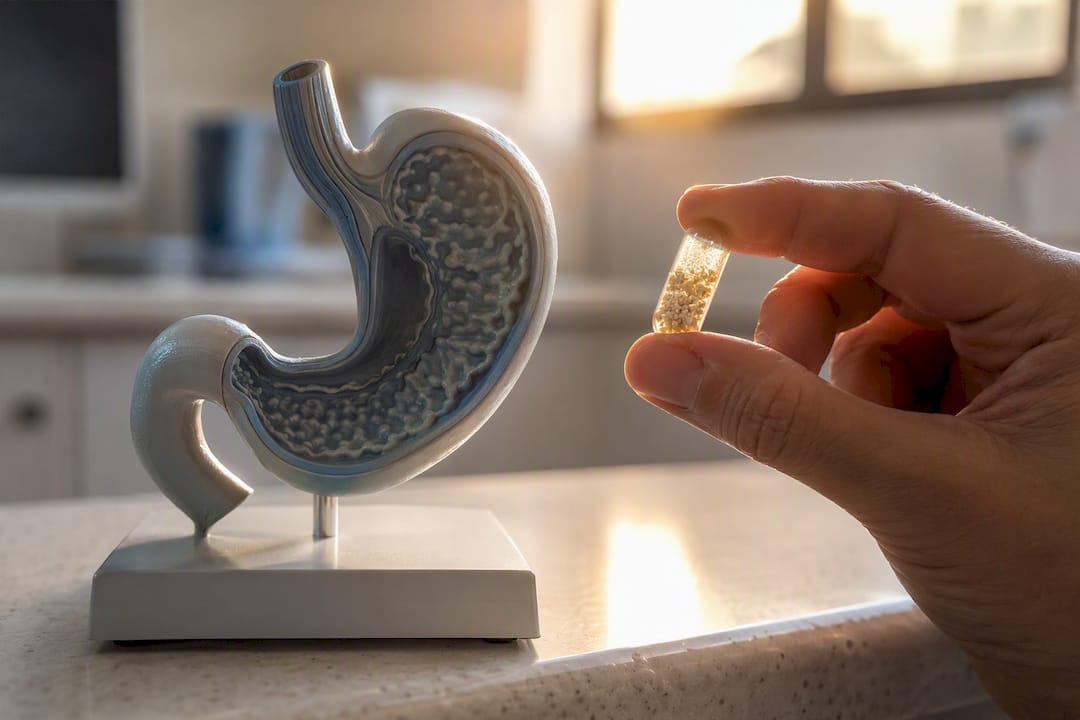
Probiotics can sometimes ease bloating, nausea, and irregularity tied to delayed gastric emptying, but they are not a cure for gastroparesis, and the evidence behind them is strain-specific rather than universal. If you are exploring probiotics gastroparesis research because your gastroenterologist mentioned it, or because you found a promising headline, here is the honest picture before you spend money on a supplement.
The research that exists points to a small number of studied strains, not a general “probiotic” category. Some trials show modest improvement in gastric emptying markers or symptom scores. Others show nothing conclusive. What none of them show is a strain that reverses gastroparesis or replaces standard treatment.
Before trying anything, keep these points in mind:
- Probiotics work best as an adjunct, alongside prokinetic medications, dietary texture changes, and clinical monitoring, not as a standalone fix.
- Benefits reported in trials are tied to specific strains like Lactobacillus gasseri OLL2716, not to probiotics broadly.
- Talk with your clinician first, especially if you have diabetes-related gastroparesis, an immune condition, or take medications that interact with gut bacteria.
Key Takeaways
Probiotics may offer modest, strain-specific symptom relief for some people with delayed gastric emptying, but they work only as a monitored adjunct to established gastroparesis care, never as a substitute for it.
| Point |
Details |
| Not a cure |
Probiotics may ease bloating and nausea for some patients but don’t reverse delayed gastric emptying. |
| Strain specificity rules |
LG21, L. rhamnosus GG, and multi-strain Lactobacillus each have distinct, limited evidence, not interchangeable results. |
| Delivery technology matters |
Acid-resistant or enteric-coated formulations matter more here since food sits longer in the stomach. |
| Time-box your trial |
Use a probiotic consistently for 4 to 12 weeks while logging nausea, fullness, bloating, and bowel changes. |
| Know the red flags |
Immunocompromised patients and those on prokinetic medications like erythromycin should coordinate with their clinician first. |
This article is general information, not a substitute for advice from a qualified doctor. Consult a qualified healthcare professional about your own circumstances before acting on anything here.
Table of Contents
What the Research on Probiotics for Gastroparesis Actually Shows
The evidence base is real but thin. A narrative review examining microbiota and gastroparesis found strain-specific signals linking certain Lactobacillus species to improved gastric emptying and symptom relief in small trials, while flagging that most studies suffer from limited sample sizes and inconsistent methodology. That combination, promising direction paired with weak statistical footing, describes almost every study in this space.
Three lines of evidence matter most for anyone weighing a probiotic treatment for gastroparesis:
- The LG21 yogurt trial. A randomized, double-blind, placebo-controlled study tested Lactobacillus gasseri OLL2716 in people with mild to moderate delayed gastric emptying over 12 weeks. The trial did not hit statistical significance on its primary endpoint, but it recorded an odds ratio of 4.1 for a defined symptom improvement, with a wide confidence interval (0.8 to 20.2) that reflects the small sample of 28 participants. Secondary measures suggested changes in autonomic nervous system function, hinting at a gut-brain mechanism rather than a direct mechanical push on the stomach.
- A multi-strain crossover trial. Small crossover research on multi-strain Lactobacillus capsules suggested age-dependent effects, with older adults showing more improvement in gastric emptying than younger participants, though these findings are preliminary. That split suggests probiotics may interact with age-related changes in gut motility or microbiome composition, though the sample size was too small to generalize.
- A systematic review of seven trials. A systematic review covering seven trials on probiotics and gastroparesis symptoms reported potential benefits from Lactobacillus strains and multi-strain preparations on motility and symptom scores, while explicitly noting mixed study quality and the need for larger, better-controlled trials before anyone can call this a standard treatment.
Quick take: across these studies, no trial enrolled more than a few dozen participants, and none used identical measures of gastric emptying, so comparing them directly is difficult. What holds up across the literature is the direction of the signal, not its size.
Lactobacillus rhamnosus GG shows up in a different context. It has clinical evidence in older adults related to nutrient absorption and gut motility support, which researchers cite as a reason to study it further in gastroparesis specifically, even though direct gastroparesis trials on GG remain limited. Taken together, the studies support cautious optimism about certain strains, not a blanket endorsement of probiotics as gastroparesis treatment.
How Probiotics Might Influence Gastric Motility
Nobody has fully mapped the mechanism, but three plausible pathways come up repeatedly in the research.
- Gut-brain signaling. The vagus nerve carries information both ways between your gut and brain. Changes in gut bacteria can alter that signaling, and the autonomic markers observed in the LG21 trial suggest this route may matter more than direct muscular stimulation of the stomach.
- Microbial metabolites. Certain bacterial byproducts appear to influence antral contractions, the squeezing motions that move food out of the stomach, and may reduce local inflammation that contributes to sluggish emptying.
- Cross-condition evidence. Research on probiotics in irritable bowel syndrome and functional dyspepsia shows Bifidobacterium and Lactobacillus strains improving motility and mucosal immune responses, a mechanistic overlap that makes their use in gastroparesis biologically plausible even where direct trials are scarce.
Pro Tip: If a product doesn’t state that it survives stomach acid or lists no strain identifier beyond “Lactobacillus,” treat the marketing claim skeptically. Strain-level specificity is the difference between a studied intervention and a guess.
Stomach acid resistance matters more here than in ordinary digestion. Food sits in a gastroparesis stomach far longer than normal, giving acid more time to kill live organisms before they ever reach the intestine. That is why delivery technology is a bigger variable in gastroparesis than it is for someone with typical gut transit.
Which Probiotic Strains Have Real Evidence Behind Them
Strain identity is the single biggest factor separating a probiotic that might help from one that is just marketing. Here is what the named strains in gastroparesis-adjacent research actually show.
- Lactobacillus gasseri OLL2716 (LG21). The best-studied strain for this specific condition. The 12-week RCT produced an odds ratio of 4.1 for improvement under a defined threshold, without reaching significance on the primary outcome. This is a real signal in mild to moderate delayed emptying, not proof of efficacy.
- Lactobacillus rhamnosus GG. One of the most researched probiotic strains across gastrointestinal conditions generally, with evidence in older adults tied to nutrient absorption and motility support. Direct gastroparesis data on GG specifically remains sparse, so its relevance here is inferred rather than confirmed.
- Multi-strain Lactobacillus formulations. Small crossover trials found age-dependent effects, with adults aged 41 to 60 showing significant gastric-emptying improvement while younger adults did not. That is an intriguing but preliminary finding, not a dosing recommendation.
- Bifidobacterium species (B. infantis, B. bifidum) and Lactobacillus acidophilus. These strains have shown symptom benefits in related functional gastrointestinal disorders like IBS and functional dyspepsia. They lack gastroparesis-specific trial data, but the mechanistic overlap (motility modulation, mucosal support) makes them reasonable candidates for future study.
None of this adds up to a single “best probiotic for gastroparesis.” It adds up to a short list of candidates worth discussing with your care team, each with a different evidence trail and a different level of confidence behind it.
How to Choose and Trial a Probiotic Safely
If you and your clinician decide a trial is reasonable, treat it like a structured experiment, not a blind purchase.
- Check for a named, studied strain. Look for an explicit strain identifier (like OLL2716 or GG), not just a species name. Genus and species alone tell you almost nothing about what a product actually does.
- Look for viability and testing claims. A credible product states colony-forming unit counts at the time of consumption, not just at manufacture, and lists third-party testing for potency and purity.
- Favor delayed-release or enteric-coated formulations. Given how long food and supplements sit in a gastroparesis stomach, a product built to survive acid exposure has a better chance of reaching the intestine intact.
- Decide between food-based and supplement forms. LG21-style fermented yogurt delivers the probiotic alongside a soft, low-residue food matrix that may suit a gastroparesis diet better than a large capsule. A texture-adjusted approach to digestive symptoms often matters as much as the strain itself.
- Set a trial window and keep a log. Give any probiotic 4 to 12 weeks of consistent daily use before judging it. Track nausea, early fullness, bloating, and bowel frequency in a simple daily log.
- Review results with your clinician. Bring your log to your next appointment. If symptoms are unchanged or worse after a full trial period, that is useful data, not a failure.
Pro Tip: Take your probiotic at the same time each day, ideally with a meal, since consistency affects how reliably you can interpret your symptom diary later.
Safety, Side Effects, and When to Be Cautious
Most people tolerate probiotics well, but “well tolerated” does not mean “risk-free” for everyone.
- Common adjustment effects. Mild, temporary gas or bloating in the first one to two weeks is common and usually settles on its own.
- Stop and reassess if symptoms worsen. Increased nausea, new abdominal pain, or a significant change in bowel habits that persists beyond the adjustment period is a signal to stop and call your clinician, not push through.
- High-risk groups need supervision. People who are immunocompromised, have a central line, or have had recent gut surgery face a small but documented risk of bacterial translocation from live probiotic organisms and should only use them under medical guidance.
- Medication interactions deserve a conversation. If you take erythromycin or another prokinetic agent for gastroparesis, mention any probiotic to your prescriber, since erythromycin carries its own cardiac and antimicrobial resistance considerations that your care team is already managing.
- Don’t let a probiotic delay real treatment. If your gastric emptying is significantly delayed or you’re losing weight, prokinetic medication, nutritional support, or a gastroenterology referral should take priority over a supplement trial.
How a Functional Medicine Clinic Approaches Delayed Gastric Emptying
At Brainrestoremeridian, probiotics are never viewed as a standalone answer. A monitored approach for someone with delayed gastric emptying typically starts with a full clinical history, because gastroparesis has multiple possible drivers, from diabetes to post-viral autonomic changes.
From there, a few things tend to happen together rather than in isolation:
- Dietary pattern and food texture get reviewed first, since meal composition changes symptom burden independent of any supplement.
- Gut-brain and autonomic function get consideration given the vagal signaling pathways discussed in functional medicine approaches to mood and gut health.
- Any probiotic trial gets time-boxed and tracked with the same symptom-diary discipline described above, reviewed at follow-up rather than left open-ended.
- Probiotics get positioned as one adjunct among several, not the primary intervention, inside a broader plan that may include nutrition support and targeted therapies.
This is what strain-specific, evidence-led care looks like in practice: nothing prescribed on the strength of a label claim alone.
Neurofeedback and the Gut-Brain Connection Worth Exploring
The gut-brain axis that shapes gastric motility runs on the same nervous system pathways that influence stress response, sleep, and cognitive function. If autonomic dysregulation is part of your gastroparesis picture, it rarely stays confined to your stomach. Brainrestoremeridian’s neurofeedback training approach works directly with the nervous system patterns that influence vagal tone, the same signaling pathway researchers point to when explaining how probiotics like LG21 may exert their effects. If you’re already investigating the gut-brain link behind your symptoms, a broader evaluation of your nervous system function may fill in a piece the probiotic conversation alone cannot address. A consultation at Brainrestoremeridian’s Meridian, Idaho clinic can help determine whether that connection is relevant to your case.
What Actually Matters When You Cut Through the Noise
Here is the uncomfortable truth about probiotics gastroparesis research: the strain matters more than the category, and almost nobody selling these products tells you that clearly. “Probiotics” as a marketing word covers thousands of different organisms with wildly different evidence levels. Lumping them together the way most retail listings do is where the confusion starts.
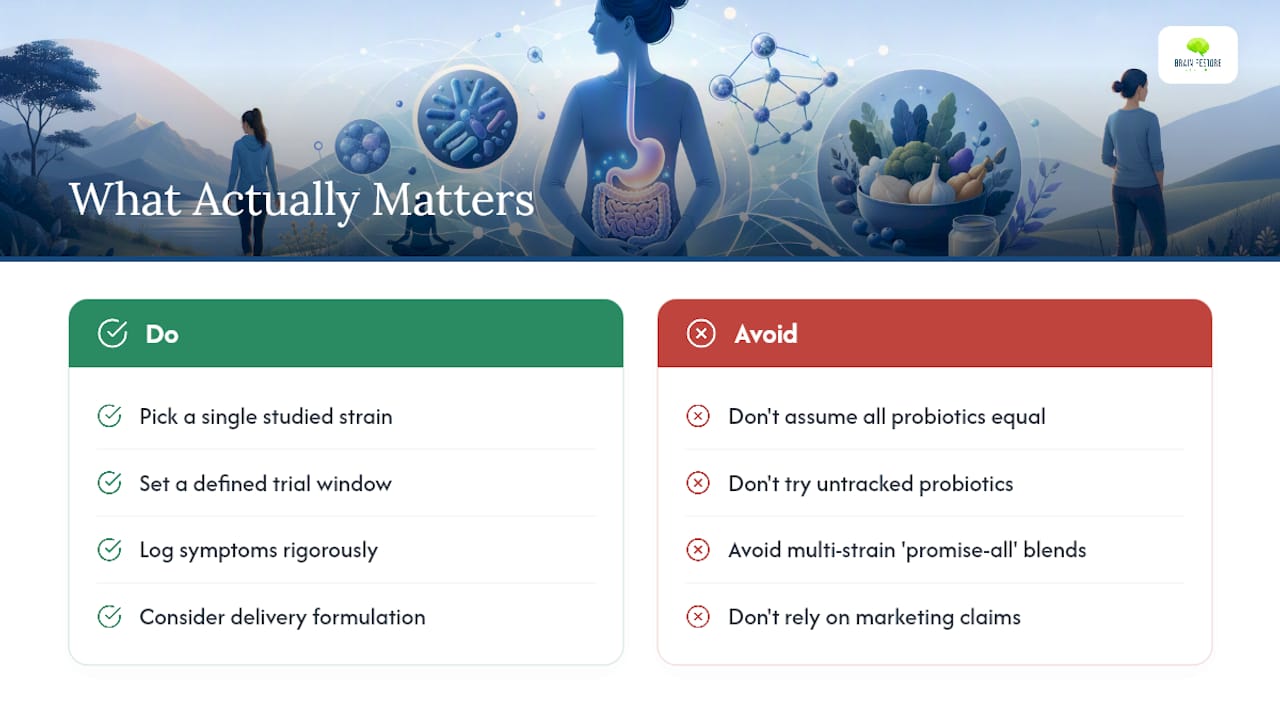
The conventional advice, “try a probiotic, it can’t hurt,” undersells two real issues. First, delivery matters enormously in a stomach that empties slowly, and most consumer products aren’t formulated with that in mind. Second, a probiotic tried without a defined endpoint just becomes another unmonitored variable in an already complicated condition.
If I had to prioritize one thing for someone starting this process, it would be this: pick a single studied strain, commit to a defined trial window, and log your symptoms with the same rigor you’d want from a clinical trial. Skip the multi-strain blends promising everything at once. The data we have rewards specificity, not variety.
— Chad
Sources
Recommended