What Does Hyperbaric Oxygen Therapy Cost in 2026?
August 27, 2026

Most private clinics charge between $150 and $450 per hyperbaric oxygen therapy session, with a national median near $250 to $350 per session. A full protocol ranging from 20 to 40 sessions typically costs several thousand dollars in cash-pay amount, depending on setting and package discounts. Here’s the insurance truth up front: Medicare and most private plans cover HBOT only for a specific list of medically approved conditions, and when it’s covered, you’ll usually still owe about 20% coinsurance after your deductible.
Quick math: at a median clinic rate, 30 sessions runs roughly $250 to $350 per session, putting a full course near $7,500 to $10,500 before any package discount.
Hyperbaric oxygen therapy costs $75 to $2,500+ per session depending on setting, and insurance coverage depends almost entirely on whether your diagnosis matches an approved medical indication.
| Point | Details |
|---|---|
| Session price range | Expect $75–$150 at wellness studios, $150–$450 at independent clinics, and $1,000+ at hospitals. |
| Full-course budgeting | A 20–40 session protocol typically totals $3,000–$24,000 in cash-pay dollars before discounts. |
| Medicare coverage is narrow | Coverage applies only to 14 UHMS-listed indications, with roughly 20% coinsurance after the $283 deductible. |
| Ask for the self-pay rate | Hospitals often discount chargemaster prices 40%–80% for cash-paying patients who ask directly. |
| Get a local written estimate | Brainrestoremeridian provides physician evaluation, insurance verification, and a written estimate before booking. |
This article is general information, not a substitute for advice from a qualified doctor. Consult a qualified healthcare professional about your own circumstances before acting on anything here.
The price tag on hyperbaric oxygen therapy depends almost entirely on where you sit down for treatment. A soft-shell chamber at a wellness studio is a different animal, clinically and financially, than a hospital-grade unit run by a wound care team, and the gap between them is wider than most people expect walking in.
Multiply those per-session figures across a full protocol and the totals add up accordingly. At clinic rates, 20 sessions typically cost several thousand dollars, 30 sessions cost more, and 40 sessions even more, before any multi-session package discounts. Hospital-based courses can reach over ten thousand dollars without insurance.
Watch for costs that sit outside the quoted per-session number. Many clinics charge separately for an initial consultation, physician oversight fees, or wound care supplies used during your visit. Ask whether the quoted rate is truly all-inclusive, because a $250 “session price” that excludes physician billing can quietly become $300 or more once everything hits the invoice.

Chamber type and pressure explain most of the spread you’ll see between providers. Soft-shell chambers run at lower pressure, typically 1.3 to 1.5 ATA (atmospheres absolute), and cost less to build, staff, and maintain. Hard-shell monoplace and multiplace chambers used in clinical settings run at 2.0 to 3.0 ATA, require certified technicians, physician oversight, and more rigorous safety protocols, and that difference shows up directly on your bill.
A few factors separate a fair price from an inflated one:
Pro Tip: A higher price doesn’t always mean better care. Ask whether the quoted rate reflects a hard-shell clinical chamber with physician oversight, or a soft-shell wellness unit marketed with clinical-sounding language. The pressure rating (ATA) tells you more than the marketing copy does.
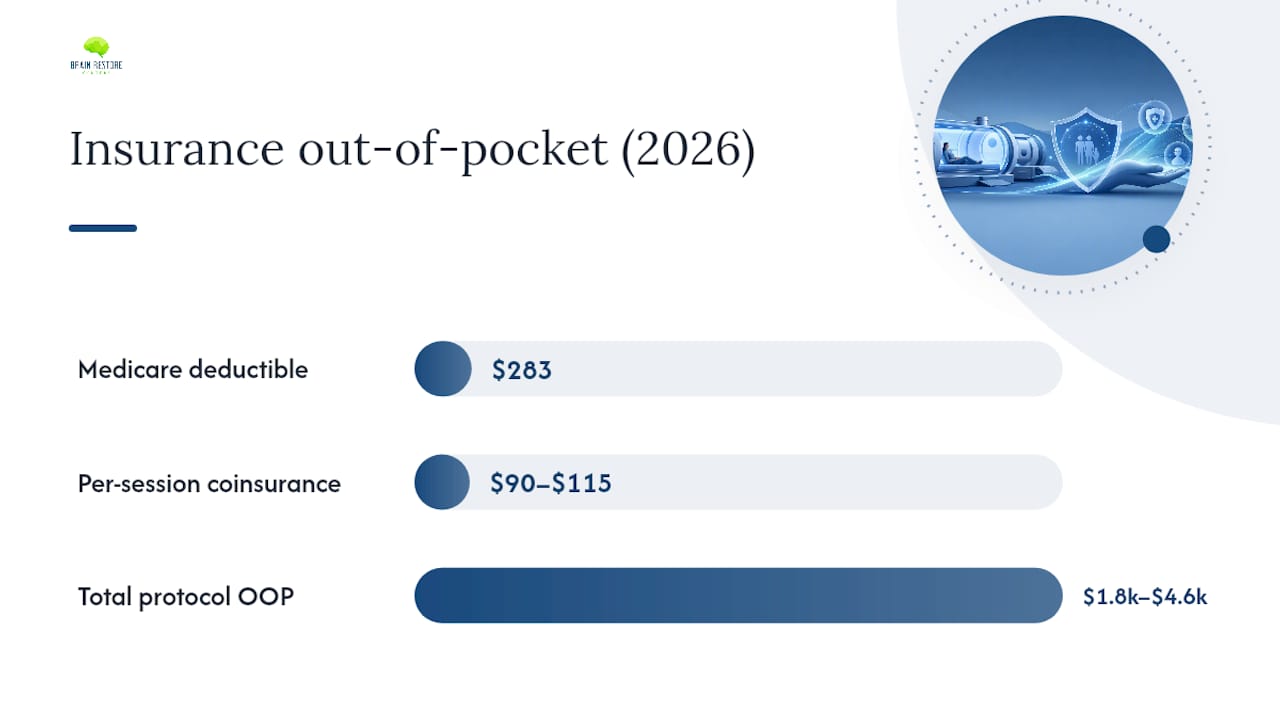
Insurance coverage for HBOT hinges on one thing: your diagnosis, not your symptoms. Medicare Part B covers hyperbaric oxygen therapy only for 14 specific indications approved under national coverage rules, a list built around the Undersea and Hyperbaric Medical Society’s (UHMS) established indications. These include conditions like diabetic foot ulcers, chronic refractory osteomyelitis, delayed radiation injury, and carbon monoxide poisoning. Most private insurers largely mirror Medicare’s list, though individual policies vary and prior authorization is common practice, according to Medicare’s own coverage summary.
If your condition qualifies, here’s what the math looks like in 2026:
Expect paperwork before you ever get near a chamber. Insurers commonly require prior authorization, documented wound measurements or clinical progress notes, and proof that standard treatments failed first. Staying in-network matters, too. Out-of-network hyperbaric centers can leave you facing the full billed rate instead of a negotiated one, and some plans cap the total number of covered sessions regardless of your progress.
Off-label uses, including long COVID recovery, traumatic brain injury support, and anti-aging protocols, remain largely self-pay. Clinical overviews from institutions like Mayo Clinic note that research into these applications continues, but insurers haven’t caught up to cover them yet.
Paying full retail for every session isn’t your only option. A handful of practical moves can meaningfully cut what you spend out of pocket.
Before buying anything for home use, confirm FDA clearance and safety guidance. Ownership without clinical oversight introduces real safety logistics, and the break-even math only works out favorably after dozens of sessions.
A quoted price means little until you know exactly what it includes. Before you commit to a provider, run through this short checklist:
Pro Tip: If a facility quotes only its chargemaster rate with no mention of a self-pay discount, ask directly. Many hospitals reduce cash-pay pricing by 40% to 80% off the listed rate, but they rarely offer that discount unless you ask for it first.
Years of watching billing and insurance navigation up close taught me one lesson: the biggest financial mistake isn’t overpaying per session, it’s committing to a long off-label protocol before confirming medical necessity. If your condition sits on the UHMS-approved list, pursue documentation and prior authorization first. If it doesn’t, get a written estimate and verify the clinic’s safety credentials before you spend thousands chasing speculative benefit.
— Chad
Chasing quotes across town and guessing whether insurance will help is exhausting when you’re already managing a health condition. Brainrestoremeridian gives you a direct, local alternative to that runaround: one visit gets you a physician review, a recommended protocol built around your specific diagnosis, and an insurance and prior-authorization check before you commit a dollar.
At your first visit, our team reviews your history, discusses whether your condition aligns with covered indications, and walks through what hyperbaric oxygen therapy realistically looks like for your situation, both clinically and financially. Because Brainrestoremeridian operates as part of a multidisciplinary clinic in Meridian, your HBOT plan can also connect with neurofeedback, functional medicine, or chiropractic care if your evaluation points that direction. Request a written cost estimate and ask us to verify your coverage before you schedule your first session.