Clinician Aligned Home Oculomotor Exercises for Concussion
October 7, 2026

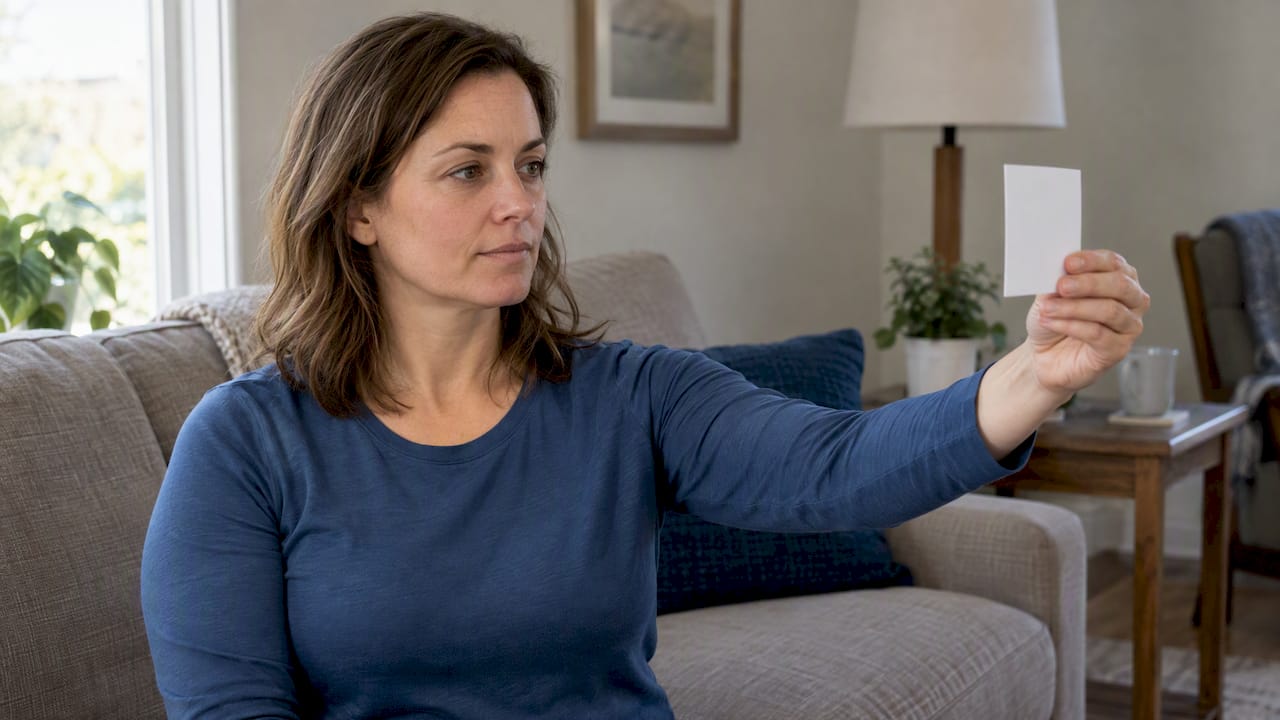
If you’re dealing with blurry vision, headaches when reading, or dizziness after a concussion, smooth pursuits, saccades, convergence drills, and gaze stabilization exercises are the core tools that clinicians use to retrain your eyes and brain. Start gently, stay below the point where symptoms spike, and seek urgent care right away if you notice new weakness, slurred speech, or a severe worsening headache.
TL;DR:
- Exercises should stay below the symptom spike threshold, with progress made gradually by tracking symptom responses before and after each session.
- The basic routine includes seated pursuits and saccades for about 15 minutes daily, with more advanced routines adding head and balance challenges for symptom-free tolerances.
- Most effective practices involve slow, controlled eye movements, avoiding rushing reps, and ensuring proper technique to prevent worsening symptoms.
- Persistent double vision, abnormal near point of convergence, or lack of improvement after 2 to 4 weeks indicate the need for professional evaluation and tailored treatment.
- Active, paced rehabilitation is supported by recent research, but care should be personalized, especially if symptoms involve neck or balance issues.
You don’t need special equipment to begin oculomotor rehab. Pick the routine that matches your current symptom tolerance, and move up only when you feel steady.
A full session for any of these runs about 15 to 20 minutes. The Health Restore Program™ framework we use with patients pairs this kind of pacing with broader recovery support, since eye exercises rarely work in isolation from sleep, nutrition, and stress management.
Pro Tip: Keep a simple notebook rating your symptoms 0 to 10 before and after each session. If a routine pushes you more than 2 points above baseline, scale it back the next time.
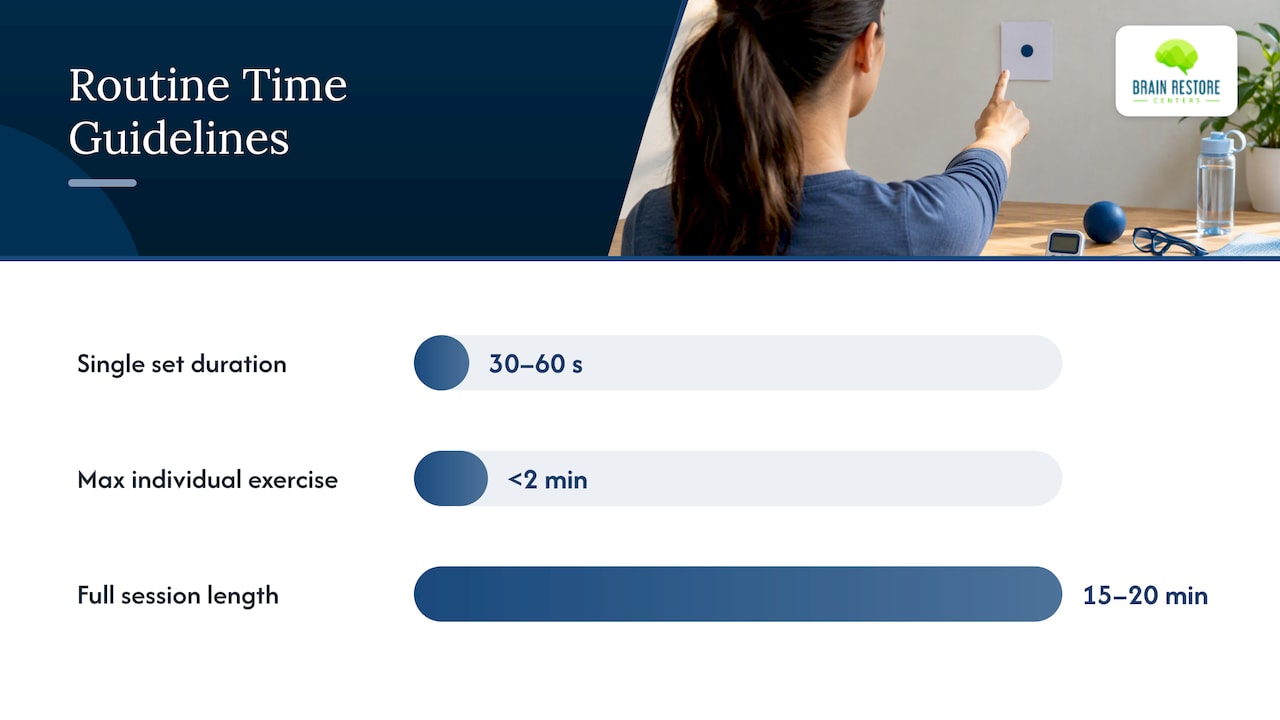
Technique matters more than intensity here. Rushing through reps or letting your head drift when it should stay still undoes most of the benefit.
Common mistakes include letting your head move during eye-only exercises, going too fast before your tracking is accurate, and skipping rest between sets when fatigue sets in. If letters blur or double consistently at a certain speed or distance, that’s your current ceiling, not a sign to push harder.
If standard-size print feels like too much, larger letters, higher contrast cards, or seated versions of standing exercises make these drills accessible without changing the underlying skill you’re training. A clinic protocol along these lines, drawn from pediatric and adult concussion handouts, typically layers seated pursuits and saccades first, then adds standing VOR with a metronome, then introduces dynamic environments and balance challenges once tolerance improves, as described in sample home exercise programs.
Your subsymptom threshold is the activity level just below where symptoms noticeably worsen. Finding it starts with a baseline symptom log: rate your top two or three symptoms before you begin, then again immediately after and 30 minutes later.
A workable progression rule is to find the rep count where symptoms start to climb, then back off to that number minus a few reps as your real starting point, adding small increments every few days rather than jumping ahead. Increase tempo before you increase complexity, and add head movement or balance challenges only once the simpler version feels stable for several sessions in a row, as explained in detail for vibration plates for balance. Most home programs run twice daily, with sessions short enough that fatigue doesn’t creep in before you finish. For more on pacing cognitive and physical activity within this same framework, our guide on why cognitive rest matters after concussion walks through the same subsymptom principle in more depth.
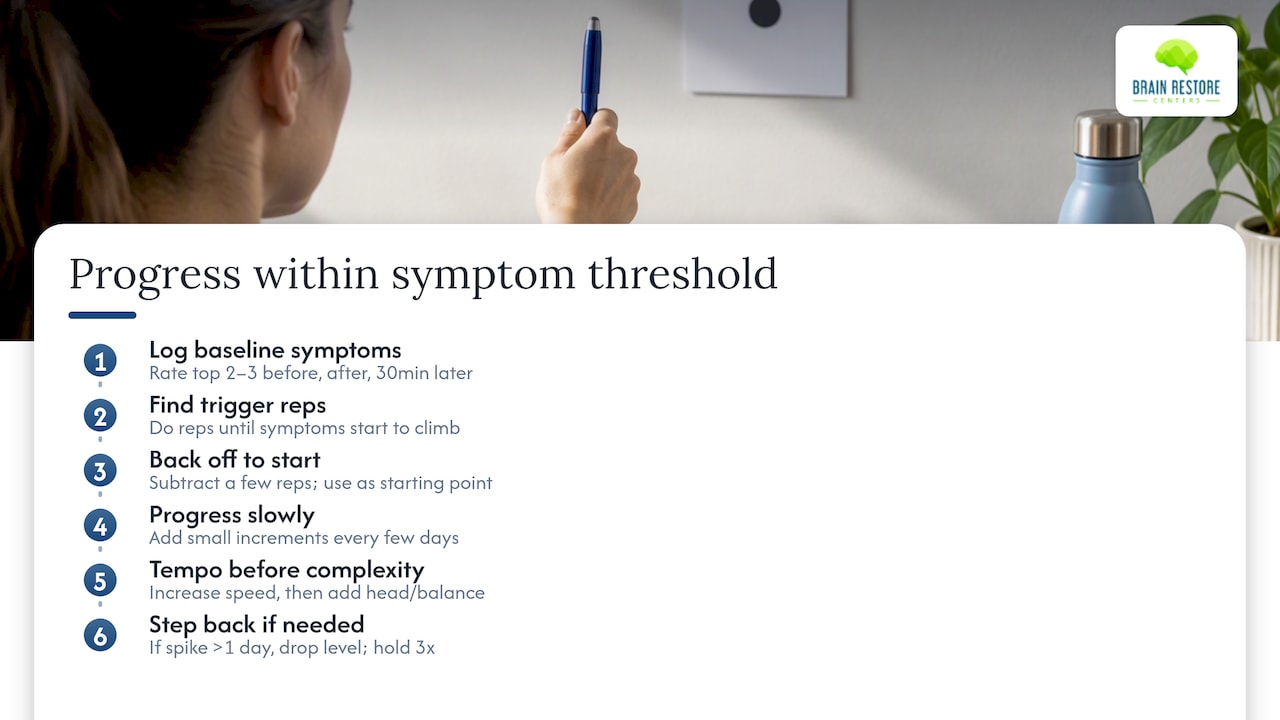
Pro Tip: If a symptom spike lasts more than a day after a session, drop back one full level in your routine and hold there for at least three sessions before trying to advance again.
Most oculomotor symptoms improve with steady, paced practice, but some signs mean you need more than a home program.
A clinician will typically check near point of convergence, run the VOMS (Vestibular/Ocular Motor Screening) battery, test with King-Devick, and observe your saccades and pursuits directly. Bring your symptom log and a list of which exercises you’ve already tried. Our concussion recovery checklist outlines these same escalation points if you want a broader view of recovery milestones.
Current guidance has moved firmly away from prolonged rest. CDC mTBI treatment guidance favors active, structured rehabilitation and recommends early referral when vestibulo-oculomotor dysfunction persists and is objectively documented, rather than extended dark-room recovery. The American Academy of Ophthalmology’s clinical considerations are more cautious, noting that evidence for specific vision therapy protocols remains limited and calling for more rigorous randomized trials, while still recommending referral pathways and targeted assessment of vergence, accommodation, and oculomotor function.
A 2025 quasi-experimental trial found that early, self-guided oculomotor rehabilitation significantly reduced persisting post-concussion symptoms at 4 weeks compared with standard care, according to the trial results. That’s a meaningful signal, but the study was non-randomized with a modest sample, so it points toward benefit rather than proving it conclusively.
Across the broader literature, vision and orthoptic therapy alongside vestibular-oculomotor rehab show the most consistent support of any concussion intervention category, though study designs vary enough that more controlled trials are still needed before anyone can call this settled science.
Eye exercises rarely solve everything on their own. Before you start, it’s worth confirming your glasses prescription is current, since outdated correction can mimic or worsen oculomotor symptoms. Neck dysfunction after concussion can also drive dizziness and visual strain that looks like a pure vision problem but isn’t.
Our piece on how the cervical spine affects concussion symptoms and our 20-minute vestibular exercise guide both go deeper into this coordination between systems.
When we evaluate someone after a concussion, we check their glasses prescription, screen for neck-driven symptoms, and build exercise pacing around their actual tolerance rather than a generic template. The most common pitfall we see is patients pushing through symptom spikes because they assume more repetitions means faster progress, when it usually means a longer setback. If you’ve hit the referral triggers above, book an evaluation rather than guessing at the next step on your own.
— Chad
When home exercises stall or your symptoms involve more than your eyes, a supervised evaluation catches what a self-guided routine can miss, including neck-driven dizziness, uncorrected refractive issues, and lingering balance deficits that need hands-on retraining. Our Brain Restore Program builds a personalized plan around exactly these overlapping systems, starting with a brain health consultation that maps out where your recovery is stuck.
If you’re in the Meridian, Idaho area and recognize any of the referral triggers above, schedule a brain health consultation to get a clear picture of what’s driving your symptoms and a plan built around your specific recovery.
This article is general information, not a substitute for advice from a qualified doctor. Consult a qualified healthcare professional about your own circumstances before acting on anything here.
Oculomotor exercises are structured eye-movement drills, including smooth pursuits, saccades, convergence work, and gaze stabilization, used to retrain visual tracking and coordination after a concussion. They’re typically introduced gradually and monitored against your symptom response rather than performed at a fixed intensity for everyone.
Most home programs run once or twice daily in short sessions of a few minutes per exercise, staying below the point where symptoms noticeably worsen. A 2025 trial found early, self-guided practice along these lines reduced persisting symptoms at 4 weeks compared with standard care.
Yes, if you progress too fast or ignore your symptom threshold, exercises can trigger a temporary flare. Tracking symptoms before and after each session and backing off when they spike more than a couple of points helps you avoid repeated setbacks.
See a specialist if double vision persists, your near point of convergence stays abnormal, or you see no real improvement after 2 to 4 weeks of consistent, guided practice. The CDC’s guidance specifically recommends referral when vestibulo-oculomotor dysfunction persists and is objectively confirmed.
They help many people with visual tracking and convergence complaints, but evidence quality varies, and the American Academy of Ophthalmology notes that research on specific protocols is still limited. Outcomes also depend on whether neck dysfunction or uncorrected vision problems are contributing, which exercises alone won’t fix.