Concussion Recovery Checklist for Adults: 2026 Guide
June 17, 2026


A concussion recovery checklist for adults is a structured, stage-based tool that guides safe return to daily activity while preventing symptom setbacks. Recovery from a mild concussion is not simply a matter of resting in a dark room and waiting. The CDC HEADS UP program, Cleveland Clinic, and Harvard Health all confirm that structured, symptom-guided progression produces better outcomes than unstructured rest. This guide gives you a practical, step-by-step framework for adult concussion recovery, from the first hours after injury through full return to work, exercise, and life.
The six clinical stages of concussion recovery, as defined by Cleveland Clinic, move from complete rest through light activity, moderate activity, sport-specific exercise, full practice, and finally return to competition or full work duties. Each stage is guided by symptom response, not a fixed calendar. That distinction matters because two adults with identical injuries can have very different timelines.
| Stage | Focus | Typical Duration | Symptom Intensity |
|---|---|---|---|
| 1. Complete rest | Sleep and mental rest | 24–48 hours | High |
| 2. Light aerobic activity | Walking, gentle stretching | 1–3 days | Moderate |
| 3. Sport or work-specific movement | Low-intensity tasks | 2–5 days | Low to moderate |
| 4. Non-contact activity | Complex tasks without risk | 2–5 days | Low |
| 5. Full practice or work | Normal duties, supervised | 1–3 days | Minimal |
| 6. Return to full activity | Unrestricted participation | Ongoing | None |
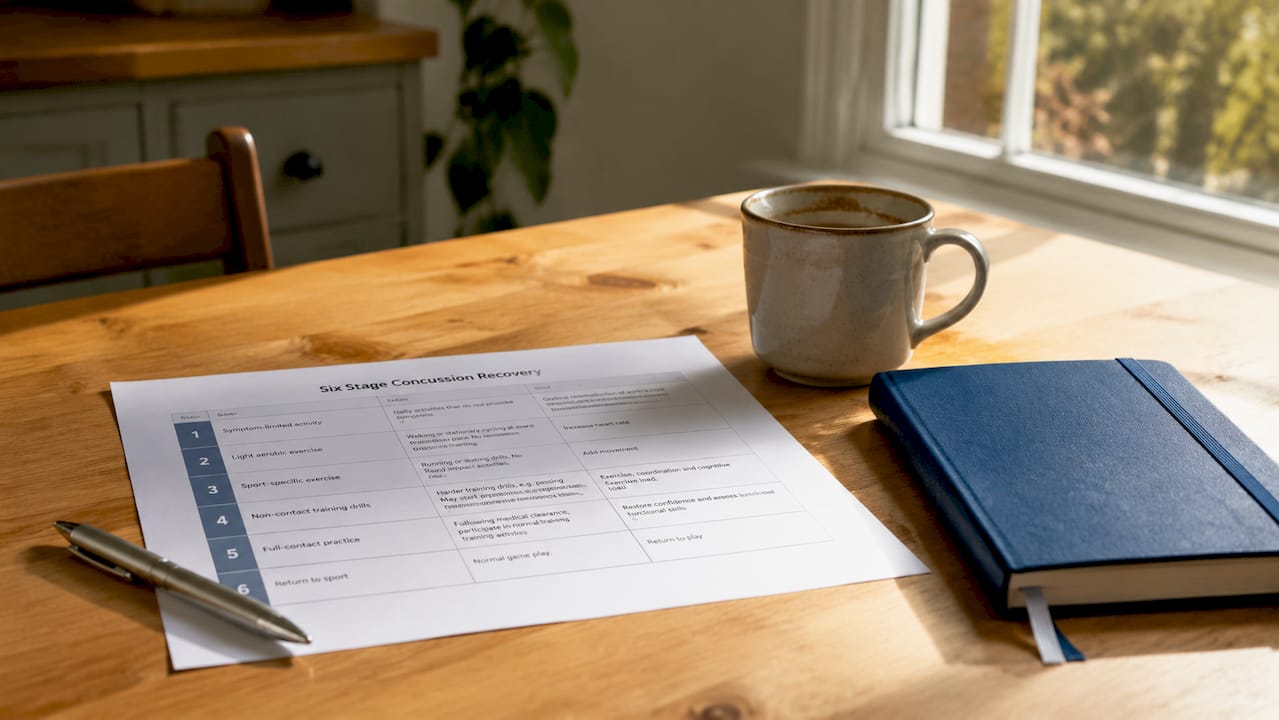
Most adults recover from a mild concussion within a few weeks, though symptoms may persist for 6–12 weeks. Knowing this range helps you set realistic expectations without panic. You should only advance to the next stage when your current symptoms are at or near zero.
Pro Tip: Write the date you enter each stage in a small notebook or phone note. Tracking stage transitions gives your doctor concrete data and helps you spot patterns that are invisible day to day.
Scoring your symptoms on a 1–10 scale and pausing activity when that score rises above 3 is the most reliable way to avoid setbacks. This sub-symptom threshold approach keeps your brain working within its current capacity rather than pushing past it. Recording trends over multi-day blocks, rather than hour by hour, gives you a clearer picture of whether you are improving.
Your daily symptom checklist should cover:
Tracking symptom trends over multi-day blocks rather than hour by hour helps you avoid overreacting to a single bad afternoon and underreacting to a slow decline across a week. Hydration also plays a direct role. Electrolyte-rich fluids and reducing screen brightness or using night mode on your phone help maintain brain chemical balance and reduce common symptom triggers.
Pro Tip: The old advice to sit in a dark room and avoid all stimulation is outdated. Prolonged total inactivity, sometimes called “cocooning,” can worsen anxiety and depression. Light movement and gentle mental engagement, matched to your symptom level, support faster recovery.
Relative rest combined with light physical activity aids both physical and mental recovery more effectively than complete inactivity. The brain heals through a process of metabolic restoration, and gentle movement supports blood flow without overwhelming a system that is already under stress. Think of it as giving your brain the right amount of work, not too much and not too little.
Effective self-care strategies for adult concussion recovery include:
Inflammation is a key factor that slows brain healing after traumatic injury. Addressing it through nutrition, hydration, and appropriate movement gives your recovery a measurable advantage.
Worsening headaches, repeated vomiting, confusion, or loss of consciousness are red flags that require immediate emergency care. These symptoms signal complications that go beyond a standard concussion and need urgent medical evaluation. Do not wait to see if they improve on their own.
Beyond emergency signs, use your checklist to identify these situations that warrant a scheduled medical visit:
When symptoms last beyond three months, the condition is classified as post-concussion syndrome and requires specialized evaluation. Harvard Health identifies this three-month benchmark as the point at which self-managed recovery is no longer sufficient.
Recovery may be slower in older adults, those with prior head injuries, or individuals with existing psychiatric conditions. If you fall into any of these groups, set a lower threshold for seeking professional input. A breakthrough concussion test can provide objective data about brain function that symptom tracking alone cannot capture.
No two adults have the same schedule, stress load, or recovery baseline. A teacher returning to a classroom full of noise faces different demands than a remote worker managing email from a quiet home office. Your checklist needs to reflect your actual life, not a generic template.
Practical ways to customize your adult concussion recovery plan:
A step-by-step recovery guide can also help you map out the emotional and psychological dimensions of recovery, which adults often underestimate compared to physical symptoms.
Effective adult concussion recovery requires a structured, symptom-guided checklist that progresses through defined stages, monitors daily symptoms, and adjusts pace based on individual tolerance and lifestyle demands.
| Point | Details |
|---|---|
| Follow staged progression | Advance through six recovery stages based on symptom scores, not fixed dates. |
| Track symptoms daily | Rate symptoms on a 1–10 scale and pause activity when scores exceed 3. |
| Avoid prolonged inactivity | Light movement and gentle engagement support faster recovery than total rest. |
| Know your red flags | Seek emergency care for worsening headaches, vomiting, confusion, or loss of consciousness. |
| Customize your checklist | Adjust pacing for age, prior injuries, work demands, and family responsibilities. |
The single biggest mistake I see adults make is treating concussion recovery like a linear process with a clear finish line. Recovery is more like a dial than a switch. Some days you turn it up a little, and some days you turn it back down. That is not regression. That is the process working.
What actually moves the needle is consistent symptom tracking paired with honest communication with your care team. Patients who bring a written log to their appointments recover faster than those who rely on memory. The log removes the guesswork and gives the clinician something concrete to work with.
I have also noticed that adults with prior head injuries or high-stress jobs tend to underreport symptoms. They normalize headaches and brain fog because those feelings have become familiar. If that sounds like you, set a higher standard for what “normal” feels like. You deserve a baseline that is genuinely clear, not just manageable.
Patience is not passive. Choosing to rest on a high-symptom day, skipping the evening news because the noise is too much, or asking a colleague to handle a meeting are all active decisions that protect your recovery. Every one of those choices is progress.
— Chad
If your symptoms have lingered beyond two weeks or you want objective data about how your brain is functioning, Brainrestoremeridian in Meridian, Idaho offers specialized evaluation and care for adults navigating concussion recovery.
The clinic’s predictive concussion test provides measurable insight into brain function that symptom checklists alone cannot deliver. From there, a personalized care plan may include neurofeedback, chiropractic care, hyperbaric oxygen therapy, or laser therapy, each matched to your specific recovery profile. You do not have to guess whether you are healing. Brainrestoremeridian gives you the tools to know. Contact the clinic to schedule your evaluation and take the next step toward reclaiming your full cognitive health.
Most adults recover from a mild concussion within a few weeks, though symptoms may last 6–12 weeks. Symptoms persisting beyond three months indicate post-concussion syndrome and require specialized care.
Daily symptom tracking using a 1–10 scale is the most critical habit. Pausing activity when scores rise above 3 prevents flare-ups and protects long-term recovery.
Short-term rest is necessary, but prolonged total inactivity slows recovery and increases the risk of anxiety and depression. Relative rest with light movement, matched to your symptom level, produces better outcomes.
Seek immediate care if you experience worsening headaches, repeated vomiting, confusion, seizures, or loss of consciousness. These symptoms signal complications beyond a standard concussion.
Yes, returning to work early with accommodations such as reduced hours or a quieter workspace can shorten recovery time and reduce psychological symptoms. Advance your activity only when your symptom score is at or near zero.