Nonsurgical Herniated Disc Treatment: What Works and Why
August 28, 2026

Nonsurgical care is the first-line treatment for most herniated discs and relieves symptoms for the majority of patients within weeks to months. Conservative treatment combines activity modification, anti-inflammatory medication, and physical therapy, with selective steroid injections for stubborn nerve pain. Surgery only becomes urgent when specific red flags appear, like progressive weakness or loss of bladder control. For nearly everyone else, patience and the right sequence of nonsurgical herniated disc treatment options lead to real recovery.
TL;DR:
- Most herniated discs heal with conservative care within six weeks to months, emphasizing activity modification, medication, and physical therapy.
- Imaging findings often do not match pain severity, so clinical exam and symptoms are more critical in guiding treatment decisions.
- Moderate-evidence therapies like mobilization, exercise, neural mobilization, and epidural injections should be prioritized over weaker options such as long-term traction or ultrasound.
- Red flags such as loss of bladder control or progressive weakness require immediate surgical evaluation, while most cases are managed non-surgically.
- Active movement, patient education, and staged multidisciplinary care significantly improve recovery compared to rest or uncoordinated treatments.
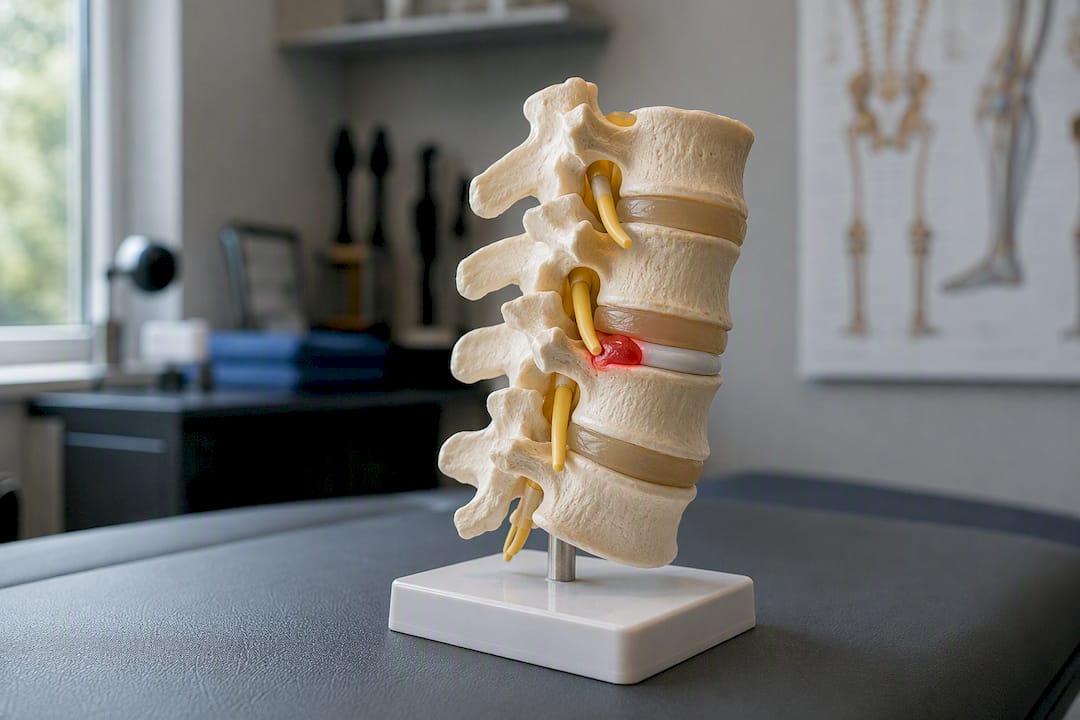
Each disc in your spine works like a shock absorber, a tough outer ring called the annulus fibrosus wrapped around a gel-like center, the nucleus pulposus. When that outer ring weakens or tears, usually from years of wear, a sudden twist, or heavy lifting, the gel center can push through and press against nearby structures. That’s a herniated disc, sometimes called a slipped or bulging disc, though the disc never actually slips out of place.
The pain you feel doesn’t always come from the disc itself. It comes from what the herniation touches. When herniated material presses against a nerve root exiting your spine, it triggers inflammation and mechanical irritation along that nerve’s entire path. This is called radicular pain, and it explains why a problem in your lower back can produce burning, shooting pain all the way down your leg into your foot, a pattern most people know as sciatica.
Symptoms vary quite a bit depending on where the herniation sits and how much it’s compressing:
That last point matters. Herniations don’t always announce themselves with pain, and pain intensity doesn’t always match how large the herniation is on imaging. This mismatch between what a scan shows and what you actually feel is one of the more misunderstood parts of disc problems, and it shapes everything about how clinicians diagnose and treat them.
Diagnosis starts with a conversation and a physical exam, not a scan. A clinician will ask about when your pain started, what makes it better or worse, and whether you’ve noticed numbness, tingling, or weakness in a specific pattern. Then comes the neurologic exam, which checks three things: muscle strength in specific muscle groups, sensation along known nerve pathways, and reflexes like the knee jerk or ankle jerk response. Changes in any of these help pinpoint which nerve root is involved, often before any imaging is ordered.
Imaging comes next, and each tool serves a different purpose:
Here’s the part that surprises a lot of patients: imaging findings often don’t correlate with pain severity. Studies referenced by the Mayo Clinic show that plenty of people walk around with herniated discs on MRI and feel no pain at all, while others with fairly modest imaging findings report severe symptoms. This is why treatment decisions lean on your exam findings and functional limitations rather than the picture alone.
That gap between scan and symptom has a direct clinical consequence. A clinician generally won’t rush you into aggressive treatment just because your MRI looks dramatic, and they won’t dismiss your pain just because the imaging looks mild. Your reported symptoms and physical exam carry more weight in guiding your care plan.
Conservative treatment is recommended as the first-line approach for lumbar disc herniation when no neurologic red flags are present, according to the WFNS spine committee. The plan typically unfolds in a fairly predictable sequence, and understanding it helps you know what to expect instead of wondering if your treatment is “working” fast enough.
The medications and injections aren’t the treatment, exactly. They’re tools that make the real treatment, movement and rehabilitation, tolerable. Think of an anti-inflammatory or an injection as clearing enough space for your body to do the work of healing through guided activity. Clinicians who prescribe medication without a movement plan behind it are usually missing the point of why the medication was given in the first place.
Medication choice depends heavily on what kind of pain you’re describing. Sharp, localized back pain responds differently than burning nerve pain radiating down a leg, and treating both the same way usually falls short.
Pro Tip: If your pain is burning or electric rather than achy, tell your provider specifically. That distinction often changes which medication class gets tried first, since NSAIDs target inflammation while neuropathic agents target nerve signaling itself.
Roughly nine out of ten people with a herniated disc avoid surgery entirely when nonsurgical care is applied thoughtfully, according to Cleveland Clinic data. Medication plays a supporting role in that outcome. It rarely resolves the herniation itself, but it buys you the functional window needed to do the physical therapy that actually drives recovery.
Physical therapy for back pain isn’t one thing. It’s a collection of distinct techniques, and matching the right one to your specific presentation makes a measurable difference in how quickly you improve.
The McKenzie method, also called mechanical diagnosis and therapy, uses repeated movements, often spinal extension, to identify a direction that “centralizes” your pain, meaning it moves the pain from your leg back toward your spine. Centralization is actually a good sign; it suggests the nerve root irritation is easing. This approach works best for a specific subset of patients whose pain responds predictably to positioning, and a trained therapist can usually tell within a session or two whether you’re a good candidate.
Beyond McKenzie, a well-built PT program typically layers in:
A narrative review of nonsurgical approaches to lumbar disc herniation with radiculopathy found moderate evidence supporting exercise therapy, mobilization, and neural mobilization as effective components of care, published in PMC. What stands out in that research is how a multidisciplinary approach, combining mobilization, exercise, and core activation rather than relying on a single technique, tends to produce better functional outcomes for radiculopathy patients than any single modality alone.
Good physical therapy also coordinates with the rest of your care team. Your therapist adjusts your program based on how your symptoms evolve, communicates with your prescribing physician about your progress, and flags early if something isn’t tracking the way it should. That kind of coordination is part of what separates effective neurological rehabilitation from a generic exercise handout.
Epidural steroid injections deliver anti-inflammatory medication directly into the space around your spinal nerves, targeting the inflammation driving your radicular pain more precisely than an oral medication can. They’re generally considered when conservative measures haven’t provided enough relief to progress in physical therapy, not as a first step.
Two delivery approaches are commonly used:
Both approaches are typically performed under imaging guidance, usually fluoroscopy, to confirm accurate needle placement and avoid nearby structures. This isn’t a procedure done blind.
It’s worth being clear about what these injections actually accomplish. They can meaningfully reduce localized inflammation and provide short-term pain relief, sometimes enough to make physical therapy dramatically more productive. What they don’t do is change the mechanical herniation itself. The disc material pressing on the nerve is still there; the injection just calms the inflammatory reaction around it. Research summarized by the WFNS spine committee notes that while injections can reduce inflammation effectively, outcomes may be less durable long-term compared to surgery for certain patients, which is exactly why they’re used as a bridge rather than a standalone fix.
Beyond the core treatments, a wide field of adjunct therapies gets offered for herniated discs, and the evidence quality varies considerably from one to the next. Knowing the difference helps you invest your time and money where it’s most likely to pay off.
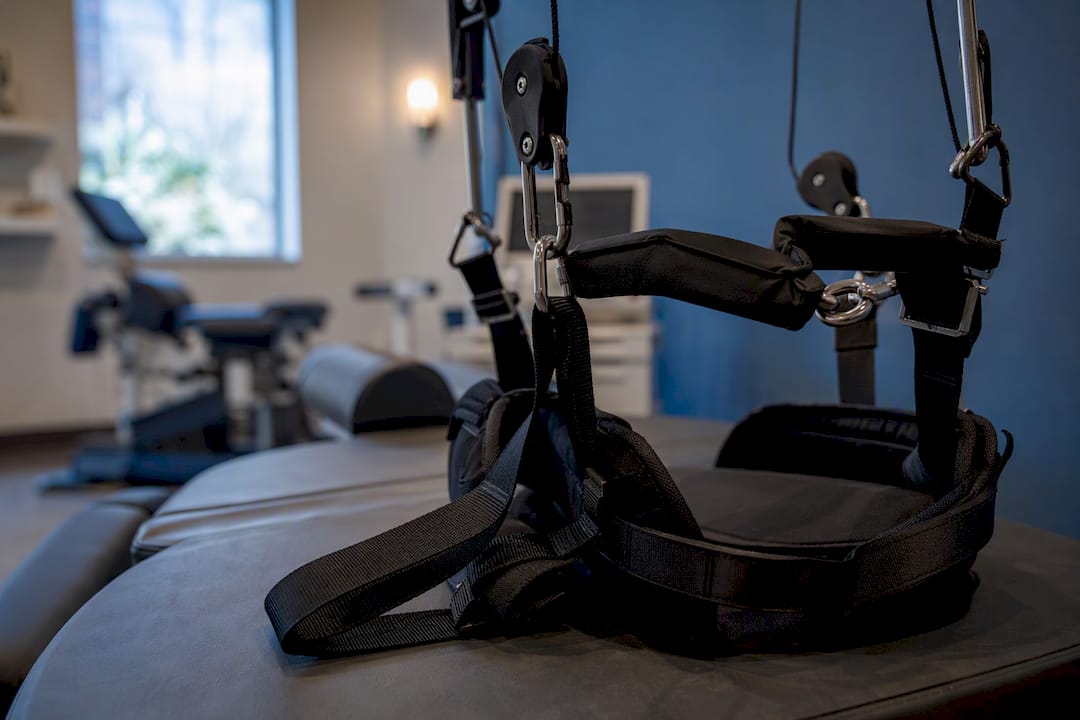
Spinal traction and decompression apply a gentle, controlled pulling force to the spine, aiming to reduce pressure on the affected disc and nerve. Short-term traction has moderate evidence supporting its use, particularly when combined with other conservative measures, though long-term traction alone shows weaker, more inconsistent results.
Acupuncture and dry needling involve inserting thin needles at specific points to influence pain signaling. According to the NCCIH, acupuncture may provide immediate or short-term relief for chronic low back pain, though high-quality evidence specific to disc-related nerve pain remains limited. It’s a reasonable adjunct for some patients, not a replacement for exercise-based rehab.
Chiropractic care uses manual spinal mobilization and adjustment techniques, which fall under the mobilization category shown to have moderate evidence support for disc-related radiculopathy. For many patients, hands-on chiropractic care for herniated disc symptoms works best alongside, not instead of, active rehabilitation.

Laser therapy, ultrasound, and electrotherapy round out the adjunct category, and here the evidence gets genuinely mixed. Some patients report benefit, but the research base is inconsistent enough that these are best viewed as case-by-case additions rather than core pillars of your treatment plan.
Not all nonsurgical herniated disc treatment options carry equal scientific weight, and knowing where each one sits on the evidence spectrum helps you prioritize your time and energy.
A narrative review published in PMC grouped nonsurgical interventions for lumbar disc herniation with radiculopathy into two broad tiers:
That split doesn’t mean the weaker-evidence therapies are worthless. It means they should occupy a supporting role rather than anchor your plan. A treatment plan built primarily around laser therapy while skipping exercise-based rehab has the priorities backward.
The strongest pattern across the research is that individualized, multidisciplinary care outperforms any single-modality approach. Combining mobilization, targeted exercise, and core activation tends to produce better functional recovery than relying on one technique in isolation, a finding that shows up consistently enough across studies to shape how thoughtful clinics structure their treatment sequencing. This is also the practical argument for working with a clinic that can layer these therapies together rather than bouncing between separate providers who never coordinate.
Most disc herniations never need a surgeon. But a small subset of symptoms represents a genuine emergency, and recognizing them quickly protects your long-term function.
Guidelines consistently reserve urgent surgery for cauda equina syndrome or progressive significant weakness, with conservative care recommended initially for everyone else, per the WFNS spine committee. Outside those red flags, the common referral pattern is a conservative trial of six to twelve weeks, depending on symptom severity, before a surgical consult even enters the conversation. If you do reach that point, your response to nonsurgical treatment, what helped, what didn’t, how your strength and function trended, gives the surgical team valuable information about what to expect from an operative approach.
How you spend your days during recovery matters almost as much as any single treatment you receive. Prolonged bed rest is one of the most persistent, and most damaging, myths in back pain care. Research summarized by Harvard Health shows that bed rest beyond a brief period actually delays healing rather than supporting it, since prolonged inactivity leads to deconditioning that makes eventual movement harder, not easier.
Practical guidance that holds up across most cases:
Pro Tip: Early guided activity and progressive loading, rather than rest, are what prevent the deconditioning that turns a temporary flare into a chronic problem. This single habit shift accounts for a meaningful share of the difference between people who recover in weeks and those who struggle for months.
Weight management and smoking cessation also support healing, since excess load increases mechanical stress on lumbar discs and smoking impairs the blood flow discs rely on for repair. Neither change happens overnight, but both meaningfully shift your recovery trajectory over time.
Pain that persists despite good physical progress often benefits from a psychological angle too. Cognitive behavioral therapy helps patients reframe pain-related fear and avoidance behavior, which can otherwise become its own barrier to movement long after the original tissue irritation has calmed down.
The strongest research on nonsurgical herniated disc treatment doesn’t point to one miracle technique. It points to sequencing several moderate-evidence therapies together, matched to your specific presentation, and adjusted as you progress. That’s the model a multidisciplinary clinic is built to deliver.
At Brainrestoremeridian, care typically maps directly onto the evidence tiers discussed above:
Case guidance on spinal decompression recovery illustrates how staged rehabilitation, not a single intervention, drives functional recovery over weeks to months. That staging matters because clinical “healing” generally means symptom resolution and restored function rather than the disc physically reversing its herniation, a distinction the WFNS spine committee emphasizes for setting realistic patient expectations.
Individualized assessment, tracking your specific strength, sensation, and functional markers rather than treating every disc herniation identically, is what allows a clinic to escalate or de-escalate care appropriately. That kind of shared decision-making is often what keeps a treatable disc problem from turning into an unnecessary surgical referral.
Most conventional advice on herniated discs stops at “try physical therapy and see.” That’s not wrong, but it’s incomplete, and it leaves patients guessing about sequencing, timing, and what to escalate when. The research actually supports something more specific: a staged plan where medication and injections aren’t the treatment but the tools that make effective rehabilitation possible.
What’s genuinely underrated is patient education itself. It carries the same moderate evidence rating as the McKenzie method and mobilization, yet it gets treated as an afterthought rather than a core intervention. Understanding that imaging doesn’t predict pain, that movement helps rather than harms, and that six weeks is a reasonable trial window before escalation, that knowledge changes how patients engage with their own recovery.
If there’s one priority I’d push readers toward first, it’s this: stop treating rest as the safe default. The research is consistent that guided movement outperforms prolonged inactivity, and the patients who recover fastest are usually the ones who stayed appropriately active from week one, not the ones who waited for pain to disappear before moving again.
— Chad
If you’re weighing a home exercise routine against a standalone chiropractor visit or a generic physical therapy referral, know that piecing together separate providers who never talk to each other is exactly the gap that slows recovery. Brainrestoremeridian brings spinal decompression, chiropractic care, and progressive rehab together under one coordinated plan, so your treatment sequence is built around your actual exam findings and functional progress, not a one-size-fits-all protocol.
Your first visit typically includes a detailed history, a neurologic exam checking strength, sensation, and reflexes, and a discussion of your goals, whether that’s returning to a sport, sitting through a workday pain-free, or simply sleeping through the night again. From there, your plan gets built around which moderate-evidence therapies fit your specific presentation. If spinal decompression or coordinated chiropractic and rehab care sounds like the structured next step you’ve been missing, schedule an assessment with Brainrestoremeridian and find out exactly where your recovery plan should start.
This article is general information, not a substitute for advice from a qualified doctor. Consult a qualified healthcare professional about your own circumstances before acting on anything here.
Questions about your next step?
Our Meridian team can help you understand the evaluation process and which care options may fit your needs.
Schedule a Disc Care ConsultationPrefer to speak with our team? Call 208-639-1397