
Ketogenic Diet for Brain Disease: What the Evidence Shows
August 14, 2026


Therapeutic ketogenic diets are an established nonpharmacologic treatment for drug-resistant epilepsy and show promising but preliminary benefit in Alzheimer’s disease, Parkinson’s disease, migraine, and certain psychiatric conditions. A broad PMC review concluded that ketogenic therapy can provide adjunctive benefits across these conditions by modulating oxidative stress, neurotransmitter balance, inflammation, and the gut microbiome, while acknowledging that human evidence remains far stronger for epilepsy than for other diagnoses. A 2026 review on PubMed reinforces that point: clinical trial data across neurodegenerative diseases are heterogeneous and largely short-term, which limits firm recommendations. The single most important safety step is this: never start a therapeutic ketogenic diet without physician and registered dietitian oversight, because medication interactions, metabolic monitoring, and individualized macronutrient calculations are required from day one.
Where the evidence stands right now:
Bottom line: The ketogenic diet for brain disease is a legitimate clinical tool in epilepsy and a credible area of active research for neurodegeneration, but it is not a self-managed intervention.
The ketogenic diet for brain disease has its strongest clinical evidence in drug-resistant epilepsy, modest but real support in Alzheimer’s disease, and early-stage signals in psychiatric disorders and Parkinson’s, with all non-epilepsy applications requiring supervised clinical trials rather than self-managed implementation.
| Point | Details |
|---|---|
| Epilepsy is the established indication | KD is a guideline-supported therapy for drug-resistant epilepsy after two failed anticonvulsants. |
| Alzheimer’s evidence is modest but real | Small RCTs and meta-analyses show cognitive improvements on MMSE; MCT-based formulas used in 3–15 month trials. |
| Mechanisms are multifactorial | BHB supports mitochondrial energy, reduces NLRP3 inflammation, and enhances GABAergic signaling. |
| Supervision is non-negotiable | Physician and dietitian oversight, baseline labs, and medication review are required before starting. |
| Adjunctive integration amplifies benefit | Combining KD with neurofeedback, photobiomodulation, or functional medicine addresses multiple pathways simultaneously. |
A ketogenic diet shifts the body’s primary fuel source from glucose to fat-derived ketone bodies, principally beta-hydroxybutyrate (BHB) and acetoacetate. When dietary carbohydrates drop low enough, the liver converts fatty acids into these ketones, which cross the blood-brain barrier and serve as an efficient alternative fuel. The metabolic state that results is called nutritional ketosis, typically defined by blood BHB levels in the range of 0.5–3.0 mmol/L in most clinical protocols.
Therapeutic ketogenic diets are not a single formula. Clinicians choose among several variants based on the patient’s age, diagnosis, tolerance, and monitoring capacity.
| Variant | Typical fat:protein+carb ratio | Carb restriction | Common clinical use |
|---|---|---|---|
| Classic KD | 4:1 or 3:1 (by weight) | Very strict (low carbohydrate grams) | Pediatric refractory epilepsy |
| MCT diet | Moderate fat ratio; MCT oil supplies 30–60% of calories | Moderate | Pediatric epilepsy; adult adjunctive trials |
| Modified Atkins Diet (MAD) | No fixed ratio; high fat encouraged | ~10 grams per day | Adult epilepsy; pilot neurodegeneration studies |
| Low Glycemic Index Treatment (LGIT) | No fixed ratio | Low-GI foods only | Adolescent/adult epilepsy; adherence-sensitive patients |
The classic 4:1 diet is the most restrictive and requires weighed, measured meals. It produces the highest and most consistent ketone levels, which is why it remains the standard for pediatric epilepsy. The Modified Atkins Diet offers a pragmatic alternative for adults because it drops the strict gram-weighing requirement while still achieving meaningful ketosis. Hopkins Medicine’s epilepsy diet therapy resources note that therapeutic protocols differ fundamentally from consumer “keto for weight loss” in their goals, monitoring intensity, and medical oversight requirements.
How therapeutic KD differs from popular weight-loss keto:
One point worth flagging early: exogenous ketone supplements (ketone salts, ketone esters) can raise blood BHB without dietary restriction, but they do not replicate the full metabolic shift of a sustained ketogenic diet. Their role in clinical protocols is discussed in the implementation section below.
Ketone bodies, particularly BHB, serve as an efficient alternative fuel when cerebral glucose metabolism is impaired. This matters clinically because aging and neurodegenerative diseases like Alzheimer’s are associated with a measurable decline in the brain’s ability to take up and use glucose, a pattern sometimes called “type 3 diabetes” in the research literature. Ketones bypass that impairment.

Experimental and short-term human studies show that BHB can preserve ATP production, improve mitochondrial efficiency, and reduce oxidative stress and inflammatory signaling. The clinical relevance of those findings for long-term cerebrovascular and cognitive outcomes, however, remains uncertain.
The key mechanistic pathways, as mapped by a scoping review in Nutrients, include:
For Alzheimer’s disease specifically, preclinical models show that diet-derived ketones can reduce amyloid and tau aggregates in brain tissue. The same PMC review notes that some mouse studies showed reduced amyloid beta deposits after weeks of KD exposure, though these biochemical changes did not always translate to verified cognitive gains in short-duration experiments.
A critical caveat: the majority of this mechanistic evidence comes from preclinical models or short-term human biomarker studies. Demonstrating a biological effect in a lab model is not the same as demonstrating a clinical outcome in a patient. The anti-inflammatory and neuroprotective rationale is scientifically coherent, but it needs to be tested against clinical endpoints in well-designed trials before it can guide treatment decisions.
The strength of evidence varies considerably across conditions. The table below summarizes the current state of human trial data.
| Condition | Evidence strength | Typical trial duration/population | Study types | Key endpoints and notes |
|---|---|---|---|---|
| Drug-resistant epilepsy | Strong | Weeks to years; pediatric and adult | RCTs, meta-analyses, cohort studies | Seizure frequency and severity; established guideline indication |
| Alzheimer’s disease | Moderate (modest effect) | 3–15 months; mild-to-moderate AD | Small RCTs, meta-analyses | MMSE, ADAS-Cog; MCT-based formulas most studied |
| Parkinson’s disease | Weak | Weeks to months; small samples | Pilot studies, preclinical | Motor scales, non-motor symptoms; limited human data |
| Migraine | Weak | 1–3 months; small adult samples | Pilot studies | Attack frequency and duration; no large RCTs |
| Psychiatric disorders | Preliminary | Weeks; small inpatient/outpatient samples | Pilot (Stanford) | Metabolic markers, symptom scales; needs replication |
| Multiple sclerosis | Insufficient | Short-term; small samples | Pilot, preclinical | Fatigue, relapse rate; human evidence very limited |
| ALS | Insufficient | Preclinical dominant | Animal models, case reports | Survival, motor function; no adequate human RCTs |
Ketogenic therapy for epilepsy is the most clinically validated application. It is typically considered after two anticonvulsant medications have failed to control seizures, which is the standard threshold for “drug-resistant” classification. The Hopkins Medicine epilepsy diet therapy program describes KD as an established nonpharmacologic therapy that requires physician and dietitian oversight because of its monitoring and adherence demands. Multiple randomized controlled trials and meta-analyses in both pediatric and adult populations confirm meaningful reductions in seizure frequency. The mechanism most relevant here is enhanced GABAergic inhibitory signaling combined with reduced neuronal excitability.
The evidence for keto diet Alzheimer’s benefits is more cautious but genuinely encouraging. Meta-analyses and clinical trials in Alzheimer’s disease report modest improvements on cognitive scales such as the MMSE after ketogenic dietary interventions, with typical trial durations ranging from 3 to 15 months. MCT-based formulas are the most commonly used approach because they raise blood ketone levels without requiring the full dietary restriction of a classic KD, which improves adherence in older adults. The rationale is compelling: Alzheimer’s involves impaired cerebral glucose uptake, and ketones can partially bypass that deficit. The limitation is that most trials are small, short, and heterogeneous in their dietary protocols, making it difficult to draw firm conclusions about the size or durability of the cognitive benefit.
Preclinical support for KD in Parkinson’s is solid at the mechanistic level, particularly around mitochondrial protection and reduced oxidative stress in dopaminergic neurons. Small human studies have reported improvements in motor and non-motor symptoms, but sample sizes are too small and follow-up too short to support clinical recommendations. The 2026 review covering neurodegenerative diseases including Parkinson’s notes translational promise but heterogeneous and largely short-term human data.
A Stanford pilot study reported metabolic changes consistent with clinical stabilization in patients with severe mental illness, including schizophrenia and bipolar disorder. The signal is real and worth following, but the study was small and uncontrolled. Larger randomized trials are needed before KD can be recommended as an adjunctive psychiatric intervention.
Pilot data in migraine suggest reduced attack frequency on a ketogenic or low-carbohydrate diet, likely through anti-inflammatory and mitochondrial mechanisms. For MS and ALS, the evidence base is almost entirely preclinical. The scoping review in Nutrients maps the molecular rationale for neuroprotection across these conditions but explicitly calls for large, long-term randomized controlled trials before clinical conclusions can be drawn.
One consistent limitation across all non-epilepsy conditions: separating ketosis-specific effects from the broader metabolic benefits of weight loss, caloric restriction, and improved glycemic control is genuinely difficult. Many of the cognitive and inflammatory improvements seen in trials could be partially attributable to those confounding factors rather than ketosis itself.
Therapeutic KD has predictable short-term side effects and potential long-term concerns that require active monitoring. Starting the diet without clinical oversight is not a reasonable approach for anyone managing a neurological condition.
Common short-term side effects:
Longer-term monitoring concerns:
Monitoring checklist for clinical teams:
Absolute contraindications include known fatty-acid oxidation disorders (e.g., MCAD deficiency), pyruvate carboxylase deficiency, porphyria, and certain mitochondrial disorders. Genetic and metabolic screening is warranted before initiating KD in patients with atypical presentations or unexplained metabolic symptoms.
Special populations requiring specialist oversight: Pregnancy (generally avoid), older adults with severe malnutrition or frailty, and patients with active pancreatitis or severe hepatic disease.
Pro Tip: Before starting any ketogenic protocol, ask your clinician to review your full medication list specifically for insulin, SGLT2 inhibitors, and anticonvulsants. Dose adjustments are often needed within the first two weeks, and missing this step is one of the most common and preventable sources of adverse events.
Therapeutic KD is typically initiated by a multidisciplinary team, a neurologist or functional medicine physician working alongside a registered dietitian, with individualized macronutrient calculations based on the patient’s weight, age, activity level, and clinical goals. Clinical guidance from NCBI Bookshelf is clear that adherence is the main challenge and that success depends on this team-based structure.
Clinical initiation steps:
Blood BHB testing (fingerstick meters like those used for glucose) gives the most accurate real-time ketone reading. Urine ketone strips measure acetoacetate and are useful early in the diet but become less reliable as the body adapts and excretes fewer ketones in urine. Breath acetone monitors offer a needle-free option that correlates reasonably well with blood BHB in most patients.
MCT oil or MCT-based shakes are a practical tool for patients who cannot tolerate the full fat load of a classic KD or who need to raise ketone levels without extreme carbohydrate restriction. Exogenous ketone supplements (ketone esters or salts) can acutely raise blood BHB but do not replicate the sustained metabolic shift of dietary ketosis. Some research teams use them in short-term trials to test ketone-specific effects independently of dietary change, but their role in long-term clinical protocols remains under study.
Expected timelines for clinical change:
Pro Tip: If full classic KD is not feasible because of adherence barriers, the Modified Atkins Diet is a clinically reasonable starting point for adults. It eliminates the need for gram-weighing while still achieving meaningful ketosis in most patients, and it can always be tightened toward a classic ratio if the clinical response warrants it. Pair it with a micronutrient supplementation plan from day one to prevent the deficiencies that derail long-term adherence.
Ketogenic therapy is most safely and effectively used as part of coordinated care that includes medical oversight, dietetic support, and adjunctive therapies targeting the same underlying pathways from different angles. At Brainrestoremeridian in Meridian, Idaho, that means KD does not stand alone. It is one metabolic tool within a broader framework that may include neurofeedback, photobiomodulation, hyperbaric oxygen therapy, and functional medicine assessment.
Consider how this works in practice. A patient presenting with early cognitive decline and a history of poor metabolic health might undergo a functional medicine evaluation including fasting labs, a comprehensive metabolic panel, and cognitive baseline testing. If the clinical picture supports a ketogenic trial, the team selects an appropriate variant, typically MCT-based or Modified Atkins for an older adult, and initiates it alongside other interventions. Neurofeedback sessions, for example, can run concurrently to support brain regulation while the metabolic shift takes hold. Neurofeedback for neurodegenerative patients addresses the neurological side of the equation while KD addresses the metabolic side. Neither replaces the other.
What to bring to your first consultation:
The clinic’s functional medicine approach to neurodegeneration provides the diagnostic framework for identifying which patients are most likely to benefit from a ketogenic trial. Not every patient with a neurological condition is a good candidate. Contraindications, medication interactions, and metabolic status all factor into the decision. That individualized assessment is what distinguishes a supervised clinical trial from a self-managed dietary experiment.
Pro Tip: Ask specifically whether your clinic uses standardized ketone monitoring and interval lab protocols. Published monitoring standards and a documented protocol are the clearest signs that a clinical team is treating KD as a medical intervention rather than a wellness recommendation.
Brainrestoremeridian’s multidisciplinary model also incorporates photobiomodulation and laser therapy as adjunctive tools for patients where neuroinflammation and mitochondrial support are clinical priorities, which overlaps directly with the mechanistic rationale for KD. The combination is not arbitrary. Both interventions target mitochondrial function and inflammatory tone through different mechanisms, and the evidence base for each, while still developing, points in a consistent direction.
There is a gap between how ketogenic diets are discussed in popular health media and what the clinical evidence actually supports. The popular framing tends toward either uncritical enthusiasm (“keto cures brain disease”) or reflexive dismissal (“just another fad”). Neither is accurate, and neither serves patients who are genuinely trying to make an informed decision.
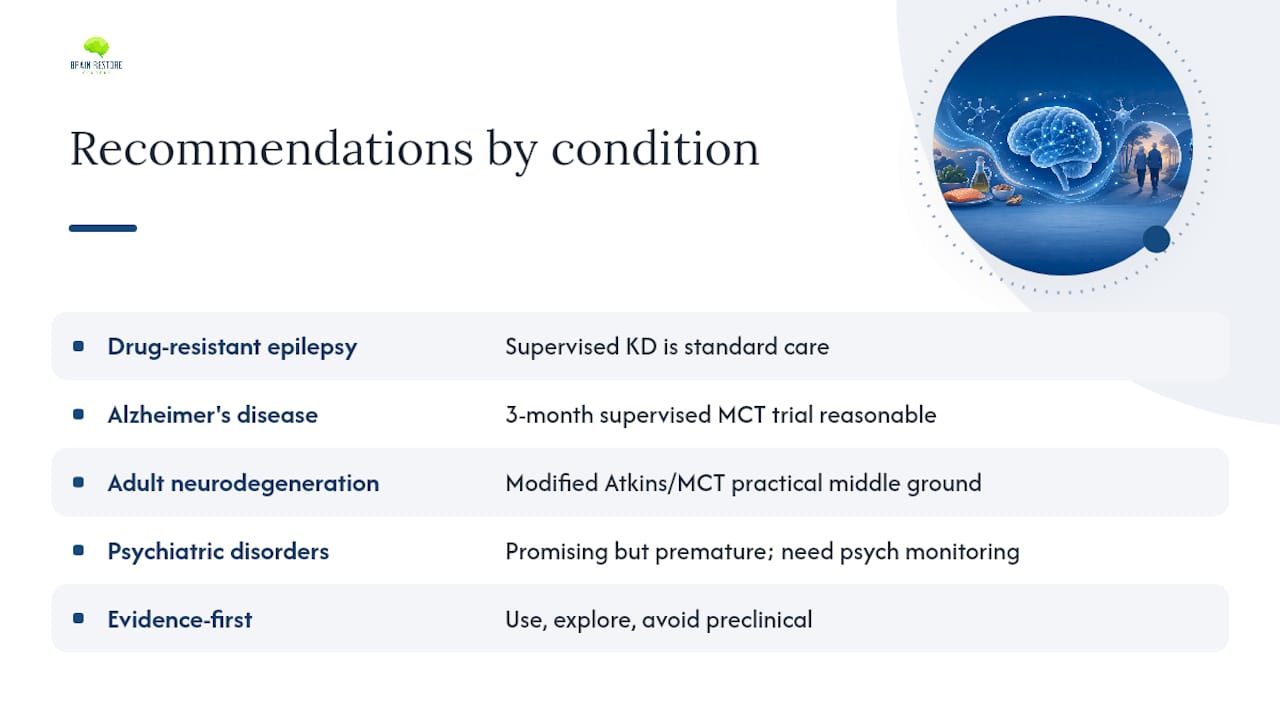
The evidence is clearest where the clinical need is greatest: drug-resistant epilepsy. For a child or adult who has failed multiple anticonvulsant medications, a supervised ketogenic trial is not experimental, it is standard of care. The mechanisms are understood, the monitoring protocols are established, and the outcomes are measurable. That clarity should give clinicians and patients confidence to pursue it.
For Alzheimer’s disease, the picture is more nuanced than most popular accounts acknowledge. The mechanistic rationale is genuinely compelling. A brain that can no longer efficiently metabolize glucose may respond to an alternative fuel source. The early trial data on cognitive scales are modest but consistent. What is missing is not a reason to try it, but a reason to be certain about the size and durability of the benefit. MCT-based protocols are low-risk enough in most patients that a supervised 3-month trial is a reasonable clinical conversation to have, especially when standard disease-modifying options are limited.
Where I think conventional advice falls short is in treating KD as an all-or-nothing proposition. The Modified Atkins Diet and MCT supplementation approaches make meaningful ketosis achievable for patients who cannot or will not follow a strict classic protocol. Clinicians who present only the 4:1 classic diet as “real” ketogenic therapy are leaving a practical middle ground unused. That middle ground may be exactly where most adult patients with neurodegenerative conditions can realistically operate.
The psychiatric applications are the most exciting and the most premature. The Stanford pilot data on severe mental illness deserve serious follow-up. But “exciting pilot data” is not a clinical recommendation. Patients with schizophrenia or bipolar disorder who are considering a ketogenic trial need close psychiatric monitoring, not just metabolic monitoring, because the interaction between dietary metabolic shifts and psychiatric medication is not yet well characterized.
The honest clinical posture is this: use KD where the evidence is strong, explore it where the mechanistic rationale is sound and the risk is manageable, and hold the line on conditions where the evidence base is still preclinical. That is not pessimism. It is the kind of evidence-first thinking that actually helps patients.
This article is general information, not a substitute for advice from a qualified doctor. Consult a qualified healthcare professional about your own circumstances before acting on anything here.
The sources below represent the strongest available evidence base for ketogenic therapy across neurological and psychiatric conditions.
Questions about your next step?
Our Meridian team can help you understand the evaluation process and which care options may fit your needs.
Schedule a Brain Health ConsultationPrefer to speak with our team? Call 208-639-1397