
Neurofeedback for Concussion: Evidence, Limits, and Care Options
October 13, 2026

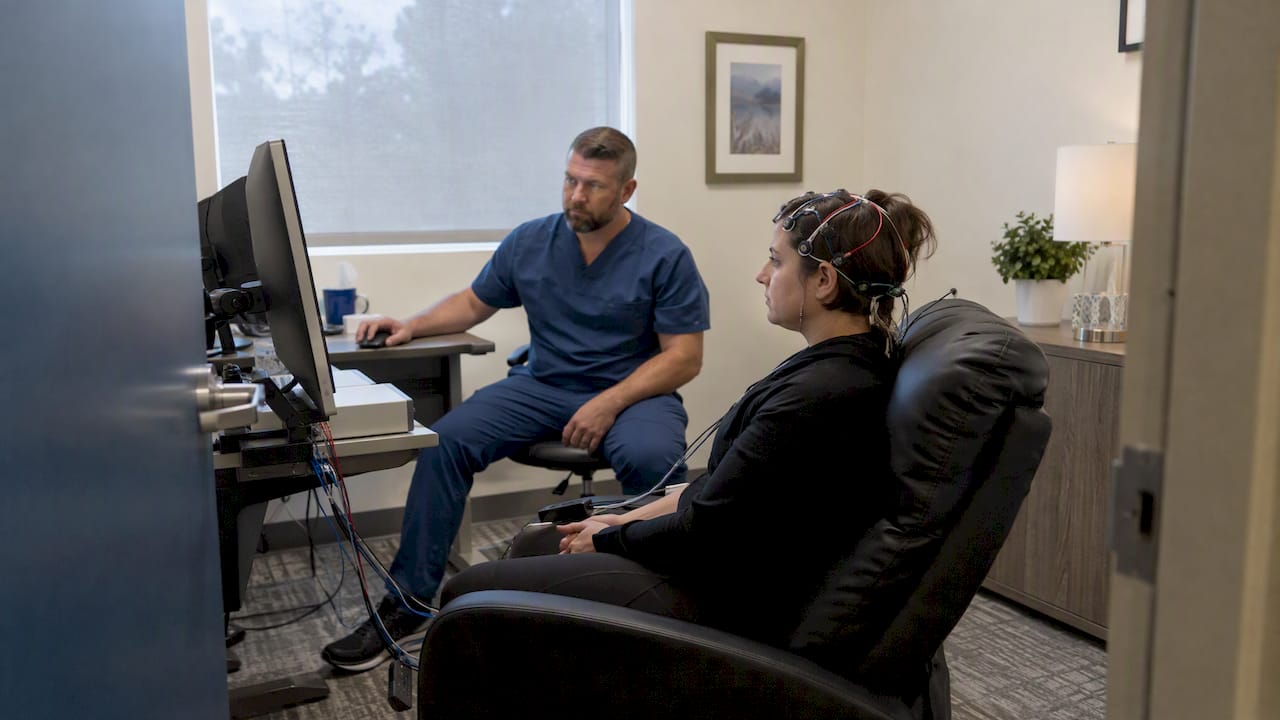
Neurofeedback has shown real promise for easing certain persistent post-concussion symptoms, especially headaches and sleep disturbance, according to several clinical studies. Results for attention and memory are more mixed, and the protocol used matters a great deal. Below, we walk through the evidence, the protocols behind it, what a treatment course looks like, and how to find safe, qualified care.
TL;DR:
- Ask which protocol matches your main symptoms: ILF has the clearest evidence for headaches and sleep, while LZNFB has shown memory and attention gains.
- Concussion specific ILF courses of 30 to 40 sessions were linked to greater symptom improvement, while one multidisciplinary program averaged 22 sessions over 16 weeks.
- Choose clinician supervised care over consumer headbands, because most meaningful TBI evidence comes from clinic programs and home device evidence remains limited.
- Mild headache, fatigue, dizziness, or nausea can follow sessions; providers may shorten sessions or switch to audio feedback, and should screen for seizure history and photosensitivity.
Neurofeedback is a form of EEG-based brain training that shows you, in real time, how your own brainwaves are behaving, then rewards patterns associated with steadier, more regulated brain function. The process relies on operant conditioning: your brain receives a cue, often a sound or visual signal, when it produces a desired pattern, and over repeated sessions it learns to produce that pattern more consistently on its own. You can think of it as exercise for your mind, where the “reps” are small shifts in brainwave activity rather than physical movement.
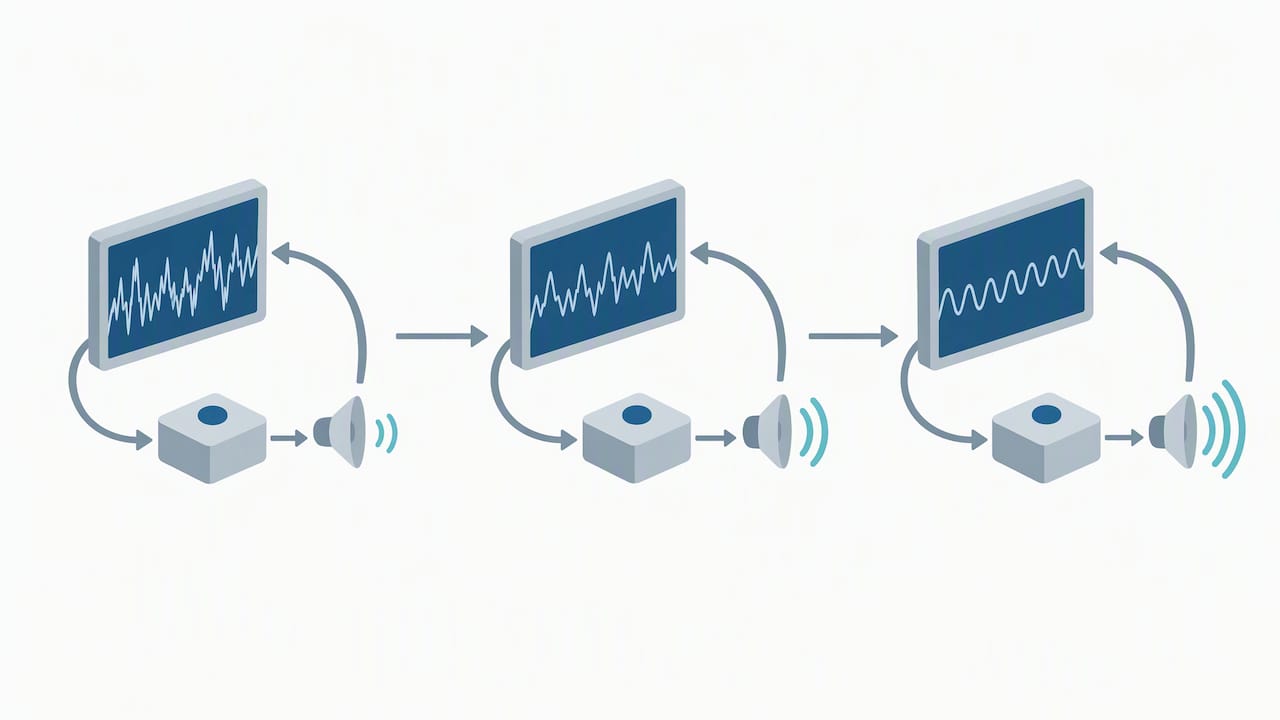
After a concussion, brain networks that normally coordinate attention, sleep, and pain regulation can fall out of sync. This dysregulation helps explain why so many people experience headaches, insomnia, brain fog, and irritability weeks or months after the original injury, even when imaging looks normal. Neurofeedback training aims to help the brain restore more typical patterns of electrical activity in the networks tied to those symptoms, which is why clinicians have studied it as a tool for persistent post-concussive symptoms rather than for the acute injury itself.
How you receive this training matters. A clinician positioning EEG sensors correctly on your scalp, and interpreting the resulting data, is a skilled task, and it shapes both safety and results.
This distinction is worth remembering as you read about the studies below: almost all of the meaningful evidence comes from supervised, clinic-based programs, not from apps or consumer gadgets.
The research on neurofeedback for concussion is still developing, but a handful of well-designed studies give us a clearer picture than most people expect.
One of the most informative lines of research comes from the Department of Veterans Affairs, where researchers studied infra-low frequency (ILF) neurofeedback in veterans with persistent post-concussive symptoms. A VA Research Currents report describes a study of 87 participants in which individualized ILF neurofeedback reduced chronic headaches, sleep problems, and attention difficulties, with the ILF group showing clinically meaningful improvements compared with controls, some of which persisted at follow-up. Secondary measures, including depression, PTSD symptoms, and quality of life, also improved in that group.
A related delayed-intervention analysis looked at combat veterans who initially served as a waitlist control before receiving ILF neurofeedback themselves. Once they began training, their headache, sleep, and attention scores improved by statistically and clinically meaningful margins, with some benefits sustained at two-month follow-up. That same body of research found that patients who completed 30 to 40 sessions of a concussion-specific ILF protocol showed greater net symptom improvement than those who received fewer sessions or a more generic protocol, a pattern a separate retrospective ILF study also reported in patients with persistent postconcussion symptoms.
ILF neurofeedback has produced some of the most consistent positive results for headache and sleep among people with chronic post-concussive symptoms, according to the VA-funded research, though cognitive outcomes vary more across studies.
A different protocol, low-resolution electromagnetic tomography z-score neurofeedback (LZNFB), was tested head-to-head against a theta/beta protocol and usual care in a randomized trial of TBI patients. That study found consecutive LZNFB produced greater gains in memory, attention, and productive daily activity than usual care, with significant improvements on immediate and delayed recall testing, according to the trial results. This suggests that protocol choice genuinely changes which symptoms respond, which is why “neurofeedback” as a blanket term can be misleading without knowing which approach was used.
Outside the randomized-trial world, a retrospective analysis of a comprehensive Concussion Recovery Program that combined brain coaching with EEG-based neurofeedback reported significant gains in attention, cognitive flexibility, and executive functioning among patients who completed the program, with a typical program duration lasting several months and multiple neurofeedback sessions.
A few limitations deserve a plain-spoken mention:
Taken together, this body of work, summarized in a broader overview of neurofeedback and biofeedback for TBI, supports neurofeedback as a reasonable option worth discussing with a provider for lingering post-concussive symptoms, particularly headache and sleep, while cautioning that higher-quality, larger trials are still needed before firmer claims can be made.
Not all neurofeedback is the same, and knowing the basic protocol names can help you ask sharper questions at your first visit.
Protocol selection is not one-size-fits-all. A thoughtful provider will typically start with a baseline assessment, choose a protocol that matches your dominant symptoms, and adjust the approach over the course of treatment based on how your brain responds. Understanding the role of operant conditioning in this process can help you see why sessions build on each other rather than acting like a one-time fix.
Pro Tip: Ask your provider which specific protocol they plan to use and why, since headache-dominant and memory-dominant symptoms often call for different approaches.
Treatment courses vary by clinic and by how your symptoms respond, but the research gives us useful benchmarks.
Progress with neurofeedback is rarely a straight line. Expect your provider to check in regularly, adjust the protocol if a particular approach plateaus, and use objective testing, not just how you feel that week, to decide when you are ready to taper sessions.
Neurofeedback tends to work best as one part of a coordinated recovery plan rather than a standalone fix. The retrospective Concussion Recovery Program analysis that reported significant cognitive gains paired EEG neurofeedback with structured brain coaching, and that combination, not neurofeedback alone, is what produced the broader functional improvements documented in that program data.
Common elements that clinics pair with neurofeedback include:
A concussion recovery program that combined brain coaching and EEG-based neurofeedback reported significant improvements in cognitive domains and symptoms, with a median program length near 16 weeks and roughly 22 neurofeedback sessions.
Retrospective analysis published in Neurology
Our Brain Restore Program is built around a multidisciplinary approach. Alongside neurofeedback, care may include chiropractic care, functional medicine, low-level laser therapy, and hyperbaric oxygen support, coordinating these services so your providers are working from the same picture of your recovery rather than treating symptoms in isolation. You can read more about how a Brain Restore Program approach addresses lingering concussion symptoms that have not resolved on their own.
If you are already seeing a neurologist or concussion specialist, bring your neurofeedback progress reports to those appointments. Clear communication between providers helps everyone involved adjust your plan based on the same data instead of working from partial information.
Neurofeedback is generally well tolerated, and keeping a few practical safety habits in mind helps make it even safer for people recovering from concussion.
Transient side effects are the most commonly reported issue, and they usually resolve quickly:
Clinicians typically respond to these effects by shortening sessions, slowing the pace of protocol changes, or switching to audio-based feedback instead of visual cues when screen sensitivity is a concern, according to a pilot-study overview of neurofeedback for TBI. Before starting, a thorough provider will screen for seizure history, photosensitivity, and uncontrolled medical conditions that might call for a modified approach.
Pro Tip: If a session leaves you unusually fatigued or foggy for more than a day, tell your provider before your next appointment so the protocol can be adjusted rather than repeated.
For complex cases, especially when symptoms involve seizures, significant mood disorders, or unresolved medical issues, coordinating neurofeedback with your primary neurologist or concussion specialist keeps your overall care plan consistent and safe.
We think the biggest mistake in concussion recovery is treating neurofeedback as a generic fix rather than a tool that has to be matched to your specific symptom pattern. Headache-dominant recovery looks different from memory-dominant recovery, and the protocol, pacing, and session count should reflect that difference rather than follow a fixed template.
In our practice, we track progress with the same kind of objective measures used in the research, baseline testing, symptom scales, and periodic retesting, so decisions about adjusting or tapering your protocol are based on data rather than guesswork. If you are curious whether this approach fits your situation, an initial assessment is a low-pressure way to find out.
— Chad
If persistent headaches, sleep trouble, or brain fog have outlasted your concussion by weeks or months, our Brain Restore Program gives you a structured, clinician-guided path rather than a single isolated treatment. We built it around the same evidence-based combination that performs well in the research: clinic-supervised EEG neurofeedback paired with complementary therapies chosen for your specific symptoms.
What this looks like in practice:
If lingering post-concussion symptoms have been running your life for longer than you expected, book a Brain Health Consultation and let us build a plan around what your brain actually needs.
This article is general information, not a substitute for advice from a qualified doctor. Consult a qualified healthcare professional about your own circumstances before acting on anything here.
Return-to-sport guidelines generally call for a gradual, stepwise increase in physical and cognitive activity, moving forward only once you are symptom-free at each stage, under guidance from a qualified medical provider. Because recovery timelines vary widely from person to person, a concussion specialist or sports medicine provider should clear each step rather than relying on a fixed calendar.
Seek evaluation from a medical provider experienced in concussion care, such as a primary care physician, urgent care, emergency department for severe symptoms, or a specialist concussion clinic, depending on how serious your symptoms are. A chiropractor or other provider trained in concussion screening can also help determine next steps, as described in guidance on when to seek evaluation after a head injury.
A traumatic brain injury can disrupt the brain’s normal electrical and network activity, which may lead to symptoms like headache, sleep disturbance, attention problems, and mood changes that persist well beyond the initial injury in some people. For some of these persistent symptoms, particularly headache and sleep issues, neurofeedback training has shown promising results in clinical studies.
Many providers recommend limiting screen time in the early days after a concussion if screens worsen your headache, dizziness, or eye strain, since visual stimulation can aggravate symptoms during the acute recovery period. As symptoms ease, screen tolerance typically improves, and your provider can guide when to increase activities like TV or reading based on how you respond.
Some people notice early changes within the first several sessions, but research on concussion-specific protocols suggests that 30 to 40 sessions are associated with greater and more lasting symptom improvement than shorter courses, according to retrospective analyses. Program length varies by clinic and by your symptom pattern, so your provider will typically set expectations after your initial evaluation.
Questions about your next step?
Our Meridian team can help you understand the evaluation process and which care options may fit your needs.
Schedule a Brain Health ConsultationPrefer to speak with our team? Call 208-639-1397


