Hyperbaricwellnesscenter.com Alternatives: Best Options
August 5, 2026

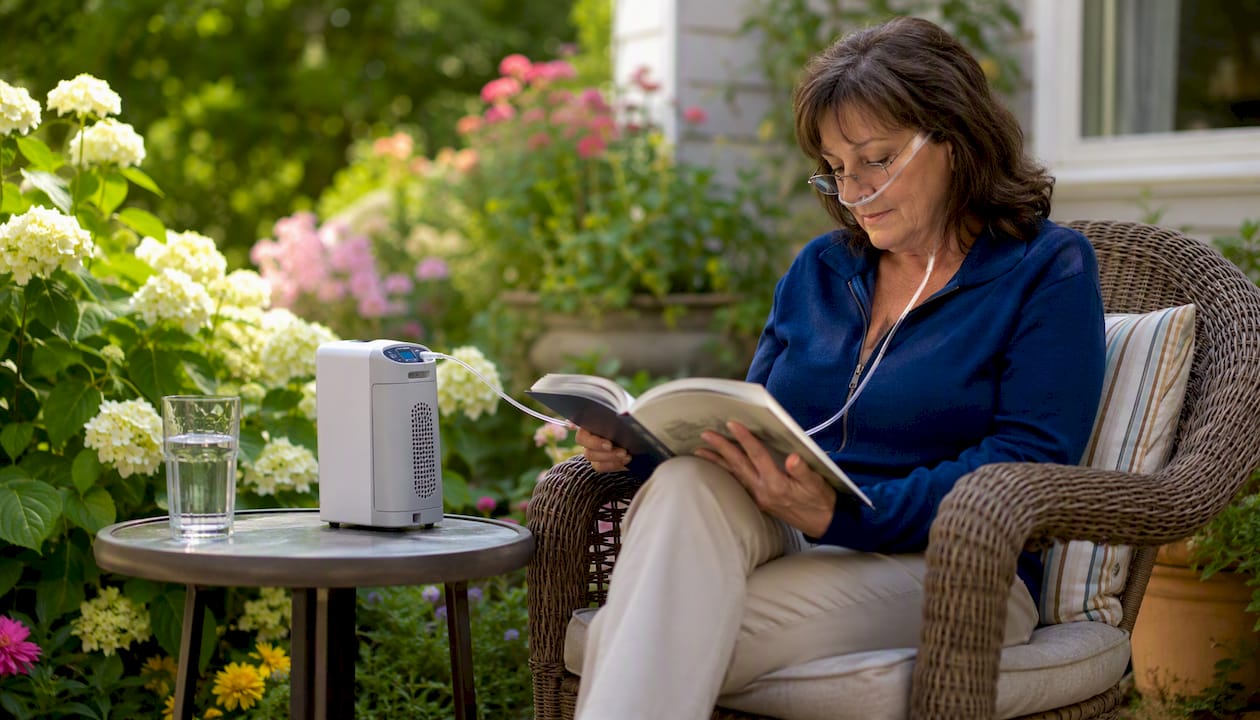
For most wellness and athletic recovery goals, the most practical alternatives to in-clinic hyperbaric oxygen therapy (HBOT) are oxygen nanobubble immersion (Bimini NanoJet), exercise with oxygen therapy (EWOT), and portable oxygen concentrators. If you have a medically indicated condition, clinical HBOT at an accredited facility remains the standard of care. For everyone else, here is a quick shortlist to orient your search:
Recommended first pick for most wellness users: EWOT or a portable oxygen concentrator, because both are accessible, relatively affordable, and carry a manageable safety profile. That said, consult a physician before starting any oxygen therapy if you have a respiratory condition, recent ear surgery, or any undiagnosed health concern.
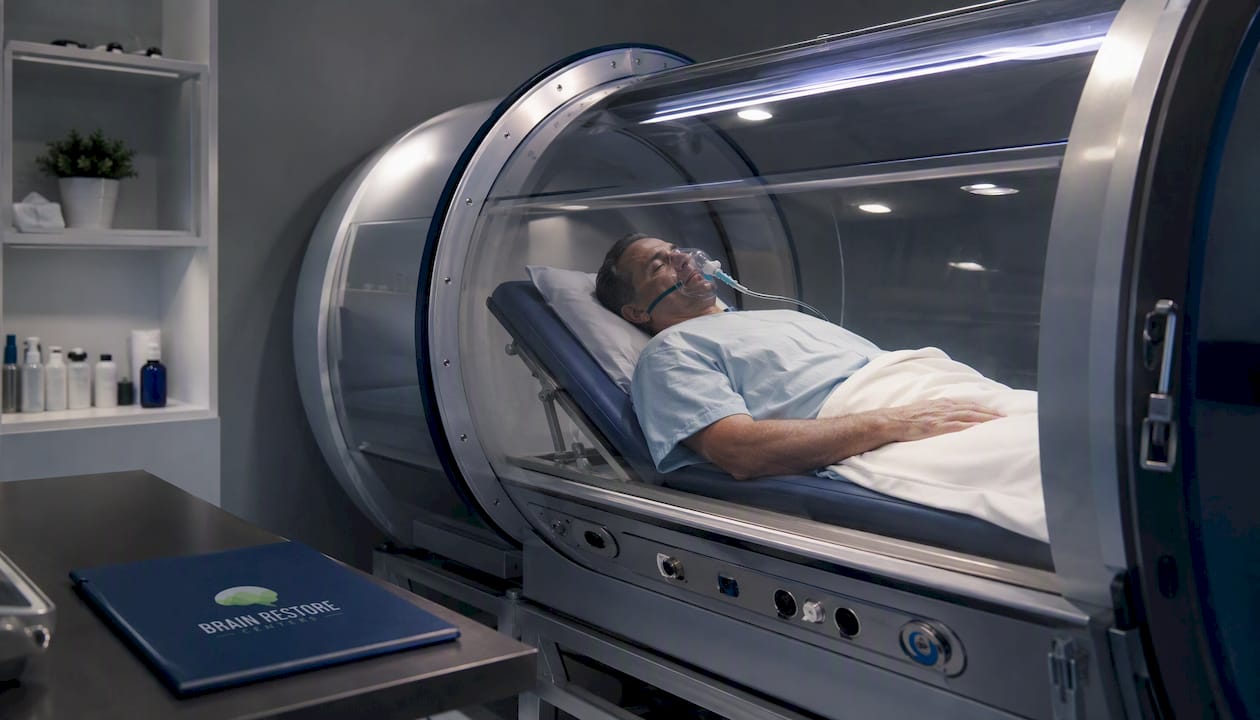
The table below compares Brainrestoremeridian’s in-clinic HBOT program against the four most-discussed non-HBOT alternatives across the dimensions that matter most to wellness seekers.
| Dimension | Clinic HBOT (Brainrestoremeridian) | Oxygen nanobubble immersion (Bimini NanoJet) | Portable O2 concentrators | EWOT | Ozone therapy |
|---|---|---|---|---|---|
| Oxygen delivery | Highest: pressurized pure O2 at 2.0–3.0 ATA | Dissolved nanobubbles in water; transdermal/inhalation route | Normobaric; no pressure boost | Normobaric O2 during exercise | Ozone/O2 blend; mechanism differs from HBOT |
| Cost | Per-session clinic pricing; varies by location and protocol | Device or session fee; pricing not publicly listed | — | — | Per-session clinic fee; varies widely |
| Convenience | Scheduled clinic visits in Meridian, ID | Spa/clinic visits or home unit | High: home use daily | Moderate: home setup required | Clinic visits required |
| Medical supervision | Board-certified physician oversight | Typically none | None required for wellness use | None required | Varies; clinical supervision recommended |
| Session length / frequency | Daily or twice daily for clinical protocols; wellness varies | 30–60 min per session | Continuous or as needed | 15–30 min per session | 30–60 min; frequency varies |
| Evidence base | Strongest for FDA-approved indications | Pilot and industry studies; limited peer-reviewed trials | Established for supplemental O2 needs | Promising pilot data; limited RCTs | Mixed; limited for wellness claims |
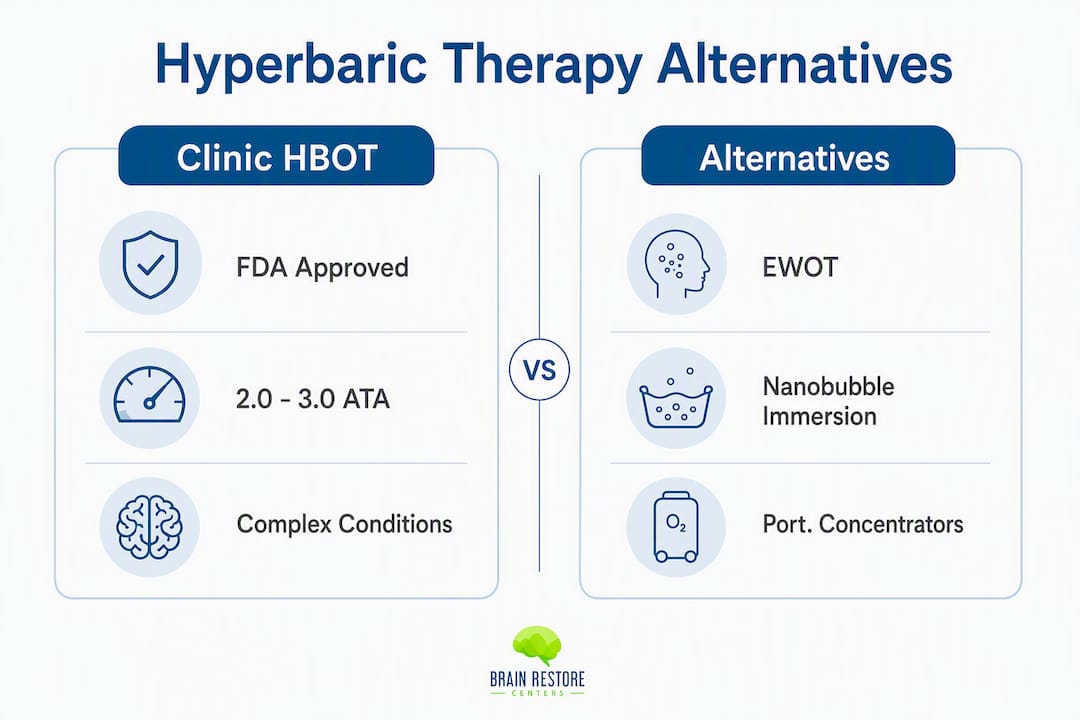
Bottom line: Choose clinical HBOT at Brainrestoremeridian for FDA-approved conditions or complex neurological recovery. Nanobubble immersion or EWOT work well for convenience-focused wellness. Portable concentrators suit daily supplemental oxygen needs at home.
Bimini NanoJet delivers oxygen dissolved as nanobubbles into water, which the body absorbs through skin contact and inhalation during immersion. The physiological rationale is that nanobubbles remain stable longer than standard bubbles, potentially extending oxygen contact time with tissue.
Pros:
Cons:
Session profile: Typically 30–60 minutes; frequency depends on the provider’s wellness protocol.
EWOT pairs aerobic exercise with breathing high-concentration oxygen through a mask connected to a reservoir bag and concentrator. The idea is that increased cardiac output during exercise drives more oxygen into tissues than rest-based inhalation alone.
Pros:
Cons:
Session profile: 15–30 minutes of moderate aerobic activity; wellness users often do 3–5 sessions per week.
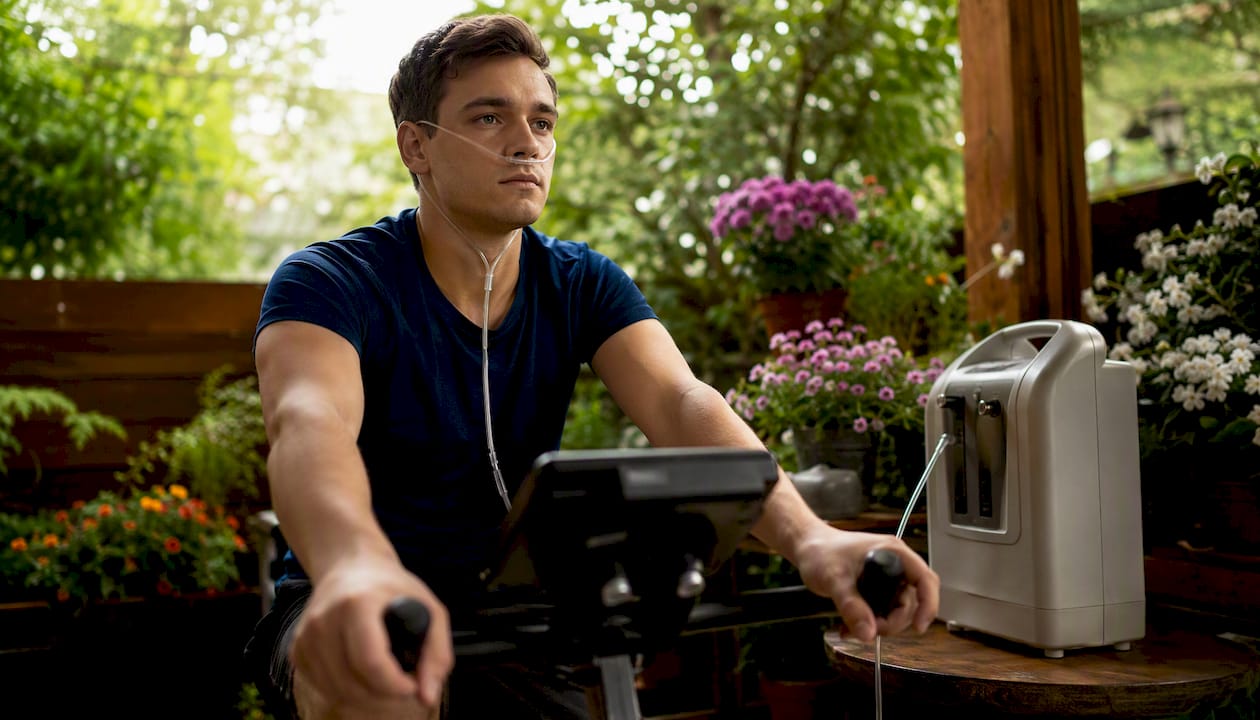
Portable oxygen concentrators filter ambient air to deliver 87–95% pure oxygen at atmospheric pressure. They are well-established for supplemental oxygen in respiratory conditions and are increasingly used by wellness seekers for general oxygenation support.
Pros:
Cons:
Session profile: Continuous or intermittent use; no fixed session length for wellness applications.
Soft-shell home chambers operate at pressures below approximately 1.4 ATA, far below the 2.0–3.0 ATA range used in clinical settings. Many wellness clinics market mHBOT interchangeably with clinical HBOT, but the physiological dosing is substantially different.
Pros:
Cons:
Safety note: Never use a home chamber without reviewing contraindications with a physician first.
Ozone therapy introduces a reactive oxygen species (O3) into the body through various routes, including intravenous, rectal, or topical application. It is sometimes used alongside conventional oxygen therapies as an adjunct.
Pros:
Cons:
Safety caution: Ozone is a reactive gas. Inhaled ozone is harmful to the lungs. Always seek a licensed provider for any ozone protocol.
Structured breathing practices such as diaphragmatic training, Buteyko breathing, or CO2 tolerance work improve respiratory efficiency and can support oxygen utilization without any device.
Pros:
Cons:
Infrared saunas improve circulation and may support mitochondrial function through heat stress, which indirectly affects how efficiently your body uses available oxygen.
Pros:
Cons:
Pro Tip: If you are exploring multiple modalities, start with the lowest-risk option (breathwork or a portable concentrator) for four to six weeks before investing in a larger device or clinic program. Track a simple metric, like resting heart rate or sleep quality, so you have a baseline to evaluate progress.
For specific medical conditions, no wellness alternative replaces clinical HBOT. The FDA has approved hyperbaric oxygen therapy for a defined set of indications, including:
The FDA has not cleared HBOT for Alzheimer’s disease, autism, cancer, or Lyme disease. Mayo Clinic advises patients to verify provider credentials and consult a physician before treatment, because some clinics make broad, unproven claims about HBOT’s benefits.
Clinical HBOT operates at 2.0–3.0 ATA, which forces oxygen into blood plasma at concentrations impossible to achieve at normal atmospheric pressure. Mild HBOT soft chambers, operating below 1.4 ATA, produce a physiologically different effect. This distinction matters enormously when the goal is tissue repair in an FDA-approved indication versus general wellness support.
When clinical HBOT is appropriate, seek facilities that meet these standards:
Common HBOT risks include ear and sinus barotrauma, temporary vision changes, and in rare cases lung complications. Johns Hopkins Medicine recommends pursuing HBOT only after consultation with qualified healthcare providers.
Insurance coverage generally aligns with FDA-cleared indications. Expect coverage for approved clinical uses; wellness or off-label HBOT claims are typically not reimbursed. Confirm your specific plan’s policy before scheduling a clinical course.
The right choice depends on three things: what you are trying to achieve, how much evidence supports that goal, and what level of supervision your health status requires. Here is a practical framework.
Avoid any oxygen therapy without medical clearance if you have:
Red flags from a provider: no physician oversight, pressure or oxygen concentration claims that exceed device specifications, or promises to treat conditions the FDA has not cleared.
Cost varies significantly by modality, location, and whether you are buying a device or paying per session.
| Modality | Upfront / device cost | Per-session cost | Recommended frequency |
|---|---|---|---|
| Clinical HBOT (accredited clinic) | None (clinic-based) | Varies by location and indication | Daily or twice daily for clinical protocols |
| Bimini NanoJet (nanobubble) | Varies; not publicly listed | Spa/clinic session fee | 1–3 sessions/week for wellness |
| Portable O2 concentrator | — | Minimal (electricity) | Daily or as needed |
| EWOT setup | — | Minimal after setup | 3–5 sessions/week |
| Mild HBOT soft chamber | — | Minimal after purchase | 1–5 sessions/week |
| Infrared sauna | — | — | 3–5 sessions/week |
A few practical notes on budgeting:
Brainrestoremeridian is the right choice when you need medically supervised HBOT as part of a broader, integrative recovery plan. The clinic’s approach combines hyperbaric oxygen therapy with neurofeedback, photobiomodulation, and functional medicine, which means your oxygen therapy does not exist in isolation. It is coordinated with a full clinical picture.
Choose Brainrestoremeridian when:
What to expect from a consultation: a medical review of your history, a recommended treatment plan with realistic timelines, safety screening for contraindications, and a clear explanation of what each therapy is expected to accomplish. You leave knowing exactly what you are doing and why.
Pro Tip: Before your first appointment, write down your three most specific symptoms or goals. “I want more energy” is harder to track than “I want to reduce post-exercise fatigue within 30 minutes of a workout.” Specific goals give the clinical team a measurable target.
One safety reminder: always consult a physician before combining therapies or starting ozone or any unsupervised oxygen protocol, especially if you are already on medications or managing a chronic condition.
For most wellness seekers, EWOT and portable oxygen concentrators offer the best balance of cost, convenience, and safety; clinical HBOT at an accredited facility remains the standard for FDA-approved medical indications.
| Point | Details |
|---|---|
| Alternatives suit wellness goals | EWOT, nanobubble immersion, and portable concentrators work for recovery and general wellness but cannot replicate clinical HBOT’s pressure-driven oxygenation. |
| Pressure level defines the therapy | Clinical HBOT runs at 2.0–3.0 ATA; mild HBOT soft chambers operate below 1.4 ATA, producing a physiologically different effect. |
| FDA indications require clinical HBOT | Conditions like decompression sickness, carbon monoxide poisoning, and radiation-damaged tissue require accredited, physician-supervised HBOT. |
| Verify any provider before committing | Ask about UHMS accreditation, oxygen concentration delivered, and staff credentials before booking a clinic or purchasing a device. |
| Brainrestoremeridian for integrated care | Choose Brainrestoremeridian when you need supervised HBOT combined with neurofeedback, photobiomodulation, or functional medicine in Meridian, ID. |
Most people researching hyperbaricwellnesscenter.com alternatives are not looking for a clinical substitute. They want something that fits their life: affordable, accessible, and backed by enough evidence to feel confident. That is a reasonable goal, and the options above genuinely serve it.
What concerns me about the wellness oxygen space is how often the pressure distinction gets glossed over. A soft chamber at 1.3 ATA and a clinical chamber at 2.4 ATA are not the same therapy wearing different clothes. The physiological gap is real, and it matters most when someone has a condition that actually warrants clinical HBOT but settles for a wellness alternative because the marketing language blurred the line.
The honest answer is this: for general recovery, sleep, and performance support, EWOT and portable concentrators are solid, low-risk starting points. For anything involving a diagnosed condition, neurological complexity, or a history of trauma, the right move is a clinical evaluation first. Alternatives are not inferior to clinical HBOT for wellness goals. They are just designed for a different job.
Brainrestoremeridian offers something the device market cannot: a physician-reviewed plan that accounts for your full health picture before recommending any oxygen therapy. For readers in the Meridian, Idaho area who have been weighing alternatives, a consultation cuts through the noise quickly.
A consultation at Brainrestoremeridian includes a medical history review, safety screening for contraindications, a recommended therapy plan (which may include HBOT, neurofeedback, or photobiomodulation), and a realistic timeline for expected outcomes. If clinical HBOT is not appropriate for your situation, the team will tell you that directly and point you toward the right alternative. Readers managing cognitive symptoms or post-concussion recovery may also benefit from exploring neurofeedback for anxiety relief as part of a broader restorative plan.
To schedule a consultation or ask whether clinical HBOT fits your goals, visit Brainrestoremeridian’s HBOT page or call the clinic directly.
This article provides general health information, not medical advice. Confirm current clinical guidelines and your personal contraindications with a qualified healthcare provider before starting any oxygen therapy.
Questions about your next step?
Our Meridian team can help you understand the evaluation process and which care options may fit your needs.
Schedule a ConsultationPrefer to speak with our team? Call 208-639-1397