How Neurofeedback Complements Chiropractic Care
June 20, 2026

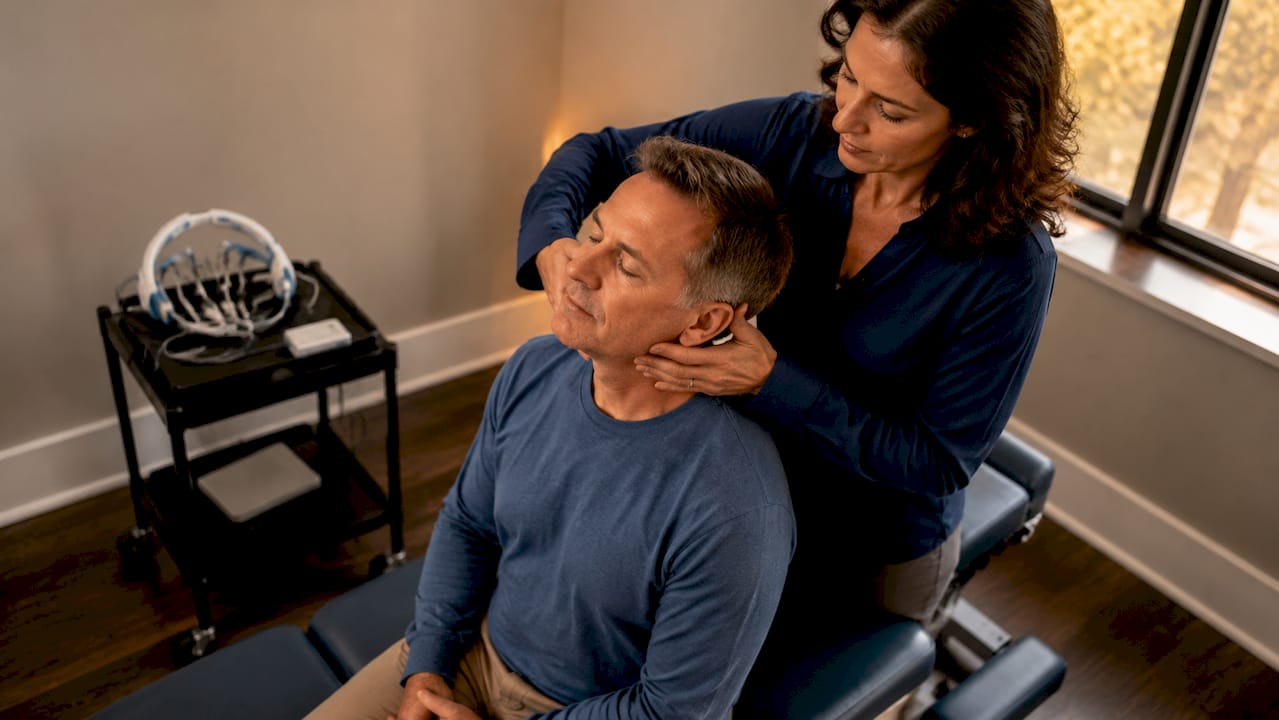
Neurofeedback is a brain-training therapy that, when combined with chiropractic care, creates a complete system for nervous system regulation. Chiropractic care addresses the structural “hardware” of your spine and musculoskeletal system. Neurofeedback addresses the neurological “software,” training your brain to regulate its own electrical activity. Together, they form an integrative approach that clinical practitioners at Brainrestoremeridian use to treat anxiety, PTSD, chronic pain, and attention disorders. Understanding how neurofeedback complements chiropractic care gives you a clearer picture of what full nervous system recovery actually looks like.
Neurofeedback, also called EEG biofeedback, is a non-invasive therapy that monitors your brainwave activity in real time and trains your brain to self-regulate. Sensors placed on your scalp read electrical signals. A computer translates those signals into audio or visual feedback, and your brain learns to shift toward healthier patterns without conscious effort on your part.
Standard neurofeedback sessions run 30–45 minutes, with most patients needing 20 or more sessions to see significant results. A newer approach called Microcurrent Neurofeedback (MCN) shortens sessions to roughly 7 minutes and requires less active engagement from the patient. MCN is particularly useful in chiropractic clinic settings where appointment flow and time efficiency matter.
Before treatment begins, practitioners use QEEG brain mapping to identify which brainwave patterns are dysregulated. QEEG stands for quantitative electroencephalography, and it produces a detailed map of your brain’s electrical activity. That map guides a personalized neurofeedback protocol rather than a one-size-fits-all approach.
The conditions neurofeedback addresses most effectively include:
Pro Tip: Ask your provider whether QEEG brain mapping is included in your initial evaluation. Protocols built on objective brain data consistently outperform generic approaches.
Chiropractic adjustments do more than relieve back pain. Spinal misalignment creates chronic tension that keeps your autonomic nervous system locked in sympathetic overdrive, the physiological state commonly called “fight or flight.” That state makes it harder for your brain to learn, adapt, or respond to any form of therapy.

Chiropractic techniques targeting the cervical spine directly affect vagal tone, which is the activity level of the vagus nerve. The vagus nerve is the primary driver of your parasympathetic nervous system, the “rest and digest” state that allows healing and neuroplasticity. Spinal adjustments increase vagal tone and decrease sympathetic overactivity, resetting the nervous system toward a calmer baseline.
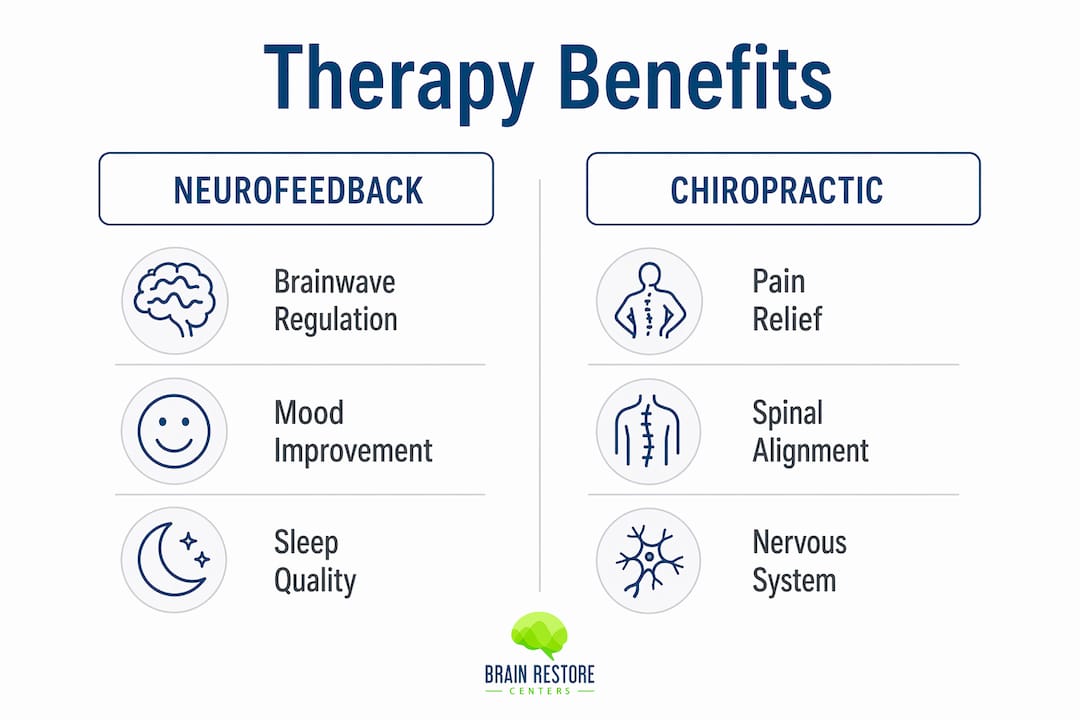
Trauma and chronic stress are stored physically in the body. Muscle guarding, restricted joint movement, and compressed spinal segments all signal danger to the brain. Chiropractic care reduces sympathetic activation by releasing that physical tension, which opens the nervous system to benefit more fully from neurofeedback brain training.
The practical result is significant. When your nervous system is no longer fighting structural tension, neurofeedback sessions produce faster and more durable changes. Chiropractic care creates the physical conditions that make neuroplasticity possible. Neurofeedback then guides the brain to use that openness productively.
Key chiropractic contributions to neurofeedback outcomes include:
Pro Tip: Schedule your chiropractic adjustment before your neurofeedback session when possible. Patients who do this report that their brains feel more receptive and sessions feel less effortful.
The research base for each therapy individually is strong. A systematic review of 45 studies with 4,600 participants confirmed neurofeedback produces moderate to large clinical effect sizes for anxiety and PTSD. That is not a marginal finding. Effect sizes in that range are comparable to established pharmaceutical interventions, without the side effects.
Practitioners who integrate neurofeedback into chiropractic settings report faster and more comprehensive improvements than either therapy produces alone. The mechanism is straightforward: combining top-down brain training with bottom-up musculoskeletal care breaks the chronic feedback loop between physical tension and neurological dysregulation. Neither therapy can fully resolve that loop on its own.
“Neurofeedback is effectively physical therapy for the brain. Chiropractic care addresses the physical hardware. Together, they form a complete nervous system care plan.” — Clinical framework described by integrative practitioners
The table below summarizes how the combined approach compares to single-modality treatment across key outcome areas:
| Outcome area | Neurofeedback alone | Chiropractic alone | Combined approach |
|---|---|---|---|
| Anxiety reduction | Moderate to large effect | Moderate via vagal tone | Faster and more sustained |
| PTSD symptom relief | Strong, non-verbal reset | Reduces somatic tension | Addresses both layers |
| Chronic pain management | Addresses neurological component | Addresses structural component | Resolves both drivers |
| Cognitive focus | Directly improves brainwave regulation | Indirect via stress reduction | Compounded improvement |
| Sleep quality | Improves via brainwave normalization | Improves via tension relief | Patients report strongest gains |
Patients undergoing combined neurofeedback and chiropractic sessions report improved sleep quality, mood regulation, focus, and pain tolerance. These gains are linked to neuroplastic changes and improved autonomic function working in parallel. The quality of the neurofeedback platform also matters. Personalized QEEG-guided protocols produce more consistent results than generic brainwave training, particularly in a chiropractic clinic setting where patient populations are diverse.
Patients with nutritional or metabolic issues affecting the nervous system see additional benefit from adjunctive therapies such as functional nutrition combined with neurofeedback and chiropractic care. Brainrestoremeridian’s multidisciplinary model reflects exactly this kind of layered approach.
Most patients begin with a QEEG brain map and a chiropractic evaluation in the same intake process. That dual assessment identifies both neurological dysregulation and structural contributors before a single treatment session begins. The result is a care plan that addresses your specific pattern, not a generic protocol.
A typical integrated treatment plan looks like this:
One concern patients frequently raise is whether neurofeedback requires them to talk about past trauma. It does not. Neurofeedback is a non-verbal intervention that trains brain electrical activity while you watch a video or listen to audio. Your brain learns self-regulation without you having to revisit painful memories. That makes it accessible to patients who have not responded well to talk therapy.
Conditions that respond particularly well to the combined approach include anxiety disorders, PTSD, traumatic brain injury recovery, chronic low back pain, attention disorders, and migraine. For patients recovering from concussion, the combination of chiropractic care for structural trauma alongside neurofeedback for neurological recovery addresses both the physical and cognitive dimensions of injury. Patients typically report noticeable changes in sleep and mood within the first several weeks, with cognitive and pain improvements building over the full course of treatment.
Neurofeedback and chiropractic care work together because they target different but connected layers of the same nervous system, producing outcomes neither therapy achieves as effectively alone.
| Point | Details |
|---|---|
| Dual-system approach | Neurofeedback trains brainwave regulation while chiropractic care corrects structural tension driving nervous system stress. |
| Chiropractic prepares the brain | Spinal adjustments increase vagal tone and reduce sympathetic overdrive, making the brain more receptive to neurofeedback. |
| Strong clinical evidence | A review of 45 studies with 4,600 participants confirmed moderate to large effect sizes for neurofeedback in anxiety and PTSD. |
| QEEG guides personalized care | Brain mapping before treatment produces better outcomes than generic neurofeedback protocols. |
| Non-verbal trauma safety | Neurofeedback does not require patients to relive trauma, making it accessible for PTSD and trauma recovery. |
Patients come to me having tried one or the other. They’ve done chiropractic care for months and feel better structurally but still can’t sleep, still feel anxious, still can’t focus. Or they’ve done neurofeedback and noticed real cognitive shifts but their body keeps pulling them back into tension and pain. The missing piece is almost always the other half of the equation.
What I’ve found clinically is that the body and brain are not separate problems. Chronic sympathetic activation from a misaligned cervical spine will undermine even the best neurofeedback protocol. And a brain locked in dysregulated theta or high-beta patterns will keep generating the muscle tension that sends patients back to the adjustment table. You have to address both simultaneously, or you’re managing symptoms rather than resolving the underlying pattern.
The misconception I hear most often is that neurofeedback is experimental. The American Academy of Pediatrics rated it Level 1 Best Support for ADHD. That is the same evidence tier as stimulant medication, without the dependency risk. For PTSD, the non-verbal nature of neurofeedback is not a workaround. It is a clinical advantage for patients who cannot tolerate exposure-based talk therapies.
My honest advice: if you’ve plateaued with either therapy alone, the answer is not more of the same. A combined evaluation that maps your brain and assesses your spine in the same visit will tell you more in one hour than months of single-modality guesswork. You can also explore conditions chiropractors treat to understand the full scope of what structural care addresses before your first appointment.
— Chad
If you’ve been managing anxiety, chronic pain, PTSD, or cognitive fog without lasting results, the gap may be between what your brain needs and what your body is allowing. Brainrestoremeridian in Meridian, Idaho combines QEEG-guided neurofeedback with chiropractic care and functional medicine in one coordinated program. Every care plan starts with a thorough evaluation so your treatment targets your specific pattern, not a generic protocol.

Patients who want to understand how chiropractic care relieves pain while neurofeedback restores brain function can schedule a comprehensive evaluation with the Brainrestoremeridian team. The clinic also offers resources on boosting brain function for patients who want to understand the neurological side of their recovery before their first visit. Contact Brainrestoremeridian to take the first step toward a care plan that addresses both layers of your nervous system.
Neurofeedback is a non-invasive brain-training therapy that monitors your brainwave activity through scalp sensors and provides real-time audio or visual feedback. Your brain uses that feedback to learn healthier self-regulation patterns without medication or conscious effort.
Yes. Chiropractic adjustments reduce sympathetic overactivation and improve vagal tone, which makes the brain more receptive to neurofeedback training. Practitioners report faster and more comprehensive improvements when both therapies are combined compared to either alone.
Standard neurofeedback protocols require 20 or more sessions of 30–45 minutes each for significant results. Microcurrent Neurofeedback sessions run approximately 7 minutes and may produce results in fewer visits for some patients.
Neurofeedback is a non-verbal intervention that does not require patients to revisit or describe traumatic memories. It trains brain electrical activity directly, making it a safe option for patients who have not responded to talk-based trauma therapies.
Anxiety disorders, PTSD, chronic pain, ADHD, traumatic brain injury recovery, and migraine respond particularly well to the combined approach. The integration addresses both the neurological and structural contributors to these conditions simultaneously.