From Brain Scan to Hope: Idaho Veterans Share Their Brain Health Recovery Stories
May 24, 2026

What happens after a veteran discovers that years of stress, trauma, head injuries, or high-pressure environments may have affected the way their brain is functioning?
For two Idaho veterans and first responders, the answer has become a story of hope.
Idaho News 6 recently returned to Brain Restore Centers of Meridian (located in Align Integrated Medical) to follow up on a story it first covered during Suicide Prevention Month, when our clinic offered complimentary brain scans to veterans and first responders throughout the Treasure Valley.
That original initiative was designed to help those who have spent their lives serving others gain a better understanding of their own brain health.
But something happened after that first story aired.
More veterans began reaching out for help.
Now, Idaho News 6 has returned to share what happened next.
In the original Idaho News 6 report, Brain Restore Centers of Meridian opened its doors to provide complimentary brain scans for veterans and first responders.
The goal was simple: raise awareness about the often-overlooked neurological toll associated with years of chronic stress, trauma, concussions, sleep disruption, and high-pressure environments.
[Read our original article about the Brain Restore Meridian veteran and first responder brain scan initiative →]
The response to that story was encouraging.
According to the follow-up report from Idaho News 6, additional veterans reached out to Brain Restore Centers of Meridian seeking help after the original story aired.
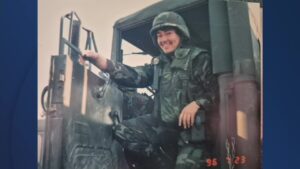
One of them was U.S. Army veteran Michelle Pratt.
Pratt served in the Army during the 1990s, including time stationed in Germany and Bosnia.
During her military service, she witnessed traumatic events that remained with her long after returning home.
She described seeing serious accidents and situations most people would rarely encounter.
Years later, she found herself dealing with exhaustion, brain fog, and difficulty focusing.
Like many people experiencing these problems, the symptoms weren't necessarily dramatic from one day to the next.
Instead, life simply became harder.
Tasks required more energy. Focus became more difficult. Fatigue accumulated.
Pratt described feeling as though she was stuck on a "hamster wheel."
Eventually, she came to Brain Restore Centers of Meridian looking for answers.
Mental health and brain health are deeply interconnected, but they aren't necessarily the same thing.
Psychological trauma deserves appropriate psychological and medical care.
At the same time, someone with a history of military service, contact sports, vehicle accidents, blast exposure, concussions, sleep disruption, or chronic stress may have additional factors worth investigating.
That's one reason our approach at Brain Restore Centers of Meridian begins with a comprehensive evaluation.
Rather than looking at a single symptom or relying upon a single test, our evaluation process may examine areas such as:
A QEEG, sometimes referred to as a "brain map," records electrical activity generated by the brain.
It is important to understand that QEEG alone does not diagnose PTSD, depression, anxiety, traumatic brain injury, or other psychiatric or neurological conditions.
Instead, it can provide objective information about patterns of electrical brain activity that can be considered alongside other clinical findings.
For someone who has spent years wondering why they don't feel like themselves anymore, gathering more information can be an important first step.
After beginning the Brain Restore program in Meridian, Pratt told Idaho News 6 that she had already begun noticing changes in how she felt.
One of the most noticeable differences involved her energy.
She described previously feeling tired and groggy but told Channel 6 that she was now waking up in the morning feeling ready to go.
Her story is an individual patient experience and should not be interpreted as a guarantee that another person will experience the same results.
But her experience illustrates why we believe these conversations about brain health are worth having.
Sometimes people spend years adapting to symptoms without realizing how much those symptoms have affected their lives.
Idaho News 6 also spoke with Todd Harris, a former police officer who understands the cumulative toll that years in law enforcement can take.
Harris described something that many veterans and first responders may recognize:
You can leave the dangerous situation physically, but your body doesn't always respond as though the danger is gone.
As Harris explained to Channel 6, years of those experiences can take a toll internally without someone fully recognizing what is happening.
He also reported noticing changes during his care, particularly with his ability to remember and access memories.
Again, no individual patient's response predicts another patient's outcome.
But Harris' story raises an important question:
How many veterans and first responders are living with brain fog, memory problems, poor sleep, fatigue, difficulty concentrating, or other symptoms they've simply learned to live with?
There is no single explanation for the challenges experienced by veterans and first responders.
PTSD, depression, anxiety, traumatic brain injury, chronic pain, sleep disorders, relationship stress, metabolic health, medications, and many other factors can contribute to someone's symptoms.
That's why comprehensive evaluation—and collaboration with the appropriate healthcare professionals—is so important.
Our goal isn't to reduce every mental health concern to a brain scan.
It's the opposite.
We want to look at the whole person.
What happened to them?
What symptoms are they experiencing?
How is their brain functioning?
How is their balance?
How are they sleeping?
What is their concussion history?
What other physical, neurological, metabolic, psychological, or lifestyle factors may deserve attention?
The more complete the picture, the better informed the next conversation can be.
The Idaho News 6 follow-up also revealed another important development for Treasure Valley veterans.
According to the report, the Boise VA confirmed that Brain Restore Centers of Meridian is now a Community Care Network provider, allowing eligible VA-enrolled veterans to potentially receive authorized care through the clinic.
This is an important step in our mission to make comprehensive brain health services more accessible to the men and women who have served our country.
Veterans interested in utilizing VA Community Care should speak with their VA healthcare team to determine eligibility and obtain any necessary authorization before receiving community care.
We are especially grateful that Idaho News 6 has now helped tell two different parts of this story.
The first story was about awareness.
During Suicide Prevention Month, Brain Restore Centers of Meridian offered complimentary brain scans to veterans and first responders to help bring greater attention to brain health, mental health, trauma, and suicide prevention.
The second story is about what happened afterward.
Veterans saw the story.
Some reached out.
And people like Michelle Pratt and Todd Harris became willing to publicly share their experiences in hopes that someone else might recognize themselves in their stories.
For Pratt, that's precisely the point.
She told Idaho News 6 that she hopes other veterans can see her experience and recognize that there may be hope.
We couldn't agree more.
Brain health isn't only important after a major diagnosis.
Persistent brain fog, memory problems, difficulty concentrating, sleep problems, changes following a concussion, balance problems, unexplained fatigue, or simply feeling cognitively different than you once did can all be reasonable reasons to speak with a qualified healthcare professional.
At Brain Restore Centers of Meridian, we work with patients throughout Meridian, Boise, Eagle, Kuna, Nampa, and the greater Treasure Valley who want to better understand their brain health.
Our goal is not to make assumptions based upon symptoms.
Our goal is to measure, evaluate, understand, and then help each patient determine an appropriate path forward.
Watch the full Idaho News 6 report:
“Idaho Veteran Shares Mental Health Journey, Hope Found Through Meridian Clinic.”
And if you haven't seen the story that started this conversation, read our companion article about the original Brain Restore Centers Meridian free brain scan initiative for veterans and first responders.
Together, these stories demonstrate something important:
Sometimes the first step toward change is simply realizing there may be another avenue worth exploring.
If you are a veteran, first responder, or Treasure Valley resident experiencing brain fog, memory problems, difficulty concentrating, cognitive changes, symptoms following a concussion, or other concerns about brain function, contact Brain Restore Centers of Meridian to learn more about our comprehensive brain health evaluation process.
Brain Restore Centers of Meridian
750 W. Ustick Rd., Suite 100
Meridian, Idaho 83646
208-639-1397
Individual experiences and outcomes vary. Information provided here is educational and is not intended to diagnose or treat any condition or replace care from an appropriate healthcare professional.
If you or someone you know is experiencing a mental health crisis or having thoughts of suicide, seek immediate professional assistance.
Questions about your next step?
Our Meridian team can help you understand the evaluation process and which care options may fit your needs.
Schedule a Brain Health ConsultationPrefer to speak with our team? Call 208-639-1397