
Brain Scan for ADHD: What It Can and Can't Tell You
August 1, 2026

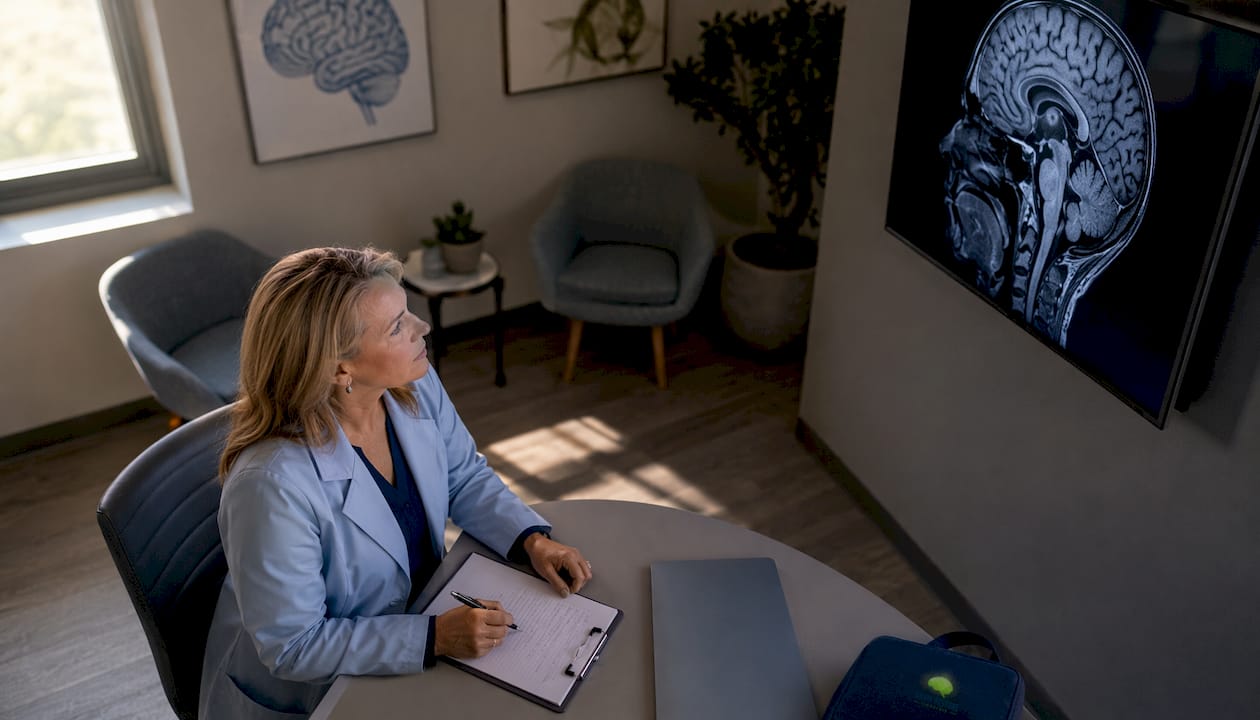
A brain scan cannot diagnose ADHD in an individual. That is the clinical consensus, and it matters to say it plainly before anything else. The Brain & Behavior Research Foundation confirms that ADHD diagnosis relies on clinical interview and behavioral assessment, not imaging. What scans can do is reveal patterns that inform care, rule out other causes, and help build a personalized treatment plan.
Several modalities appear in ADHD research and clinical settings. Each measures something different, and each has real limits for individual diagnosis.
| Category | Modality | What It Measures | Clinical Usefulness | Key Limitation |
|---|---|---|---|---|
| Structural | MRI / DTI | Gray matter volume, white matter tract integrity | Rules out lesions; shows group-level volume differences | Cannot confirm ADHD in one person |
| Functional | fMRI (task & resting-state) | Blood-oxygen activation and connectivity patterns | Reveals hypoactivation in frontal-parietal networks | Sensitive to task design, age, and medication status |
| Perfusion | PET / SPECT | Regional cerebral blood flow and metabolic activity | Identifies perfusion deficits in prefrontal and basal ganglia regions | Radiation exposure; cohort-specific findings |
| Electrophysiology | qEEG / EEG | Brainwave frequency patterns and connectivity | Supports neurofeedback targeting; tracks treatment response | Requires artifact-free recording; findings vary by protocol |
| Neuropsychological | Standardized testing | Attention, working memory, processing speed | Gold standard adjunct to clinical interview | Does not produce an imaging result |
Resting-state fMRI is particularly useful for pediatric and adult populations because it captures intrinsic brain activity without requiring a task. Quantitative EEG, or qEEG, stands out in clinical practice because it is non-invasive, repeatable, and directly informs neurofeedback protocols. At Brainrestoremeridian, brain function testing draws on qEEG and neuropsychological assessment to build a picture that guides treatment rather than simply labeling a diagnosis.
Research consistently finds structural and functional differences in the frontal lobes, corpus callosum, basal ganglia, and limbic system across people with ADHD. The left superior frontal gyrus and corpus callosum appear frequently in meta-analytic findings. But here is the critical nuance: these are group-level patterns. Any individual with ADHD may or may not show them.
“Because ADHD is heterogeneous, experts are shifting from seeking a single imaging biomarker to using imaging to identify biological subtypes that may predict treatment response.” — Translational Psychiatry, 2025
A large semi-supervised learning study analyzing thousands of adolescents from the ABCD dataset identified distinct neuroimaging subtypes of ADHD, labeled underdeveloped, overdeveloped, and mixed, each correlating with cognitive scores and medication response. That kind of subtyping could eventually guide which therapies work best for which patients.
| Metric | Reported Value | Study Context |
|---|---|---|
| Visual ROI AUC | 97.6% | Adult ADHD vs. healthy controls, large multisite SPECT cohort |
| Post-hoc ROI AUC | 100% | Same cohort, post-hoc analysis |
| Visual read sensitivity | ~100% | Non-comorbid adult ADHD sample |
| Visual read specificity | >97% | Same sample |
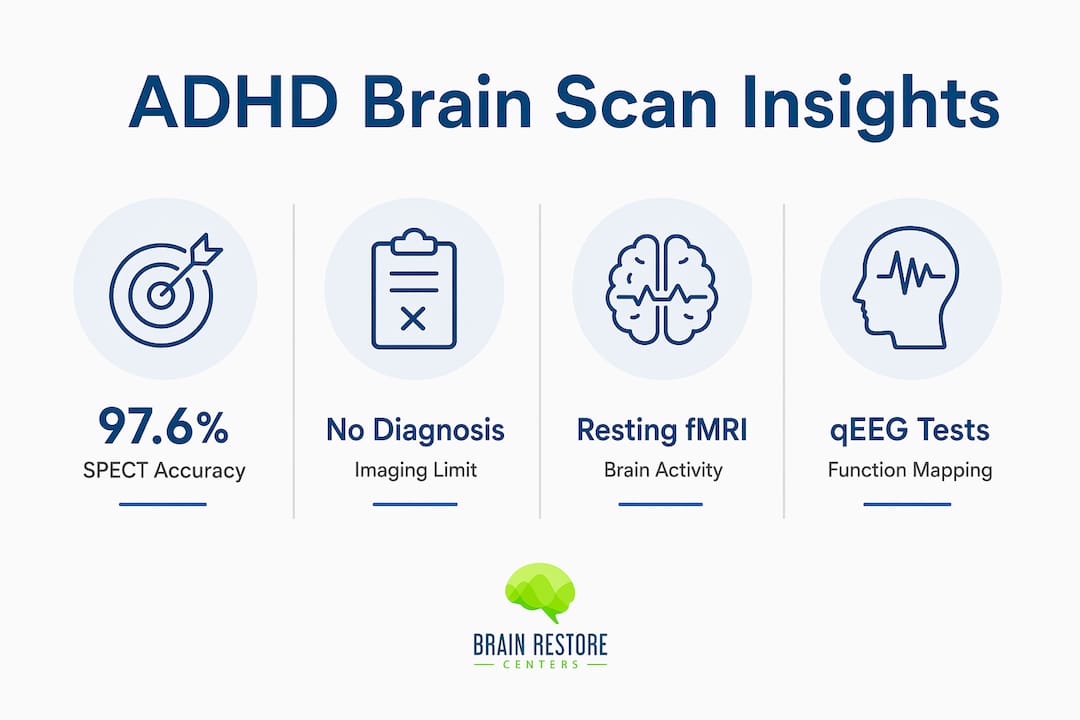
These numbers from a large multisite SPECT analysis are striking: reported visual ROI AUC was 97.6%, post-hoc ROI AUC 100%, with visual read sensitivity around 100% and specificity above 97% in the studied cohort. But they reflect a carefully selected, non-comorbid research cohort. Real-world patients carry comorbidities, take medications, and vary enormously in age and symptom profile. AI and machine-learning models trained on imaging data reach moderate to high accuracy for group classification, depending on the study, but those pipelines are not yet used in routine clinical practice.
Meta-analytic evidence also shows that children with ADHD display more widespread structural alterations than adults, suggesting some findings may normalize with age or treatment. That matters when you are an adult seeking answers: the imaging literature skews younger, and adult-specific patterns are still being mapped.
Most adults with ADHD do not need a brain scan to get good care. But certain situations genuinely call for one.
Age matters here too. Because imaging findings may normalize with age, adults considering a scan should discuss whether the expected findings are likely to change their treatment plan before committing to the cost.
Insurance and cost: Standard MRI is sometimes covered when ordered to rule out structural pathology, but functional studies like SPECT and qEEG are rarely covered for ADHD specifically. Out-of-pocket costs vary widely in the Meridian area. Always ask for the CPT code before scheduling.
Pro Tip: Ask your provider for the specific CPT codes for any ordered test before your appointment. Call your insurer with those codes to confirm coverage and preauthorization requirements. This one step can prevent a surprise bill of several hundred dollars.
Brainrestoremeridian takes a stepwise, multidisciplinary approach to adult ADHD evaluation that goes well beyond a single test.
The evaluation process:
How imaging guides therapy at the clinic:
Brain scans cannot diagnose ADHD in an individual, but qEEG and neuropsychological testing can reveal brain-function patterns that guide personalized treatment at a clinic like Brainrestoremeridian in Meridian, Idaho.
| Point | Details |
|---|---|
| Scans don’t diagnose ADHD | No single imaging biomarker can confirm ADHD; clinical interview remains the standard. |
| Group-level patterns are real | Research consistently shows frontal lobe, basal ganglia, and corpus callosum differences, but these vary across individuals. |
| SPECT shows promise, not routine use | A large multisite study reported AUC of — for visual ROI reads, but findings are cohort-specific and not standard clinical practice. |
| qEEG guides personalized therapy | Brainwave mapping at Brainrestoremeridian directly informs neurofeedback protocols and treatment planning. |
| Brainrestoremeridian offers local evaluation | Adults and families in Meridian can book a multidisciplinary brain-function evaluation that moves from testing to a written care plan. |
There is a version of this conversation that goes wrong quickly: a patient arrives convinced that a scan will finally “prove” their ADHD, and leaves frustrated when the results are ambiguous. That frustration is understandable, but it comes from a mismatch between what imaging promises and what it actually delivers right now.
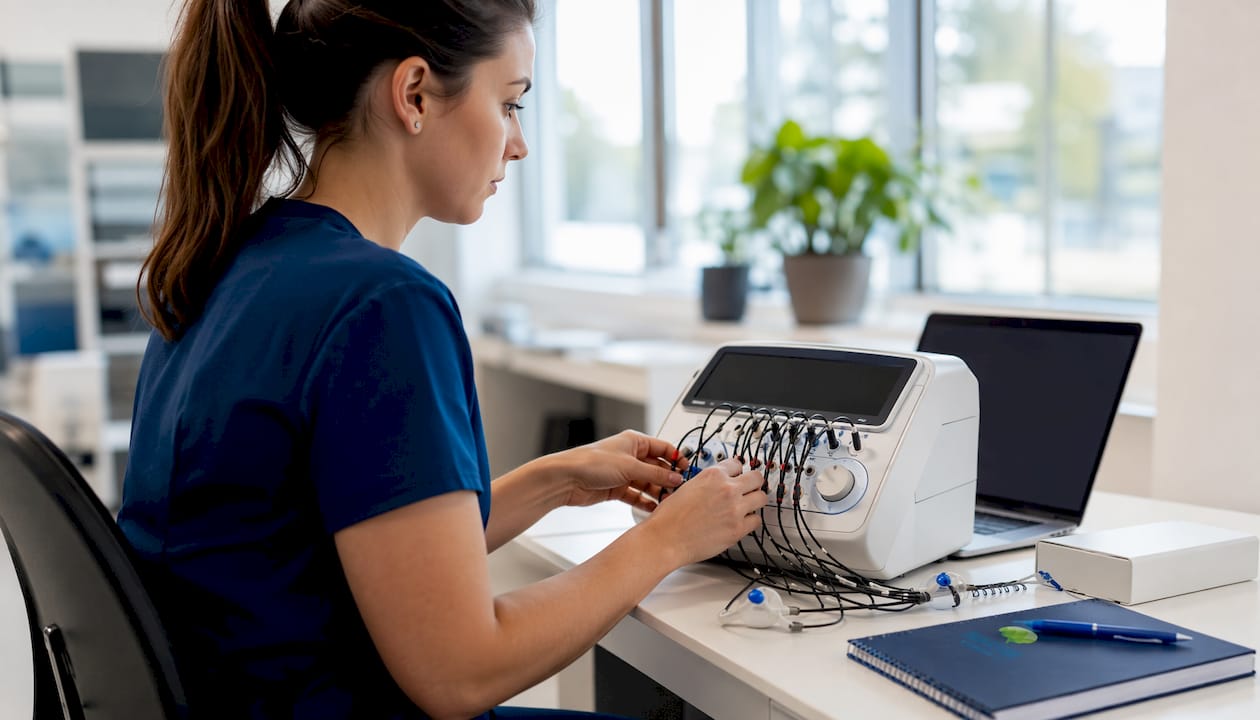
The more useful frame is this: a qEEG or functional study is like a detailed map of how your brain is currently operating. It does not tell you the diagnosis. It tells you where to focus the work. At Brainrestoremeridian, that map shapes every neurofeedback session, every functional medicine recommendation, and every conversation about what to try next. The goal is not a label. The goal is a plan that fits how your brain actually works, not how a textbook says it should.
What the research is moving toward, particularly the neuroimaging subtype work in Translational Psychiatry, is genuinely exciting: the idea that your specific pattern of brain activity might predict which therapies will work best for you. We are not there yet in routine clinical practice. But a thorough, well-interpreted brain-function evaluation today gets you meaningfully closer to that kind of precision.
Brainrestoremeridian offers something most clinics in the Treasure Valley do not: a fully integrated evaluation that combines qEEG brain mapping, neuropsychological testing, and functional medicine review under one roof, with a written treatment plan that connects directly to therapy. You are not handed a report and sent home. The team walks through findings with you and builds a care path that may include neurofeedback, photobiomodulation, hyperbaric oxygen therapy, chiropractic care, or functional medicine support, depending on what your evaluation shows.
Insurance coverage for brain-function testing varies. Contact the clinic directly to discuss fees, what your plan may cover, and how to prepare. Appointments are available for adults and families in Meridian and the surrounding Treasure Valley area. To book your evaluation or ask questions about the process, visit brainrestoremeridian.com or call the clinic directly.
The following peer-reviewed sources and clinic resources informed this article. Research sources were used to summarize evidence on ADHD neuroimaging; clinic pages provide local service and scheduling context.
This article is general health information, not medical advice. Confirm current diagnostic and treatment options with a qualified clinician for your specific situation.
Questions about your next step?
Our Meridian team can help you understand the evaluation process and which care options may fit your needs.
Schedule a Brain Health ConsultationPrefer to speak with our team? Call 208-639-1397