Brain Injury Rehabilitation: Stages, Timeline and What Helps
November 16, 2026

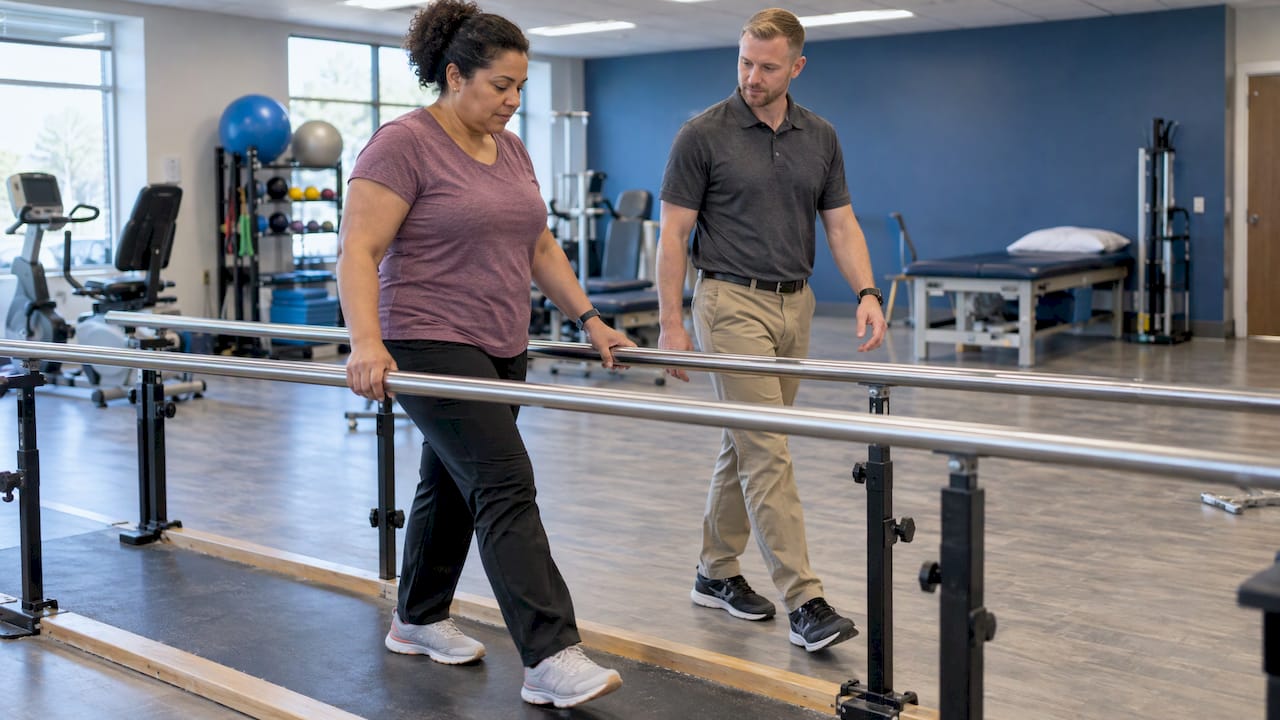
Brain injury rehabilitation is a team-based process that helps you rebuild thinking, movement, mood and daily skills after a concussion or traumatic brain injury (TBI). The best plans start early, match the stage you are in, and keep adjusting as you change. If you are in the Meridian area, our clinic can help you sort out where you are in that process and what to do next, starting with a Brain Health Consultation.
This guide explains what rehab includes, how the stages work, how long recovery tends to take, and how to choose the right kind of support. You do not need a medical background to follow it.
A brain injury can affect more than memory. It can change balance, vision, sleep, mood, energy, speech, and the way you handle ordinary tasks like cooking or driving. Rehabilitation is the organized effort to work on all of those areas, not only the one that bothers you most.
The National Institute of Child Health and Human Development (NICHD) says rehabilitation can address physical, emotional, cognitive, self-care, driving and social-interaction problems, and that it may be brief, intermittent, lifelong or ongoing depending on the injury. That range matters. Some people need a few weeks of guided support. Others need a longer program that changes as their goals change.
The same NICHD page lists the usual building blocks:
Not everyone needs every piece. The point of an evaluation is to decide which pieces belong in your plan and in what order.
Rehab is not only for severe injuries. If you had a concussion and still have brain fog, headaches, dizziness, trouble concentrating, sleep problems or mood changes, you are exactly the kind of person a rehabilitation plan is built for. People with moderate or severe injuries typically need a more structured sequence of care, often starting in a hospital or inpatient setting.
You may also benefit if you were told you “should be fine” but you do not feel fine. Persistent symptoms are a reason to ask for a closer look, not a reason to push through alone.
Stages help you understand where you are and what comes next. They are a map, not a schedule.
The Department of Veterans Affairs’ caregiver guide on traumatic brain injury describes four commonly used stages:
The same guide notes that patients can enter, leave and re-enter these stages as their condition and care path change. If you need more help six months in, that is a normal part of recovery, not a setback in your character.
For mild TBI, the VA/DoD clinical practice guideline divides care into acute (0 to 7 days), post-acute (1 to 12 weeks) and chronic (more than 12 weeks) periods. That framework is useful because the right approach differs in each window.
| Phase | Timing | What the focus usually is |
|---|---|---|
| Acute | Days 0 to 7 | Rest, monitoring, a careful and gradual return to activity |
| Post-acute | Weeks 1 to 12 | Treating the symptoms that persist: headache, dizziness, sleep, concentration |
| Chronic | After 12 weeks | A fuller evaluation and a structured rehab plan for what remains |
If you are still in the first week, our guide on why cognitive rest matters after concussion explains how to pace your days. If you are further along, the concussion recovery checklist for adults gives you a way to track what is improving.
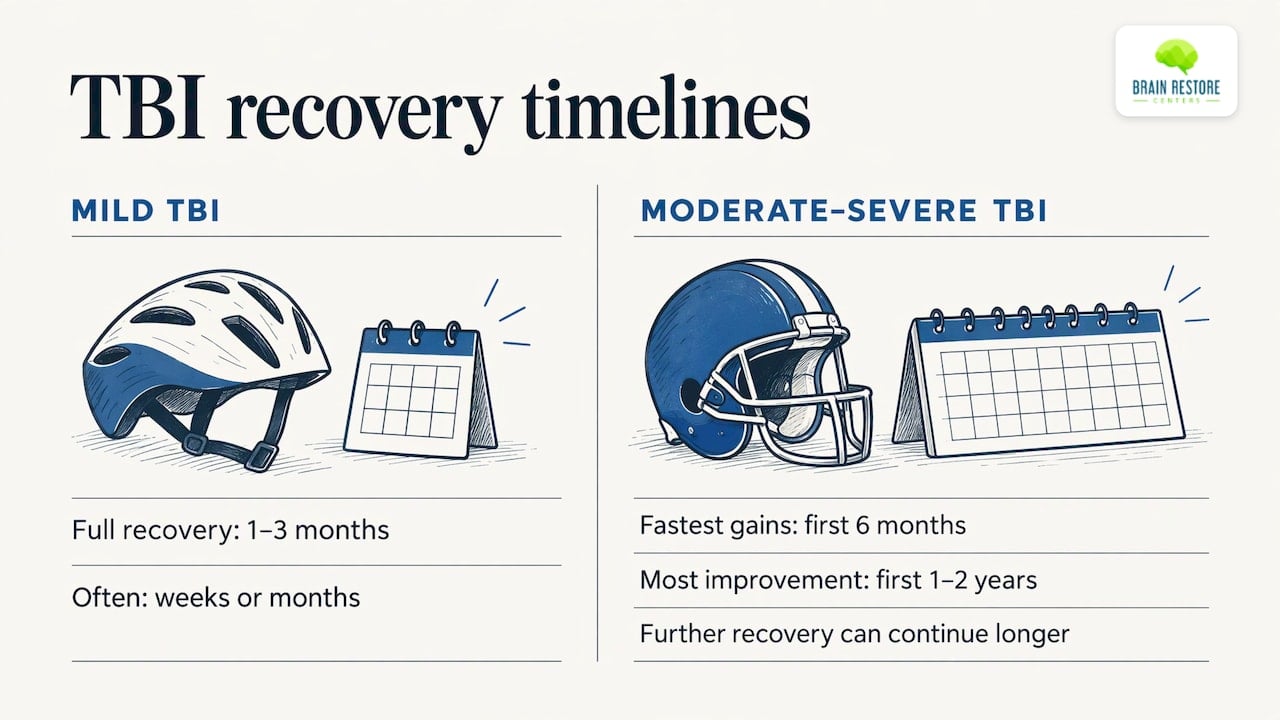
Everyone wants a number, and the honest answer is a range. The VA caregiver guide says mild TBI recovery often happens within weeks or months, while moderate to severe recovery is less predictable, with the fastest gains commonly in the first six months and further recovery over months to years.
The 2025 ACOEM guideline gives a similar picture: full recovery from mild TBI is generally expected within one to three months, and most improvement after moderate to severe injury occurs in the first one to two years, though it can continue longer.
No guideline can predict your exact path, but several things influence it:
A plan that is too aggressive can flare symptoms. A plan that is too cautious can leave you stuck. Finding the middle takes regular check-ins and honest feedback about how you feel.
Before choosing therapies, a clinician needs to understand what is actually happening: which symptoms, how severe, what triggers them, and what you need to get back to. Guidelines support this approach. The VA/DoD guideline recommends clinician-directed cognitive rehabilitation for selected patients with persistent cognitive symptoms, which means the therapy is chosen for the person, not handed out to everyone.
The American College of Surgeons’ 2024 TBI guidance added a rehabilitation section that emphasizes early interdisciplinary rehabilitation, physical medicine and rehabilitation involvement, discharge planning and community-based multidisciplinary follow-up. In plain terms: brain injury care works best when several specialists coordinate, and when follow-up does not end at the hospital door.
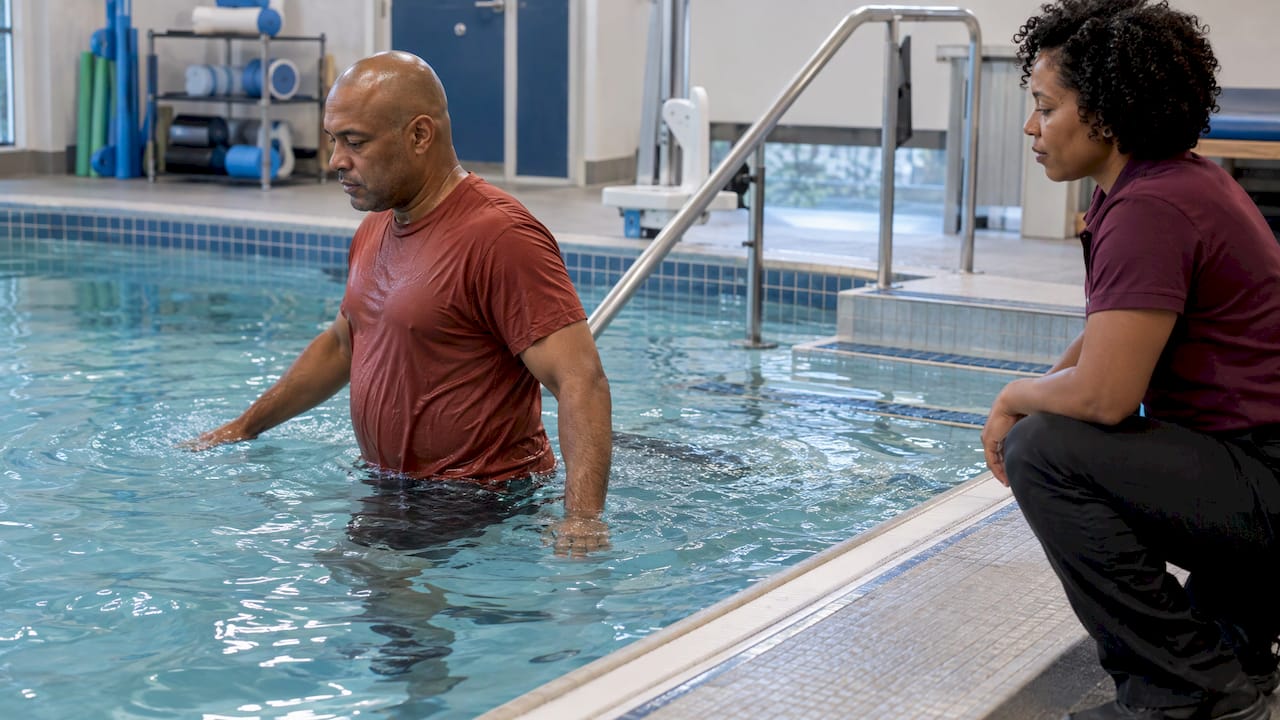
Exercise is a good example. The 2025 ACOEM guideline describes aquatic therapy as typically beginning at three to four visits a week, showing functional improvement within two weeks, and ordinarily moving to land-based or self-directed activity by six weeks. The lesson applies to every therapy: there should be a starting point, a checkpoint and a next step. Our article on safe exercise after head injury shows how that pacing works for activity at home.
Rehab succeeds when it shows up in real life: managing a workday, driving again, keeping a conversation going, sleeping through the night. If you are thinking about what this means for your job, see our staged plan for returning to work after TBI. If you are weighing how rehab fits with health coverage, this overview of physical rehab benefits and recovery covers the functional challenges rehabilitation works on.
We are a clinic in Meridian, Idaho focused on brain health and restorative care. Our team brings over 50 years of combined clinical experience, and our patients have left more than 400 five-star reviews. Our services are designed to work together, so you do not have to assemble your own care plan from separate offices.
For people recovering from concussion or TBI, the services most often relevant are:
If you want the broader picture of how these fit together, read what neurological rehabilitation involves. For symptoms that look like fog, slowed thinking or poor focus, our cognitive dysfunction treatment guide is a good next read.
Many people come to us months after an injury, tired of hearing that they just need more time. Time matters, but so does direction. Recovery tends to feel more hopeful when someone has looked at the whole picture: how your brain is functioning, how your body is moving, how you are sleeping and what your days demand of you.
That is why we combine brain-based therapies with chiropractic care, laser therapy, hyperbaric oxygen, rehab and functional medicine in one place. Each piece supports the others, and your plan changes as you do.
If you are living with brain fog, headaches, anxiety or a sense that you are not yourself since your injury, you deserve a clear plan and a team that walks it with you. Reclaiming your focus, your energy and your confidence is a realistic goal to work toward.
Chad
If your symptoms have lasted beyond the first few weeks, or you want a plan built around your goals, our Brain Restore Program starts with a Brain Health Consultation. It is where we listen to your story, look at what is driving your symptoms and talk through the therapies that fit. You can learn more about the Brain Restore Program or book an appointment directly.
For a closer look at care for milder injuries, see mild traumatic brain injury treatment in Meridian.
As early as your medical team says it is safe. The American College of Surgeons’ 2024 guidance emphasizes early interdisciplinary rehabilitation. If you are past the first few weeks and symptoms persist, it is not too late: rehabilitation can begin or resume at any point.
A concussion is a mild traumatic brain injury. Most people improve within one to three months, but if headaches, dizziness, fog or mood changes continue past the 12-week mark, a structured rehab plan is worth pursuing. See a doctor right away for severe headache, repeated vomiting, confusion, seizures or worsening symptoms.
Yes. The 2025 ACOEM guideline says improvement after moderate to severe injury occurs mostly in the first one to two years but can continue longer. Goals and therapies may change over time, which is why periodic reviews help.
You can help by keeping routines steady, reducing noise and clutter, breaking tasks into small steps and joining appointments when the patient wants you there. Encourage rest and pacing, and share changes in mood or behavior with the care team so the plan can adjust.
Questions about your next step?
Our Meridian team can help you understand the evaluation process and which care options may fit your needs.
Schedule a Brain Health ConsultationPrefer to speak with our team? Call 208-639-1397