7 FDA Approved Hyperbaric Oxygen Benefits Backed by Evidence
September 18, 2026

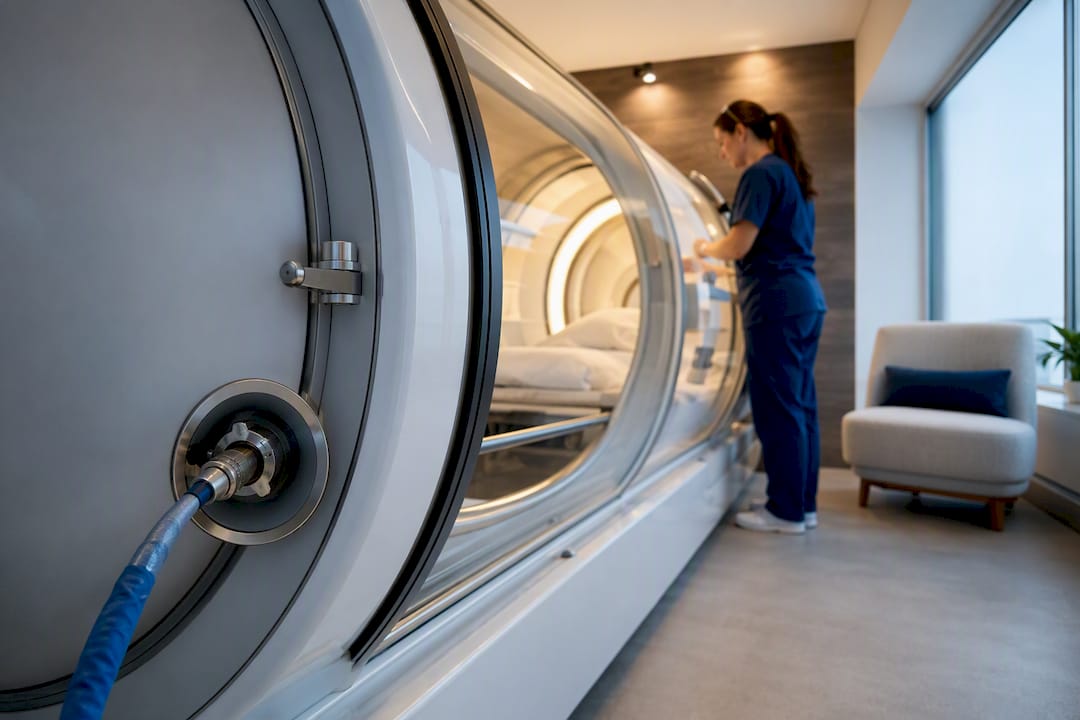
Hyperbaric oxygen therapy (HBOT) floods injured tissue with dissolved oxygen, and that mechanism is backed by decades of clinical evidence for a specific list of conditions, from nonhealing diabetic wounds to carbon monoxide poisoning. The FDA has cleared HBOT for a defined set of diagnoses, not for the broader wellness and anti-aging claims you’ll see marketed alongside it. If you’re weighing HBOT for yourself or a family member, the right next step is a conversation with a qualified hyperbaric medicine program that can match the therapy to your actual diagnosis.
TL;DR:
- Hyperbaric oxygen therapy significantly raises plasma oxygen levels, enabling oxygen delivery to tissue with blood vessel limitations, which is crucial for healing.
- The clinical evidence primarily supports HBOT for conditions like nonhealing wounds, decompression sickness, carbon monoxide poisoning, radiation injury, and certain infections, not for general wellness or anti-aging claims.
- Most treatments involve multiple sessions over weeks, with the full course necessary for meaningful healing, especially in chronic wounds and radiation tissue injuries.
- Risks are generally mild but can include ear pressure, fatigue, or sinus discomfort, while serious complications like lung injury are rare and require careful screening.
- Consider HBOT only after confirming your diagnosis aligns with evidence-backed indications, and coordinate it with other therapies for optimal recovery.
You breathe roughly 21% oxygen at sea level, and your red blood cells carry most of what your tissues use. HBOT changes that equation. Inside a pressurized chamber, you breathe 100% oxygen at pressures typically ranging within the medically standard range of pressures used in HBOT, which is higher than normal air pressure. That combination doesn’t just top off your red blood cells. It forces extra oxygen directly into your blood plasma, the liquid part of your blood that normally carries very little oxygen on its own.
That shift matters because plasma-dissolved oxygen can reach tissue that swollen or damaged blood vessels can’t. According to research on the physiological effects of hyperbaric gases, dissolved oxygen in plasma can climb far above normal room-air levels under therapeutic pressure, effectively bypassing some of the circulatory bottlenecks that starve healing tissue.
Statistic to know: Under typical treatment pressures, plasma oxygen levels can rise significantly above normal room-air levels, according to StatPearls.
That oxygen surge triggers several downstream effects your body needs for repair:
None of these mechanisms fire fully after one session. That’s why repeated dosing, not a single trip in the chamber, is what produces measurable clinical change.
The FDA has cleared HBOT for a specific, limited list of conditions. If a clinic offers it for anything outside that list, ask what evidence they’re basing it on.
Approved and evidence-backed uses include, per Harvard Health:
The Mayo Clinic frames HBOT similarly, describing it as a treatment reserved for serious conditions where oxygen delivery to tissue has broken down, not a general wellness boost.
Here’s where you need to be a discerning consumer. HBOT is aggressively marketed for Alzheimer’s disease, autism, general anti-aging, and cognitive enhancement in healthy people. Harvard Health is direct about this gap: promotional claims for these uses run well ahead of what controlled trials have actually shown. Some small studies explore these areas, but “someone is researching it” and “the FDA approved it for this” are two very different statements, and clinics that blur that line deserve real skepticism.
Outcomes vary by diagnosis, and understanding what’s realistic for each condition helps you set expectations before you start.
Diabetic foot ulcers and nonhealing wounds. HBOT drives new vessel growth into tissue that’s stopped healing on its own. The Cleveland Clinic notes that meaningful wound improvement generally requires completing a full prescribed course rather than a handful of sessions, often stretching across weeks.
Radiation tissue injury and graft or flap support. For tissue damaged by prior radiation treatment, or for surgical grafts and flaps at risk of failing, HBOT can improve blood vessel formation enough to salvage tissue that would otherwise die back.
Necrotizing infections. In gas gangrene and related severe infections, the oxygen-rich environment directly suppresses anaerobic bacteria that thrive in low-oxygen tissue, working alongside surgery and antibiotics rather than replacing them.
Neurological and brain-related injury. This is where the evidence is more mixed. Acute brain injury and certain post-concussion applications show promising signals, but research on long-term cognitive aging and general brain performance remains preliminary. If you’re exploring this angle, our breakdown of HBOT’s mental health applications walks through what’s supported and what’s still being studied.
Carbon monoxide poisoning and decompression sickness. These are the fastest-acting, most dramatic uses. HBOT accelerates the clearance of carbon monoxide from hemoglobin and compresses dangerous gas bubbles in divers, sometimes producing improvement within hours.
Most people tolerate HBOT well, but no medical treatment is risk-free, and you deserve a clear picture before you commit to a course of sessions.
The common, usually mild side effects include:
Serious complications are rare in medically supervised settings, but they exist. Johns Hopkins Medicine lists pulmonary barotrauma (lung tissue injury from pressure changes), oxygen toxicity, and, very rarely, seizures among the more serious risks. People with certain lung conditions, untreated pneumothorax, or specific cardiac issues face higher risk and typically require careful screening before treatment.
Pro Tip: Tell your provider about every medication you’re on, including certain chemotherapy drugs, before starting HBOT. Some medical treatments interact with high-oxygen environments, and a thorough medical history catches this before it becomes a problem.
Reputable clinics reduce risk through pressure equalization coaching, gradual descent and ascent rates, and pre-treatment screening for contraindications like unresolved lung disease.
A single HBOT session typically runs 60 to 90 minutes, and you’ll usually be scheduled for one session per day. The total number of sessions depends entirely on your diagnosis.
You may be treated in a monoplace chamber, built for one person, or a multiplace chamber where several patients are treated together understaff supervision. Either way, trained personnel monitor you throughout. If you’re wondering why so many sessions are often prescribed, our detailed look at session count rationale explains the checkpoints clinicians use to judge progress partway through a course. Medicare and many insurers cover HBOT for FDA-approved indications, though coverage details vary by diagnosis and plan.
HBOT rarely works best in isolation. At Brainrestoremeridian, hyperbaric treatment is positioned alongside neurorehabilitation, functional medicine, and wound or injury-specific care, because oxygen delivery is one piece of a recovery puzzle that usually involves inflammation, circulation, and nervous system function together.
Clinical guidance consistently emphasizes that partial treatment courses often fall short of the outcomes seen in full-length protocols, according to the Cleveland Clinic.
Practical application depends on:
Most of what you read about HBOT online sits at one of two extremes: dismissive skepticism or breathless promotion. Neither serves you well. The honest read of the evidence is narrower and, frankly, more useful. HBOT has a real, mechanistic reason to work for hypoxic tissue, and it has a defined list of conditions where trials back that mechanism up.
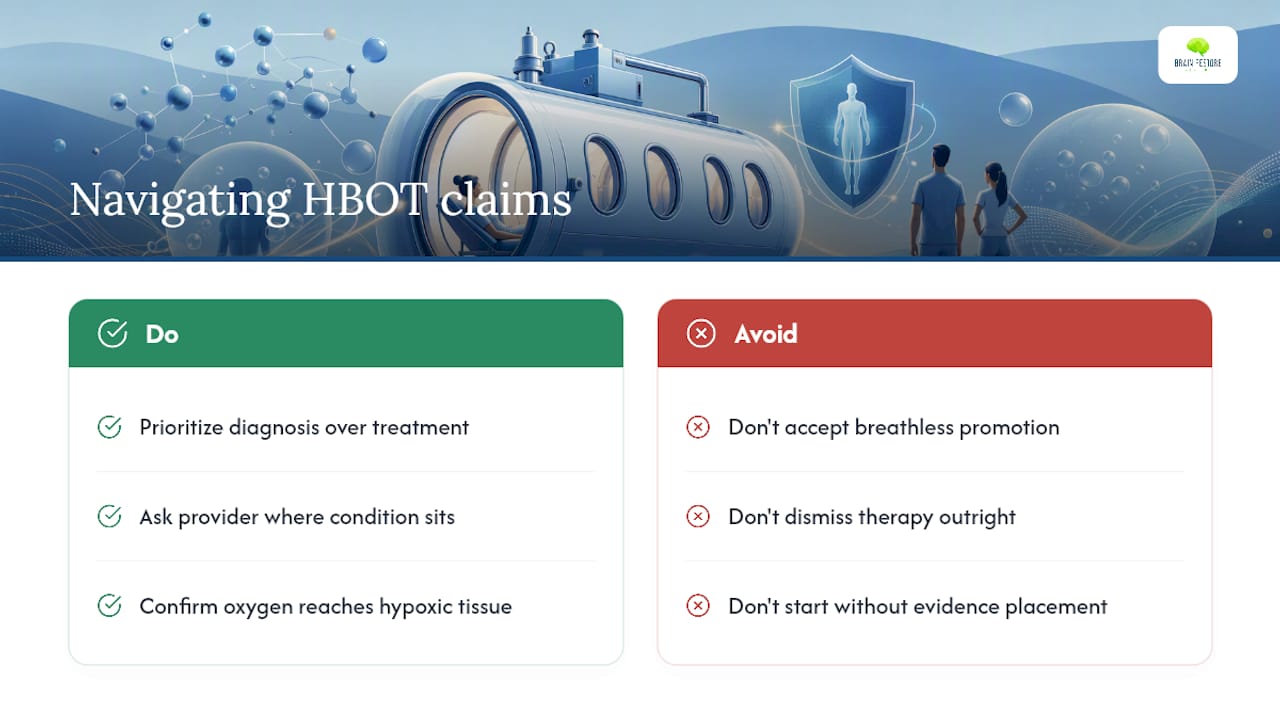
Where conventional coverage falls short is in how it handles the gray zone. Brain injury recovery, post-concussion symptoms, and inflammatory conditions sit in territory where mechanism is plausible but large-scale trial evidence is still catching up. That’s not a reason to dismiss the therapy. It’s a reason to ask sharper questions before starting it.
If you take one thing from this, prioritize the diagnosis conversation over the treatment itself. The oxygen only helps if it’s reaching tissue that actually needs it for a reason science has already confirmed. Ask any provider, including ours, to show you exactly where your condition sits on that evidence spectrum before you book a course of sessions.
— Chad
Plenty of standalone hyperbaric centers will sell you a package of sessions with little context for how they fit your broader health picture. Some clinics take an integrated approach by delivering hyperbaric oxygen therapy alongside neurofeedback, functional medicine, and rehabilitative care, aiming to address the whole health picture rather than just one mechanism in isolation.
If you’re recovering from a concussion, managing a nonhealing wound, or exploring brain-related symptoms, our team can walk you through whether HBOT fits your specific diagnosis and how it pairs with programs like the Brain Restore Program. We also help patients understand how insurance and Medicare coverage applies to approved HBOT indications, along with realistic cost expectations before you commit to a course. Recovery planning that involves mobility and daily function can also benefit from resources like these chair exercises for older adults, useful alongside any hyperbaric or rehab protocol. Consider scheduling a brain health consultation with a qualified provider to find out whether HBOT belongs in your recovery plan.
Key references to include Mayo Clinic, Harvard Health, StatPearls/NCBI, Johns Hopkins Medicine, and MedlinePlus.
This article is general information, not a substitute for advice from a qualified doctor. Consult a qualified healthcare professional about your own circumstances before acting on anything here.
It raises air pressure while you breathe 100% oxygen, which pushes far more dissolved oxygen into your blood plasma and helps that oxygen reach tissue that isn’t getting enough through normal circulation.
The most common downsides are mild, like ear or sinus pressure and temporary fatigue, though rare serious risks include lung injury from pressure changes and oxygen toxicity, which is why medical screening matters before starting treatment.
Evidence supports HBOT for acute brain injury in some contexts, but research on general cognitive benefits or brain aging is still limited. Ask a qualified provider where your specific situation falls on that evidence spectrum, and see our dedicated overview of HBOT’s mental health uses for more detail.
It depends on the condition. Acute issues like carbon monoxide poisoning may need only a few sessions, while chronic wound healing often requires a full course of treatment with multiple sessions to show full benefit.
Medicare and many insurers cover HBOT for FDA-approved indications, though coverage varies by diagnosis and plan, and it’s worth confirming eligibility before you begin a course.