Patients: Understand the Evidence on Laser Therapy for Knee Pain
September 6, 2026

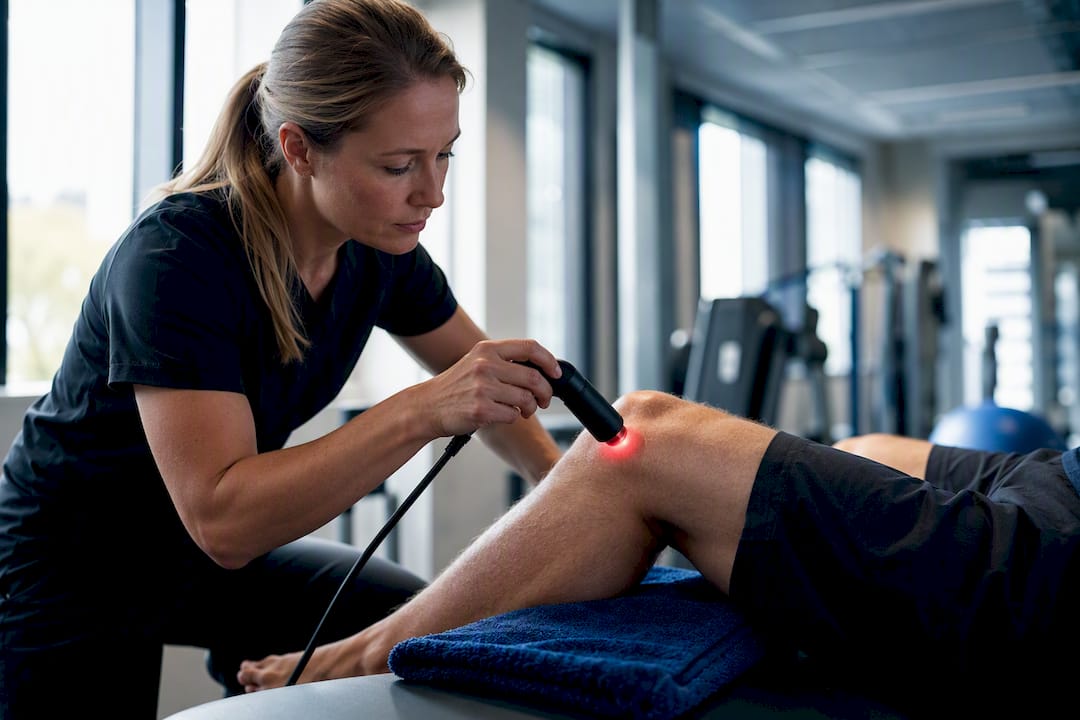
Laser therapy can meaningfully reduce knee osteoarthritis pain, and high-intensity laser therapy (HILT) tends to outperform low-level laser therapy (LLLT) in head-to-head research. Neither device reverses cartilage damage or replaces surgery for advanced joint disease. If you’re considering laser therapy for knee pain, the smartest first step is asking your clinician which device class they use and whether they’ll pair it with an exercise program, since that combination is where the real, lasting relief comes from.
TL;DR:
- High-intensity laser therapy (HILT) generally provides faster and more significant pain relief compared to low-level laser therapy (LLLT), especially for deeper joint structures.
- Most effective results occur when laser therapy is combined with an exercise program, notably strengthening and mobility work, rather than used alone.
- HILT protocols typically involve 10 sessions over four to five weeks, delivering between 300 to 3,000 joules, with sessions usually lasting 30 to 60 seconds per point.
- Patients with advanced joint damage, red-flag symptoms, or certain health conditions like pregnancy or active infections should avoid laser therapy.
- Costs generally range from $50 to $150 per session, and insurance coverage is inconsistent; confirming device class and treatment protocols beforehand is crucial.
Laser therapy works through two distinct mechanisms depending on the device. Low-power lasers trigger photobiomodulation, a nonthermal process where light energy nudges cellular activity in ways that calm inflammation and support tissue repair. Higher-power lasers add a photothermal effect, generating mild, controlled heat that changes how deep the therapeutic effect can reach.
That difference shows up directly in the two main categories clinicians use:
The practical consequence matters more than the physics lesson. A cold laser working 2 to 4 centimeters deep may soothe superficial tissue and skin-level inflammation, but it often can’t reach the deeper joint structures involved in knee osteoarthritis. HILT’s extra depth is why it’s frequently the better-performing option for genuine joint pain rather than surface-level soft tissue complaints. If you’ve read about low-level laser therapy for knee pain and wondered why results seem inconsistent across clinics, device class is usually the reason.
The clearest answer comes from a 2022 network meta-analysis comparing physical modalities for knee osteoarthritis. It ranked HILT as the single most effective option for pain relief, giving it a SUCRA score of 100%, a statistical measure of how likely a treatment is to be the best among everything compared.
Those numbers sound abstract until you see what they translate to in actual trials.
By the numbers: A randomized controlled trial using HILT protocols delivering around 562.5 joules per session across 10 sessions produced statistically and clinically significant reductions in VAS pain scores, a 0 to 10 visual scale patients use to rate pain intensity, compared with sham treatment. The trial also showed meaningful drops in the WOMAC total score when HILT was layered onto standard conservative care rather than used alone.
That last detail is worth sitting with. The trials showing the strongest results weren’t testing laser therapy in isolation. They were testing laser plus conservative management, which is closer to how most patients will actually use it.
A few things temper the enthusiasm:
Even accounting for those caveats, the pattern across the research is consistent: HILT tends to produce faster and larger pain reductions than LLLT, and LLLT still shows a real, if more modest, benefit over no treatment at all. If you’re weighing chronic knee pain relief options, that’s the honest summary. Not a miracle, but a genuinely effective adjunct with numbers behind it.
Laser therapy tends to work best for people with symptomatic knee osteoarthritis, recovering from a soft tissue or ligament injury, or actively trying to avoid surgery through conservative, non-invasive knee pain therapy. If you’ve tried NSAIDs or basic physical therapy without enough relief, laser is a reasonable next conversation to have with your provider.
Certain situations call for caution or an outright pass on treatment:
If you have advanced structural knee disease, bone-on-bone arthritis, or acute red-flag symptoms like sudden severe swelling, fever, or inability to bear weight, laser therapy isn’t the priority. Those situations need direct medical evaluation first.
Pro Tip: Ask your clinician specifically which device class they use (LLLT or HILT), the wavelength, and how many sessions their protocol typically involves. A provider who can answer precisely is usually one following a real evidence-based protocol rather than a generic one.
Sessions differ noticeably depending on which device your clinic uses. LLLT treatment involves the practitioner holding the device at or near specific points on the knee for about 30 to 60 seconds per point. HILT sessions deliver a broader energy dose, often somewhere in the range of 300 to 3,000 joules depending on the specific protocol and treatment area size.
Course length also varies. Some HILT protocols run 10 sessions over four to five weeks, two to three times weekly. LLLT courses, per practical clinical guidance, often range from 8 up to 30 sessions total, depending on how the patient responds. Most people feel a warm or tingling sensation with HILT and nothing at all with LLLT. Neither requires downtime, and you can typically drive yourself home and resume normal activity immediately.
Before booking anywhere, run through this short checklist:
Laser therapy performs better as part of a rehab plan than as a standalone fix. Systematic reviews synthesizing multiple RCTs found that pairing laser therapy with structured exercise produced better pain and function outcomes than laser or sham laser used without an active exercise component.
That makes physiological sense. Laser therapy calms pain signaling and inflammation, but strength and range of motion still need to be rebuilt through movement.
Useful pairings include:
Many clinics schedule laser sessions directly before or after physical therapy visits, which keeps adherence high since patients aren’t juggling separate appointments.
Pro Tip: If a clinic offers laser therapy without ever mentioning an exercise component, ask why. The strongest outcomes in the research come from combined care, not laser in isolation.
Laser therapy’s real strength is noninvasive pain reduction with a favorable safety profile. Trials consistently report low rates of serious side effects, with most adverse events limited to transient soreness or mild skin irritation at the treatment site.
By the numbers: HILT achieved the top SUCRA ranking (100%) for pain relief among physical modalities studied for knee osteoarthritis, though the same analysis found stiffness improvements often fell short of the minimal clinically important difference, meaning patients felt less pain without necessarily feeling less stiff.
Where the evidence is thinner: protocols vary widely between studies and clinics, insurance coverage is inconsistent, and there’s minimal support for laser therapy actually repairing cartilage or reversing structural joint damage.
Out-of-pocket cost per session in the United States typically falls between $50 and $150, depending on the device class, session length, and clinic overhead. HILT sessions using higher-end equipment tend to sit at the upper end of that range.
You’ll usually find laser therapy offered at physical therapy clinics, orthopedic and pain management practices, and some chiropractic clinics that integrate it into broader rehab plans. Insurance coverage is inconsistent across providers and plans, so it’s worth calling your insurer directly and asking about the specific billing codes your clinic plans to use before you commit to a course of treatment.
Before booking, confirm:
One clinic takes a multidisciplinary approach, combining laser therapy with structured rehab rather than offering it as an isolated treatment. The typical workflow may start with an evaluation, move into a trial course of treatment, and build toward a combined exercise plan designed around each patient’s response. (Author credentials, patient case studies, and clinic-specific outcome data to be added.)
Laser therapy, particularly HILT, is a legitimate adjunct for knee osteoarthritis and injury-related pain when paired with active rehab. It is not a cure for structural joint damage and shouldn’t replace medical evaluation for advanced disease or acute red-flag symptoms.
Before starting: confirm the device class and operator training, ask how outcomes are measured, and commit to an exercise plan alongside your sessions. If pain worsens, swelling escalates, or new symptoms appear during treatment, stop and get evaluated rather than pushing through.
Patients who do best with laser therapy are rarely the ones expecting the device alone to fix things. The pattern in the research holds up in practice: pain drops faster when laser sessions run alongside real strengthening work, not instead of it. Talk with your treating clinician about what the evidence supports for your specific situation, and don’t skip the exercise homework just because the laser session felt like enough.
— Chad
If you’ve read this far, you already know laser therapy works best as part of a coordinated plan, not a one-off treatment. Many clinics structure care with an initial evaluation, a trial course using the device class suited to your specific pain pattern, and a rehab plan built around it from day one, rather than sending you home with a laser session and nothing else.
Curious what mechanisms are actually at play when laser reduces pain? Our explainer on how laser therapy relieves pain breaks down the science in plain terms. If cost is your main question, our cold laser pricing guide lays out what to expect per session. When you’re ready to move forward, book an evaluation through our knee pain and laser therapy page and we’ll walk you through which device class and protocol fits your situation.
This article is general information, not a substitute for advice from a qualified doctor. Consult a qualified healthcare professional about your own circumstances before acting on anything here.