Can Mushrooms Really Help Heal Your Brain?
August 24, 2026

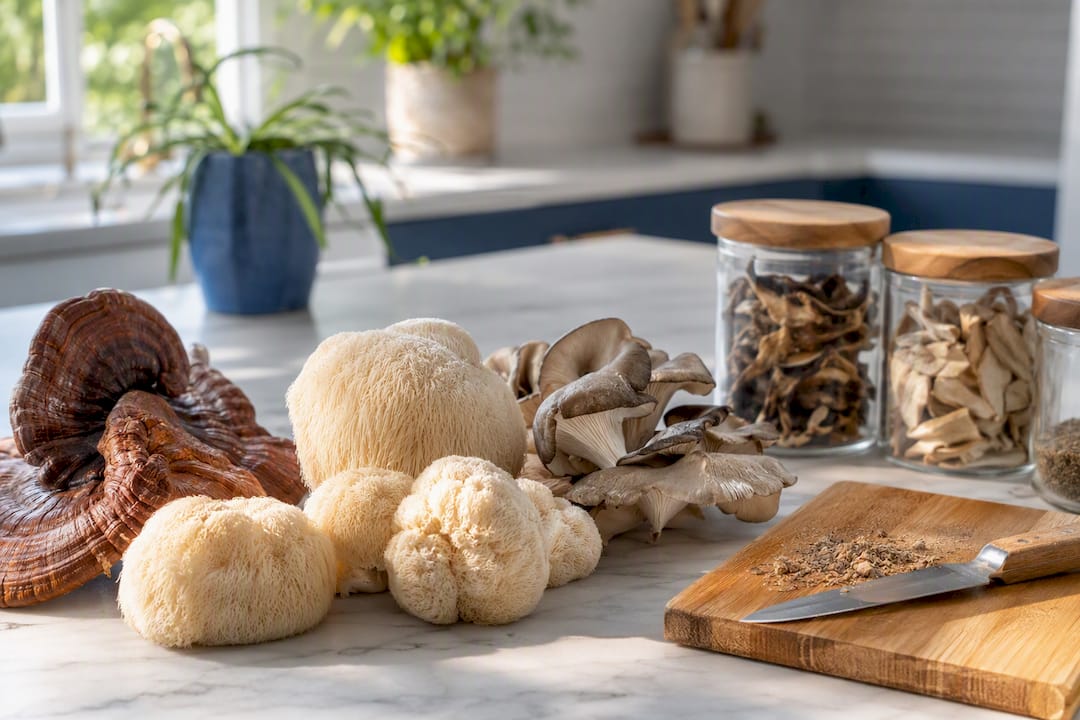
Yes, with a qualifier that matters: certain non-psychedelic medicinal mushrooms show real, evidence-backed promise as adjuncts to brain healing, not as standalone cures. Hericium erinaceus (Lion’s Mane) has the strongest human trial data for cognitive support, with mechanisms tied to nerve growth factor (NGF) and brain-derived neurotrophic factor (BDNF). Reishi trails close behind for its anti-inflammatory action. At Brainrestoremeridian, we view mushroom supplements the way we view any single therapy: valuable when it’s one piece of a coordinated plan.
Lion’s Mane and Reishi show the strongest evidence among medicinal mushrooms for supporting brain health, but both work as adjuncts within a broader clinical plan, not as stand-alone treatments.
| Point | Details |
|---|---|
| Lion’s Mane leads the evidence | RCTs and a 49-week EAHE trial show cognitive and mood benefits, especially with chronic use. |
| Reishi depends on extract type | Sporoderm-removed spores or triterpene concentrates absorb differently than raw fruiting body powder. |
| Cordyceps and Turkey Tail are supportive | Anti-inflammatory and immune roles exist, but direct cognition trial data remains limited. |
| Expect a slow timeline | Measurable effects typically emerge after 8 to 16 weeks, with stronger data at 49 weeks. |
| Disclose supplements before surgery | Reishi and similar mushrooms may affect platelets and immune signaling, relevant for anticoagulant users. |
| Brainrestoremeridian coordinates the full plan | Their clinical team evaluates mushroom supplements alongside neurofeedback, functional medicine, and other therapies rather than in isolation. |
The honest answer is: encouraging but incomplete. Human trials on mushrooms for healing are still small compared to the mountain of research behind pharmaceutical cognitive treatments, and anyone selling you certainty is overselling.
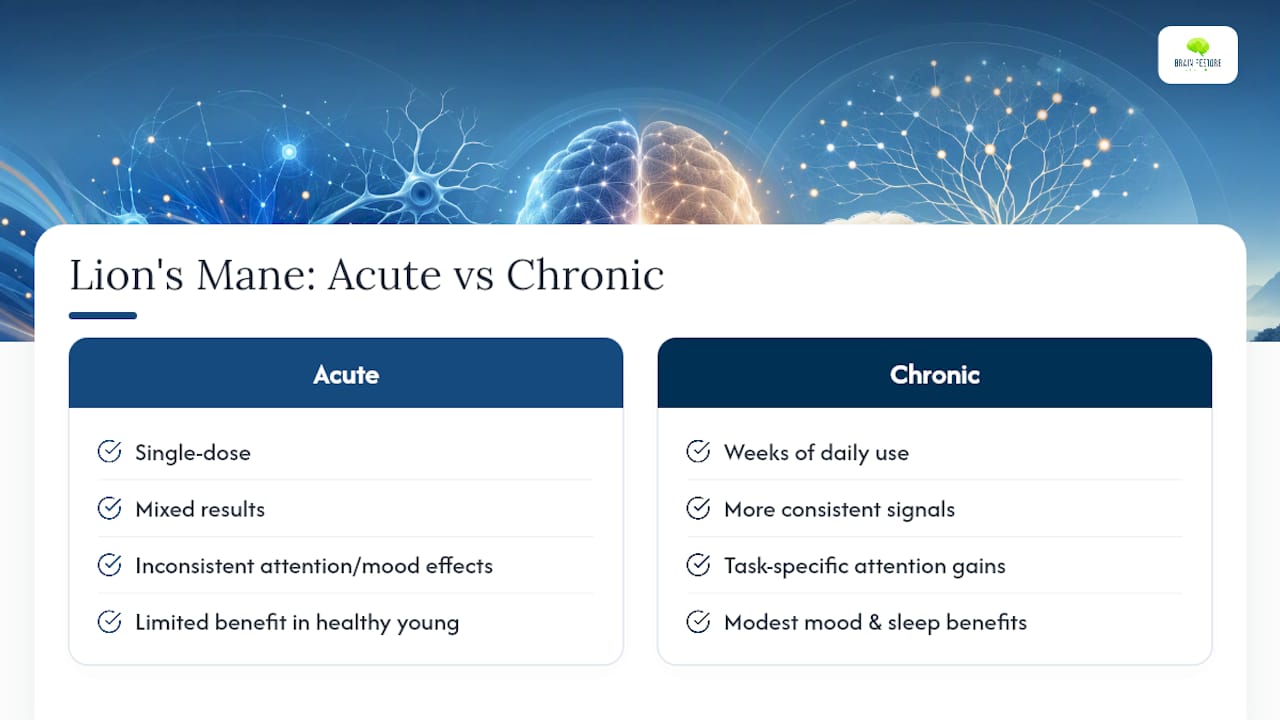
Here’s what actually holds up. A systematic look at Lion’s Mane trials found mixed results in acute, single-dose settings, but more consistent signals in chronic use, meaning weeks of daily supplementation. Task-specific attention improvements and modest mood or sleep benefits showed up across several of these trials, particularly in older or symptomatic adults rather than healthy young ones. That distinction matters when you’re deciding whether this fits your situation.
Longer trials tell a more compelling story. A 49-week pilot study using erinacine A-enriched Hericium erinaceus mycelia (EAHE) in patients with mild Alzheimer’s disease found improved MMSE and CASI cognitive scores compared to placebo, along with better contrast sensitivity, and the intervention was well tolerated for nearly a year.
Population data adds another layer. Long-term cohort research, including analyses tied to EPIC-Norfolk, links eating just one portion of mushrooms per week or more to better episodic memory, faster processing speed, and lower odds of mild cognitive impairment over years of follow-up.
The limitations are real. Sample sizes in most Lion’s Mane and Reishi trials run small. Extract types and doses vary wildly between studies, which makes direct comparison difficult. Diet, culture, and lifestyle factors muddy epidemiological links. A broader review of mushrooms and neurocognitive health concludes the signals are promising but calls for more rigorous, well-controlled human trials before anyone declares victory.
Not every medicinal mushroom deserves equal billing. Some have real trial data behind them; others are riding on preclinical promise and centuries of traditional use. Here’s how the four most-discussed species stack up for brain health.
Hericium erinaceus (Lion’s Mane). This is the species with the most direct cognitive evidence. Its bioactive compounds, hericenones and erinacines, appear to stimulate NGF and BDNF pathways in preclinical and early clinical models. Typical study doses range from 1 to 3 grams per day of fruiting body extract, while erinacine-enriched mycelia formulations used in longer trials rely on standardized capsule protocols. Evidence strength: moderate for chronic use, weaker for single doses.
Ganoderma lucidum (Reishi). Reishi’s value comes from triterpenoids and polysaccharides, compounds tied to anti-neuroinflammatory activity and improved spatial memory in animal models. Extract type matters enormously here. Sporoderm-removed spores and triterpene concentrates behave differently in the body than raw fruiting body powder, because the outer spore shell limits absorption unless it’s processed. Trial dosing patterns vary, but standardized triterpene percentage is the detail worth asking about.
Cordyceps species. Cordyceps shows anti-inflammatory and immune-modulating activity that supports overall physiological resilience, but it lacks the direct cognition-focused RCT evidence that Lion’s Mane and Reishi have accumulated. Think of it as a supportive adjunct rather than a primary brain-health tool.
Trametes versicolor (Turkey Tail). Best known for immune support through polysaccharide compounds, Turkey Tail’s role in brain healing is largely indirect, working through inflammation and immune regulation rather than direct neurotrophic action.
Pro Tip: When comparing products, look past the species name on the label. Ask whether it’s fruiting body or mycelium, whether it lists a standardized percentage of active compounds, and whether a third-party lab verified that content. Two bottles labeled “Lion’s Mane 1000mg” can contain wildly different amounts of the compounds that actually matter.
The biological story behind mushrooms for healing centers on three plausible pathways, though the strength of evidence differs sharply between them.
The gap between what happens in a petri dish and what happens in a human brain is where most supplement hype falls apart. Preclinical mechanisms for NGF and BDNF stimulation are well documented in cell and animal studies. Translation into consistent, measurable human cognitive gains is real but smaller and slower than the mechanism alone would suggest.
That gap is exactly why we frame mushroom supplements as adjuncts at Brainrestoremeridian rather than centerpieces of a recovery plan.
Most people tolerate medicinal mushroom supplements well, though dosing precision matters and some mild side effects such as gastrointestinal upset or occasional allergic skin reactions have been reported. Individuals with known mushroom or mold sensitivities should exercise caution and monitor for adverse reactions.
Dosing in actual trials gives you a useful benchmark. Fruiting body extracts of Lion’s Mane commonly ran 1 to 3 grams per day. The 49-week EAHE mycelia protocol that showed cognitive improvement in mild Alzheimer’s patients used a standardized capsule dose sustained for nearly a year, which underscores why extract standardization, not just the milligram number on the label, determines whether you’re getting a comparable product.
Interaction red flags deserve direct attention. Reishi and other polysaccharide-rich mushrooms can theoretically affect platelet function and immune signaling, which raises concern for anyone on anticoagulants or immunomodulating medications. Disclose any mushroom supplement to your surgical team before a procedure, the same way you would disclose fish oil or herbal blood thinners.
Timeline expectations matter most for managing your own patience. Clinical signals in the trials reviewed above generally emerged over 8 to 16 weeks, with the strongest cognitive data coming from studies running much longer, up to 49 weeks. If you’re expecting a noticeable shift in two weeks, you’re likely to quit before the compound has a fair chance to work.
A supplement bottle is not a treatment plan. The research on integrated nutritional neurology is consistent on this point: mushroom supplementation works best paired with broader clinical care, not used in isolation.
Pro Tip: If you’re already tracking sleep or mood for another condition, use that same data to evaluate whether a mushroom supplement is doing anything measurable. A month of consistent tracking tells you more than how you subjectively feel on any given Tuesday.
Stop and consult your clinician if you notice adverse symptoms, see no change after a reasonable trial period, or manage a complex medication regimen where interaction risk is higher.
Two bodies of evidence support mushrooms for healing, and they don’t carry equal weight. Human clinical trials, though limited in number, provide the most direct answer to whether mushroom supplements affect cognition and mood. Preclinical research, done in cells and animal models, explains plausible mechanisms but doesn’t guarantee the same effect size in people.
On the human side, Lion’s Mane carries the most trial volume, including acute and chronic RCTs showing task-specific cognitive gains and mood benefits, plus the standout 49-week EAHE study in mild Alzheimer’s patients. Reishi’s human cognition data lags behind, with most of its cognitive support resting on preclinical models showing reduced inflammation and improved spatial memory.
On the preclinical side, the mechanistic story is strong and consistent across species. Lion’s Mane compounds stimulate neurotrophic factors. Reishi triterpenoids reduce inflammatory signaling. Both stories make biological sense and align with what we know about neuroplasticity and neuroinflammation generally.
The honest summary: preclinical science explains why these mushrooms might help. Human trials, still modest in scale, show that they often do, at least for specific populations and specific outcomes. Treat any claim that goes beyond that framing with skepticism, no matter how confidently it’s marketed.
Medicinal mushrooms didn’t arrive with a research grant. Lion’s Mane, Reishi, Cordyceps, and Turkey Tail all carry centuries of documented use in traditional Chinese medicine, where Reishi in particular earned the nickname “mushroom of immortality” for its association with vitality and longevity.
Traditional practitioners used Reishi to support what they described as calm energy and resilience against stress, long before anyone identified triterpenoids as the likely active compounds. Lion’s Mane, named for its shaggy white appearance resembling a lion’s mane, was historically prepared as a food and tonic believed to support digestion and mental clarity. Cordyceps, harvested at high altitude in the Himalayas, held a reputation as a stamina and vitality tonic used by traditional healers for generations. Turkey Tail, widely distributed across temperate forests, appeared in folk preparations aimed at general immune resilience.
None of that traditional use constitutes clinical proof, and it’s worth being direct about that distinction. What traditional use does offer is a long safety record for typical culinary and tea-based preparations, along with a starting point for the modern researchers who eventually asked which specific compounds might explain centuries of anecdotal reputation. The bridge between folklore and laboratory is exactly where research on NGF, BDNF, and triterpenoids picks up the story, turning a traditional tonic into a compound with an actual, testable mechanism.
That history matters for context, but it shouldn’t substitute for the clinical evidence covered earlier in this article.
Every honest conversation about mushrooms for healing needs a section on what we don’t know yet, because the gaps shape how much weight any single trial deserves.
Sample sizes across most human trials remain small, often a few dozen to low hundreds of participants, which limits how confidently results generalize to the broader population. Extract type and dose vary from study to study, meaning a positive result with one Lion’s Mane mycelia product doesn’t automatically apply to a different fruiting body extract at a different dose. Study populations differ too. Some trials recruit healthy young adults, others recruit older adults with mild cognitive symptoms, and the effects don’t necessarily transfer between those groups. A broader review of the field explicitly calls for more rigorous, larger, and longer human trials before firmer conclusions are warranted.
Call a clinician before starting, or promptly after starting, if:
A functional-medicine clinician can help interpret your specific situation against the trial populations these studies actually recruited, which matters more than most supplement labels let on.
The supplement aisle is full of products that share a species name but little else. Sourcing quality matters as much as species selection when it comes to mushrooms for healing.
Fruiting body versus mycelium is the first distinction worth understanding. Fruiting body extracts, the part of the mushroom you’d recognize visually, generally carry higher concentrations of the specific bioactive compounds studied in trials. Mycelium-based products, grown on grain substrate, can sometimes dilute active compound content with residual starch, though standardized erinacine-enriched mycelia products have shown real trial results, so mycelium isn’t automatically inferior when properly standardized.
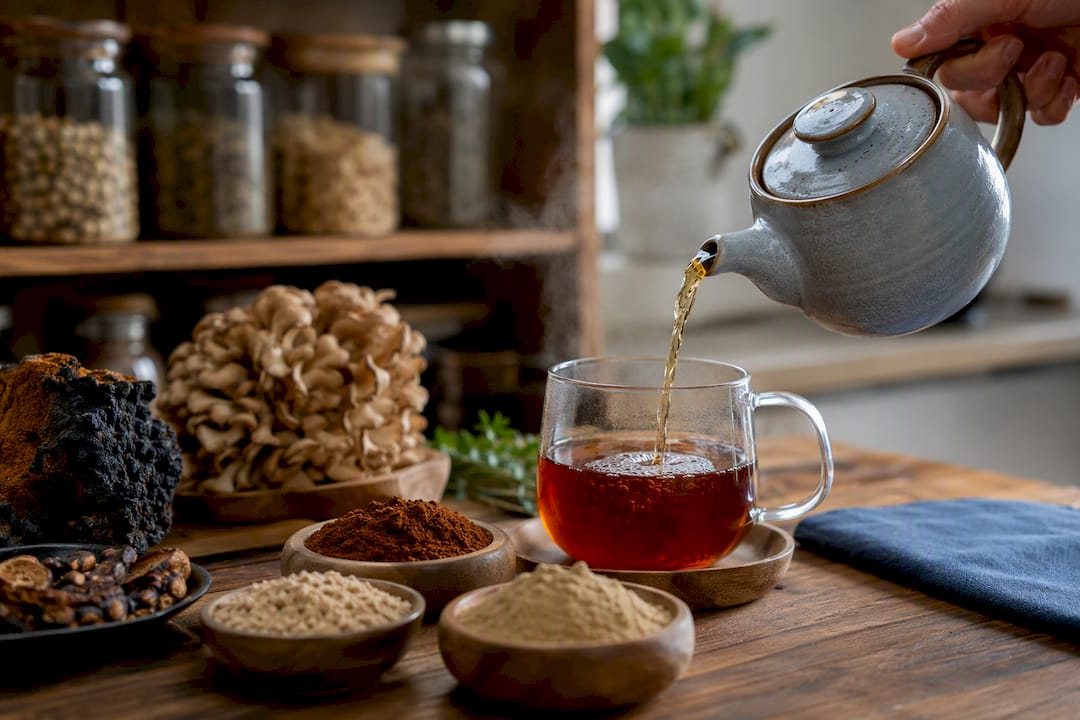
Extraction method changes bioavailability. For Reishi specifically, whether spores have had their outer sporoderm shell removed significantly affects how much of the active triterpenoid content your body can actually absorb. A label that doesn’t mention extraction method is a label withholding useful information.
Third-party testing separates serious manufacturers from the rest. Look for products verified by an independent lab for both potency, meaning they contain the standardized percentage claimed, and purity, confirming the absence of heavy metals or contaminants, since mushrooms are known to concentrate environmental toxins from their growing substrate.
Standardization percentage on the label, such as a stated percentage of beta-glucans or triterpenes, gives you something concrete to compare across brands instead of relying on a milligram number that says nothing about actual potency.
At Brainrestoremeridian, we treat mushroom supplements as one supportive layer within a coordinated brain-health plan, never the whole plan. We’ve seen patients report steadier focus and improved sleep when supplementation runs alongside neurofeedback or functional nutrition work. The evidence supports cautious optimism, not blind faith, which is exactly why personalized evaluation matters before you start.

Reading about NGF, BDNF, and erinacine-enriched mycelia only gets you so far without someone translating it into a plan built around your actual labs, history, and goals. That’s the gap Brainrestoremeridian closes for readers in the Meridian, Idaho, area: a clinical team that evaluates where supplements like Lion’s Mane and Reishi genuinely fit alongside therapies with their own independent evidence base, rather than leaving you to guess at interactions and dosing alone.
Our comprehensive brain health restoration program coordinates functional medicine, neurofeedback, laser therapy, and hyperbaric oxygen therapy into one plan built around objective baseline testing rather than trial and error. An intake evaluation covers your cognitive history, current medications and supplements, and specific recovery goals, so any mushroom supplement you’re already taking gets weighed against everything else in your regimen instead of sitting in isolation. If you want a plan that treats supplementation as one coordinated piece rather than a solo experiment, schedule an evaluation with our clinical team to map out what actually fits your situation.
Can mushrooms actually help heal brain damage?
Non-psychedelic medicinal mushrooms like Lion’s Mane show evidence for supporting cognitive function and neuroplasticity as adjuncts, particularly in trials involving mild cognitive impairment. They don’t reverse structural brain damage, but they may support the recovery environment alongside other clinical therapies.
Which mushroom is best for brain healing?
Hericium erinaceus (Lion’s Mane) currently has the strongest human trial evidence for cognitive and mood support, including a 49-week trial showing improved cognitive scores in mild Alzheimer’s patients. Reishi follows with strong preclinical anti-inflammatory data.
How long does it take for mushroom supplements to show results?
Most trials show measurable changes after 8 to 16 weeks of consistent use, with the most robust cognitive data coming from studies extending to 49 weeks. Expecting results within days sets unrealistic expectations.
Are medicinal mushroom supplements safe with medications?
Generally well tolerated, but mushrooms like Reishi may affect platelet function and immune signaling, which raises concern for people on anticoagulants or immunosuppressants. Always disclose supplement use to your clinician, especially before surgery.
Do mushroom supplements replace other brain-health treatments?
No. Every serious review of nutritional neurology frames mushroom supplementation as an adjunct that works best paired with broader clinical care, including therapies like neurofeedback or functional medicine, not as a replacement for them.
This article is general information, not a substitute for advice from a qualified doctor. Consult a qualified healthcare professional about your own circumstances before acting on anything here.
Questions about your next step?
Our Meridian team can help you understand the evaluation process and which care options may fit your needs.
Schedule a Brain Health ConsultationPrefer to speak with our team? Call 208-639-1397