
Brain Fog Treatment Boise: Get Evaluated and Treated
July 27, 2026


If you’re dealing with persistent brain fog in Boise or nearby Meridian, the fastest path to clarity starts with a root-cause evaluation at a multidisciplinary clinic like Brainrestoremeridian, which offers neurofeedback, photobiomodulation, hyperbaric oxygen therapy, and functional medicine testing under one roof. Chasing symptoms without identifying the underlying driver, whether that’s a thyroid imbalance, cortisol dysregulation, nutritional deficiency, or a neurological pattern, means treatments that miss the mark. A structured intake that maps your hormones, brain activity, and metabolic markers gives clinicians what they need to build a plan that actually works.
Pro Tip: Bring a one-page symptom summary to your first visit. Clinicians who can see your symptom arc from day one spend less time gathering history and more time designing your protocol.
Boise and Meridian residents have access to a broader range of brain-health modalities than most mid-sized cities. Here is what local clinics currently offer and what each targets best.
Pro Tip: Combining hormone optimization with neurostimulation often produces faster results than either alone, but only after labs confirm a metabolic driver. Start with testing, then layer modalities.
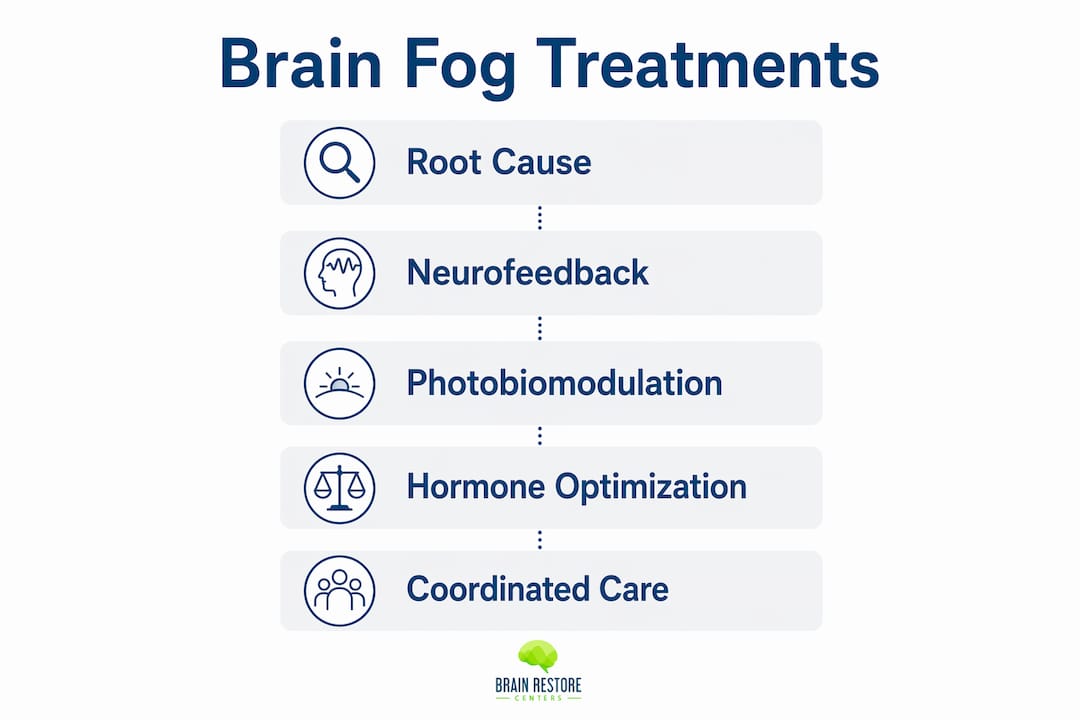
A thorough root-cause workup is what separates a treatment plan that works from one that guesses. Local providers typically run a layered diagnostic process that covers both the body and the brain.
Understanding how body systems signal illness helps you recognize which symptoms belong together and what to report clearly at your first visit.
Typical timeline: Most patients receive preliminary lab results within 1–3 weeks of their intake visit, with a personalized treatment plan built shortly after. Neuro-assessments like qEEG can often be completed at the same clinic in a separate session.
Knowing what a session actually looks like, and how long before you feel a difference, helps you plan realistically.
| Treatment | Session length | Typical course | Downtime | Common side effects |
|---|---|---|---|---|
| Neurofeedback | — | 20–40 sessions | None | Mild fatigue, vivid dreams initially |
| TMS/Exomind-style | — | Six-session protocols | None | Mild scalp tingling, transient headache |
| Photobiomodulation | 15–20 | 10–20 sessions | None | Rare; mild warmth at treatment site |
| Hyperbaric oxygen | — | 10–40 sessions | None | Ear pressure, mild fatigue |
| Hormone optimization | Ongoing | — | None | Varies by hormone and delivery method |
| Nutrition/sleep plan | Ongoing | 4–12 weeks | None | Adjustment period (diet changes) |
Neurofeedback works like exercise for your mind: the brain receives real-time feedback on its own electrical activity and gradually learns to self-regulate. Most patients notice improved sleep and attention within the first 10–15 sessions, though the full course runs longer for deeper cognitive concerns.

Photobiomodulation supports brain health by boosting mitochondrial function in neurons, which translates to better cellular energy and reduced inflammation. It pairs well with neurofeedback for post-concussion cases. HBOT delivers pressurized oxygen that promotes tissue repair and may reduce neuroinflammation, making it a useful option when post-viral or post-concussion symptoms are prominent.

Report immediately if you experience: sudden worsening of headaches, new visual disturbances, significant mood shifts, or any neurological symptom that feels different from your baseline.
Pro Tip: Correcting metabolic or endocrine contributors first (thyroid, cortisol, B12) often improves how well your brain responds to neurofeedback or photobiomodulation later in the care plan.
The right first call depends on how your symptoms present and how long they’ve lasted.
Go to the ER or call urgent care immediately if you experience: sudden severe headache unlike any you’ve had before, new focal weakness or numbness, vision changes, slurred speech, loss of consciousness, or rapid cognitive decline over hours or days. These symptoms require urgent neurological evaluation and are not appropriate for an outpatient brain-health clinic as a first stop.
Local integrative clinics coordinate referrals for MRI and CT imaging when the clinical picture warrants it, so you don’t have to navigate that alone.
Costs vary significantly depending on the modality and whether your plan covers it. Here is a realistic picture.
Insurance basics: Standard medical insurance (including most plans through St. Luke’s Health Partners and similar Idaho networks) generally covers PCP visits, neurology referrals, and physician-ordered labs. Neurofeedback, photobiomodulation, and HBOT are more often self-pay or covered under specific wellness benefits. Always call your insurer before your first appointment to verify coverage and whether a referral is required.
Reducing wait times:
Brainrestoremeridian brings together the full range of brain-health modalities under one clinical roof in Meridian, a short drive from Boise. The clinic’s integrated approach to cognitive decline combines neurofeedback, photobiomodulation/laser therapy, hyperbaric oxygen, functional medicine testing, chiropractic care, and progressive rehab into a single coordinated plan rather than a patchwork of disconnected referrals.
The intake process is structured to move efficiently: an initial evaluation captures your symptom history, prior imaging, and medication list; targeted labs and neuro-assessments follow; and a personalized protocol is built from those results. Modalities are layered intentionally, with metabolic corrections typically addressed before or alongside neurostimulation for better responsiveness.
Pro Tip: When you call or fill out the online form, mention your primary symptom cluster (e.g., “brain fog after COVID” or “attention and sleep problems for 18 months”). That detail helps the intake team route you to the right first assessment.
Root-cause evaluation at a local multidisciplinary clinic is the most direct path to effective brain fog treatment in Boise, and Brainrestoremeridian in Meridian offers that full-spectrum workup and treatment in one place.
| Point | Details |
|---|---|
| Start with root-cause testing | Thyroid, cortisol, sex hormones, and vitamin panels identify metabolic drivers before treatment begins. |
| Layer modalities strategically | Correcting metabolic imbalances first improves how well neurofeedback and photobiomodulation work later. |
| Know the red flags | Sudden severe headache, focal weakness, vision changes, or rapid decline require an ER visit, not a wellness clinic. |
| Check insurance before you book | Labs and PCP referrals are often covered; neurofeedback and HBOT are frequently self-pay. |
| Brainrestoremeridian | Offers neurofeedback, photobiomodulation, HBOT, and functional medicine testing in Meridian for Boise-area patients. |
The single biggest mistake patients make before their first visit is waiting to see if the fog lifts on its own. By the time most people walk through the door, they’ve been symptomatic for months, sometimes years, and the underlying drivers have had time to compound. What we look for first is not the most dramatic finding but the most correctable one: a thyroid that’s running low-normal, a cortisol curve that’s flat by afternoon, a B12 level that’s technically “in range” but functionally inadequate. Those are the levers that, when addressed, make everything else work better.
The patients who move fastest through recovery are the ones who arrive prepared. A clear symptom timeline, prior labs, and honest notes about sleep, stress, and diet cut diagnostic time significantly. That preparation isn’t just helpful for us; it gives you a clearer picture of your own health before the conversation even starts.
The resources below support the claims in this article and are worth bookmarking before your first appointment.
| Resource | What it covers |
|---|---|
| Brainrestoremeridian.com | Clinic overview, services, and booking for Meridian/Boise-area patients |
| Cognitive Decline Treatment in Meridian | Local guide to multimodal brain health protocols |
| Mental Fatigue Treatment | Practical guidance on managing brain fog and mental fatigue |
| Thyroid and cognitive symptoms | How thyroid dysfunction contributes to brain fog |
| St. Luke’s Neuropsychology, Boise | Formal neuropsychological evaluation locally |
| MediGuide: body systems and illness | Plain-English explanation of which body systems affect cognition |
Printing or bookmarking the Brainrestoremeridian treatment pages before your appointment gives you a ready reference for the questions you’ll want to ask.
Brainrestoremeridian offers Boise-area residents something most single-specialty clinics can’t: a coordinated plan that addresses the neurological, hormonal, and metabolic contributors to brain fog at the same time. Rather than cycling through separate providers for labs, neurofeedback, and lifestyle support, you get a single intake, a single team, and a protocol built around your specific results. The clinic’s neurofeedback and brain health programs are designed for patients who have tried the standard routes without lasting relief. If that sounds like where you are right now, the next step is straightforward: visit brainrestoremeridian.com to schedule your initial evaluation, or call the clinic directly to ask about current availability and what your first visit will include.
This article is for general informational purposes only and does not constitute medical advice. Confirm current treatment options, costs, and insurance coverage directly with your provider or a qualified clinician for your specific situation.
Questions about your next step?
Our Meridian team can help you understand the evaluation process and which care options may fit your needs.
Schedule a Brain Health ConsultationPrefer to speak with our team? Call 208-639-1397