
What Is Functional Neurology? A Clear Guide
July 3, 2026


Functional neurology is defined as a clinical discipline that applies neuroplasticity principles to assess and rehabilitate the nervous system through targeted sensory and motor stimulation, without drugs or surgery. Unlike conventional neurology, which centers on diagnosing structural diseases, functional neurology targets suboptimal neural circuit performance that often goes undetected by standard imaging or blood work. If you have experienced brain fog, balance problems, cognitive decline, or recovery from a concussion, this field may offer answers that traditional medicine has not provided. Brainrestoremeridian integrates functional neurology principles into a broader brain health restoration model designed for exactly these situations.
Functional neurology is a subspecialty that uses the brain’s capacity to change and adapt, a property called neuroplasticity, to restore nervous system performance. Practitioners design personalized sensory and motor exercises rather than prescribing medication or recommending surgery. The goal is to identify which neural circuits are underperforming and then stimulate them back toward normal function through repeated, targeted input.
The foundational mechanism is activity-dependent neuroplasticity. This means the brain physically reorganizes itself in response to specific, repeated stimulation. Think of it as physical therapy for neural pathways. Each session builds on the last, gradually strengthening circuits that have become weak or dysregulated.

This approach addresses a gap that conventional medicine often leaves open. Many patients experience real, measurable symptoms but receive normal results on MRI scans or standard neurological exams. Functional neurology is built precisely for that space, where the nervous system is struggling but has not yet crossed into diagnosable disease.
Assessment is the foundation of every functional neurology treatment plan. A comprehensive clinical examination typically includes eye movement evaluation in multiple planes, gait and posture analysis, balance testing, reflex checks, and muscle tone assessment on both sides of the body. Each of these tests reveals how specific brain regions and neural circuits are performing.
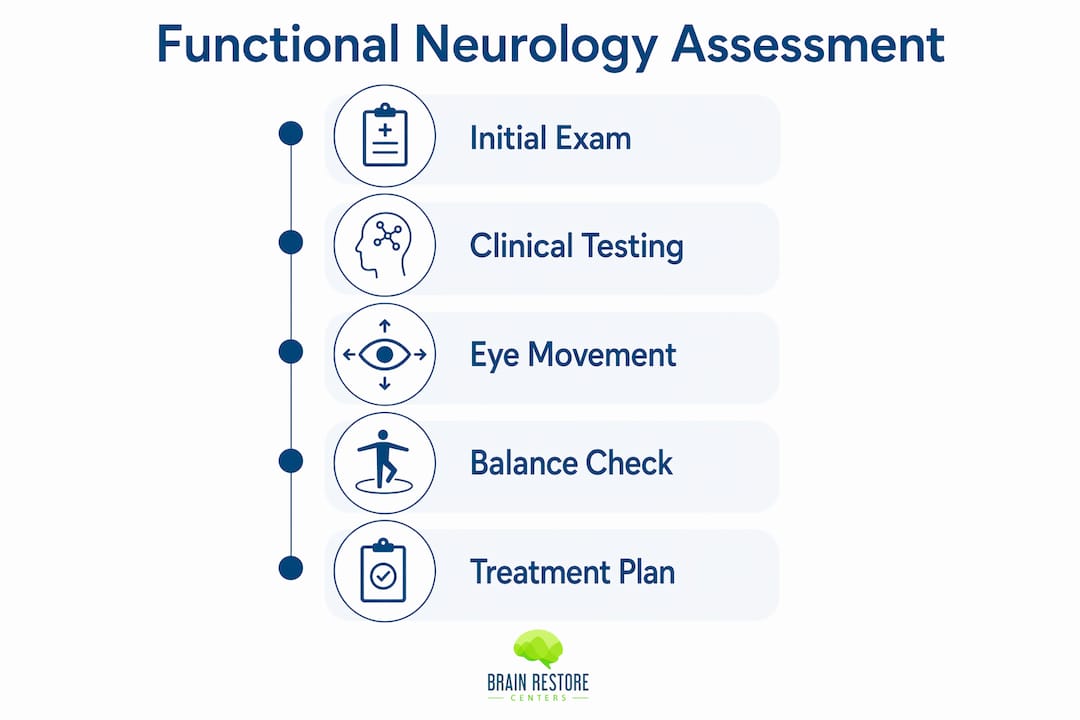
Eye movement testing is particularly revealing. The pathways that control eye tracking pass through the brainstem and cerebellum, so abnormalities in smooth pursuit or saccadic movements point directly to dysfunction in those regions. Gait analysis works similarly. The way you walk reflects the real-time coordination between your motor cortex, cerebellum, and spinal cord.
Balance and reflex testing adds another layer of precision. Age-related balance decline, for example, is linked to brain-based changes rather than joint degradation alone. Identifying the neurological source of instability allows the practitioner to target the correct circuits rather than treating symptoms in isolation.
The result of this full assessment is a functional map of your nervous system. That map drives every decision about treatment type, intensity, and duration.
Pro Tip: Wear comfortable clothing and flat shoes to your first functional neurology evaluation. Practitioners need to observe your natural gait and posture without footwear interference, and you may be asked to perform balance tasks on different surfaces.
Functional neurology treatments are non-invasive and safe, relying entirely on neuroplasticity and repeated stimulation exercises rather than pharmaceuticals or surgical procedures. Each treatment plan is built from the functional map created during assessment, so no two patients receive identical protocols.
The core techniques target specific neural pathways through sensory and motor input. Practitioners use vestibular challenges, joint manipulation, and sensory stimulation to activate and strengthen underperforming brain regions. Olfactory stimulation, for instance, directly engages the limbic system and can support emotional regulation and memory circuits. Vestibular exercises challenge the inner ear and cerebellum together, improving balance and spatial orientation.
Here is how a typical treatment sequence is structured:
Pro Tip: Functional neurology sessions are typically short, often 15–30 minutes of active treatment. Longer sessions can actually overload a fatigued nervous system. Consistency over weeks matters far more than session length.
Conventional neurology operates on a pathology-centered model. It identifies structural diseases, such as multiple sclerosis, Parkinson’s disease, or stroke, and treats them with pharmacological agents or surgical intervention. Functional neurology operates on a performance-centered model. It asks not “what disease is present?” but “which neural circuits are underperforming and why?”
This distinction matters enormously for patients who fall between the cracks. Suboptimal neural circuit performance often falls below disease thresholds and goes undiagnosed by conventional neurology. A patient with post-concussion brain fog, chronic dizziness, or early cognitive decline may receive a clean bill of health from standard testing while still experiencing significant functional impairment.
Functional neurology also differs from neurofeedback, though the two complement each other well. Neurofeedback uses real-time brainwave feedback to train the brain toward healthier electrical patterns. Functional neurology uses physical sensory and motor stimulation to activate specific neural circuits. Neuromuscular therapy shares some overlap in its focus on the body-brain connection, and neuromuscular techniques can support functional neurology rehabilitation goals.
| Feature | Conventional neurology | Functional neurology |
|---|---|---|
| Primary focus | Structural disease diagnosis | Neural circuit performance |
| Main tools | Imaging, lab tests, medications | Sensory and motor assessment |
| Treatment approach | Pharmacological or surgical | Neuroplasticity-based exercises |
| Patient profile | Diagnosed neurological disease | Suboptimal function, no clear diagnosis |
| Invasiveness | Often invasive or pharmaceutical | Non-invasive, drug-free |
The benefits of functional neurology extend across a wide range of neurological and cognitive conditions. Patients commonly report improvements in balance, coordination, cognitive clarity, memory, mood stability, and reduction in chronic neurological symptoms. These outcomes reflect the direct effect of rehabilitating underperforming neural circuits rather than masking symptoms with medication.
Functional neurology applies to conditions including traumatic brain injury recovery, post-concussion syndrome, cognitive decline, chronic pain with a neurological component, balance disorders, and movement dysfunction. Integrating functional neurology with chiropractic care improves patient outcomes in brain and nervous system health, particularly when both disciplines address the same underlying neural circuits from different angles.
The non-invasive nature of treatment is a significant practical benefit. Patients who cannot tolerate medications due to side effects, or who have not responded to standard treatments, often find functional neurology offers a viable path forward. The personalized assessment protocol means treatment targets your specific deficits rather than a generic symptom category.
Pro Tip: Functional neurology produces the best results when patients are consistent and engaged between sessions. Practitioners often assign home exercises, such as specific eye movement drills or balance tasks, that reinforce in-clinic work. Skipping these reduces the cumulative neuroplasticity effect.
Functional neurology rehabilitates the nervous system through neuroplasticity-based sensory and motor stimulation, addressing performance deficits that conventional neurology’s disease-focused model does not capture.
| Point | Details |
|---|---|
| Core mechanism | Activity-dependent neuroplasticity drives all functional neurology treatment outcomes. |
| Assessment depth | Eye movement, gait, balance, and reflex testing create a precise functional map of the nervous system. |
| Treatment approach | Non-invasive sensory and motor exercises replace pharmaceuticals and surgery in this model. |
| Key distinction | Functional neurology targets suboptimal circuit performance, not just diagnosed neurological disease. |
| Best results | Consistent sessions combined with home exercises produce the strongest neuroplasticity gains. |
Most people encounter functional neurology only after years of frustrating dead ends with conventional care. That delay is the real problem, not the therapy itself. I have seen patients arrive after multiple specialist visits, normal MRI results, and a growing sense that their symptoms are not real. Functional neurology gives those symptoms a precise, testable explanation.
What strikes me most is how much information a skilled functional neurologist extracts from a simple eye movement test. The eyes do not lie about brain function. Subtle tracking errors, nystagmus patterns, or convergence weakness map directly to specific brainstem and cerebellar regions. That level of specificity is rare in any clinical discipline.
The integration of functional neurology with chiropractic care and brain health restoration is where I see the most consistent patient progress. Neither discipline works in isolation as well as they do together. The chiropractic adjustment sends proprioceptive input to the brain; the functional neurology protocol tells you exactly which brain region needs that input most.
My honest expectation for this field is continued growth as neuroplasticity research matures. The clinical evidence base is building, and insurance recognition is expanding. Functional neurology is already covered by most insurance policies in many cases, which removes a major barrier for patients who need it most. The practitioners who combine rigorous assessment with patient education will define what this subspecialty becomes.
— Chad
Brainrestoremeridian combines functional neurology principles with neurofeedback, chiropractic care, photobiomodulation, and functional medicine to create personalized brain health restoration plans in Meridian, Idaho. Every patient begins with a thorough neurological assessment before any treatment is recommended.
Whether you are managing anxiety, recovering from a concussion, or working through cognitive decline, the clinic’s integrative model addresses the neural circuits driving your symptoms. Neurofeedback for anxiety relief is one of the clinic’s most requested services, pairing naturally with functional neurology assessment to target the specific brain regions involved. Patients seeking relief from chronic pain through neurofeedback will find the same personalized, evidence-informed approach. Contact Brainrestoremeridian to schedule a consultation and find out which therapies match your neurological profile.
Functional neurology is a clinical approach that uses targeted exercises and sensory stimulation to improve how the brain and nervous system perform. It relies on neuroplasticity rather than medication or surgery.
Functional neurology addresses conditions including post-concussion syndrome, cognitive decline, balance disorders, chronic pain with a neurological component, and movement dysfunction. It is designed for patients whose symptoms do not fit a standard disease diagnosis.
Conventional neurology diagnoses structural diseases and treats them with drugs or surgery. Functional neurology focuses on optimizing neural circuit performance in patients whose standard tests return normal results.
Functional neurology is covered by most insurance policies in many cases, as it is a recognized subspecialty with defined clinical protocols. Patients should verify coverage details with their specific provider.
Functional neurological disorders are conditions where the nervous system does not function correctly despite the absence of structural damage or disease. They include symptoms such as tremors, weakness, and sensory disturbances that respond well to neuroplasticity-based rehabilitation.
Questions about your next step?
Our Meridian team can help you understand the evaluation process and which care options may fit your needs.
Schedule a ConsultationPrefer to speak with our team? Call 208-639-1397