Chiropractic Care for TBI: Recovery and Brain Health
July 7, 2026


Chiropractic care is defined as a clinical intervention that targets cervical spine dysfunction to reduce symptoms and support nervous system recovery after traumatic brain injury (TBI). The role of chiropractic care in TBI is not to repair the brain directly. It is to address the cervical spine trauma that so often accompanies a head injury and prolongs symptoms like headaches, dizziness, and neck pain. Research confirms that spinal adjustments modulate sensorimotor integration and support neurological reorganization after brain injury. When the cervical spine is treated alongside vestibular and oculomotor rehabilitation, patients recover faster and more completely than with rest alone.
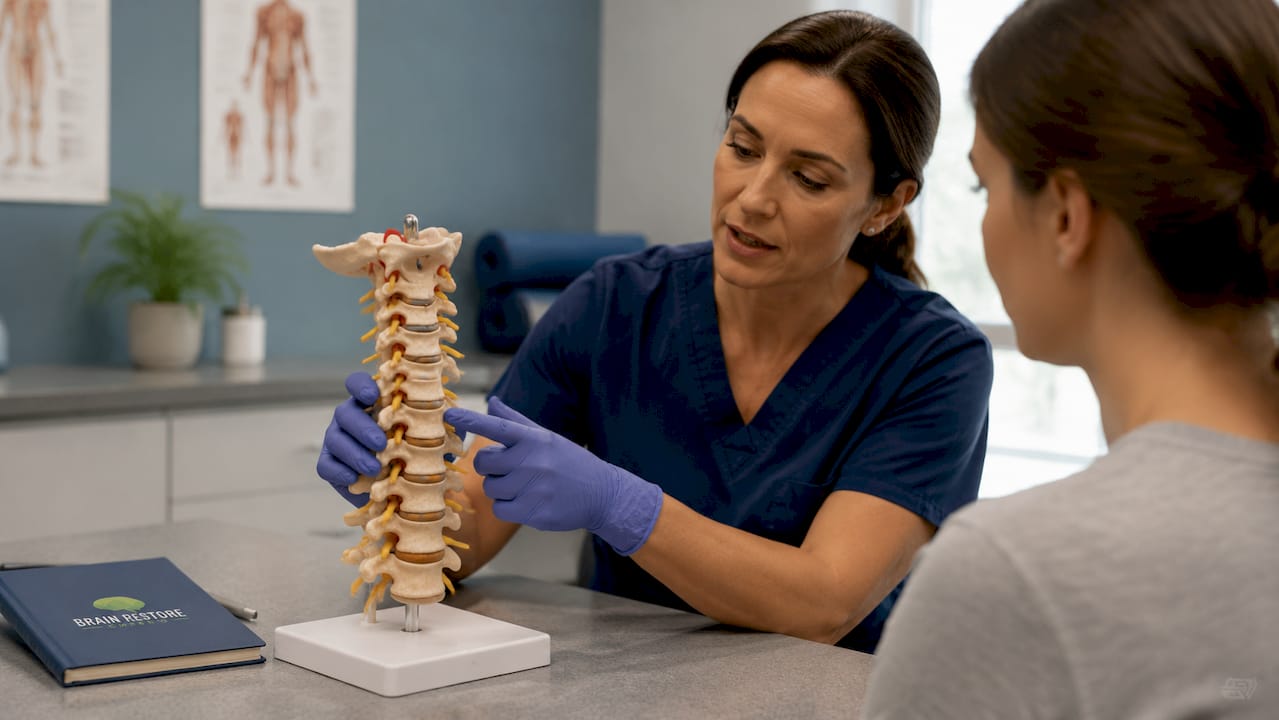
Chiropractic care addresses the cervical spine as a primary neurological gateway between the body and the brain. Every signal your brain receives about posture, movement, and spatial orientation travels through the cervical spine. When that pathway is disrupted by trauma, the brain receives distorted input. That distortion produces or worsens symptoms that look identical to a concussion: persistent headaches, brain fog, balance problems, and light sensitivity.
TBI events rarely injure the brain in isolation. A car accident, a sports collision, or a fall that causes a brain injury almost always strains the neck at the same time. Neck injuries mimic or prolong concussion symptoms like headache and dizziness, and targeted chiropractic care can reduce those symptoms significantly. This means a patient who feels “stuck” in recovery may actually be dealing with an untreated cervical injury rather than an unresolved brain injury.
Chiropractic intervention in TBI focuses on restoring normal joint mechanics in the upper cervical spine, reducing muscle tension, and improving proprioceptive signaling to the brain. Proprioception is your body’s sense of where it is in space. When cervical joints are restricted, proprioceptive signals become unreliable, and the brain struggles to recalibrate. Restoring that signal quality is one of the most direct ways chiropractic care supports neurological recovery.
Pro Tip: If your concussion symptoms have lasted longer than four weeks, ask your provider to assess your cervical spine specifically. Persistent symptoms often have a musculoskeletal component that standard neurological workups miss.
Key signs that cervical dysfunction may be contributing to your TBI symptoms include:
Clinical research on chiropractic treatment for TBI has grown substantially over the past decade. The strongest evidence centers on combined treatment protocols rather than spinal manipulation alone. Combining cervical spine therapy with vestibular rehabilitation improves medical clearance rates within 8 weeks for youth and young adults with persistent concussion symptoms. That outcome matters because prolonged recovery is one of the most disabling aspects of TBI for patients of all ages.
Randomized trial data also shows that targeted chiropractic interventions can influence oculomotor and attention-related visual outcomes in mild TBI patients. Oculomotor function refers to how well your eyes track moving objects and shift focus. These skills are essential for reading, driving, and screen use. Deficits in this area are common after TBI and respond to combined chiropractic and visual rehabilitation.
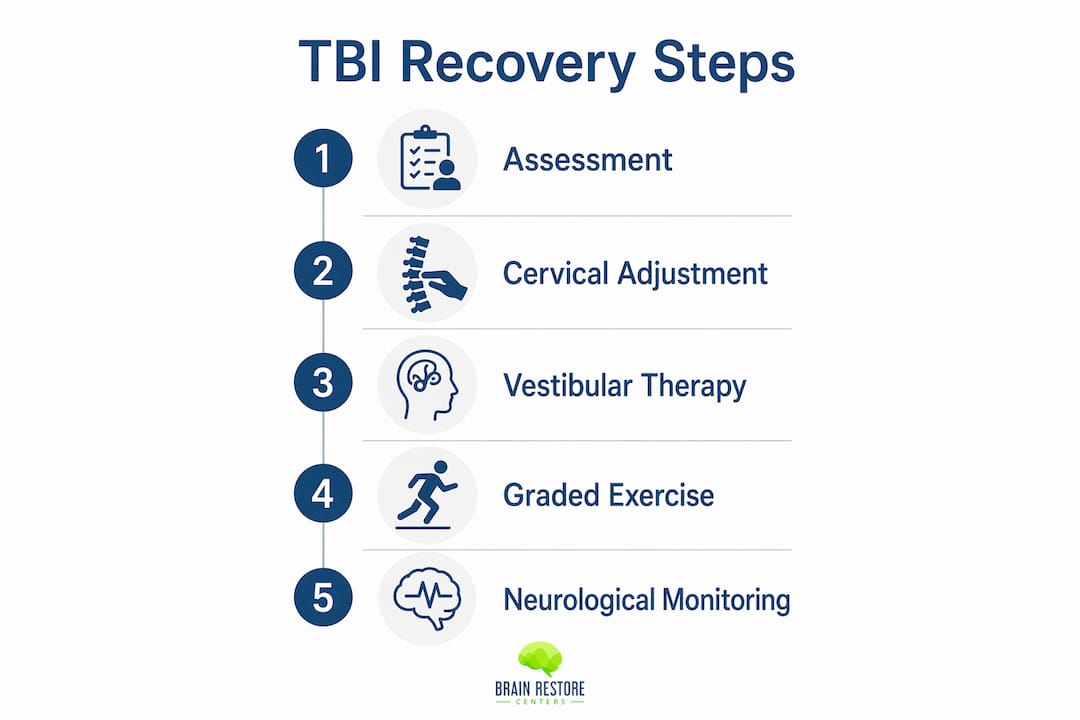
A well-designed chiropractic protocol for TBI recovery typically includes the following components:
| Treatment component | Primary benefit in TBI recovery |
|---|---|
| Cervical spine adjustment | Restores proprioceptive signaling and reduces headache |
| Vestibular rehabilitation | Reduces dizziness and improves balance |
| Oculomotor training | Improves visual tracking and reduces cognitive fatigue |
| Graded aerobic exercise | Accelerates neurological recovery timelines |
| Interdisciplinary coordination | Addresses cognitive, emotional, and functional deficits |
Successful TBI recovery involves multifaceted care including chiropractic, graded exercise, vestibular therapy, and specialist referrals rather than spinal manipulation alone. Integrated approaches produce stronger clinical outcomes than any single treatment modality.
Pro Tip: Ask your chiropractor whether they screen for vestibular and oculomotor impairments at your first visit. If they only assess the spine, you may be missing two of the most treatable contributors to your symptoms.
TBI disrupts the autonomic nervous system in a predictable way. The autonomic nervous system controls your heart rate, breathing, digestion, and stress response. After a brain injury, the system often gets locked in a state of chronic sympathetic dominance, which is the “fight or flight” mode your body uses during danger. TBI often induces chronic sympathetic dominance, and chiropractic adjustments can promote parasympathetic feedback, reducing stress responses and supporting neuroplasticity.
Parasympathetic activation is the “rest and repair” state your nervous system needs to heal. When you are stuck in sympathetic overdrive, your body prioritizes survival over recovery. Sleep deteriorates, pain sensitivity increases, and cognitive function suffers. Chiropractic adjustments applied to the cervical and thoracic spine stimulate mechanoreceptors that send calming signals to the brainstem, helping shift the nervous system toward a more balanced state.
Neuroplasticity is the brain’s ability to reorganize itself by forming new neural connections. It is the biological foundation of all TBI recovery. The spine serves as a neurological gateway; spinal adjustments modulate sensorimotor integration and support neurological reorganization after brain injury. Improving the quality and consistency of spinal input gives the brain better raw material to work with as it rebuilds damaged pathways.
“Chronic stress response in TBI patients can be mitigated by chiropractic-induced parasympathetic activation, aiding neural pathway development through neuroplasticity. Addressing the spine is not a workaround. It is a direct intervention in the brain’s recovery environment.”
You can learn more about how chiropractic improves brain function and why the cervical spine is central to that process.
Setting realistic expectations is the first step toward getting real results. Chiropractic care does not cure the brain injury but addresses cervical spine trauma commonly associated with TBI symptoms to speed recovery. Patients who understand this distinction engage more effectively with their full treatment plan rather than expecting a single therapy to resolve everything.
What chiropractic care can realistically deliver in TBI recovery includes:
Choosing chiropractors trained in concussion and functional neurology is critical for safe and effective TBI care. Not every chiropractor has training in concussion management. You want a provider who conducts detailed cervical, vestibular, and oculomotor assessments, not one who applies a standard spinal manipulation protocol without a TBI-specific evaluation.
Post-traumatic headaches and musculoskeletal pain after TBI correlate with worse recovery. Addressing pain early improves your ability to participate in rehabilitation, which directly affects how well and how quickly you recover. Pain that goes untreated becomes a barrier to every other form of therapy.
Understanding how the cervical spine affects concussion symptoms can help you have more productive conversations with your care team and advocate for the assessments you need.
Pro Tip: Before your first chiropractic appointment post-TBI, write down every symptom you experience, when it started, and what makes it better or worse. That history helps a skilled clinician identify whether your symptoms are primarily neurological, cervical, vestibular, or a combination.
Many individuals experience long-term disability after TBI due to functional limitations and chronic pain. Task-specific functional restoration, which focuses on mobility, cognition, and communication, is what separates patients who regain independence from those who plateau. Chiropractic care contributes to that restoration by removing physical barriers to participation.
Chiropractic care supports TBI recovery by correcting cervical spine dysfunction, restoring nervous system balance, and forming part of a multidisciplinary rehabilitation plan that produces better outcomes than any single treatment alone.
| Point | Details |
|---|---|
| Cervical spine is central | Neck injuries commonly accompany TBI and prolong symptoms like headache and dizziness. |
| Combined therapy works best | Cervical care plus vestibular rehabilitation improves recovery rates within 8 weeks. |
| Autonomic regulation matters | Chiropractic adjustments promote parasympathetic activation, reducing chronic stress and supporting neuroplasticity. |
| Provider training is critical | Choose chiropractors trained in concussion and functional neurology for safe, effective care. |
| Chiropractic is one part of the plan | Integrated care including graded exercise, vestibular therapy, and specialist referrals produces the strongest outcomes. |
The most common mistake I see in TBI recovery is treating the brain and the spine as separate problems. Patients get a neurological workup, receive a concussion diagnosis, and are told to rest. Weeks pass. Symptoms persist. Then someone finally assesses the cervical spine and finds restricted joints, muscle guarding, and impaired proprioception that have been feeding distorted signals to the brain the entire time.
The research on this is clear, but clinical practice has been slow to catch up. Chiropractors trained in functional neurology understand that the spine is not just a structural column. It is a sensory organ. Every adjustment is also a neurological input. When you restore normal cervical mechanics, you change what the brain receives, and that changes how the brain responds.
What I find most compelling is the autonomic piece. Patients with TBI often describe feeling “wired but tired,” unable to sleep despite exhaustion, anxious without a clear reason, and sensitive to light and sound. These are autonomic symptoms. Chiropractic care that targets the upper cervical spine can shift that autonomic balance in a measurable way. It is not a cure. It is a recalibration that makes every other therapy more effective.
The future of TBI care is genuinely multidisciplinary. Chiropractors, neurologists, vestibular therapists, and neurofeedback practitioners need to work from the same clinical picture. Patients deserve providers who communicate with each other, not siloed specialists who each treat one piece of the puzzle. The evidence supports integration. The outcomes demand it.
— Chad
At Brainrestoremeridian, chiropractic care is one part of a broader clinical picture that includes neurofeedback, spinal decompression, laser therapy, and functional medicine. TBI recovery rarely follows a straight line, and a single-modality approach rarely gets patients where they need to go.
Neurofeedback works alongside chiropractic care by training the brain’s electrical activity toward healthier patterns, which supports the neuroplasticity that spinal care helps create. You can learn how neurofeedback complements chiropractic care and whether that combination fits your recovery needs. If you are ready to take the next step, Brainrestoremeridian offers personalized consultations that assess your full clinical picture and build a plan around your specific symptoms and goals.
Chiropractic care addresses cervical spine dysfunction that commonly accompanies TBI, reducing symptoms like headaches, dizziness, and neck pain. It does not repair brain tissue but improves the neurological environment in which the brain heals.
Clinical research shows that combined cervical spine therapy and vestibular rehabilitation can achieve medical clearance within 8 weeks for patients with persistent concussion symptoms. Individual timelines vary based on injury severity and treatment consistency.
Chiropractic care is safe for TBI patients when provided by a clinician trained in concussion and functional neurology who conducts proper cervical, vestibular, and oculomotor screening before treatment. Patients should always disclose their full injury history before any spinal intervention.
Chiropractic care alone produces limited results. Integrated approaches that combine cervical therapy with graded aerobic exercise, vestibular rehabilitation, and specialist referrals yield the strongest clinical evidence and best patient outcomes.
Look for chiropractors with training in concussion management or functional neurology who perform detailed assessments of the cervical spine, vestibular system, and oculomotor function. Providers who coordinate with neurologists and physical therapists offer the most complete care.
Questions about your next step?
Our Meridian team can help you understand the evaluation process and which care options may fit your needs.
Schedule a Brain Health ConsultationPrefer to speak with our team? Call 208-639-1397