What Does Neurological Rehabilitation Involve?
July 6, 2026

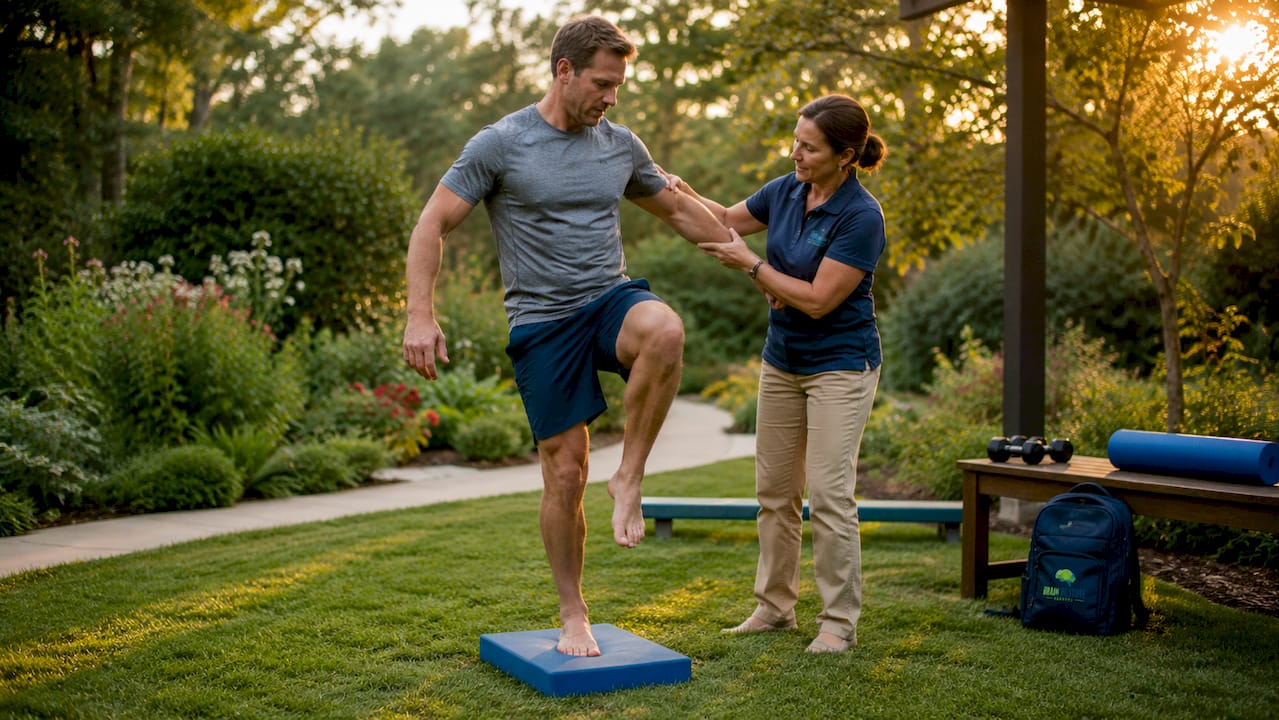
Neurological rehabilitation is defined as a structured clinical process that restores function, reduces disability, and maximizes independence after injury or disease affects the nervous system. The standard industry term is neurorehabilitation, and it applies to conditions ranging from stroke and traumatic brain injury to Parkinson’s disease and spinal cord damage. The biological engine behind every recovery plan is neuroplasticity, the brain’s ability to reorganize and form new connections through repeated, meaningful practice. Understanding what neurological rehabilitation involves gives you a clear picture of what to expect and why each step matters for your recovery.
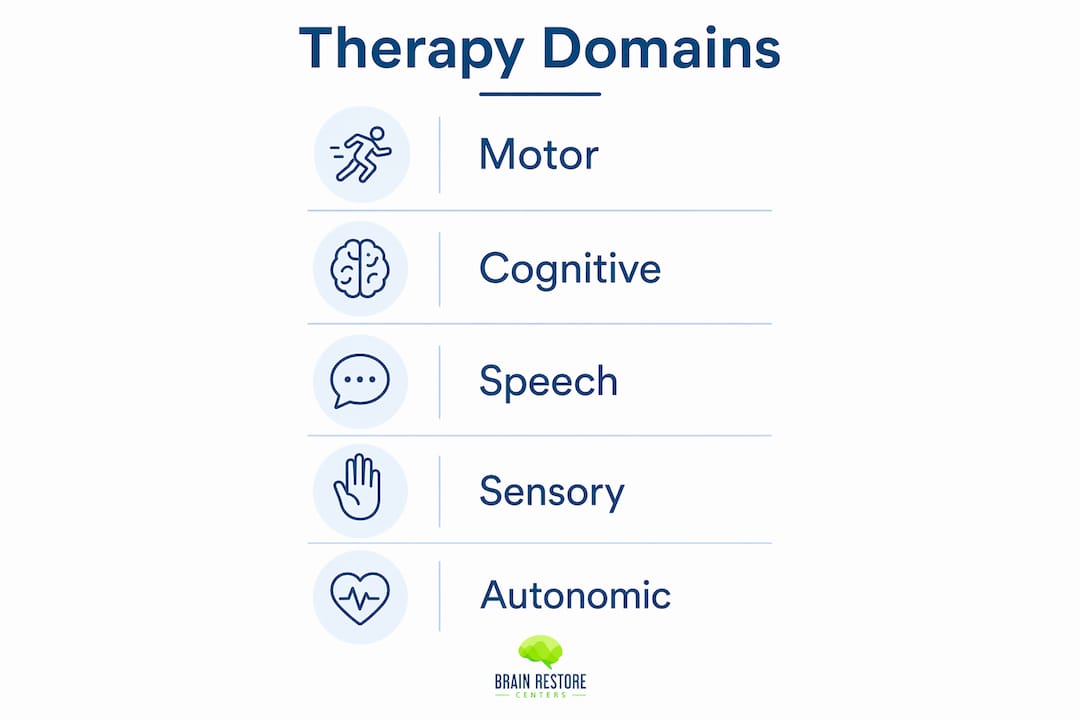
Neurological rehabilitation involves four primary therapy domains: motor rehabilitation, cognitive rehabilitation, speech and language therapy, and sensory or autonomic rehabilitation. Each domain targets a specific system affected by neurological damage, and most patients receive interventions across more than one domain simultaneously. The goal is not simply to reverse damage. Neurorehabilitation focuses on exploiting neuroplasticity through meaningful practice to maximize safety and independence.
Motor rehabilitation addresses movement, balance, gait, and fine motor skills. Therapists use task-oriented training, which means practicing real activities like standing from a chair, walking on uneven surfaces, or buttoning a shirt, rather than isolated muscle exercises. Task-oriented training promotes better neural reorganization than rote mechanical exercises because the brain responds to context and purpose. Patients working on gait after a stroke, for example, practice walking in varied environments to build the adaptability needed for daily life.

Cognitive rehabilitation retrains memory, attention, processing speed, and executive functions like planning and decision-making. Therapists use structured exercises, compensatory strategies, and real-world practice tasks to rebuild these skills. Think of it as exercise for your mind: the brain strengthens pathways by using them repeatedly in meaningful ways. Patients recovering from a traumatic brain injury often work on memory notebooks, calendar systems, and step-by-step task planning before returning to work. For a detailed look at staged cognitive recovery, Brainrestoremeridian offers practical guidance on pacing your return to full function.
Speech therapists address aphasia (difficulty finding or producing words), dysarthria (slurred or weak speech), and dysphagia (swallowing problems). These deficits are common after stroke, brain injury, and neurodegenerative conditions. Therapy involves repetitive practice of speaking, reading, and swallowing tasks graded by difficulty. Swallowing rehabilitation, in particular, prevents aspiration pneumonia, one of the most serious secondary complications in neurological patients.
Sensory rehabilitation addresses abnormal pain, numbness, and sensory processing problems. Autonomic rehabilitation manages bladder and bowel function, blood pressure regulation, and temperature control. These areas are often overlooked but directly affect a patient’s comfort, safety, and ability to participate in other therapies. Addressing them early keeps the full rehabilitation program on track.
Pro Tip: Ask your care team to explain how each therapy connects to a specific daily activity you want to reclaim. Concrete goals tied to real life keep motivation high and give therapists clear targets to measure progress against.
Interdisciplinary teams are the standard of care in neurorehabilitation because neurological impairments involve complex interactions between motor, cognitive, and sensory systems. No single discipline can address all of them effectively. The team typically includes the following professionals, each contributing a distinct role:
The team meets regularly to share findings, align goals, and adjust the treatment plan. This communication prevents conflicting recommendations and keeps every intervention moving in the same direction.
“Patients who actively participate in setting realistic rehab goals experience better engagement and motivation, driving improved outcomes. Goal-setting in rehab is a dynamic, shared process, not a prescription handed down by clinicians.”
Your active participation in goal-setting is not optional. It is one of the strongest predictors of successful community reintegration. When you help define what recovery looks like for your life, the team can design therapy that actually fits your priorities.
Rehabilitation consultation begins within 24–48 hours after medical stabilization. Starting early prevents secondary complications like muscle contractures, pressure injuries, deep vein thrombosis, and deconditioning. Early mobilization also signals the nervous system to begin reorganizing before maladaptive patterns set in.
The Centers for Medicare and Medicaid Services (CMS) sets federal intensity standards for inpatient rehabilitation facilities. These standards exist to protect patients and define what qualifies as true intensive rehabilitation.
| Setting | Therapy intensity | Regulatory standard |
|---|---|---|
| Inpatient rehab facility | 3 hours/day, 5 days/week minimum | CMS 42 CFR Part 412 |
| Subacute rehab | Variable, typically 1–2 hours/day | State-level regulations |
| Outpatient neurorehab | Variable by payer and provider | No federal minimum mandate |
CMS also requires that at least 60% of patients in a certified inpatient facility carry qualifying diagnoses such as stroke, spinal cord injury, or traumatic brain injury. That threshold protects program quality and ensures facilities maintain genuine neurological expertise.
Outpatient and subacute programs operate under different, often less intensive, standards. Outpatient programs frequently have less intensive therapy dosing with variable payment regulations. This means the responsibility for advocating for adequate therapy frequency often falls on you and your family.
Pro Tip: Before accepting a discharge plan, ask your team to document the recommended therapy frequency in writing. Compare it against CMS inpatient standards so you understand exactly what level of intensity your recovery requires.
The benefits of neurological rehabilitation span physical, cognitive, emotional, and social domains. Recovery is rarely linear, but the evidence consistently shows meaningful gains across all four areas when therapy is delivered at adequate intensity and duration.
Physical and functional gains:
Cognitive improvements:
Emotional and psychological support:
Neurorehabilitation addresses anxiety, depression, and stress as integral components of recovery, not as separate concerns. These emotional challenges are direct consequences of neurological injury and affect how well patients engage with therapy. Neuropsychologists and counselors work alongside the physical and cognitive team to provide coping strategies, grief processing, and mental health support.
Quality of life and community reintegration:
The ultimate measure of successful neurorehabilitation is whether you can return to the roles and activities that matter most to you. That might mean returning to work, driving independently, caring for children, or simply living at home without constant assistance. Patients engaged in negotiating their own rehab goals experience better community reintegration and sustained improvement over time. Brainrestoremeridian’s approach to neurofeedback for neurodegenerative conditions extends these gains by targeting brain regulation directly, complementing traditional rehabilitation with measurable neurological support.
Fatigue is the most commonly underestimated challenge in neurorehabilitation. The brain uses significantly more energy during recovery than it does under normal conditions. Pacing strategies, rest breaks within therapy sessions, and sleep optimization are not luxuries. They are clinical tools that protect the quality of every session.
Neurological rehabilitation is a structured, interdisciplinary process that uses neuroplasticity, task-specific training, and coordinated team care to restore function and quality of life after neurological injury or disease.
| Point | Details |
|---|---|
| Neuroplasticity drives recovery | Repeated, meaningful practice rewires the brain and is the foundation of every effective rehab plan. |
| Four core therapy domains | Motor, cognitive, speech, and sensory rehabilitation address the full range of neurological impairment. |
| Interdisciplinary teams are standard | Physicians, therapists, neuropsychologists, and nurses must coordinate to manage complex, overlapping deficits. |
| Early start and intensity matter | Rehab begins within 24–48 hours of stabilization; CMS mandates 3 hours/day for inpatient facilities. |
| Patient participation drives outcomes | Active goal-setting and engagement in therapy directly improve community reintegration and long-term gains. |
After working with patients navigating neurological recovery, the pattern I see most often is this: the patients who recover best are not always the ones with the mildest injuries. They are the ones who treat goal-setting as a conversation, not a form to sign.
Most people arrive at rehabilitation expecting a fixed program. They assume the team will hand them a schedule and they will follow it until they are better. That is not how the brain works. Clinical reasoning in neurophysiotherapy requires an ongoing, patient-centered, biopsychosocial approach that integrates assessment, evaluation, intervention, and prognosis continuously. The plan changes because you change.
The second thing most guides skip is the emotional weight of non-linear progress. You will have weeks where gains feel obvious, followed by weeks where nothing seems to move. That plateau is not failure. It is the brain consolidating what it has learned before it can build further. Patients who understand this stay in therapy longer and ultimately recover more function.
The third insight is about task specificity. Practicing a movement in a clinical gym is useful. Practicing that same movement in your kitchen, with the noise and distraction of real life, is what actually transfers to independence. Push your therapists to move therapy into real environments as soon as it is safe. The brain learns context, not just motion.
— Chad
Brainrestoremeridian integrates neurofeedback, photobiomodulation, and functional medicine to support patients who want to go beyond what traditional rehabilitation alone can offer.
Neurofeedback trains the brain to regulate its own electrical activity, which directly supports cognitive recovery, emotional stability, and sleep quality. These are three areas where traditional rehab often reaches its limits. Combined with photobiomodulation and a functional medicine assessment of underlying health factors, the result is a personalized plan built around your specific brain and body. If you are looking for neurofeedback support for neurological conditions, Brainrestoremeridian’s team in Meridian, Idaho is ready to build a plan with you. Contact the clinic to schedule your initial assessment and take the next step in your recovery.
Stroke rehabilitation involves motor retraining, speech therapy, cognitive rehabilitation, and emotional support delivered by an interdisciplinary team. CMS requires inpatient stroke rehab facilities to provide at least 3 hours of combined therapy daily.
Duration varies by injury severity, patient goals, and setting. Inpatient programs typically run several weeks, while outpatient neurorehabilitation can continue for months or years depending on progress and payer coverage.
Neuroplasticity is the brain’s ability to reorganize and form new neural connections in response to repeated, meaningful activity. It is the biological mechanism that makes functional recovery possible after neurological injury.
Yes. Cognitive rehabilitation targets memory, attention, processing speed, and executive function through structured exercises and real-world practice. Patients recovering from brain injury or stroke regularly achieve meaningful cognitive gains with consistent therapy.
Inpatient rehab provides intensive therapy of at least 3 hours per day under federal CMS standards, while outpatient programs offer variable frequency with no federal minimum. Patients in outpatient settings often need to advocate actively for adequate therapy intensity.
Questions about your next step?
Our Meridian team can help you understand the evaluation process and which care options may fit your needs.
Schedule a ConsultationPrefer to speak with our team? Call 208-639-1397