Expect $50–$150 per Session for Cold Laser in the U.S.
August 29, 2026

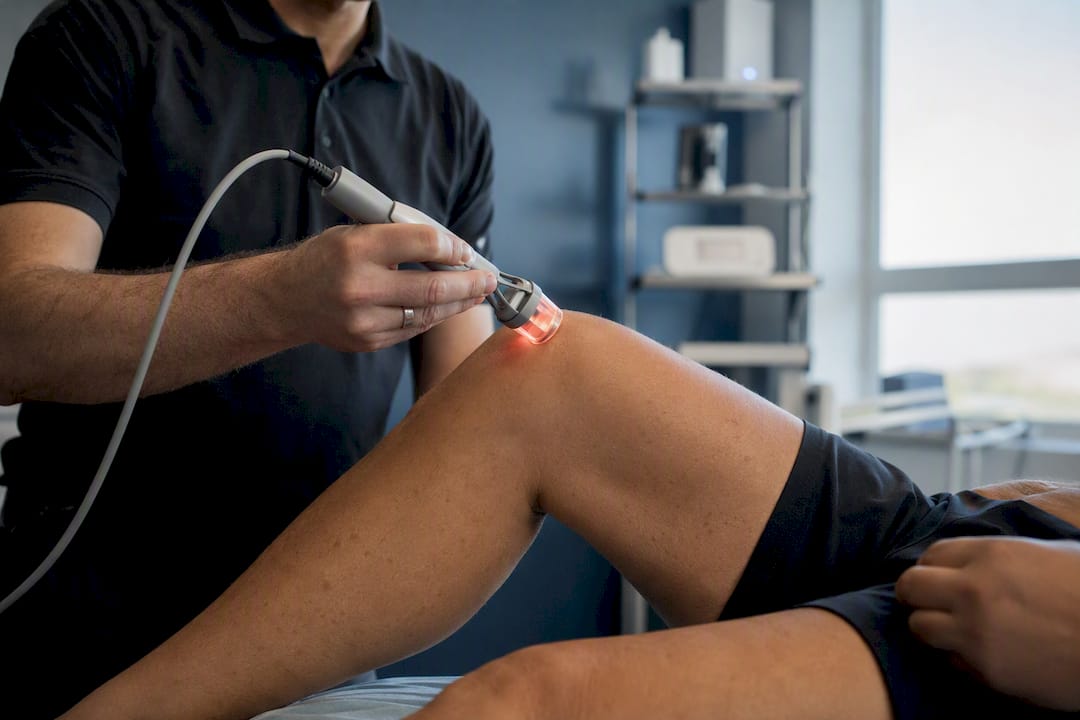
Most cold laser therapy sessions in the United States run $50 to $150, and clinics that sell packages of multiple sessions typically provide a discount off the per-session rate. Your total cost depends far more on how many sessions your condition needs than on the sticker price of any single visit, so a “cheap” $50 session that stretches to 20 visits can cost more than a $120 session done eight times.
TL;DR:
- The typical cost per session ranges from $50 to $150, with higher prices in large metro markets and for larger or longer treatment areas.
- Most treatment plans require 8 to 20 sessions depending on the condition, significantly affecting total costs more than per-session fees.
- Clinics often offer discounts on packages, but it is best to start with individual sessions to assess response before committing to a full course.
- Factors like device class, equipment investment, treatment scope, and location influence the per-session prices, with higher-output lasers generally reducing total visits needed.
- Insurance and Medicare rarely cover cold laser therapy, so payers expect outpatient, documented evidence of medical necessity for reimbursement.
The national range for cold laser therapy, also called low-level laser therapy (LLLT) or photobiomodulation, sits between $50 and $150 per session at most U.S. clinics. Some practices using higher-output Class IV systems on larger treatment areas charge up to $200 for a single visit. That’s a wide band, and the width isn’t random. It reflects real differences in equipment, location, and what’s actually happening during your appointment.
Here’s what typically drives you toward the low end, the middle, or the high end of that range:
Package pricing is where the real savings show up. Clinics commonly structure bundles like this, according to pricing data compiled by Loucil Chiropractic:
A clinic charging $100 per single visit might sell a 10-pack for $800, dropping your real cost to $80 a session. That’s not a gimmick. Clinics front-load administrative work, like your intake and initial dosing calibration, and packages let them spread that cost across more visits.
Location matters too, though maybe less than you’d expect. A clinic in a major coastal city might charge 20% to 30% more than one in a smaller Midwestern or Mountain West market, largely tracking overall clinic overhead rather than the laser itself. Many practices also run new-patient specials, sometimes a first session at $29 to $49, specifically to get you in the door and evaluated before you commit to a package. Ask about this directly. It’s one of the easiest ways to test a clinic’s approach before spending several hundred dollars.
Pro Tip: Never buy a large package on your first visit. Ask for one or two individually priced sessions first so you can judge how your body responds before locking into a 10 or 12 session commitment.
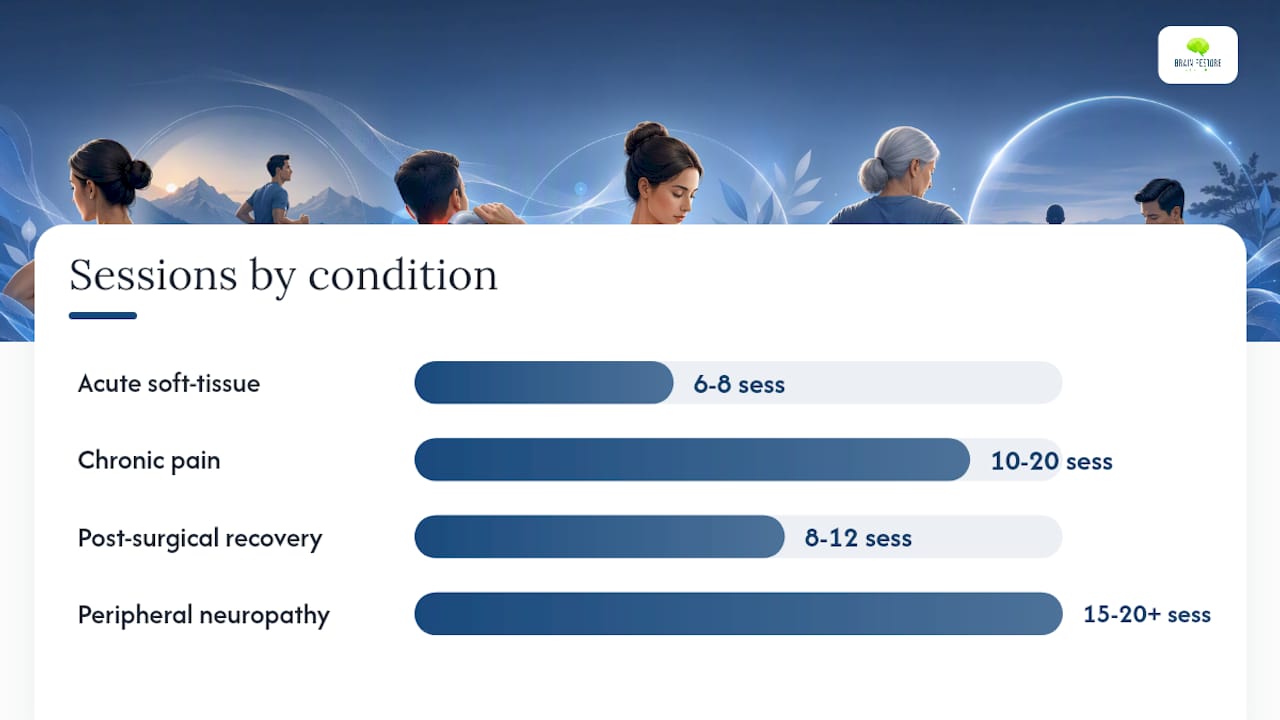
This is the number that determines your real budget, and it varies more by condition than by clinic. Cold laser therapy works cumulatively. A single session rarely resolves anything on its own; it’s the photobiomodulation effect building session over session that produces change in tissue healing and inflammation.
Rough treatment courses by condition type:
A patient using laser therapy for knee pain from mild osteoarthritis, for example, might see meaningful improvement within 8 to 10 sessions, while someone managing chronic nerve-related pain could need double that. This is exactly why the per-session price alone tells you so little. A clinic quoting $60 a session but expecting 20 visits for your condition will cost you more than a $110-per-session clinic that resolves things in 8.
The honest move here is to ask your provider, before you start, roughly how many sessions they expect for a case like yours. A provider who can’t give you even a rough estimate hasn’t treated enough similar cases to plan your budget responsibly.
Four factors explain nearly all the variation you’ll see between clinics quoting cold laser therapy.
Device class. Class III lasers (low-power, often called cold lasers in the strictest sense) cost less to purchase and run, and clinics using them tend to charge less per session, sometimes needing more visits to reach the same outcome. Class IV lasers deliver more energy faster, often reducing session count even though the per-visit price runs higher. A comparison of deep tissue laser pricing shows this tradeoff clearly: a higher per-session fee on a Class IV system can still produce a lower total course cost if it cuts your visits from 15 down to 8.
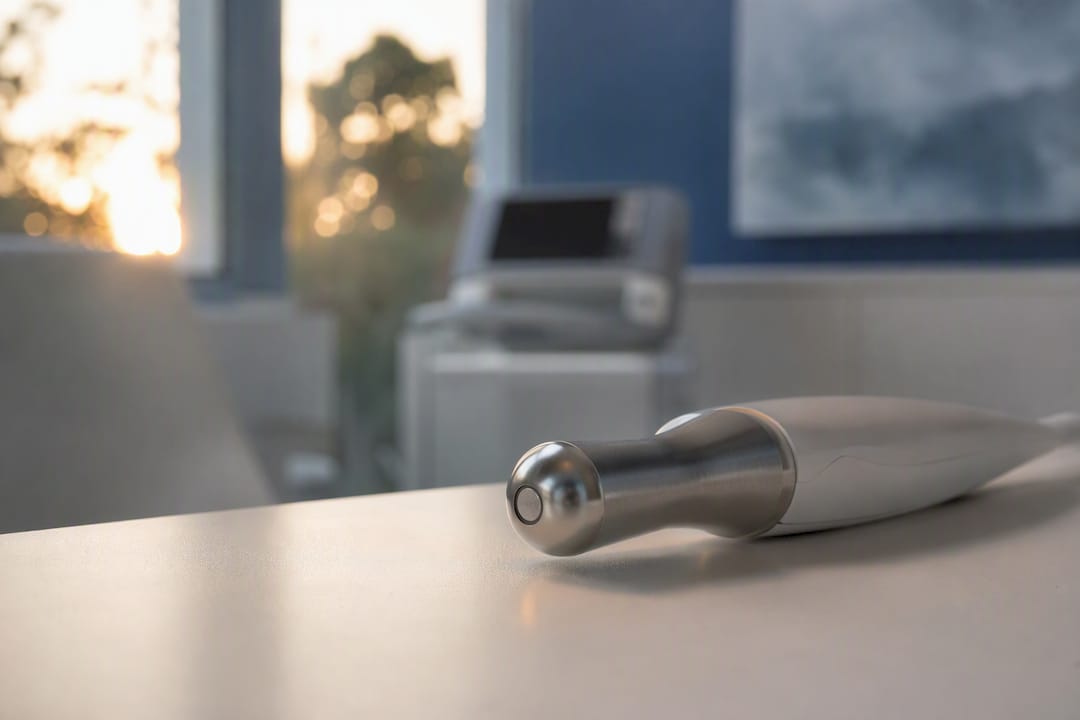
Equipment cost to the clinic. This one surprises people. A new K-Laser Cube unit, a widely used Class IV system, lists between $18,000 and $38,000, with used units running $8,000 to $20,000. Clinics financing that equipment often carry monthly payments in the $365 to $771 range, and that overhead gets baked into what you pay per visit. A clinic charging $130 a session isn’t necessarily overcharging. It may be recouping a six-figure investment in newer, faster technology.
Treatment scope and provider credentials. Treating multiple areas in one visit (say, both knees plus a lower back) typically adds $20 to $40 to a session. A session run by a licensed chiropractor or physical therapist, versus an aide operating the device under supervision, can also carry a premium.
Geography. Urban and coastal markets run consistently higher than suburban and rural clinics, mirroring general healthcare cost patterns rather than anything specific to laser equipment.
Mostly, no. Most private insurers and Medicare still classify cold laser therapy as investigational or elective for the majority of conditions, meaning you should expect to pay out of pocket in most cases. Coverage exceptions do exist, usually tied to specific documented diagnoses and delivered alongside another covered service like physical therapy, but they’re the exception rather than the rule.
That doesn’t mean you’re without options. Here’s how to actually pursue reimbursement instead of assuming there’s none available:
If you’re weighing coverage questions on other therapies too, the logic mirrors what applies to spinal decompression insurance coverage: verify benefits before committing, and get everything in writing rather than relying on a verbal quote from a front-desk staffer.
Beyond straightforward package discounts, several structures can meaningfully reduce what you pay over a full treatment course.
Clinics offer these options partly out of patient goodwill and partly out of practicality. A patient who commits to a 12-session package and pays upfront is far more likely to complete the full course, which matters clinically since cold laser therapy’s benefits are cumulative, not immediate.
The real comparison isn’t laser therapy against a single competing treatment. It’s total cost, over time, against your realistic alternatives.
A full course of cold laser therapy for a chronic condition, say 12 sessions at an average $90 each, lands around $1,080. Compare that with a single steroid injection series, which often runs $300 to $600 per injection and typically needs repeating every three to six months indefinitely. Or compare it with orthopedic surgery, where even a “minor” outpatient procedure frequently exceeds $10,000 to $20,000 before rehab costs, on top of weeks of lost work and recovery time. Long-term pain medication carries its own ongoing cost, plus the compounding risk of dependency or side effects that laser therapy simply doesn’t carry.
None of this means laser therapy replaces surgery when surgery is medically necessary, and it isn’t a substitute for medication your doctor has prescribed for a diagnosed condition. But for soft-tissue pain, inflammation, and many chronic musculoskeletal issues, it’s worth running the actual math on total course cost, not just the sticker price of a single laser visit versus a single pill bottle.
A reliable quote requires asking the right questions upfront, not comparing vague price ranges between clinic websites.
Watch for a few red flags while you’re asking: a clinic that won’t put package pricing in writing, one that pressures same-day large-package purchases before you’ve had a single treatment, or one that can’t clearly explain why they chose their specific laser class for your condition.
Pro Tip: Compare quotes using total course cost, not per-session price. Ask each clinic for their expected session count for your specific condition and multiply it out. That single calculation exposes more about real value than any per-session comparison ever will.
Pricing should never be a mystery, and honestly, too much of this industry treats it like one. At Brain Restore Meridian, we build treatment plans around your actual condition first, then quote sessions and packages based on what we realistically expect you’ll need, not around a one-size package we’re trying to move. I’ve watched patients get burned by clinics that oversell 20-session packages nobody needed. That’s not how we operate.
Our approach combines laser therapy with the broader neurological and functional medicine work we do here in Meridian, which means your quote reflects your whole treatment picture, not an isolated laser add-on. You’ll get a written estimate, a clear session count target, and paperwork you can actually use for HSA, FSA, or insurance appeals. No surprises on your invoice.
— Chad
Brain Restore Meridian prices laser therapy around your actual treatment plan, not a generic package menu, so you’re not stuck paying for sessions you don’t need or guessing at a total before you commit.
Our approach starts with an evaluation that identifies the treatment area, expected session count, and realistic timeline before you spend a dollar on a package. We combine laser therapy with our broader neurological and musculoskeletal care, including options like knee pain treatment and chiropractic support, so your total cost reflects everything your condition actually needs rather than one isolated service. A first visit includes your evaluation, a discussion of session expectations, and a written estimate you can use for HSA, FSA, or insurance documentation. If you’re in the Meridian, Idaho area and ready to find out what a realistic laser therapy plan would cost for your specific condition, schedule an evaluation and get pricing built around you, not a generic package.
For readers who want the clinical backing behind photobiomodulation, PubMed’s review of the mechanism and a more detailed clinical outcomes review in PMC cover how LLLT affects tissue healing at a cellular level. Clinicaltrials lists ongoing trials evaluating specific laser devices. For device-cost context that explains why clinic pricing varies, see the K-Laser Cube pricing breakdown, and for a broader look at photobiomodulation pricing across wellness categories, Primal Red’s red light therapy cost guide offers useful comparison context.
This article is general information, not a substitute for advice from a qualified doctor. Consult a qualified healthcare professional about your own circumstances before acting on anything here.