Match Symptoms to Proven Post Concussion Syndrome Care and Return Plan
October 4, 2026

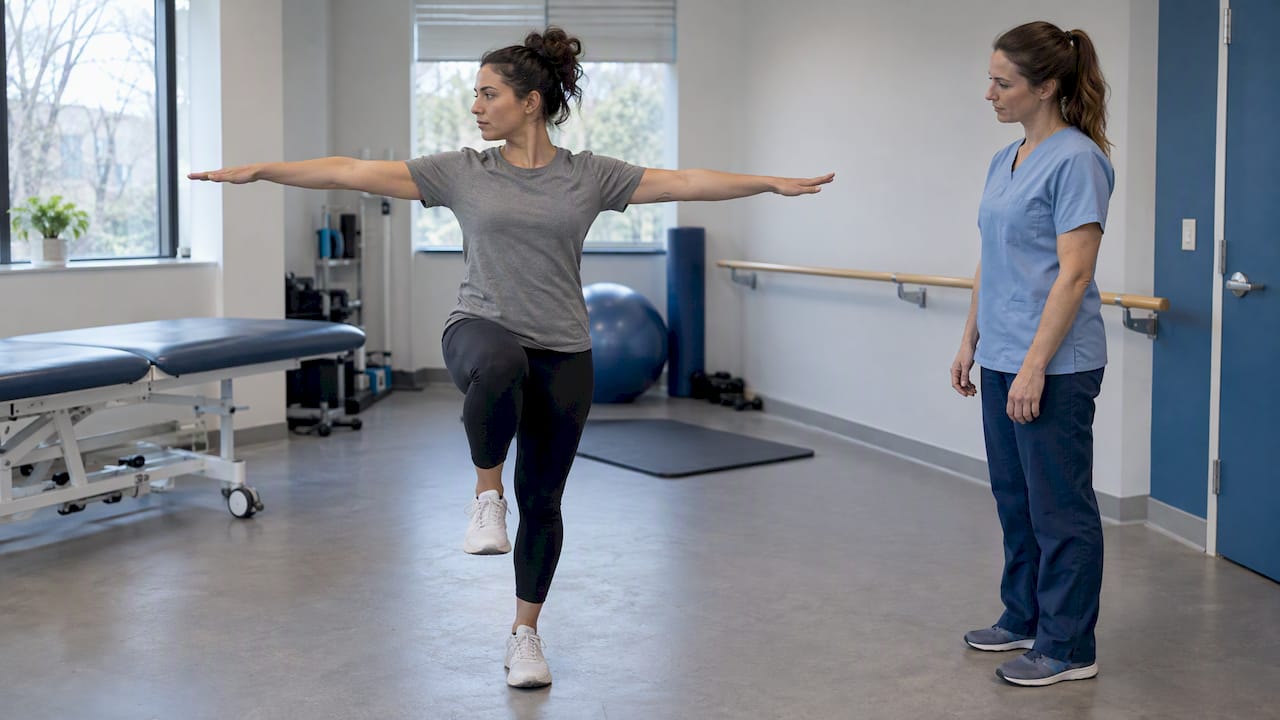
Post concussion syndrome treatment works best when it is targeted and multidisciplinary rather than a single fix. The evidence-backed components include vestibular rehabilitation, graded aerobic exercise, neck-focused physical therapy, cognitive and occupational therapy, psychological care, and symptom-directed medication. If symptoms persist beyond a few weeks or start getting worse, that is your signal to seek a specialist evaluation rather than wait it out.
TL;DR:
- Active, multidisciplinary management including vestibular, physical, cognitive, and psychological therapies is more effective than passive rest alone for persistent symptoms.
- Symptoms often cluster into physical, vestibular, cognitive, and emotional domains, each requiring targeted treatment from specialized clinicians.
- Most patients recover within weeks to months, but those with prior concussions, migraine history, or mental health issues tend to experience longer recovery times.
- A referral to a specialist is recommended if symptoms persist beyond 2 to 4 weeks or worsen, especially with red-flag signs like worsening headache or neurological changes.
- Self-care strategies, such as symptom-guided pacing, consistent sleep routines, sensory environment adjustments, and activity modifications, can help reduce symptom severity during recovery.
Post-concussion syndrome, often shortened to PCS, describes the cluster of symptoms that linger well past the typical concussion recovery window. Where an acute concussion usually settles within days to a couple of weeks, PCS is diagnosed when headaches, dizziness, fogginess, or mood changes stretch on longer and start interfering with daily life. The distinction matters because the longer symptoms persist, the more they tend to reinforce each other: poor sleep worsens concentration, concentration problems raise anxiety, and anxiety can amplify headache frequency.
Some people are simply more likely to end up here. Research and clinical guidance point to a handful of risk factors that raise the odds of a prolonged recovery:
What makes PCS tricky to treat is that it rarely shows up as one clean problem. One patient’s main complaint might be constant dizziness, while another struggles mainly with memory lapses, and a third is dealing with headaches tangled up with low mood. These symptom clusters come from different underlying mechanisms, vestibular, cervical, cognitive, and psychological, which is exactly why a single provider or a single treatment rarely resolves the full picture. A physical therapist trained in vestibular rehabilitation cannot address a mood disorder, and a psychologist cannot retrain a dysfunctional vestibular system. This is the practical argument for multidisciplinary care: matching each symptom cluster to the clinician and technique built to treat it, rather than hoping one approach covers everything.
Post-concussion symptoms tend to fall into four broad domains, and recognizing which one dominates your experience helps point toward the right treatment path.
Physical symptoms often include:
Vestibular and visual symptoms often include:
Cognitive symptoms often include:
Emotional and behavioral symptoms often include:
These clusters point directly to treatment choices. Dizziness and balance trouble usually call for vestibular rehabilitation. Headaches paired with neck stiffness often respond to cervical-focused physical therapy. Memory and concentration struggles are the territory of cognitive rehabilitation and occupational therapy, while anxiety or mood changes are better addressed with psychological support such as cognitive behavioral therapy.
Few people fit neatly into just one category. A common presentation blends dizziness with headaches and a layer of anxiety about when things will improve. This overlap is normal, and it is part of why a thorough evaluation, rather than guesswork, matters before starting treatment.
There is no blood test or scan that confirms post-concussion syndrome on its own. Diagnosis relies on a detailed history, symptom tracking over time, a neurological exam, and standardized tools that quantify how you are doing compared to your own baseline.
A typical evaluation includes:
Certain symptoms warrant urgent evaluation rather than a wait-and-see approach: repeated vomiting, worsening headache, seizures, slurred speech, new weakness or numbness, or a noticeable decline in consciousness. These are not typical PCS symptoms and need same-day medical attention.
For everyone else, timing matters. CDC clinical guidance recommends referral to a specialist when symptoms have not resolved within 2 to 4 weeks of the injury. That window exists because most straightforward concussions improve on their own in that timeframe, so symptoms that persist past it are more likely to need active, targeted treatment rather than additional rest.
The research on persistent post-concussion symptoms has moved firmly away from the old advice to simply rest and wait. A systematic review and meta-analysis of 19 randomized clinical trials involving 2,007 participants found that active, interdisciplinary management produced notable improvement, with particularly strong results in patients under 30 and those with persistent symptoms. The same review found weak but supportive evidence for graded exercise and vestibular rehabilitation as individual components.
Here is how the main evidence-backed treatments map to specific symptoms.
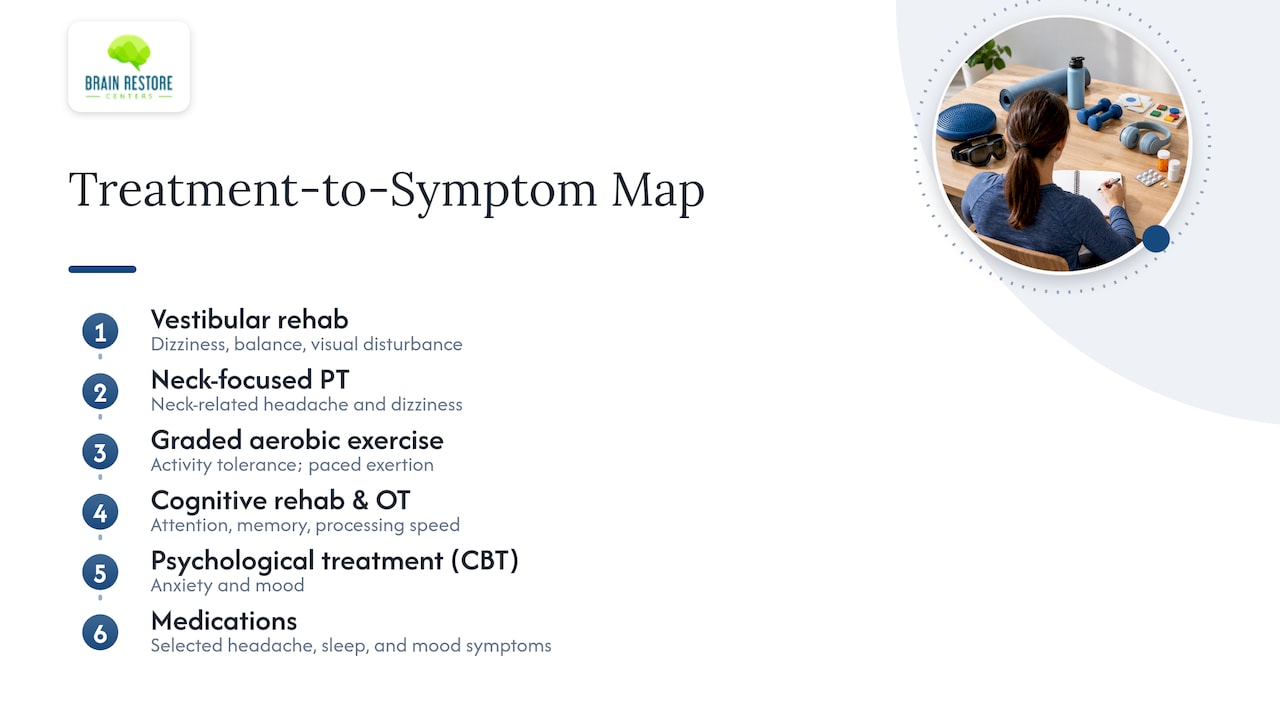
Vestibular and vestibulo-ocular rehabilitation targets dizziness, balance problems, and visual disturbances. A separate systematic review found that vestibular rehabilitation therapy improves perceived dizziness and performance on vestibular and ocular motor screening measures after mild traumatic brain injury, though the certainty of that evidence varies across studies. In practice, this looks like guided exercises that retrain the inner ear and eye coordination systems to tolerate head movement without triggering dizziness.
Cervicovestibular or neck-focused physical therapy addresses the headache and dizziness that stem from whiplash-type neck injury often occurring alongside concussion. A randomized controlled trial on combined cervical and vestibular physiotherapy found a meaningfully higher rate of medical clearance by 8 weeks compared with standard care, underscoring that neck-focused treatment is not optional add-on care for patients with cervical involvement, it can be central to recovery timing.
Graded aerobic exercise with symptom-guided pacing is one of the more counterintuitive shifts in concussion care. Rather than strict rest, patients are guided through light aerobic activity, often stationary cycling or walking, kept just below the intensity that provokes symptoms, with gradual increases over days to weeks. This approach has shifted from controversial to standard practice specifically because evidence suggests calibrated exertion speeds recovery more reliably than prolonged inactivity. A practical starting protocol involves 15 to 20 minutes of light cardio at a pace that does not worsen symptoms, repeated most days, with duration or intensity increased only when the prior level feels stable. Readers managing this at home can find a detailed staged exercise progression useful for structuring this safely.
Cognitive rehabilitation and occupational therapy help with attention, memory, and processing speed deficits that interfere with work or school. These interventions often involve structured strategies for task management, memory aids, and gradual reintroduction of cognitively demanding activities rather than passive rest.
Psychological treatments, particularly cognitive behavioral therapy, play a specific and often underused role. CBT does not treat the brain injury itself, but it addresses the anxiety, low mood, and maladaptive coping patterns that frequently compound physical symptoms. For patients whose dizziness or headaches are tangled up with health anxiety or fear of symptom flare-ups, CBT can reduce the overall symptom burden even without directly touching the physical injury.
Medications serve a symptom-targeted role rather than a curative one. Migraine-specific regimens can reduce headache frequency, short-term sleep aids may help reset a disrupted sleep cycle, and SSRIs are sometimes used for persistent mood symptoms. The caution here is real: overusing over-the-counter analgesics for headache can backfire into medication-overuse headache, making the underlying problem worse rather than better. Guidance on medication use after concussion emphasizes that medication should be adjunctive, not the primary strategy, and used selectively under clinical guidance.
Taken together, the most consistent finding across the research is that combined, multidisciplinary programs tend to produce larger improvements than any single intervention alone, particularly for people whose symptoms have already become persistent. That is the rationale behind coordinated care: vestibular and cervical issues rarely exist in isolation from cognitive and emotional symptoms, so treating them in parallel, under one coordinated plan, tends to outperform treating them one at a time.
Pro Tip: Keep a simple daily symptom log rating headache, dizziness, and fatigue on a 0 to 10 scale. It takes 30 seconds and gives your care team real data instead of a vague “I’ve been feeling better” at your next visit.
While you pursue formal treatment, daily habits can meaningfully reduce how much symptoms interfere with your life.
Cognitive rest, done correctly, is not the same as total inactivity. The idea of complete brain rest fell out of favor because it can actually prolong recovery when taken too far. A clearer explanation of cognitive rest principles covers how to balance mental activity with recovery needs.
Pro Tip: Build a one-page recovery reference listing your current triggers, your sleep routine, and your pacing limits. Bring it to every appointment so new providers do not have to start from zero.
Returning to normal activity works best as a gradual climb rather than an all-or-nothing switch. The staged approach adapted from CDC return-to-activity guidance applies whether you are heading back to a sport, a desk job, or a classroom.
For school or work, each stage translates into practical accommodations: Stage 1 might mean half-days with frequent breaks. Stage 3 might mean full days but with reduced meeting loads or extended deadlines. The point is matching activity level to current tolerance, not rushing to a calendar deadline.
Progression should pause and prompt a reassessment if you notice any of these red flags:
There is no fixed number of days that applies to everyone. Some people move through these stages in a couple of weeks, others need months, and both can be normal depending on injury severity and risk factors.
Most people recover from a concussion within days to a few months, though the exact pace varies from person to person. A smaller group goes on to develop the persistent symptoms that define post-concussion syndrome, and for them, recovery is better measured in months than weeks.
Several factors are consistently linked to longer recovery:
When symptoms persist well past the expected window, long-term management shifts from “waiting it out” to active, structured care: continued multidisciplinary treatment, periodic reassessment of which symptom clusters remain dominant, and adjustment of accommodations as tolerance improves. For some, this means months of coordinated therapy; for others, it means an occasional check-in while the bulk of symptoms resolve gradually on their own. A recovery checklist can help track progress across this longer arc.
When first-line treatment plateaus, more specialized assessment can clarify what is actually driving ongoing symptoms.
Neuropsychological assessment goes deeper than a brief cognitive screen, measuring attention, memory, processing speed, and executive function in detail. It is particularly useful when cognitive complaints do not match the severity clinicians would expect, or when returning to demanding academic or professional work requires a clearer picture of specific deficits. Detailed guidance on this is covered in this overview of cognitive dysfunction after concussion.
Vestibular laboratory testing provides objective measurement of inner ear and balance system function beyond what a bedside screen can capture, which can sharpen the targeting of vestibular rehabilitation exercises for patients whose dizziness has not responded to a general program.
Comprehensive multidisciplinary programs that coordinate several of these specialties under one plan, rather than requiring patients to juggle separate referrals, are associated with the larger improvements seen in the meta-analysis of interdisciplinary rehabilitation discussed earlier. The coordination itself appears to matter, not just the individual components.
Emerging options such as hyperbaric oxygen therapy and neurostimulation are sometimes discussed for persistent post-concussion symptoms, but the evidence behind them remains limited and mixed compared with the better-established treatments above. Anyone considering these approaches should treat them as a specialist conversation rather than a first choice, and ask detailed questions about protocol and expected outcomes before starting. Readers researching this specific option can review what to ask HBOT clinics about treatment parameters.
The most persistent myth in concussion recovery is that time alone heals it, and that any activity before full symptom resolution is a setback waiting to happen. That idea made sense a decade ago, and it is exactly backward for the patients who need help most.
What actually separates quick recoveries from prolonged ones is not how much a person rested, it is how early they got matched to the right kind of active treatment. A person with dominant vestibular symptoms who spends six weeks resting in a dark room loses ground compared to someone who starts targeted vestibular rehabilitation in week two. The research bears this out: interdisciplinary, active management consistently outperforms passive waiting for people whose symptoms have moved past the typical recovery window.
The harder truth is that this requires patients to advocate for themselves. Many primary care visits are not structured to unpack four separate symptom domains in a 15-minute appointment, which means the responsibility often falls on the patient to recognize that persistent dizziness, fog, and headaches are not one problem but several, each needing its own specialist. Waiting for symptoms to simply “resolve on their own” past the 2 to 4 week mark is not caution, it is often a delay that makes the eventual treatment take longer.
— Chad
If your symptoms have outlasted the first month and started touching multiple areas of your life, headaches, fog, dizziness, mood, an integrated evaluation can pinpoint which systems need attention instead of treating one symptom at a time. A coordinated program can involve assessment through a brain health consultation combined with therapies tailored to your symptom pattern.
Before your visit, three things make the evaluation more useful: a few days of symptom ratings using the 0 to 10 scale described earlier, copies of any prior imaging or test results, and a short list of which activities currently trigger symptoms. You can review what a brain health consultation covers and schedule one through the Brain Restore Program page, or start with a general look at available services on the clinic’s home page.
This article is general information, not a substitute for advice from a qualified doctor. Consult a qualified healthcare professional about your own circumstances before acting on anything here.
Most people with post-concussion syndrome see substantial improvement over time, especially with active, multidisciplinary treatment rather than passive rest. Recovery pace varies widely, and some people need months of structured therapy rather than weeks, but ongoing symptoms generally respond to targeted treatment rather than remaining fixed.
Concussion headaches can affect any part of the head, but they commonly present at the front, sides, or base of the skull, and often resemble tension headaches or migraines. When the neck was also injured, pain frequently radiates from the base of the skull upward, which points toward cervical involvement rather than headache alone.
Useful self-care steps include symptom-guided pacing, consistent sleep habits, careful limits on over-the-counter pain medication to avoid overuse headache, and sensory adjustments like dimmed lighting for light sensitivity. Tracking symptoms daily on a simple severity scale also helps guide how much activity is reasonable on a given day.
Light cognitive tasks such as reading in short intervals, simple memory games, and structured attention tasks introduced gradually tend to work better than either complete cognitive rest or jumping straight back into demanding mental work. Occupational therapy or cognitive rehabilitation can tailor these exercises to the specific deficits showing up on testing.
Specialist evaluation is recommended when symptoms persist beyond 2 to 4 weeks after the injury or when they are getting worse rather than better. Red-flag symptoms like repeated vomiting, worsening headache, or new neurological symptoms need urgent same-day evaluation rather than waiting for that window to pass.