Act Fast or Test Later: Blood Sugar Brain Fog and the 15/15 Rule
September 29, 2026


Yes, both low and high blood sugar can cause brain fog, but they act on different timescales and need different responses. A sudden drop in glucose brings fast, sometimes alarming confusion that calls for immediate action. Chronic high glucose builds cognitive trouble more slowly, through vascular and metabolic changes that deserve testing rather than a quick fix. If you suspect a low right now, use the 15/15 rule. If your fog keeps returning, talk to a clinician about testing.
TL;DR:
- Blood sugar spikes over months can impair blood vessels feeding the brain, contributing to cognitive decline without causing immediate symptoms.
- Checking for pattern changes in blood glucose, sleep, and stress offers a better long-term strategy than reacting to isolated foggy episodes.
- Emergency symptoms such as loss of consciousness or severe confusion require immediate medical attention rather than food or fluids.
- Tests like A1C and fasting glucose help identify prediabetes or diabetes, but their results should be confirmed with repeated testing if symptoms persist.
- Improving insulin sensitivity through healthy habits can help prevent long-term cognitive issues related to chronic blood sugar imbalance.
Your brain runs almost entirely on glucose, and it has no meaningful fuel reserve of its own. That dependence is why even a modest dip in blood sugar can throw off concentration, mood, and memory within minutes. When glucose drops too low, brain cells face an immediate energy shortage, which shows up as confusion, shakiness, or trouble finding words.
High blood sugar works differently. A single spike rarely causes dramatic symptoms, but glucose that stays elevated for months or years can damage the small blood vessels feeding the brain and contribute to memory and thinking problems over time, according to the CDC. That distinction matters for how you respond. A low is an emergency measured in minutes. A pattern of highs is a metabolic problem measured in months, and it calls for a conversation with your doctor rather than repeated sugar fixes.
Thinking of blood sugar brain fog on these two timescales, fast and slow, helps you match the response to the actual problem instead of treating every foggy afternoon the same way.
Hypoglycemia tends to announce itself quickly: dizziness, sudden irritability, trouble speaking clearly, sweating, and a shaky, unfocused feeling that comes on within minutes. Hyperglycemia moves slower, showing up as gradual memory lapses, sluggish attention, and difficulty concentrating, often alongside excess thirst and frequent urination.
Not every foggy day is about glucose. Poor sleep, certain medications, and thyroid dysfunction can produce strikingly similar symptoms, which is worth remembering if you have already ruled out blood sugar swings. If fog shows up with thirst, weight change, or after a medication adjustment, glucose deserves a closer look first.
Some symptoms are not something to wait out:
Any of these calls for emergency care, not a snack and a wait-and-see approach.
If you suspect a low, act fast:
This is the 15/15 rule the CDC recommends, and it works best with fast sugars, not slow-digesting foods like chocolate or peanut butter, which can delay recovery. If someone cannot swallow safely or has lost consciousness, they need glucagon or emergency services, not food.
Pro Tip: Keep glucose tablets in your bag, car, and nightstand so a low never depends on finding the right snack in time.
For suspected high blood sugar, hydrate, check ketones if you have been told to, and follow your sick-day plan. Seek urgent care for vomiting, abdominal pain, trouble breathing, or persistent very high readings, which can signal diabetic ketoacidosis. If your thinking is impaired, get help rather than trying to manage things alone.
A1C reflects your average blood sugar over roughly three months, while fasting glucose and the oral glucose tolerance test capture a single point in time or a two-hour response to a glucose load. According to NIDDK diagnostic guidance, an A1C between 5.7% and 6.4% suggests prediabetes, while 6.5% or above suggests diabetes, and clinicians typically repeat testing to confirm before making a diagnosis.
A single normal reading does not rule out a pattern, since glucose fluctuates with meals, stress, and illness. If your fog is persistent and paired with thirst, frequent urination, unexplained weight change, or a new medication, that combination is a reasonable trigger to ask your doctor for a full workup rather than a single fingerstick check.
Recurring fog often traces back to something broader than any one blood sugar reading: insulin resistance. Reviews of the evidence describe how cerebral insulin resistance, vascular disease, and inflammation can impair how brain cells use glucose, contributing to cognitive changes over years rather than hours. Separate research on midlife adults found insulin resistance associated with lower working memory and overall cognitive performance, suggesting that steps which improve insulin sensitivity, such as exercise and weight management, may help protect thinking skills long term.
It is worth ruling out other common culprits alongside any glucose workup: sleep apnea, thyroid disease, anemia, certain medications, and mood disorders can all mimic or worsen glucose-related fog. A brief spike on a continuous glucose monitor is a useful clue to bring up with your clinician, but on its own it does not prove that a particular meal caused your cognitive dip. Insulin resistance and inflammation tend to be the more reliable long-term predictors.
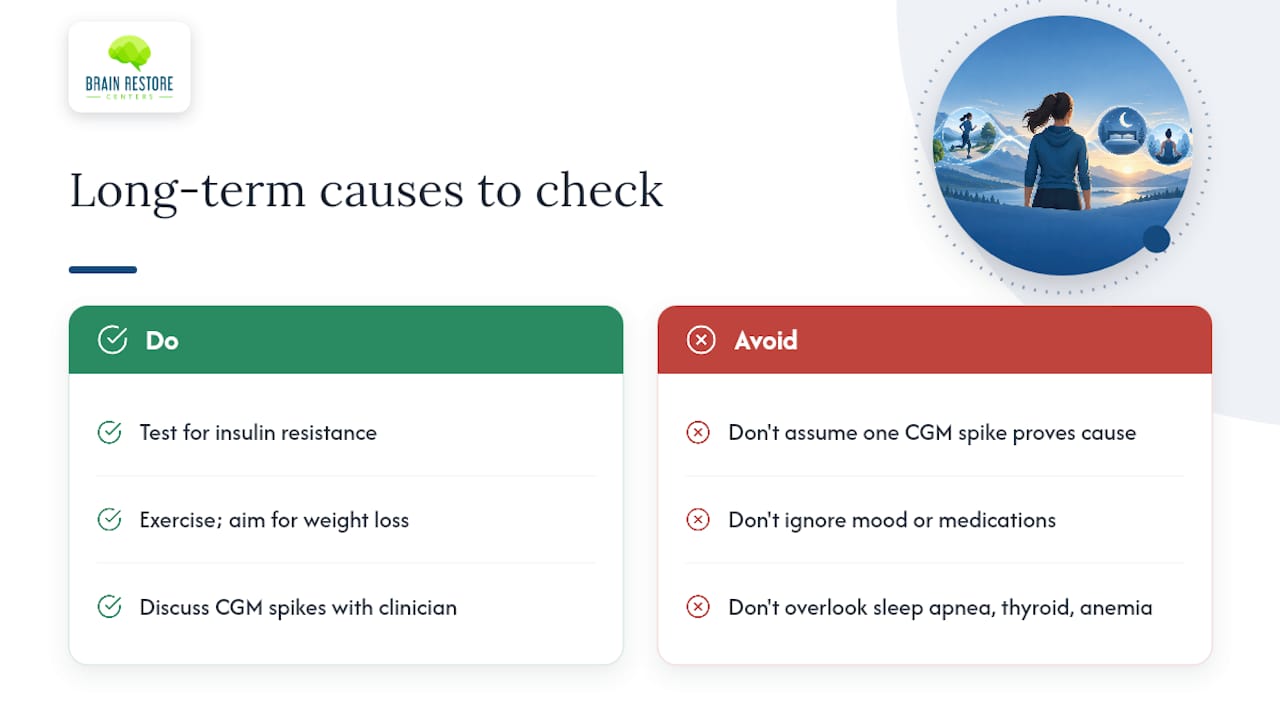
Small, consistent habits go a long way toward smoothing out the highs and lows that fuel brain fog.
If you use a glucometer or continuous glucose monitor, log patterns rather than isolated numbers: what time of day fog appears, what you ate beforehand, and how you slept the night before. That log becomes far more useful in a clinical visit than a single reading.
Pro Tip: Bring your symptom log, recent glucose readings, and a current medication list to your next appointment, it turns a vague complaint into a pattern your clinician can actually act on.
Physical activity and hydration support brain function independent of glucose control, and both are worth building into a daily routine rather than saving for symptom flare-ups.
A thorough evaluation for recurring brain fog typically includes a detailed history, targeted lab work, cognitive screening, and a review of current medications, since several conditions can overlap with glucose-related symptoms. Multidisciplinary clinics can coordinate a functional-medicine metabolic workup alongside neurofeedback and rehabilitation-based therapies when cognitive symptoms persist. Primary care is often the right starting point for glucose testing, while specialty evaluation makes sense once initial tests come back inconclusive or fog continues despite better blood sugar control. If thyroid function might be part of the picture, it is worth reading about how thyroid problems cause brain fog as a next step.
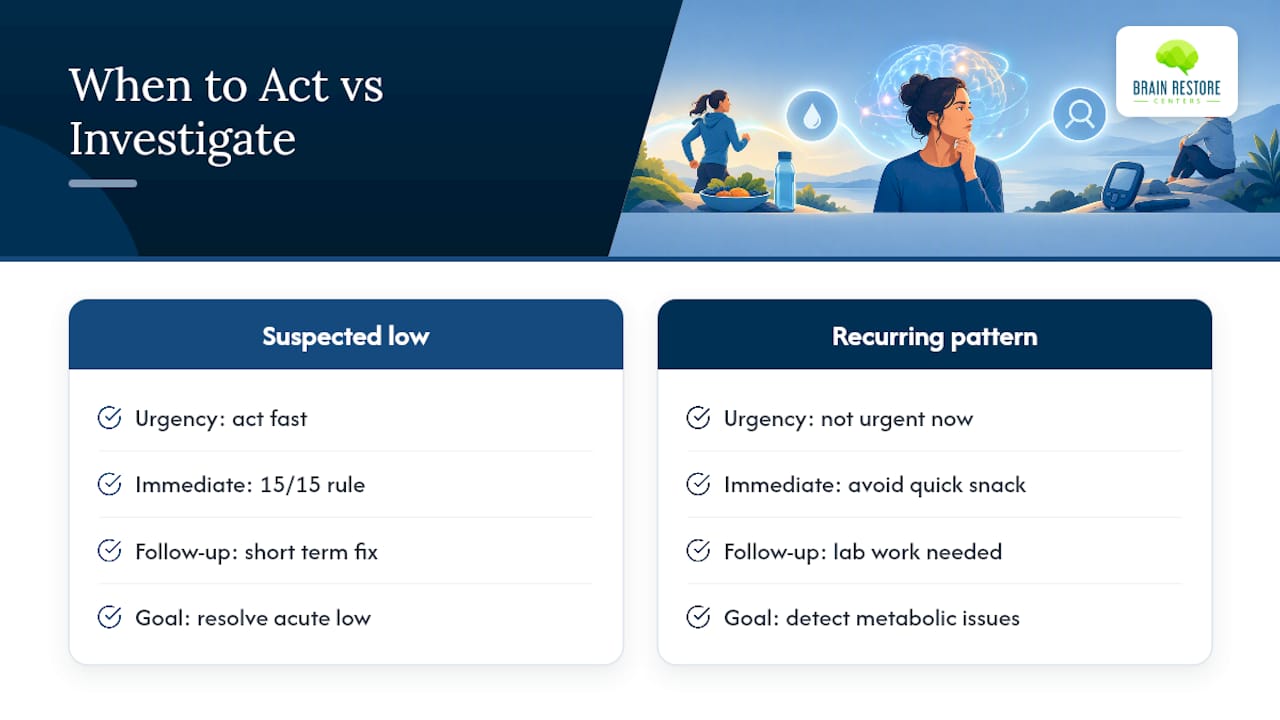
Most advice on blood sugar and brain fog treats every foggy moment the same way: eat something, drink water, move on. That approach works for a genuine low, but it quietly lets chronic highs slide under the radar for years, because hyperglycemia rarely feels urgent in the moment. The bigger risk is not the occasional shaky afternoon, it is the slow accumulation of vascular and metabolic strain that a quick snack will never fix.
If I had to prioritize one thing, it would be this: treat a suspected low with speed and treat a recurring pattern with curiosity. The 15/15 rule deserves to be second nature. But a string of foggy weeks deserves lab work, not another granola bar. Readers who track patterns, rather than reacting to isolated symptoms, tend to catch metabolic problems while they are still easy to manage. That shift in mindset, from reactive to observant, matters more than any single food swap or supplement.
— Chad
This article is general information, not a substitute for advice from a qualified doctor. Consult a qualified healthcare professional about your own circumstances before acting on anything here.
This article draws on CDC guidance on diabetes and brain effects, hypoglycemia treatment, and DKA, along with NIDDK diagnostic standards and peer-reviewed reviews on insulin resistance and cognition.
High blood sugar often causes increased thirst, frequent urination, fatigue, and gradually worsening concentration or memory. Left unmanaged over time, it can contribute to vascular changes that affect the brain, so persistent symptoms are worth discussing with a doctor.
For a true low, the 15/15 rule (15 grams of fast-acting carbs, wait 15 minutes, recheck) resolves symptoms quickly. For fog tied to chronic high glucose, steadier improvement comes from regular meals, better sleep, physical activity, and medical evaluation rather than a quick fix.
Clinical targets are typically individualized, but general guidance points to under 180 mg/dL around two hours after eating, with levels ideally settling closer to pre-meal range as time passes, according to CDC treatment targets. Your own target should come from your care team, since it depends on your health history.
Low blood sugar can cause shakiness, sweating, dizziness, irritability, and trouble speaking or concentrating, often coming on within minutes. Severe cases can progress to confusion, seizure, or loss of consciousness, which requires immediate help from another person.
Persistent brain fog alongside thirst, frequent urination, or unexplained weight change is a reasonable reason to ask for testing. According to NIDDK, diagnosis usually involves A1C, fasting glucose, or an oral glucose tolerance test, often repeated to confirm results.