Patients: 4 Serious Laser Therapy Side Effects and a Safety Checklist
September 27, 2026

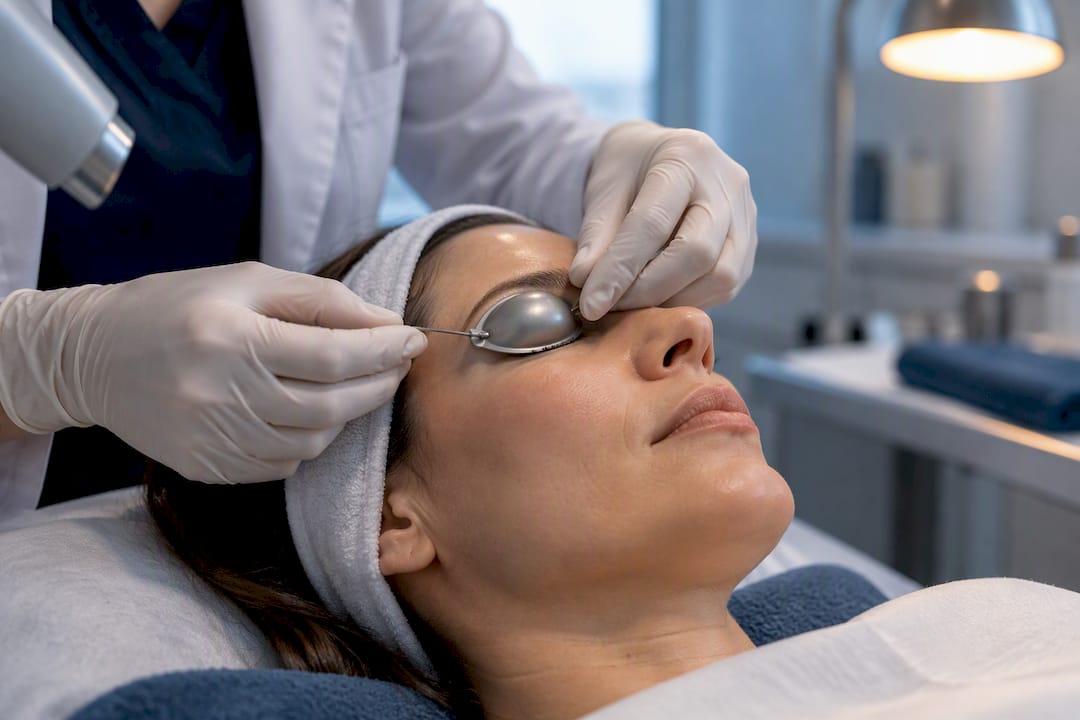
Most laser therapy side effects are mild and short lived: redness, swelling, and tenderness that fade within days. The serious risks, though rarer, are burns, infection (including HSV reactivation), scarring, pigment changes, and eye injury. Before you book, confirm the clinic uses wavelength-specific eye protection, a trained operator, and gives you clear aftercare instructions.
TL;DR:
- Patients with darker skin types (Fitzpatrick III to VI) face higher risks of post-inflammatory hyperpigmentation, requiring individualized laser settings and device choices.
- Ablative laser procedures have higher complication rates, including scarring and infection, compared to fractional, nonablative, and low-level laser therapies.
- Serious complications such as burns, infections, or eye injuries demand prompt medical attention and proper protective measures, including wavelength-specific eye shields and plume control.
- Treatments over active infections, recent isotretinoin use, pregnancy, or immune suppression should be delayed or avoided to reduce adverse outcomes.
- Proper pre-treatment questions about device parameters, safety protocols, and operator training help ensure safety and minimize the risk of side effects or complications.
Almost everyone who undergoes laser treatment notices something in the hours or days afterward. That’s the skin or tissue responding to a controlled injury, not a sign that anything went wrong.
Redness, or erythema, is the most universal reaction. It shows up because the laser heats targeted tissue and the surrounding blood vessels dilate in response. Swelling often follows, especially around the eyes, lips, or joints, where tissue is looser and more reactive. Warmth, mild tenderness, dryness, and flaking round out the list of effects of laser therapy that clinicians consider entirely expected.
How long these effects last depends heavily on the modality:
Basic self-care goes a long way. Cool compresses reduce swelling in the first 24 to 48 hours. Fragrance-free moisturizer helps with dryness and flaking. Sun avoidance matters more than most patients expect, since treated skin is temporarily more vulnerable to UV damage. Over-the-counter pain relief handles residual soreness.
What separates a normal reaction from an early complication is trajectory. Expected side effects peak within a day or two and then steadily improve. If redness spreads outward instead of fading, if swelling worsens after the second day, or if pain intensifies rather than easing, that’s a signal to call the treating clinician rather than wait it out. Isolated conditions like Class IV laser therapy for pain relief tend to produce even milder reactions than skin resurfacing, because the goal is biostimulation rather than controlled tissue ablation.
The rare but consequential laser therapy complications fall into four categories: thermal injury, pigment change, infection, and ocular damage. Recognizing the warning signs early changes the outcome dramatically.
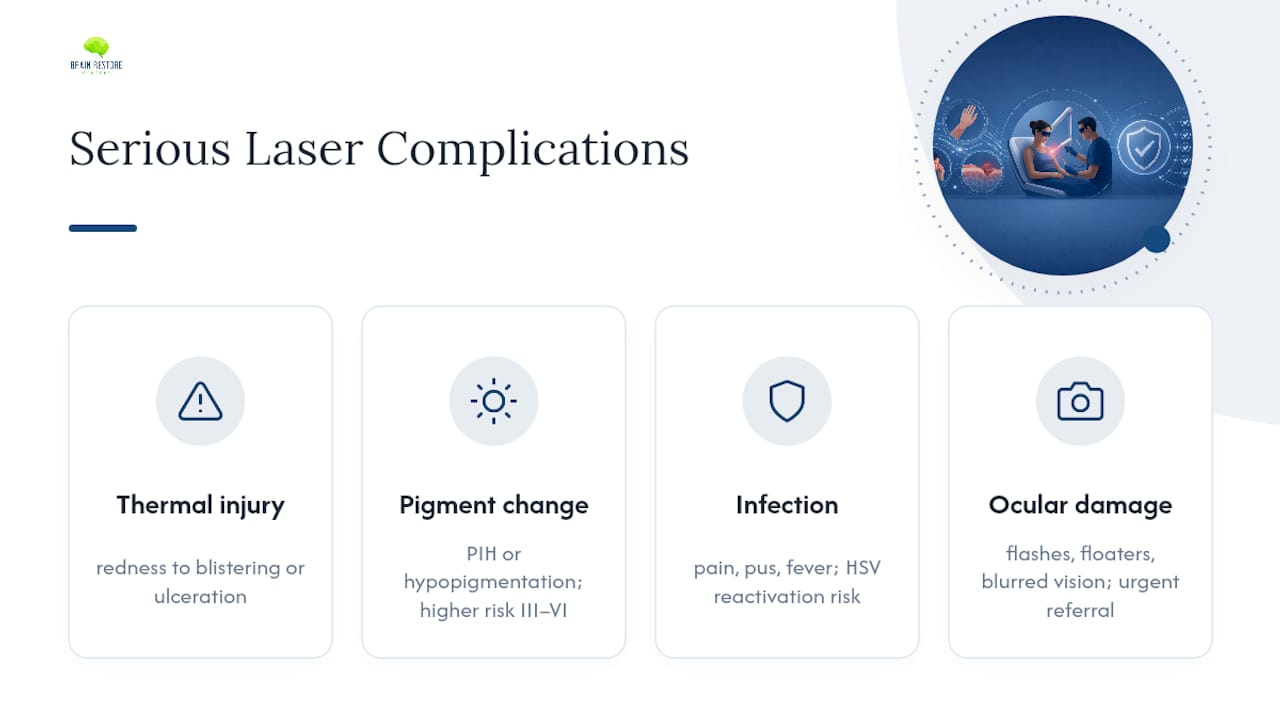
Thermal injury happens when energy delivery exceeds what the tissue can safely absorb. What starts as excess redness can progress to blistering, hemorrhagic crusting, or, in the worst cases, ulceration that leaves a scar behind. According to a clinical review of laser complications, many of these injuries trace back to excessive energy settings or photothermolysis that missed its intended target. That’s a mechanical and training issue as much as a biological one.
Pigment changes are the complication patients ask about most. Post-inflammatory hyperpigmentation (PIH) shows up as darker patches where the skin overreacts to the healing process, while hypopigmentation is the opposite: pale patches from melanocyte damage. Neither is universal.
Pigment risk by skin type: Patients with Fitzpatrick skin types III through VI carry meaningfully higher PIH risk than lighter skin types, according to clinical data on laser complications. This is one of the most consistent findings in the literature and a major reason device selection and settings should be individualized rather than standardized.
Infection risk rises whenever the skin’s barrier is broken, which is why resurfacing procedures carry more risk than surface-level treatments. Bacterial infection can present as increasing pain, pus, or fever. HSV reactivation is a distinct concern around the mouth and perioral area, since the thermal injury can trigger a dormant virus. Clinicians typically manage suspected infection with cultures, then antivirals or antibiotics depending on what’s identified.
Ocular injury is the complication that demands the fastest response. Warning signs include sudden flashes of light, new floaters, blurred vision, or eye pain during or after a session. These symptoms warrant an emergency ophthalmology referral, not a wait-and-see approach, because retinal and corneal injuries can become permanent within hours.
Not all lasers carry the same risk profile, and understanding the differences helps you evaluate what a clinic is proposing.
Three technical variables drive most of this risk: fluence (energy density), pulse duration, and spot size. The concept clinicians rely on is thermal relaxation time, the time it takes heated tissue to cool before that heat spreads to unintended areas. A pulse shorter than the target’s thermal relaxation time confines damage precisely; a pulse that lingers too long lets heat bleed into surrounding tissue, raising burn and scarring risk.
One counterintuitive risk worth knowing: paradoxical hypertrichosis, where hair removal at too low a fluence stimulates new hair growth instead of destroying follicles. It shows up most often on the face and neck in patients with darker hair and skin. Combined with the well-documented higher PIH risk in darker skin types, this is why an experienced provider adjusts settings by skin type and hair color rather than applying one protocol to everyone.
Certain conditions and situations raise your risk enough that treatment should wait, or never happen at all in that treatment area. Review this list honestly before you book, and disclose everything to your provider even if it feels unrelated.
Full disclosure of every medication, supplement, and prior cosmetic or surgical procedure is not optional paperwork. It’s the single factor that lets a provider adjust settings, add prophylactic medication, or decide together with you that a different treatment area or timeline is the safer path.
A few pointed questions before your appointment tell you more about safety than any brochure will. Clinics that take laser therapy safety seriously will answer all of these without hesitation.
Pro Tip: Ask specifically whether the smoke evacuation nozzle stays within about two centimeters of the treatment site during ablative procedures. That detail materially affects filtration efficiency and is a fair question to ask any provider running plume-generating treatments.
Metal shields, not just goggles, are the safer choice for periocular resurfacing since goggles can allow scattered light to reach the eye. A clinic that documents shield use in your chart is one that takes ocular protection seriously.
Recovery follows a fairly predictable arc, and knowing the milestones helps you tell normal healing from something that needs attention.
Daily wound care matters more than any single product. Keep treated skin clean, apply the ointment or moisturizer your provider recommends, and avoid direct sun exposure for the full healing window, which can run several weeks longer than the visible redness lasts. Most providers ask patients to hold off on retinoids and other active topical treatments until the skin has fully re-epithelialized, often one to two weeks for resurfacing procedures.
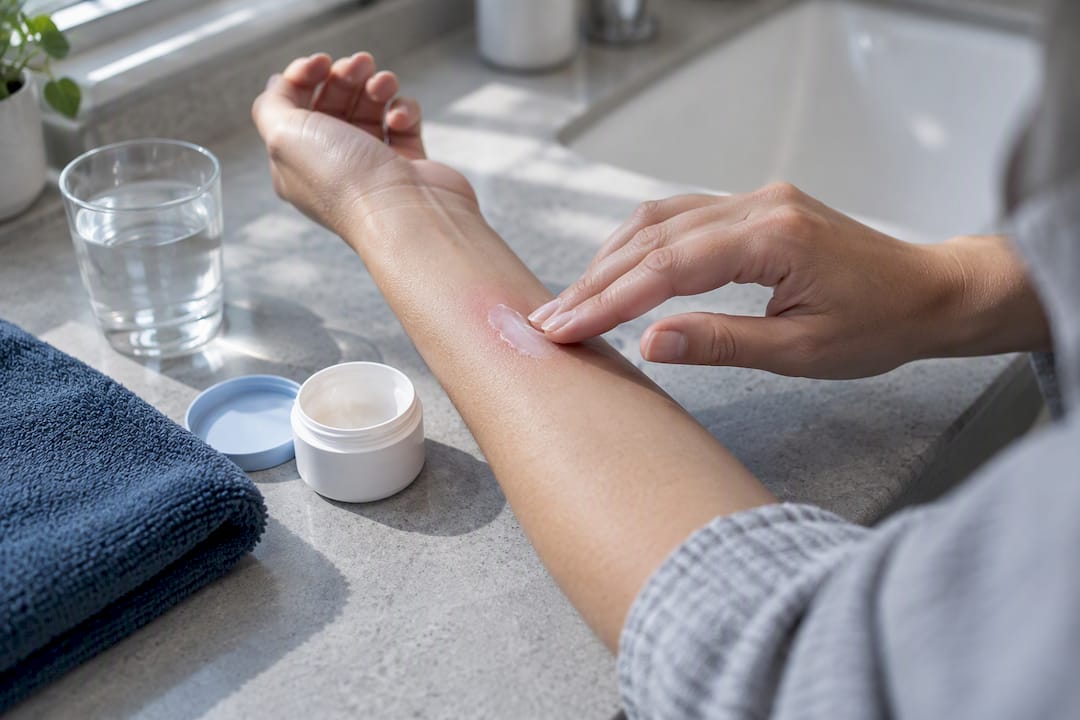
Expected recovery windows mirror the modality: hours to days for LLLT, days to a couple of weeks for nonablative treatments, and several weeks for ablative resurfacing. Normal healing looks like steadily fading redness and improving comfort day over day.
Call your provider immediately if you notice any of these:
These red flags typically prompt a physical exam, wound cultures if infection is suspected, and antiviral or antibiotic treatment depending on findings. Sudden visual symptoms warrant an emergency ophthalmology referral without delay.
The evidence on laser treatment risks is more nuanced than a simple safe-or-unsafe verdict, and it splits cleanly along modality lines.
Ablative and fractional resurfacing carry the most documented risk. That pooled analysis of facial laser complications found ablative devices produced higher cumulative rates of PIH, scarring, and infection, while fractional technology lowered scarring but did not eliminate pigment risk. That distinction, ablative versus fractional, is probably the single most useful fact a patient can carry into a consultation.
Low-level laser therapy and photobiomodulation tell a different story. A randomized, sham-controlled trial testing t-PBM across low-to-high doses found no statistically significant increase in adverse events at any dose level, with only isolated, nonserious complaints reported.
That’s a meaningfully benign profile, and it lines up with broader reviews finding no clinical evidence connecting photobiomodulation to cancer initiation or recurrence, despite some in vitro data that gets overinterpreted online.
The gaps in the research matter too. Small trial sizes limit how confidently researchers can rule out rare adverse events, and there’s still no standardized, universal framework for managing complications once they occur. The ocular safety audit on protective eyewear underscores a related gap: equipment labeling doesn’t always match real-world performance, which is exactly why verification, not assumption, belongs at the center of any safety conversation.
We favor evidence-based device selection over marketing claims, and every laser consultation at Brainrestoremeridian starts with an honest conversation about what the research actually supports for your situation. Pre-treatment screening covers your health history, medications, and any conditions that might raise your risk profile before a single setting gets chosen.
During treatment, routine safety checks (protective eyewear verification, parameter review, skin response monitoring) happen as a matter of course, not an afterthought. We’d rather you ask about device parameters, eye protection, and plume control than assume we’ve covered it silently. Informed patients get better, safer outcomes.
— Chad
If you’re weighing laser therapy against the risks outlined above, Low Level Laser Therapy at Brainrestoremeridian is built around the safety-first approach this guide describes: transparent risk discussion, individualized parameters, and no promises beyond what the evidence supports.
A consultation starts with a straightforward risk review, a look at your health history, and an honest conversation about which device parameters make sense for your goals. We’ll walk through expected recovery, realistic outcomes, and how photobiomodulation fits alongside other options like neurofeedback or functional medicine if your goals extend beyond a single treatment area. The laser consultation is informed by clinical experience and a multidisciplinary approach, ensuring it is integrated with your overall health picture.
If you’re ready to find out whether low-level laser therapy fits your needs, schedule a consultation with Brainrestoremeridian and get a personalized plan built around your actual risk factors, not a generic protocol.
For deeper reading, the StatPearls clinical chapter on laser complications covers mechanisms and management in detail. The pooled facial laser complications review and the ocular safety audit on protective eyewear offer further technical depth. Patients researching resurfacing recovery may also find this independent guide to laser skin resurfacing useful for comparing timelines.
This article is general information, not a substitute for advice from a qualified doctor. Consult a qualified healthcare professional about your own circumstances before acting on anything here.
The main risks are burns, infection (including HSV reactivation), scarring, pigment changes, and, rarely, eye injury. Most patients only experience mild, temporary redness and swelling, while serious complications remain uncommon when the procedure is done correctly.
People with active infections in the treatment area, recent isotretinoin use, pregnancy involving direct abdominal exposure, photosensitive epilepsy, or untreated tumors in the treatment field should avoid or delay laser therapy. Immunosuppressed patients need an individualized risk assessment before proceeding.
Yes, though it’s uncommon with proper technique and settings. The most frequent issues are post-inflammatory hyperpigmentation, hypopigmentation, and, with ablative devices, higher rates of scarring and infection compared to gentler modalities.
For many musculoskeletal and skin concerns, laser therapy offers real benefit with a generally favorable safety profile, especially low-level laser therapy, which showed no significant increase in adverse events across dose levels in controlled research. Whether it’s right for you depends on your skin type, health history, and treatment goals, which is why a consultation matters more than a generic answer.
Low-level laser therapy side effects usually resolve within hours to a couple of days, while nonablative treatments take days to weeks and ablative resurfacing can take several weeks to heal fully. Redness that worsens instead of improving after 48 hours is a reason to contact your provider.