Nonsurgical Knee Pain Treatment: Options and Care Planning
September 4, 2026

Nonsurgical care reduces knee pain and improves function for most people with osteoarthritis, and it can delay or even prevent knee replacement. The strongest results come from combining exercise, weight management, bracing, targeted injections, and physical modalities rather than relying on any single fix. No single treatment works as well alone as it does paired with a supervised movement plan.
TL;DR:
- Combining exercise, weight loss, bracing, injections, and physical modalities yields better pain relief than any single treatment alone, especially when supervised.
- Losing 5 to 10 percent of body weight can significantly decrease knee joint stress, often leading to noticeable pain reduction.
- Using knee braces correctly and consistently can improve walking tolerance, but they work best when combined with strengthening exercises.
- Injections like corticosteroids provide short-term relief, while PRP may offer symptom improvement lasting up to a year, though evidence varies.
- Following a structured, 8 to 12 week nonsurgical plan with regular follow-ups increases the likelihood of meaningful improvement before considering surgery.
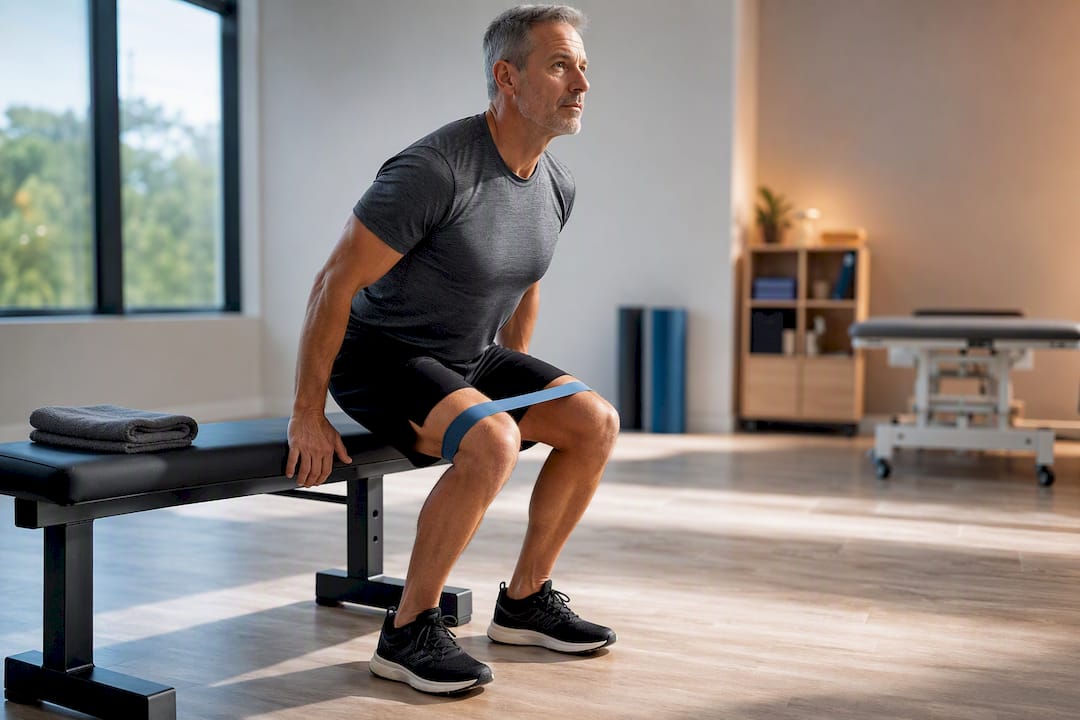
Structured exercise is widely recognized as a cornerstone of knee osteoarthritis management because strengthening the quadriceps and hip muscles helps reduce joint load and improves function.
A few exercises consistently show up in physical therapy protocols for knee pain relief:
Supervised physical therapy works best for people with significant pain, poor movement patterns, or a first flare. A home program suits those who already know proper form and need consistency more than correction. Aquatic therapy is often the right starting point for anyone whose pain spikes with land-based movement. Water buoyancy removes much of the joint load while still allowing real strengthening work.
The rule for pacing is simple: mild soreness during exercise is normal, sharp or worsening pain is not. Stop, rest, and scale back the next session. Research reviewed by the AHRQ rates exercise and weight loss as having moderate-strength evidence for medium-term pain and function gains, ahead of most passive treatments.
Pro Tip: Pair a short warm-up modality, like a heating pad or a few minutes of light cycling, with your strength routine. Reducing pain right before you exercise often lets you complete a full session you’d otherwise cut short.
Every pound of body weight adds roughly three to four pounds of force across the knee joint with each step. Drop 10 pounds, and you’re removing 30 to 40 pounds of cumulative stress every time you walk across a room. That math is why even a modest 5 to 10 percent reduction in body weight often produces a noticeable drop in daily pain.
Practical strategies that hold up over time include:
Weight loss doesn’t replace physical therapy or injections. It multiplies their effect, since a lighter joint responds better to strengthening and holds injection benefits longer.
Different types of knee braces provide varying benefits depending on the condition specifics; unloader braces are often helpful for compartment-specific osteoarthritis, sleeve supports provide general compression and warmth, and patellar stabilizers address kneecap tracking problems.
Network meta-analyses reviewed in PMC’s summary of nonsurgical knee osteoarthritis management rank bracing among the interventions with consistent outcome improvements, particularly for walking tolerance.
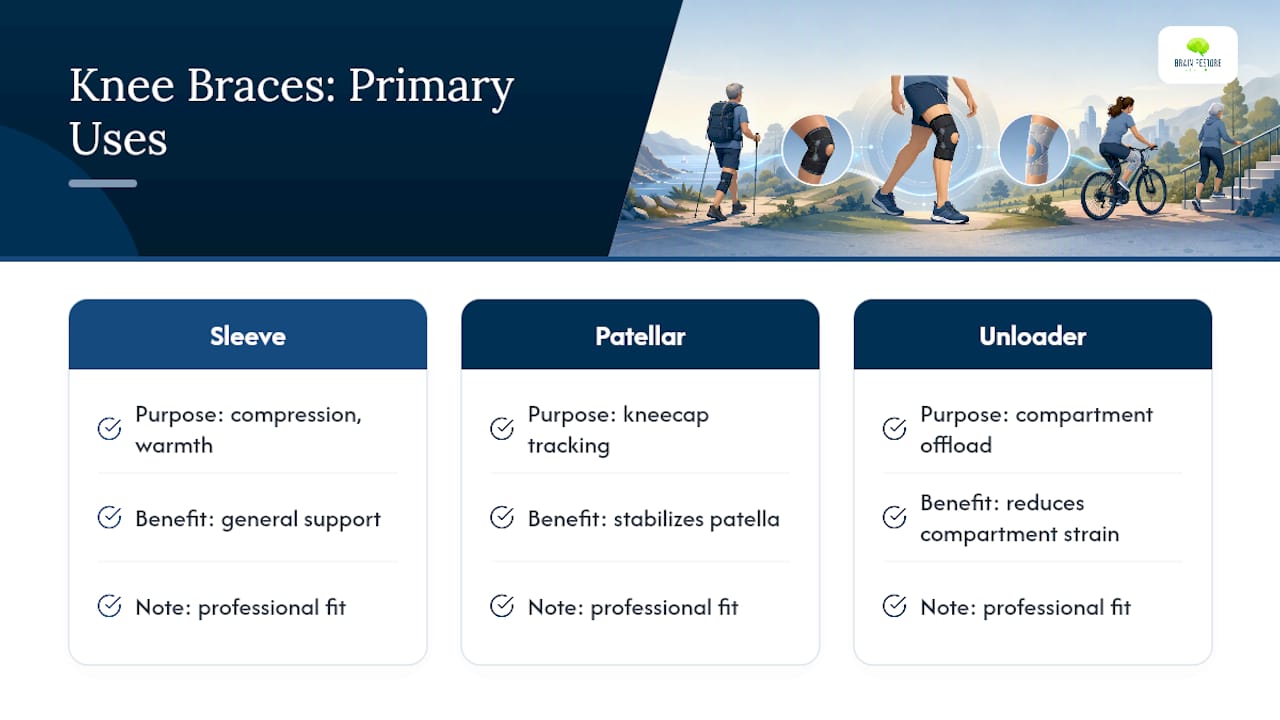
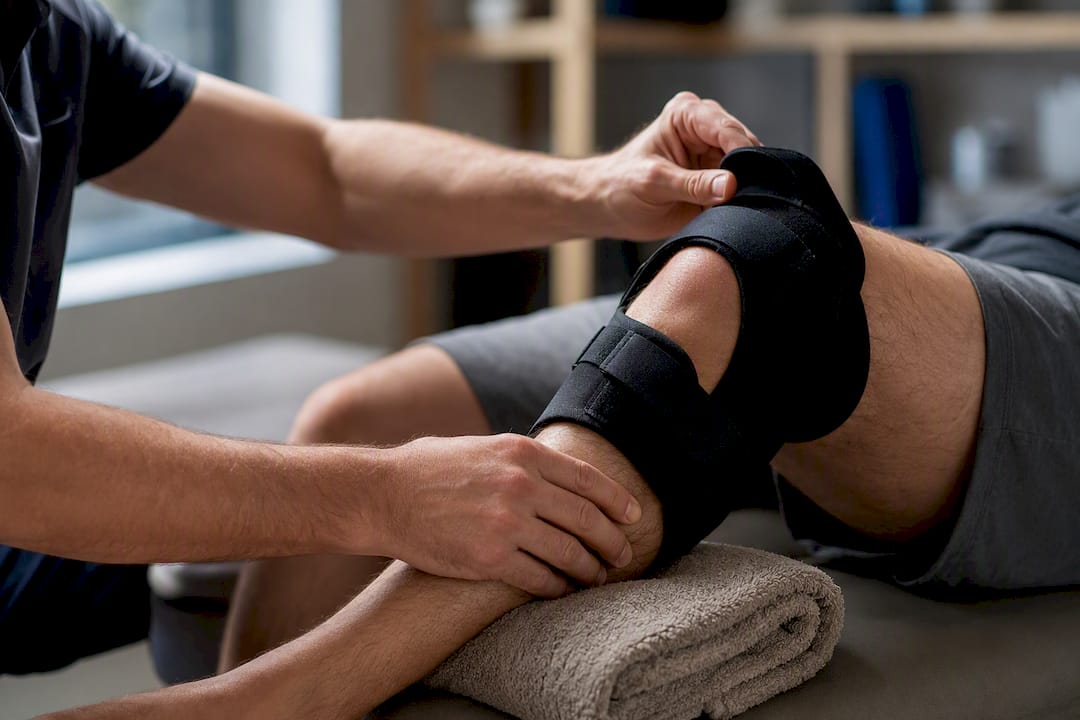
Key points include getting professionally fitted for braces to ensure comfort and effectiveness, verifying insurance coverage for such equipment, and understanding that braces alleviate mechanical strain but should be combined with exercises to build strength.
Oral and topical options come first for most people. Topical NSAIDs and diclofenac gel offer localized relief with less systemic risk than pills. Oral NSAIDs like ibuprofen or naproxen work well short-term but carry stomach, kidney, and cardiovascular risks with prolonged daily use, especially for people with existing health conditions.
When medications alone aren’t enough, injections become the next conversation:
Clinicians generally recommend at least one physical therapy visit before and after PRP to support the joint through the recovery window and lock in functional gains.
Low-level laser therapy (LLLT) and extracorporeal shockwave therapy (ESWT) rank among the modalities with the most promising pain and function results in recent network meta-analyses. TENS units and PEMF devices play a smaller, supporting role rather than acting as standalone cures.
A 2026 review in Frontiers in Medicine found electrical stimulation methods work best as adjuncts that provide variable short-term analgesia, helping patients tolerate strengthening they couldn’t otherwise complete.
Pro Tip: Ask your provider about sequencing, not just which modality to use. Running TENS or laser therapy right before a strength session, rather than after, tends to produce better exercise tolerance and, over weeks, better strength gains.
An 8 to 12 week staged approach gives most people a fair trial before deciding whether surgery belongs in the conversation.
Look for a meaningful drop in pain and a real gain in walking or stair tolerance by week 8 to 10. A 2026 Cochrane review found no meaningful quality-of-life difference at one year between knee replacement plus a 12-week nonsurgical program and that same nonsurgical program alone, which is a strong argument for giving conservative care a genuine chance first.
Surgery deserves a serious conversation when you have severe joint deformity, mechanical locking, bone-on-bone imaging findings with disabling pain, or no measurable improvement after a well-executed nonsurgical trial. Research on degenerative meniscal tears also shows arthroscopic debridement rarely outperforms physical therapy, reinforcing conservative care as the standard first step.
Brain Restore Meridian treats knee pain the way the evidence suggests it should be treated: as a multi-system problem, not a single-fix one. The clinic’s approach layers chiropractic care, progressive rehab, and low-level laser therapy alongside functional medicine work that addresses inflammation and metabolic factors influencing joint pain.
A typical workflow starts with a full assessment of movement patterns and pain triggers, followed by a staged plan with clear checkpoints, not a single prescription handed out and forgotten. Modalities like laser therapy are sequenced deliberately, often used to calm pain enough that rehab exercises become achievable rather than dreaded. That sequencing, more than any single tool, is what separates a plan that works from one that stalls.
Pain management isn’t just about which treatment you choose. It’s about how you think about pain day to day, and that mindset shapes whether you stick with a plan long enough for it to work.
Pacing matters more than most people expect. Doing too much on a good day, then crashing for three days after, is one of the most common patterns that derails progress. A steadier approach, where activity level stays roughly consistent regardless of how the knee feels that morning, tends to produce better long-term results than the boom-and-bust cycle.

Sleep and stress both influence pain perception more than people realize. Poor sleep amplifies pain signals, and chronic stress keeps the nervous system on alert in ways that make ordinary joint sensations feel sharper. Addressing either one, even modestly, often takes the edge off knee pain without touching the joint itself.
Simple coping tools help too: heat before activity to loosen tissue, ice after activity to calm inflammation, and short walks broken into two or three shorter sessions rather than one long one on flare days. None of these replace treatment, but they smooth out the rough days while the underlying plan does its work.
Tracking pain on a simple 1-to-10 scale alongside activity level, even in a basic notes app, gives you and your provider real data instead of vague impressions at your next visit.
Adherence is the variable that predicts outcomes more consistently than which specific treatment someone chooses. A well-designed physical therapy program that gets done twice a week beats a theoretically superior program that gets done once every two weeks.
Follow-up visits matter for a reason beyond accountability: they let a provider catch a plateau early and adjust before frustration sets in. Someone who skips the six-week check-in often doesn’t realize their exercise progression has stalled until months of limited progress have passed. Regular touchpoints, whether with a physical therapist, chiropractor, or physician, catch that stall while it’s still a quick fix.
Combination treatment plans specifically depend on sequencing and consistency. An injection without the physical therapy support around it, or a brace worn only on bad days instead of during the activities it’s meant to protect, blunts the benefit of both. The people who see the biggest gains tend to be the ones who treat the plan as a full program, not a menu of options to sample individually.
Most people underestimate how long consistent effort takes to show up as real change, and overestimate what any single treatment can do alone. Six to eight weeks of genuine adherence usually tells you more than any single scan or injection. If you’re weighing your options, a personalized evaluation beats guessing based on someone else’s timeline.
— Chad
If you’ve been weighing exercise programs, bracing, or injections on your own, many clinics offer coordinated plans instead of piecing together separate providers for each piece of the puzzle. Such clinics may combine chiropractic care, progressive rehab, and low-level laser therapy so your strengthening program and your pain-relief modalities are sequenced by the same team rather than left for you to coordinate.
An initial visit typically includes a movement assessment, a discussion of your pain history and goals, and a staged plan with checkpoints similar to the 8 to 12 week framework outlined above. If low-level laser therapy is part of your plan, the clinic will walk you through session expectations and typical costs before you commit to anything. Schedule an evaluation through the Brain Restore Meridian website to see whether a coordinated nonsurgical plan fits your knee, your timeline, and your goals.
This article is general information, not a substitute for advice from a qualified doctor. Consult a qualified healthcare professional about your own circumstances before acting on anything here.
Questions about your next step?
Our Meridian team can help you understand the evaluation process and which care options may fit your needs.
Schedule a ConsultationPrefer to speak with our team? Call 208-639-1397