
How Functional Medicine Slows Neurodegeneration
July 8, 2026


Functional medicine slows neurodegeneration by targeting its root causes rather than managing symptoms alone. Where conventional care focuses on a single pathway, functional medicine treats neurodegeneration as a systemic condition driven by chronic inflammation, metabolic dysfunction, toxin burden, and nutrient deficiencies. Research shows that up to 40–50% of dementia cases may be preventable by addressing these modifiable factors. That figure reframes the entire conversation. Cognitive decline is not an inevitable part of aging. With the right approach, you can shift the balance from degeneration toward restoration.
Functional medicine treats neurodegeneration as an imbalance between brain injury and brain repair. When the injury load exceeds the body’s ability to regenerate, cognitive decline accelerates. The goal is to reduce what damages the brain while simultaneously strengthening what repairs it.

Cognitive decline is not inevitable with aging. Functional medicine identifies modifiable risk factors that appear years, sometimes decades, before a clinical diagnosis. That early window is where intervention matters most.
The five primary physiological targets are:
Lifestyle changes are not optional additions to a functional medicine plan. They are the foundation. The evidence for each strategy below is specific and strong.
Pro Tip: Start with sleep before adding supplements. Fixing sleep quality often improves memory, mood, and energy faster than any single nutrient intervention.
You can also explore supplements for neurological health to understand which nutrients have the strongest clinical support for brain function.
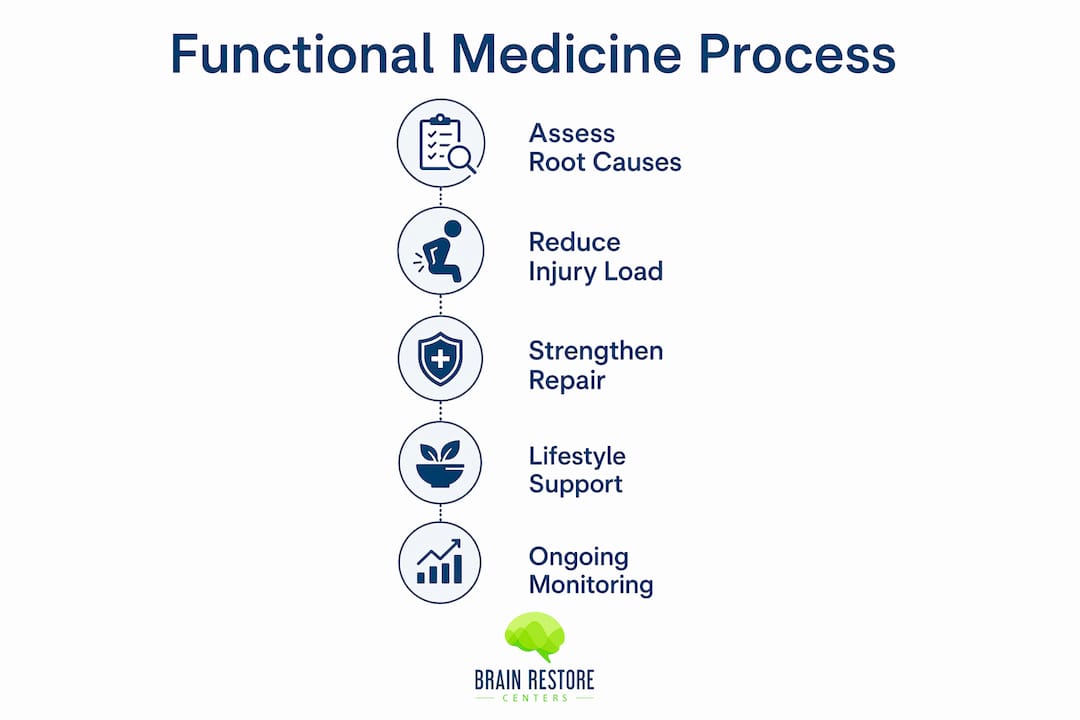
Personalized testing separates functional medicine from a one-size-fits-all approach. The goal is to identify your specific combination of risk factors, not to match you to a standard treatment protocol.
Functional medicine labs use narrow optimal ranges for brain health markers that are stricter than standard reference ranges. A result labeled “normal” by a conventional lab may still be inadequate for protecting cognitive function. That distinction changes what gets treated and when.
| Lab Category | Key Markers | Why It Matters |
|---|---|---|
| Metabolic function | HbA1c, fasting insulin, glucose | Detects brain insulin resistance early |
| Inflammation | hsCRP, homocysteine, IL-6 | Quantifies neuroinflammatory burden |
| Micronutrients | Vitamin D, B12, magnesium, zinc | Identifies deficiencies impairing repair |
| Toxin exposure | Heavy metals, mycotoxins | Reveals hidden injury contributors |
| Genetics | APOE4 status | Personalizes risk and intervention timing |
Cognitive testing and functional brain imaging add another layer. Tracking symptom scales alongside biomarkers over time shows whether the intervention is working. The Bredesen Protocol, for example, monitors 36 or more variables including blood markers and lifestyle factors to sustain cognitive improvement.
Pro Tip: Ask your provider for your fasting insulin level, not just fasting glucose. Insulin resistance often appears years before blood sugar rises into the diabetic range.
Understanding how functional medicine addresses chronic symptoms can help you see how these testing frameworks apply across interconnected conditions.
Conventional neurology has made real advances. FDA-approved anti-amyloid therapies slow cognitive decline by approximately 27–29%, which is clinically meaningful. However, these drugs carry significant costs, side effects, and do not address the systemic dysfunctions driving the disease.
Alzheimer’s is multifactorial. Targeting amyloid alone treats one downstream marker while leaving inflammation, insulin resistance, and toxin burden untouched. Functional medicine addresses these simultaneously.
Key distinctions between the two approaches:
The two approaches are not mutually exclusive. Functional medicine works best as a complement to conventional neurology, not a replacement. A skilled functional medicine provider coordinates with your neurologist to cover both fronts.
Functional medicine slows neurodegeneration by reducing injury load and strengthening repair simultaneously, making early, personalized intervention the most effective strategy available.
| Point | Details |
|---|---|
| Root cause targeting | Functional medicine addresses inflammation, insulin resistance, toxins, and nutrient deficiencies together. |
| Early intervention window | Modifiable risk factors appear years before diagnosis, making early testing critical for outcomes. |
| Lifestyle as foundation | Exercise, sleep, and diet are the most evidence-based neuroprotective tools, not optional add-ons. |
| Personalized lab ranges | Functional medicine uses stricter optimal ranges than standard labs to protect brain health. |
| Synergy with conventional care | Functional and conventional approaches work best together, not as competing alternatives. |
The most important shift I’ve seen in working with patients facing cognitive concerns is moving away from fear and toward restoration. Dementia risk is driven by cumulative brain injury that overwhelms the brain’s innate repair capacity. Once patients understand that, the conversation changes completely.
The hardest part of functional medicine is not the testing or the supplements. It is adherence. Managing 10 to 20 lifestyle variables simultaneously is genuinely difficult. Patients who succeed are the ones who build systems, not willpower. They track sleep, prep meals in advance, and schedule exercise like a medical appointment.
I also want to be direct about something most articles avoid. There is no single intervention that reverses neurodegeneration. Anyone promising a “magic pill” is selling you something. What works is a sustained, personalized protocol that reduces what harms the brain and consistently provides what it needs to repair. That requires patience and a provider who monitors your progress over time.
The 10 to 20 year window before a dementia diagnosis is where functional medicine has its greatest impact. If you are noticing early signs, word-finding difficulty, memory lapses, or mental fatigue, that is not the time to wait and see. That is the time to act. Neurofeedback for neurodegenerative patients is one tool I find consistently underutilized in this window, particularly for patients who want to support neuroplasticity alongside their functional medicine protocol.
— Chad
Brainrestoremeridian integrates functional medicine with advanced neurological therapies to support patients facing cognitive decline in Meridian, Idaho. The clinic’s approach pairs comprehensive metabolic and inflammatory testing with neurofeedback, photobiomodulation, and chiropractic care to address both the systemic and neurological dimensions of brain health.
Neurofeedback trains the brain’s electrical activity in real time, supporting neuroplasticity in ways that lifestyle changes alone cannot replicate. Combined with a personalized functional medicine protocol, it creates a coordinated plan that targets degeneration from multiple directions. If you are ready to build a personalized brain health plan, explore neurofeedback for cognitive support and see how Brainrestoremeridian’s multidisciplinary model can support your restoration.
Functional medicine identifies and treats the root causes of neurodegeneration, including inflammation, insulin resistance, and toxin burden, rather than targeting a single symptom or pathway. This systems-based approach allows for personalized interventions that address multiple contributing factors simultaneously.
Research supports that up to 40–50% of dementia cases are preventable through modifiable risk factor management. Functional medicine protocols that address metabolic, inflammatory, and lifestyle factors have shown measurable improvements in cognitive function.
The optimal window is 10 to 20 years before a potential diagnosis, when modifiable risk factors are present but neuronal loss is still limited. Early testing and intervention produce the strongest outcomes.
Key panels include fasting insulin, HbA1c, hsCRP, homocysteine, vitamin D, B12, heavy metals, and APOE4 genetic status. Functional medicine uses stricter optimal ranges than standard labs to catch problems before they progress.
Functional medicine works best as a complement to conventional neurological care. Lifestyle, nutritional, and metabolic interventions carry low risk and can be coordinated with pharmaceutical treatments to address both root causes and downstream pathology.
Questions about your next step?
Our Meridian team can help you understand the evaluation process and which care options may fit your needs.
Schedule a ConsultationPrefer to speak with our team? Call 208-639-1397