
How to Manage Headaches Post Concussion: 2026 Guide
July 5, 2026


Post-concussion headache is defined as head pain that begins within seven days of a traumatic brain injury and persists beyond normal recovery. Approximately 30% of patients experience headaches lasting beyond three months, which signals the need for early, structured intervention rather than a wait-and-see approach. To manage headaches post concussion effectively, you need a strategy that covers safe pain relief, physical rehabilitation, lifestyle changes, and emotional health. Treating only one piece of the puzzle rarely works. Six out of ten patients with post-traumatic headaches also report significant memory and concentration difficulties, which means the brain is dealing with multiple disruptions at once. That complexity is exactly why a multidisciplinary plan produces better outcomes than any single treatment.
Choosing the right medication after a concussion is not straightforward. The wrong choice can slow recovery or create a new problem entirely.
Acetaminophen is the preferred option for headache relief in the first 48 hours after injury. NSAIDs like ibuprofen and aspirin carry a bleeding risk in the acute phase and should generally be avoided until a clinician clears their use. This distinction matters because many people reach for ibuprofen out of habit, not knowing it can be harmful right after a head injury.

One of the most underappreciated risks in post-concussion care is medication-overuse headache. Excessive use of pain relievers can paradoxically worsen headache frequency over time. That means taking pain medication more than two or three days per week can actually create a new, harder-to-treat headache pattern on top of the original one.
For patients whose headaches persist beyond the acute phase, prescription options become relevant. Clinicians often consider medications like amitriptyline, a low-dose tricyclic antidepressant, for patients with frequent or severe headaches. Headache phenotype guides treatment selection, so a migraine-like presentation calls for different management than a tension-type headache. Getting that distinction right requires a proper clinical evaluation, not self-diagnosis.
Key safe medication principles:
Pro Tip: Keep a headache diary tracking frequency, duration, and triggers. This record gives your clinician the data needed to match your headache type to the right treatment.
Lifestyle factors directly influence how often and how severely post-concussion headaches occur. Small, consistent changes can reduce headache days significantly over time.
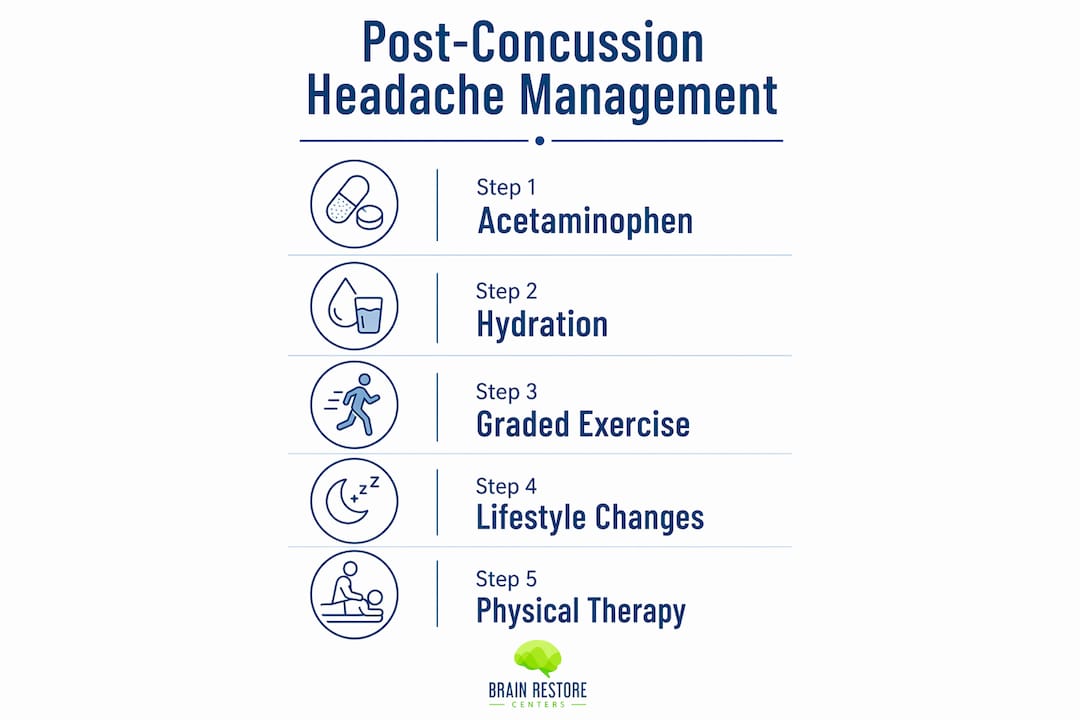
Hydration and nutrition are foundational. Dehydration is a well-documented headache trigger, and skipping meals causes blood sugar dips that amplify head pain. Eating regular, balanced meals and drinking water consistently throughout the day removes two of the most common triggers from the equation.
| Lifestyle Factor | Recommended Adjustment |
|---|---|
| Hydration | Drink water consistently; avoid long gaps between fluids |
| Caffeine | Limit to one cup per day; avoid sudden withdrawal |
| Screen time | Use blue-light filters; take a 20-minute break every hour |
| Alcohol | Avoid during active recovery; it disrupts sleep and worsens pain |
| Sleep schedule | Keep consistent wake and sleep times, even on weekends |
| Stress management | Practice mindfulness, diaphragmatic breathing, or progressive muscle relaxation daily |
Screen time deserves special attention. Bright screens and rapid visual movement stress a brain that is already working hard to recover. Blue-light filtering glasses and the 20-20-20 rule (look at something 20 feet away for 20 seconds every 20 minutes) reduce visual strain without requiring you to stop working entirely.
Graded aerobic exercise supports brain recovery and reduces headache frequency over time. This does not mean jumping back into intense workouts. It means starting with short, low-intensity walks and building up gradually as your symptoms allow. The safe exercise after head injury approach used at Brainrestoremeridian follows this graded model precisely.
Stress management rounds out the lifestyle picture. Mindfulness practices, slow diaphragmatic breathing, and progressive muscle relaxation all reduce the nervous system activation that amplifies pain. Even ten minutes of structured breathing daily can lower headache frequency for patients in active recovery.
Physical therapy addresses the structural and neurological contributors to post-concussion headaches that medication alone cannot reach. Neck stiffness, poor posture, and vestibular dysfunction all feed directly into headache persistence.
Non-drug therapies are foundational in managing persistent post-concussion headaches. A structured physical therapy program typically follows this sequence:
The interdisciplinary model matters here. A physical therapist, chiropractor, and neurologist working from the same recovery plan produce better results than three separate providers working in isolation. Brainrestoremeridian’s approach to spinal care after head trauma integrates these disciplines into a single coordinated program.
The connection between emotional health and headache persistence is direct and well-documented. Treating the physical symptoms while ignoring the psychological ones produces incomplete results.
Persistent post-traumatic headaches correlate strongly with insomnia, pain catastrophizing, and PTSD symptoms. Pain catastrophizing, the tendency to expect the worst from pain, amplifies the brain’s pain signals and makes headaches feel more severe than they might otherwise be. Recognizing this pattern is the first step toward changing it.
“Managing the emotional response to pain is as important as physical treatment for preventing persistent post-concussion headaches. Patients who receive psychological support alongside physical care show better long-term outcomes than those who receive physical care alone.”
Cognitive behavioral therapy (CBT) is the most studied psychological intervention for chronic headache. CBT helps patients identify and reframe catastrophic thinking patterns, build coping strategies, and reduce the anxiety that keeps the nervous system in a heightened pain state. It works as an adjunct to physical treatment, not a replacement.
Key emotional and cognitive strategies:
The misconception that cognitive symptoms will resolve once headaches are controlled leads many patients to delay psychological support. Memory and concentration difficulties in 60% of post-concussion patients reflect genuine neurological disruption. Addressing emotional health early shortens the overall recovery timeline.
Effective post-concussion headache management requires combining safe medication use, graded physical activity, lifestyle modifications, and early psychological support to prevent symptom chronicity.
| Point | Details |
|---|---|
| Start with acetaminophen | Use acetaminophen in the first 48 hours; avoid NSAIDs until a clinician approves. |
| Avoid medication overuse | Limit pain relievers to prevent medication-overuse headache, which worsens recovery. |
| Prioritize graded exercise | Gradual aerobic activity supports brain healing and reduces headache frequency over time. |
| Address vestibular and cervical issues | Physical therapy for neck tension and balance problems removes key headache contributors. |
| Treat emotional health early | Psychological support and CBT reduce pain catastrophizing and prevent chronic headache patterns. |
The single biggest mistake I see is patients treating post-concussion headaches like ordinary tension headaches. They take ibuprofen daily, rest completely, and wait for things to improve. That approach often makes things worse on both counts.
What actually works is the opposite of what feels intuitive. Gentle movement, even when your head hurts, supports recovery better than bed rest. Patients who start graded aerobic activity early, even just a 10-minute walk, consistently recover faster than those who stay sedentary. The research backs this up, and so does clinical observation.
The other pattern I see repeatedly is patients who manage the physical symptoms well but neglect the emotional side. They get their neck treated, they sleep better, and their headaches improve. Then a stressful week hits and the headaches come back hard. The missing piece is almost always psychological support. CBT, mindfulness, or even structured stress management coaching makes the physical gains stick.
Medication has a role, but it is a supporting role. Patients who rely primarily on pain relievers without addressing the physical and emotional contributors tend to plateau. The patients who recover most fully are the ones who commit to the full picture: movement, sleep, stress management, physical therapy, and professional guidance working together.
Be patient with yourself. Post-concussion recovery is not linear. A bad day does not mean you are going backward. It means your brain is still healing, and that process takes time.
— Chad
Brainrestoremeridian offers a coordinated program that addresses every layer of post-concussion headache, from neurological disruption to musculoskeletal contributors to emotional health. The clinic combines neurofeedback, chiropractic care, laser therapy, and vestibular rehabilitation into personalized care plans built around your specific symptom profile.
Neurofeedback for chronic pain retrains the brain’s pain-processing patterns directly, while neurofeedback for anxiety relief supports the emotional regulation that prevents headache relapse. Chiropractic care and spinal decompression address the cervical contributors that physical therapy alone may not fully resolve. Every plan at Brainrestoremeridian is built around your specific symptoms, not a generic protocol. Contact the clinic to schedule a consultation and get a recovery plan that fits your situation.
Post-concussion headache is head pain that starts within seven days of a traumatic brain injury and persists beyond the expected recovery window. It is the most common symptom reported after concussion and can resemble migraine or tension-type headache.
Headaches persist after concussion because of ongoing neurological disruption, cervical muscle tension, vestibular dysfunction, and psychological factors like insomnia and pain catastrophizing. Approximately 30% of patients experience headaches beyond three months, which is why early multidisciplinary treatment matters.
Acetaminophen is the safest first-line option in the first 48 hours after a concussion. NSAIDs like ibuprofen and aspirin are generally avoided initially due to bleeding risk.
Yes. Graded aerobic exercise, starting with short, low-intensity activity and building gradually, supports brain recovery and reduces headache frequency over time. Complete bed rest is not recommended beyond the first day or two after injury.
Balance problems after concussion reflect vestibular system disruption, which also contributes to headache persistence. Vestibular rehabilitation retrains the brain and inner ear to work together, reducing both dizziness and associated head pain.
Questions about your next step?
Our Meridian team can help you understand the evaluation process and which care options may fit your needs.
Schedule a Brain Health ConsultationPrefer to speak with our team? Call 208-639-1397