Mild Cognitive Impairment: What It Means and What to Do
August 17, 2026


Mild cognitive impairment (MCI) is a measurable decline in memory or thinking skills that goes beyond normal aging but does not stop you from living independently. That last part matters most: people with MCI can still manage their households, handle their own medications, and pay their own bills, which is exactly what separates this condition from dementia, according to the Alzheimer’s Association.
If you or someone you love is showing signs of this, here is what to do right now, not next month:
You are not diagnosing dementia by noticing these changes. You are catching something earlier, when there are more options on the table.
Mild cognitive impairment sits between normal aging and dementia, and early evaluation combined with vascular risk control gives most patients real influence over their trajectory.
| Point | Details |
|---|---|
| Know the defining line | MCI involves measurable cognitive decline while independence in daily tasks stays intact, unlike dementia. |
| Act on symptoms early | Document specific incidents and see a clinician rather than waiting for symptoms to worsen. |
| Ask for the right workup | Request bloodwork for thyroid, B12, and metabolic issues, plus a medication review and sleep assessment. |
| Monitor on a schedule | Plan follow-up cognitive evaluation every 6 to 12 months to track any change in status. |
| Consider in-person care | Brainrestoremeridian offers coordinated neurological evaluation, cognitive testing, and therapies like neurofeedback for ongoing support. |
Clinicians define MCI as a stage where a person shows objective, measurable decline in one or more thinking skills, memory, language, attention, or reasoning, while still functioning independently in daily life. That single distinction, preserved independence, is the clinical line between MCI and dementia.
To reach an MCI diagnosis, a clinician typically confirms four things:
The DSM-5 classifies this condition as “mild neurocognitive disorder,” and the ICD-11 uses a comparable framework, both treating it as a distinct diagnostic category rather than a vague gray zone, according to research on the diagnostic criteria. This matters because MCI sits on a spectrum, not as an isolated event. On one end is normal age-related forgetfulness. On the other is dementia. MCI occupies the middle, and where a person lands on that spectrum shapes everything from monitoring frequency to treatment planning.
Getting the diagnosis right also opens doors. It justifies ongoing monitoring, prompts a search for reversible causes, and gives patients and families a real basis for planning ahead instead of guessing.
Symptoms of mild cognitive impairment usually show up as small, specific breakdowns rather than dramatic confusion. A spouse notices the change before the patient does more often than not, because the person experiencing it tends to explain away individual incidents.
Common everyday examples include:
Some forms of MCI show up outside memory entirely. Nonamnestic MCI can affect decision-making, visuospatial skills, or even motor coordination and sense of smell, per data referenced by Alzheimers. If a family member seems “off” in ways that are not strictly memory-related, that still counts.
Here is what should not be happening with MCI: a complete loss of independence, an inability to recognize familiar people, severe disorientation, or an incapacity to manage basic self-care. Those signs point toward dementia or an acute medical issue, not MCI, and they warrant a faster, more urgent evaluation. If a loved one suddenly cannot find their way home from a route they have driven for twenty years, or forgets how to use the stove entirely, do not wait for the next scheduled checkup. Call a clinician that week.
Mild cognitive impairment causes fall into several categories, and no single explanation covers every case. Underlying neurodegeneration, vascular disease, medication effects, and treatable medical conditions can all produce the same surface-level symptoms, which is exactly why a proper workup matters instead of assuming the worst.
Risk factors you cannot change include age, since MCI becomes more common with each decade past 65, family history and certain genetic factors, and a prior history of significant head injury. None of these are things you can undo, but knowing they apply to you is useful context for how closely to monitor your cognitive health.
Risk factors you can influence carry more weight than most people realize. Cardiovascular risk, high blood pressure, high cholesterol, and poorly controlled diabetes, damages the small blood vessels that feed the brain over time. Untreated sleep apnea starves the brain of oxygen repeatedly through the night. Hearing loss, left uncorrected, has been linked to faster cognitive decline, possibly because the brain works overtime to compensate. Certain medications, particularly ones with strong anticholinergic effects, can mimic or worsen cognitive symptoms. Vitamin deficiencies, especially B12, and untreated depression round out the list.

Pro Tip: Bring your full medication list, including over-the-counter sleep aids and antihistamines, to your next appointment. Several common drugs quietly impair memory and attention, and a simple adjustment can sometimes produce a noticeable improvement.
Subtype matters here too. Amnestic MCI, where memory is the primary domain affected, more often points toward early Alzheimer’s-related changes. Nonamnestic MCI, affecting other domains like language or visuospatial skills, more often points toward vascular disease or other causes. Your clinician’s identification of which subtype you have is not just a label; it shapes what workup makes sense and what the likely path forward looks like.
Many causes of cognitive decline are treatable, so a first-round workup exists specifically to catch the problems that can be fixed before assuming a progressive brain disease is at play. This is the single most reassuring fact in this entire topic, and it gets underused in casual conversations about memory loss.
A typical evaluation includes:
Correcting even one of these can improve symptoms meaningfully in some patients, which is why skipping this step in favor of jumping straight to imaging or specialist referral is a mistake, per findings summarized in clinical research on MCI evaluation.
When results point beyond a simple fix, clinicians refer out. Neurology gets involved when the pattern suggests a neurodegenerative process. Geriatric psychiatry helps when mood and cognition are tangled together in a way that’s hard to separate. A sleep clinic confirms and treats apnea directly. Audiology addresses hearing loss that a basic screen flagged.
One practical habit makes every one of these visits more useful: bring someone who knows you well. An informant, a spouse, adult child, or close friend, often notices patterns the patient has missed or minimized, and clinicians rely heavily on that outside perspective to build an accurate picture.
Diagnosis is a clinical judgment built on history, cognitive testing, and functional assessment, not a single test result. No blood test or scan alone confirms MCI; it takes putting the whole picture together.
Screening tools like the Montreal Cognitive Assessment (MoCA) and the Mini-Mental State Examination (MMSE) are quick, taking 10 to 15 minutes, and useful for catching a problem worth investigating further. They are not perfect. Both tools can miss subtle deficits in highly educated people who compensate well, and both can flag false positives in people with limited education or for whom English is a second language. When results are ambiguous or the stakes are high, such as before a major life decision, clinicians order formal neuropsychological testing, a multi-hour battery administered by a specialist that maps out exactly which cognitive domains are affected and by how much.
| Test or Tool | Purpose | What It Tells the Clinician |
|---|---|---|
| MoCA / MMSE | Quick cognitive screening | Flags whether more detailed testing is warranted |
| Formal neuropsychological testing | Detailed domain-by-domain assessment | Pinpoints specific deficits (memory, language, executive function) and severity |
| Routine bloodwork (CBC, TSH, B12, metabolic panel) | Rule out reversible medical causes | Identifies treatable contributors like thyroid dysfunction or vitamin deficiency |
| Brain MRI | Structural brain imaging | Detects strokes, vascular damage, or patterns of atrophy |
| Amyloid PET or CSF testing | Specialized biomarker testing | Confirms or rules out underlying Alzheimer’s pathology |
Biomarker testing deserves a caveat. Amyloid PET scans and cerebrospinal fluid analysis can confirm whether Alzheimer’s pathology is driving the cognitive changes, and this evidence increasingly factors into a diagnosis of “MCI due to Alzheimer’s disease” specifically, according to research on Petersen’s original MCI characterization. These tests are specialized, often only available through academic medical centers or research settings, and they carry real cost and access barriers. They are not required for an initial MCI diagnosis. Most people are diagnosed and monitored well without ever needing one.
Outcomes after an MCI diagnosis vary widely, and that variability is actually good news: some people progress toward dementia, some remain stable for years, and some improve, particularly when a reversible cause gets identified and treated.
A minority of people age 65 and older with MCI are estimated to progress to dementia within a given year, according to figures cited by Alzheimers.gov. Read that statistic carefully: it means the majority of people with MCI do not convert to dementia in any single year, and a meaningful share never do. This is not a countdown clock. It is a risk range, and where an individual falls within it depends on specific factors.
Regular monitoring every several months to a year is the standard recommendation across major health organizations, allowing clinicians to catch a meaningful shift early rather than discovering a large decline at a widely spaced checkup. What should prompt an earlier visit, instead of waiting for the scheduled one? A sudden change in function, new difficulty managing medications or finances independently, a fall, or a marked jump in confusion all justify calling sooner.
Certain factors tilt the odds toward faster progression. Amnestic MCI, particularly involving significant memory loss, tends to carry higher conversion risk than nonamnestic forms. Positive biomarker findings for amyloid raise the risk further. Uncontrolled vascular disease, poorly managed blood pressure, diabetes, or a history of stroke, also pushes risk upward. None of these factors guarantee an outcome. They inform how closely you and your care team watch things.
There is currently no FDA-approved medication to reverse mild cognitive impairment, but a real, evidence-supported set of interventions can slow decline and support day-to-day function while research on drug treatments continues.
The most consistently recommended actions include:
Experts consistently point to lifestyle interventions and vascular risk management as the most practical, lowest-risk approach available today, and the benefit extends well beyond cognition into heart and metabolic health, according to Harvard Health.
Clinically, this often means referrals: physical therapy or a structured exercise program, occupational therapy for practical daily-function strategies, audiology for hearing assessment, or a sleep clinic for a formal sleep study. Depending on the pattern of symptoms, a clinician may also order neuropsychological testing to guide a more tailored plan, or refer to a specialist for closer follow-up. Approaches that combine functional evaluation with targeted therapies, like the strategies described in this overview of integrated cognitive decline care, reflect where much of this multidisciplinary thinking is headed.

Pro Tip: At your next appointment, ask specifically about a referral for audiology, a sleep study, or a review of your current medications for cognitive side effects. These three requests are simple, low-cost, and often overlooked in a standard checkup.
The first weeks after an MCI diagnosis should prioritize safety, documentation, and setting up a workable follow-up plan, not panic or overhauling your entire life overnight.
Start with a short, concrete checklist:
For dependable information beyond your own clinician, the Alzheimer’s Association, the National Institute on Aging, and clinicaltrials.gov are solid starting points.
To make follow-up visits genuinely useful, keep a running log between appointments rather than trying to remember everything on the drive there. Note specific incidents with dates, any new medications, and questions as they come up. A structured recovery approach built around consistent tracking tends to produce clearer conversations with your care team and fewer forgotten details.
Certain lifestyle and vascular-risk measures genuinely reduce the risk of further cognitive decline, and most of them are worth adopting regardless of your current cognitive status.
A practical prevention checklist looks like this:
Not every item on that list carries equal scientific weight. Cardiovascular risk control and regular exercise have the strongest clinical trial support behind them. Diet, sleep, hearing correction, and social engagement are promising and consistently associated with better outcomes, though the evidence base for some of these is still developing compared to the vascular risk data.
If biomarker testing has flagged elevated Alzheimer’s risk for you or a family member, that changes the conversation. It’s worth discussing both aggressive lifestyle measures and clinical trial eligibility directly with a specialist, since this is an active area of research where guidance shifts as new findings emerge. A clinical guide to slowing neurodegenerative progression covers some of these approaches in more depth.
Normal aging, MCI, and dementia sit along one spectrum, and the difference between them comes down to two questions: is there objective impairment on testing, and does the person still function independently?
Normal aging involves occasional forgetfulness, misplacing keys once in a while, blanking on a name temporarily, but no measurable decline on formal testing and no impact on daily function. MCI adds objective, measurable impairment on cognitive testing while independence in daily activities stays fully intact. Dementia crosses the line into functional loss: the person can no longer manage finances, medications, or self-care reliably without help, and confusion becomes a regular, not occasional, feature of daily life.
| Feature | Normal aging | Mild cognitive impairment | Dementia |
|---|---|---|---|
| Independence in daily tasks | Fully preserved | Fully preserved | Impaired, requires assistance |
| Objective test impairment | None | Present, measurable | Present, more pronounced |
| Typical symptom pattern | Occasional forgetfulness | Noticeable but isolated memory or thinking lapses | Broad functional decline, confusion, disorientation |
| Urgency of evaluation | Routine checkups | Prompt evaluation recommended | Requires medical evaluation soon |
Red-flag signs that suggest dementia rather than MCI include forgetting how to perform a familiar task entirely, like operating the microwave or getting dressed, becoming lost in a familiar place repeatedly, or a family member needing to take over financial management because bills are going unpaid. If any of those show up, don’t wait for a routine follow-up; call your clinician and describe exactly what changed.
Clinical research is actively studying early interventions and biomarker tools that can identify who is most likely to progress from MCI to dementia, and participation is a real option worth understanding, not just a last resort.
Clinicaltrials.gov and the National Institute on Aging’s trial finder are the two most reliable places to search for active studies by location and eligibility. Participating typically starts with a screening visit, cognitive testing, sometimes bloodwork or imaging, to confirm you meet a trial’s specific criteria. Benefits can include closer monitoring and early access to emerging treatments; risks include time commitment, potential side effects from investigational drugs, and the chance of being placed in a placebo group depending on the trial design.
Biomarker testing, amyloid PET scans, cerebrospinal fluid analysis, or newer blood-based tests, plays a growing role in this research space, both for identifying eligible participants and for tracking whether an intervention is having a measurable biological effect. Clinicians sometimes recommend these tests specifically for trial eligibility, and sometimes defer them when they would not change the immediate treatment plan.
If you are considering a trial, start with a direct conversation with your clinician about what is available and appropriate for your situation. From there, check eligibility criteria carefully, most trials have specific requirements around age, biomarker status, or MCI subtype, and factor in the practical logistics: how often visits are required, how far you would need to travel, and whether any costs fall outside what a trial sponsor typically covers.
The biggest misconception patients bring into the exam room is that an MCI diagnosis is a countdown to dementia. It isn’t. The data simply doesn’t support that fear, and treating every diagnosis like a terminal sentence causes people to skip the parts of the process that actually help.
The single most useful thing a patient or family member can do is keep a written log of specific incidents between visits. “My memory feels worse” gives a clinician almost nothing to work with. “I forgot my granddaughter’s name for about ten seconds on Tuesday, and I missed a dentist appointment I had written down twice last month” gives a clinician something they can actually track over time and compare against the next visit.
Bringing a spouse or adult child to appointments changes the quality of the conversation almost every time. Patients, understandably, tend to minimize or explain away their own symptoms. A close family member fills in the gaps honestly, and that honesty is often what moves a workup in the right direction faster.
Vascular risk control deserves more attention than it usually gets in these conversations. It’s not glamorous, it’s blood pressure numbers and cholesterol panels, but it’s one of the few levers with real trial evidence behind it. Patients who treat that seriously often see real, measurable stability.
Outcomes vary enormously from one person to the next, and that variability is the most reassuring fact in this entire field. Early evaluation doesn’t guarantee a specific outcome, but it consistently gives people more options than waiting does.
If you’re past the point of researching symptoms online and want a real evaluation, Brainrestoremeridian offers something most primary care visits can’t: a coordinated, in-person workup that combines neurological assessment, functional testing, and advanced restorative therapies under one roof, instead of bouncing between separate offices for each piece.
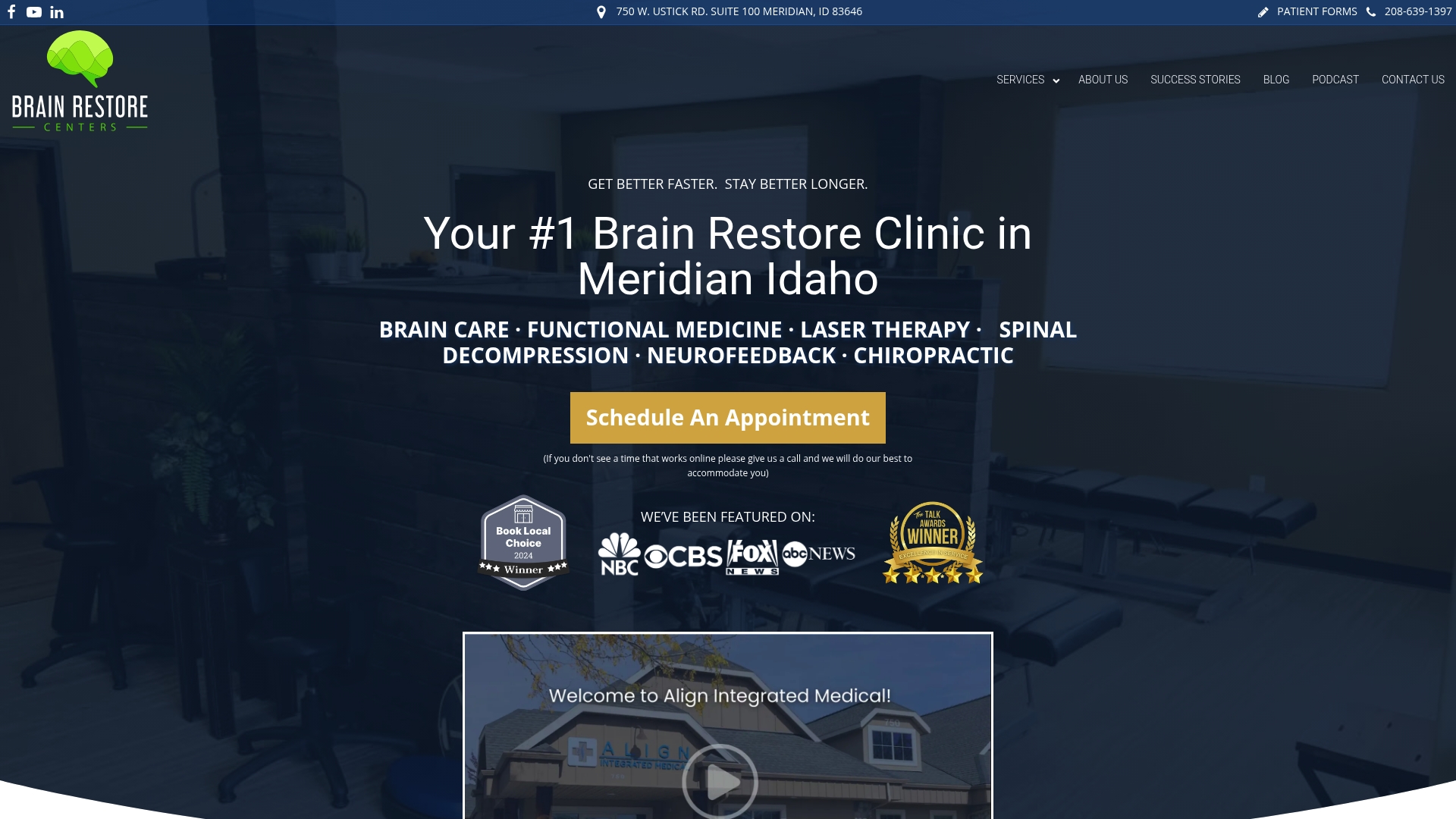
A visit typically covers a comprehensive neurological evaluation, cognitive testing to establish your baseline, a thorough medication review, and referrals to audiology or sleep testing when those factors are in play. Brainrestoremeridian also offers therapies like neurofeedback as a complement to standard medical management, giving patients a supportive option beyond lifestyle advice alone. The clinic’s broader approach to brain health restoration integrates several of these tools into one coordinated plan rather than treating cognitive concerns in isolation.
For your first visit, bring your current medication list, a written log of specific symptoms and dates, and, if possible, a family member who has noticed the changes firsthand. To schedule an evaluation with Brainrestoremeridian, request an appointment through the clinic’s contact page and describe your concerns so the team can prepare the right testing before you arrive.
What is mild cognitive impairment in simple terms?
It’s a noticeable decline in memory or thinking skills that goes beyond typical aging but doesn’t stop someone from living independently or managing daily responsibilities on their own.
What is the difference between MCI and dementia?
The key difference is independence. People with MCI can still manage finances, medications, and household tasks; dementia involves losing that functional independence.
Is mild cognitive impairment reversible?
Sometimes. When a treatable cause like thyroid dysfunction, B12 deficiency, or sleep apnea is behind the symptoms, treating it can lead to real improvement. Not every case is reversible, but many are worth investigating.
How is mild cognitive impairment diagnosed?
Through a combination of medical history, cognitive testing like the MoCA or MMSE, and bloodwork to rule out treatable causes. Imaging or biomarker testing gets added when the clinical picture calls for it.
How often should someone with MCI be monitored?
Most guidance recommends reevaluation every 6 to 12 months, with an earlier visit if new symptoms or a sudden change in function appear.
Does everyone with MCI eventually develop dementia?
No. Roughly 10% to 20% of people 65 and older with MCI progress to dementia in a given year, which means the majority do not convert in any single year, and some remain stable or even improve.
This article provides general health information and is not a substitute for personalized medical advice. Talk with a qualified clinician about your specific symptoms and situation.
These organizations are recognized public health authorities and academic references, making them reliable starting points if you want to dig deeper on your own.
Questions about your next step?
Our Meridian team can help you understand the evaluation process and which care options may fit your needs.
Schedule a Brain Health ConsultationPrefer to speak with our team? Call 208-639-1397