
How Chiropractic Improves Brain Function and Clarity
June 27, 2026


Chiropractic care improves brain function by restoring optimal nervous system communication through spinal adjustments that correct biomechanical dysfunction. When your spine is misaligned, nerve signals between your body and brain become disrupted, affecting everything from focus and memory to mood and coordination. Research shows spinal manipulations activate the sensorimotor cortex and prefrontal cortex, two brain regions central to decision-making and sensory processing. For patients managing cognitive decline, recovering from injury, or seeking sharper mental clarity, understanding how chiropractic supports neurological function is the first step toward making an informed choice about care.
The spine is the primary highway for nerve signals traveling between your body and brain. When spinal segments lose proper motion or alignment, that communication degrades. Adjustments restore normal spinal movement, which re-establishes clean nerve flow and reduces interference in neurological pathways.
Research shows spinal manipulations activate the sensorimotor cortex and prefrontal cortex. The prefrontal cortex governs planning, attention, and emotional regulation. Activating it through spinal adjustment is not a side effect. It is a measurable neurological response.

Chiropractic care also influences neurotransmitter pathways involved in stress regulation and sensory processing. This matters because chronic stress suppresses cognitive performance. When the nervous system shifts out of a stress-dominant state, mental clarity often follows.
Patients frequently report feeling clearer and more focused after adjustments. These subjective reports align with observed changes in brain activity after spinal manipulation, which gives clinical weight to what patients describe in the chair.
Key mechanisms through which spinal adjustments affect brain activity include:
Pro Tip: If you are seeking chiropractic care specifically for cognitive benefits, ask your provider which spinal levels they are targeting and why. Providers who can explain the neurological rationale for each adjustment give you far more useful information than those focused only on pain relief.
The cervical spine, the seven vertebrae in your neck, directly influences blood flow to the brain through the vertebral arteries. These arteries run through small openings in the cervical vertebrae and supply the brainstem and posterior brain. When cervical curvature is lost or distorted, those arteries can be mechanically compressed or kinked, reducing the volume and consistency of blood reaching critical brain structures.
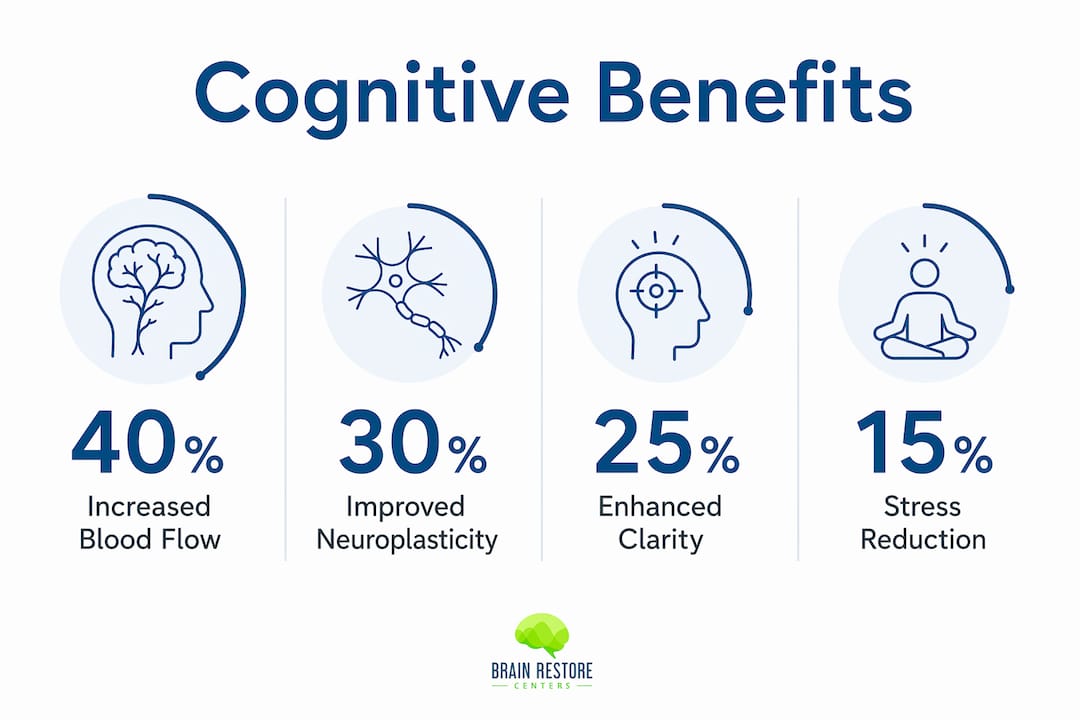
The evidence for this is measurable. Correcting cervical spine curvature leads to immediate increases in cerebral blood flow on magnetic resonance angiography scans. MRA is a high-resolution imaging method that maps blood movement through arteries in real time, making these findings objective rather than anecdotal.
A pilot study also found an immediate middle cerebral artery blood flow increase following spinal adjustment. The effect was temporary, which is a critical detail. A single adjustment does not permanently rewire circulation. Sustained improvement requires consistent care and correction of underlying postural dysfunction.
Better cerebral blood flow means more oxygen and glucose reaching neurons. Both are non-negotiable fuels for cognitive performance. Patients with forward head posture, a common consequence of prolonged screen use, are particularly vulnerable to this type of vascular restriction.
| Cervical condition | Effect on brain blood flow | Chiropractic response |
|---|---|---|
| Loss of cervical curve | Reduced vertebral artery flow | Curve restoration via adjustments |
| Forward head posture | Increased vascular compression | Postural correction and mobilization |
| Cervical joint restriction | Disrupted mechanoreceptor signaling | Targeted spinal manipulation |
| Acute cervical dysfunction | Temporary hemodynamic changes | Short-term blood flow improvement |
Pro Tip: Ask your chiropractor for cervical X-rays before and after a course of care. Comparing the curve angle on imaging gives you objective data on structural progress, not just symptom relief.
Neuroplasticity is the brain’s ability to form and reorganize neural connections in response to experience and input. It is the mechanism behind learning, memory, and recovery from brain injury. Manual therapy appears to support this process by changing the quality and volume of sensory input the brain receives from the spine and body.
Manual therapy reduces sympathetic nervous system tone and increases parasympathetic activity. A meta-analysis found decreased cortisol, improved sleep, and reduced anxiety following manual therapy interventions. Each of these outcomes directly supports the brain’s capacity for repair and adaptation.
Mechanical stimulation from manual therapy transmits biochemical signals that may regulate autonomic nervous system balance. Think of it this way: the spine is one of the richest sources of sensory input to the brain. Restoring its normal movement patterns is like clearing static from a radio signal. The brain receives cleaner, more consistent information and responds accordingly.
Patients seeking cognitive enhancement or recovering from concussion often report these benefits after consistent chiropractic care:
The evidence for these cognitive benefits is promising but still developing. Manual therapy’s effects on autonomic balance may underlie the mental health and cognitive benefits patients report, though the evidence is less definitive than for musculoskeletal conditions. That distinction matters when setting realistic expectations. You can explore how chiropractic affects brain and nervous system health for a deeper look at the clinical rationale.
Chiropractic care is safe for the vast majority of patients. The risks that do exist are rare, but they are real and worth understanding before you begin treatment, especially if you have vascular risk factors or a history of neurological symptoms.
The most serious risk associated with cervical manipulation is vertebral artery dissection, a tear in the artery wall that can lead to stroke. Cervical manipulation carries rare but serious risks including vertebral artery dissection and stroke. Neurologists also note that there is no established scientific basis for chiropractic cervical manipulation as a treatment for neurological disorders. That does not mean chiropractic has no neurological value. It means the evidence for treating diagnosed neurological conditions specifically is not yet sufficient to meet the clinical threshold neurologists require.
Patients who prefer a more conservative approach can request lower-risk techniques. Many patients choose lower-risk chiropractic techniques over high-velocity cervical manipulation and insist on shared decision-making and monitoring for neurologic red-flag symptoms. This is a reasonable and well-supported approach.
Key safety steps before starting cervical chiropractic care:
Older patients and those with cognitive decline should ask their provider to explain the specific approach, the targeted neurological mechanism, and how progress will be measured over time.
Chiropractic care improves brain function by restoring nervous system communication, supporting cerebral blood flow, and reducing the physiological burden of chronic stress on the brain.
| Point | Details |
|---|---|
| Nervous system communication | Spinal adjustments activate the prefrontal cortex and sensorimotor cortex, improving neural signaling. |
| Cerebral blood flow | Correcting cervical curvature produces measurable increases in brain blood flow on MRA imaging. |
| Neuroplasticity support | Manual therapy reduces cortisol and sympathetic tone, creating conditions for brain repair and adaptation. |
| Cognitive benefits | Patients report improved focus, better sleep, and reduced anxiety following consistent chiropractic care. |
| Safety awareness | Cervical manipulation carries rare vascular risks; lower-risk technique options exist and should be discussed. |
I have worked with patients who came to us primarily for neck pain and left reporting that their thinking felt clearer. That pattern is consistent enough to take seriously, even when the research is still catching up to the clinical observation.
What I find most useful is framing chiropractic not as a standalone brain treatment but as a nervous system reset. The spine is the brain’s primary input channel from the body. When that channel is noisy or restricted, the brain works harder to process basic sensory information. Adjustments reduce that noise. The cognitive benefits patients notice are often a downstream effect of a nervous system that is simply working with less friction.
Where I push back on overclaiming is the idea that a few adjustments will reverse cognitive decline or replace neurological rehabilitation. The hemodynamic effects are real but temporary. Sustained benefit requires sustained care, and ideally, care that is integrated with other approaches like neurofeedback, functional medicine, and targeted rehab. Chiropractic is a powerful piece of a larger plan. It is rarely the whole plan.
The patients who get the most out of chiropractic for brain health are the ones who track their outcomes, communicate openly with their provider, and treat it as one tool in a broader recovery strategy. If you are approaching it that way, the evidence supports your optimism.
— Chad
Brainrestoremeridian in Meridian, Idaho combines chiropractic care for brain function with neurofeedback, photobiomodulation, and functional medicine to address cognitive decline, concussion recovery, and neurological health from multiple angles. Each patient receives a personalized care plan built around their specific neurological profile, not a generic protocol.

If you are experiencing brain fog, memory concerns, or recovering from a head injury, the team at Brainrestoremeridian can assess your nervous system function and design a plan that fits your goals. Their neurofeedback and chiropractic integration approach is particularly well-suited for patients who want measurable cognitive outcomes alongside structural spinal care. Contact Brainrestoremeridian to schedule a consultation and find out which combination of therapies fits your situation.
Spinal adjustments stimulate mechanoreceptors in spinal joints, sending signals to the sensorimotor cortex and prefrontal cortex. This activates brain regions responsible for movement, attention, and sensory processing.
Chiropractic care can reduce sympathetic nervous system overdrive and support neurotransmitter balance, both of which contribute to clearer thinking. Patients consistently report improved focus and mental clarity following spinal adjustments.
Chiropractic is generally safe, but cervical high-velocity manipulation carries rare vascular risks including vertebral artery dissection. Patients with neurological conditions should discuss lower-risk technique options and outcome monitoring with their provider before beginning care.
Hemodynamic effects from a single adjustment are temporary. Sustained cognitive benefits require consistent care over weeks to months, ideally integrated with complementary therapies like neurofeedback or functional medicine.
Chiropractic is best used as part of a multi-domain rehabilitation plan for concussion recovery. It can support time-limited symptom improvements, but long-term recovery requires coordinated neurological and rehabilitative care.
Questions about your next step?
Our Meridian team can help you understand the evaluation process and which care options may fit your needs.
Schedule a Brain Health ConsultationPrefer to speak with our team? Call 208-639-1397