Cognitive Dysfunction Treatment: Your Recovery Guide
July 18, 2026


Cognitive dysfunction treatment is defined as a personalized, multidomain approach combining medical management, cognitive rehabilitation, and lifestyle change to restore or improve brain function. This is not a single pill or a single therapy. Clinical research confirms that individualized cognitive rehabilitation produces significant, sustained gains over six months for patients with cognitive impairment. The goal is realistic and achievable: reduce symptoms, slow decline, and help you reclaim daily function. Whether your symptoms stem from long COVID, a neurological condition, or age-related decline, the right combination of treatments can make a measurable difference in your quality of life.
Cognitive dysfunction is a symptom, not a standalone diagnosis. Treatment depends on identifying the root cause first, whether that is a neurological disease, a systemic condition, a medication side effect, or an injury. Without that foundation, any therapy risks targeting the wrong problem.
The assessment process typically includes:
A multidisciplinary team, including neurologists, occupational therapists, and functional medicine specialists, produces the most complete picture. Each discipline sees a different piece of the puzzle. Cognitive reserve factors like education level and lifestyle history also predict how quickly and how fully a patient responds to treatment. Setting realistic expectations from the start protects motivation and prevents early dropout.
Pro Tip: Ask your clinician to document your baseline scores in writing. Tracking measurable change over 3–6 months is the clearest way to confirm that your treatment plan is working.

Effective treatment for cognitive decline rarely relies on a single approach. The strongest outcomes come from combining medical, rehabilitative, and lifestyle strategies in a coordinated plan.
Medications target underlying causes rather than cognitive symptoms directly. Treating hypothyroidism, managing blood pressure, or adjusting medications that impair cognition can produce rapid improvement. For conditions like mild-to-moderate Alzheimer’s disease, modified cognitive stimulation therapy combined with standard pharmacotherapy significantly improves both cognitive scores and quality of life compared to medication alone. That finding matters because it confirms that drugs work better when paired with structured rehabilitation.
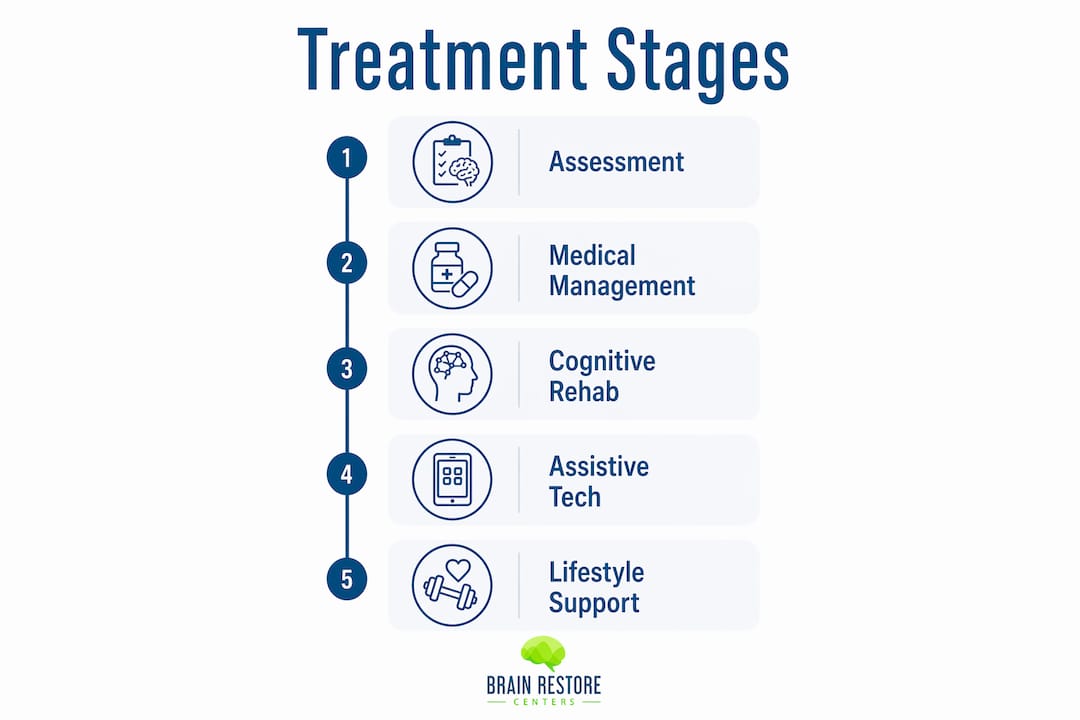
Cognitive rehabilitation is structured, goal-directed therapy designed to rebuild or compensate for impaired brain functions. Think of it as exercise for your mind: targeted, progressive, and measurable. A meta-analysis of 21 neuroimaging studies confirms that cognitive training produces moderate behavioral improvements linked to real changes in brain activation, particularly in the precuneus region. That means the brain physically responds to well-designed training.
Digital tools, reminder systems, and adaptive apps reduce the daily burden of cognitive impairment while formal rehabilitation progresses. Personalized adaptive training tailored to individual impairment profiles outperforms uniform cognitive exercise programs. Generic “brain game” apps do not meet this standard. Look for programs that adjust difficulty in real time based on your performance.
| Treatment category | Primary benefit | Best used for |
|---|---|---|
| Medical management | Treats reversible or underlying causes | Systemic, medication-related, or vascular causes |
| Cognitive rehabilitation | Rebuilds specific impaired functions | Memory, attention, executive function deficits |
| Lifestyle interventions | Slows decline, supports neuroplasticity | All cognitive impairment profiles |
| Assistive technology | Reduces daily functional burden | Moderate impairment affecting work or independence |
Pro Tip: Pair assistive technology with supervised rehabilitation rather than using it as a standalone solution. Hybrid training models that combine digital tools with clinician oversight consistently outperform fully automated approaches.
Cognitive rehabilitation works best when it follows a clear, structured process. Jumping straight into intensive training without a plan leads to fatigue and dropout.
Define specific goals. Work with your clinician to identify the two or three cognitive functions most affecting your daily life. Memory for names, attention during conversations, and planning tasks are common starting points. Specific goals produce measurable outcomes.
Select appropriate exercises. Match exercises to your impairment profile. Attention training differs from memory encoding strategies, which differ from executive function tasks. A neurological rehabilitation specialist can match the right exercises to your specific deficits.
Start at a manageable intensity. Patients consistently underestimate cognitive fatigue during early training. Begin with shorter sessions (20–30 minutes) and increase duration only when you can complete sessions without significant post-session exhaustion.
Schedule sessions consistently. Three to five sessions per week produces better results than sporadic intensive bursts. Consistency drives neuroplasticity. Your brain adapts to regular, repeated challenge more effectively than to occasional overload.
Combine digital and supervised training. Use digital platforms for daily practice and reserve supervised sessions for goal review, difficulty adjustment, and accountability. This hybrid approach maximizes both adherence and outcomes.
Integrate physical activity. Aerobic exercise directly supports neuroplasticity by increasing brain-derived neurotrophic factor (BDNF). A 30-minute walk on training days is not optional. It is part of the therapy.
Monitor and adjust. Review progress every four to six weeks. If fatigue is high and scores are flat, reduce intensity before increasing it. Progress in cognitive rehabilitation is not always linear.
Pro Tip: Keep a brief daily log noting your energy level before and after each session. That data helps your clinician adjust intensity before burnout sets in, not after.
Lifestyle interventions are not supplementary to cognitive dysfunction treatment. WHO-recognized evidence places multidomain lifestyle strategies, including diet, cardiovascular risk management, and structured cognitive stimulation, at the center of sustainable brain health improvement. Medication and rehabilitation work faster and last longer when lifestyle supports them.
The most evidence-backed lifestyle changes include:
You can also explore neurological health supplements that complement dietary changes, though supplements work best alongside, not instead of, the lifestyle foundations above.
Recovery from cognitive impairment is rarely a straight line. Recognizing and addressing common obstacles early prevents setbacks from becoming permanent plateaus.
“Success in cognitive rehabilitation depends on personalization and active management of patient fatigue. Intensity adjustment early in treatment is critical, not optional. Patients who receive real-time difficulty adjustments show better adherence and better outcomes than those on fixed-difficulty programs.”
Cognitive dysfunction treatment produces the best outcomes when personalized assessment, structured rehabilitation, and consistent lifestyle change work together as a coordinated plan.
| Point | Details |
|---|---|
| Identify root causes first | Treatment depends on etiology; skip this step and you risk targeting the wrong problem. |
| Combine modalities | Medical management, cognitive rehabilitation, and lifestyle change together outperform any single approach. |
| Manage fatigue actively | Reduce session intensity early rather than waiting for burnout to force a break. |
| Lifestyle is not optional | Diet, exercise, sleep, and social engagement directly support neuroplasticity and treatment response. |
| Hybrid training wins | Digital tools paired with clinician supervision outperform fully automated or fully manual programs. |
The patients who recover best are not always the ones with the mildest impairment. They are the ones who accept that recovery is a process, not an event. I have seen people with significant deficits make remarkable gains because they showed up consistently, communicated openly with their care team, and adjusted their expectations when the data told them to.
The biggest mistake I see is treating cognitive rehabilitation like a course you complete and then stop. The brain requires ongoing stimulation. The lifestyle habits that support recovery are the same ones that prevent relapse. Stopping exercise, returning to poor sleep, or withdrawing socially after a period of improvement almost always triggers regression.
Technology is genuinely promising. Adaptive digital platforms and AI-driven training tools are raising the ceiling on what patients can achieve between supervised sessions. But technology does not replace the clinical relationship. A skilled clinician reads what the data cannot: your frustration, your fatigue, your motivation on a hard day. The hybrid model, human expertise plus digital tools, is the current gold standard for a reason.
If you are supporting a family member through cognitive decline, your role matters more than you probably realize. Consistent encouragement, help with scheduling, and reducing daily cognitive load at home all contribute to treatment outcomes. Recovery is rarely a solo effort.
— Chad
Brainrestoremeridian specializes in personalized brain health restoration for patients in Meridian, Idaho, combining neurofeedback, photobiomodulation, and functional medicine into coordinated care plans. If cognitive symptoms are affecting your daily life, a structured assessment is the right first step.
Neurofeedback at Brainrestoremeridian trains your brain’s electrical activity in real time, producing measurable improvements in attention, memory, and anxiety. Patients dealing with cognitive symptoms alongside anxiety often see neurofeedback anxiety relief as a meaningful part of their recovery. For patients with neurodegenerative conditions, neurofeedback for neurodegeneration offers an additional layer of support alongside rehabilitation and functional medicine. Contact Brainrestoremeridian to schedule a personalized assessment and build a recovery plan designed around your specific needs.
The first step is identifying the underlying cause of your cognitive symptoms. Clinical guidelines confirm that treatment depends on etiology, so a thorough medical and cognitive evaluation must precede any therapy.
Individualized cognitive rehabilitation shows significant clinical gains at three months, with sustained improvement maintained over six months. Results vary based on impairment severity and consistency of participation.
Lifestyle changes significantly slow cognitive decline and support treatment, but they rarely reverse established impairment on their own. WHO evidence supports multidomain lifestyle interventions as a core component of treatment, not a standalone solution.
Higher cognitive reserve, built through education, social engagement, and active leisure, predicts better rehabilitation outcomes and faster recovery. Patients with greater reserve tend to respond more quickly to structured cognitive training.
Digital training alone produces weaker results than hybrid approaches. Hybrid models combining AI-driven platforms with periodic clinician oversight maximize both adherence and cognitive outcomes.
Questions about your next step?
Our Meridian team can help you understand the evaluation process and which care options may fit your needs.
Schedule a Brain Health ConsultationPrefer to speak with our team? Call 208-639-1397