2026 Evidence: Neurofeedback for Depression and How to Vet Clinics
September 5, 2026

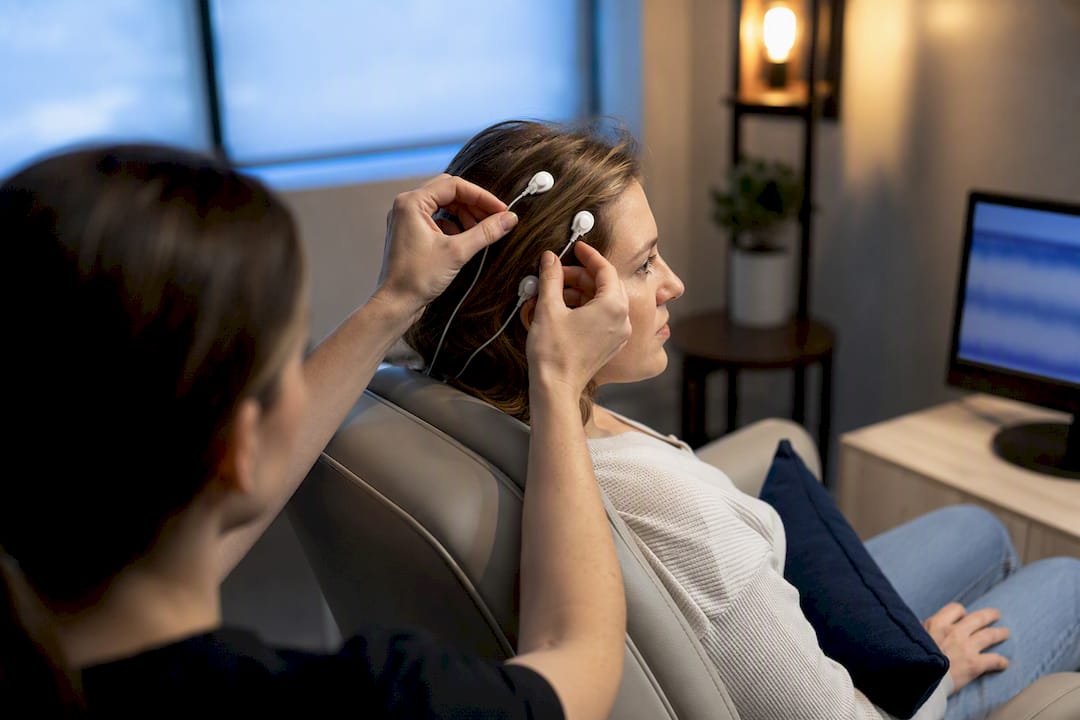
Neurofeedback can meaningfully reduce depressive symptoms for some people, particularly as an add-on treatment for lingering symptoms and anhedonia after medication or therapy have already been tried. The evidence base is promising but not definitive, built mostly on pilot trials and systematic reviews rather than large randomized studies. It’s typically used alongside standard care, not instead of it, and no depression-specific neurofeedback protocol currently carries FDA clearance.
TL;DR:
- Neurofeedback shows promise for treatment-resistant depression, with about one-third of patients achieving remission after ten sessions in recent pilot studies.
- The treatment typically requires 10 to 24 sessions scheduled two to three times weekly, and progress is monitored with standardized scales over several weeks.
- Most protocols target EEG patterns like frontal alpha asymmetry or theta/beta ratios, with newer approaches using fMRI-informed EEG to address anhedonia more precisely.
- Neurofeedback is generally safe with mild side effects, but depression-specific protocols lack FDA clearance, and insurance coverage remains rare.
- Larger, standardized clinical trials are needed to confirm its efficacy, and reputable providers should use licensed clinicians with transparent protocols and outcome tracking.
The strongest signal in the neurofeedback for depression literature comes from a handful of well-designed pilot studies, not sweeping large-scale trials. That distinction matters for how you weigh the numbers below.
A 2021 systematic review and meta-analysis concluded that neurofeedback works as a non-invasive supplementary option, with real potential for patients who remain symptomatic after standard pharmacotherapy or psychotherapy. The reviewers were careful to flag a problem the field still hasn’t solved: study protocols vary widely in target brain regions, session counts, and outcome measures, which makes pooling results into one clean number difficult.
The most concrete recent data comes from a 2025 multicenter pilot study testing an EEG-fMRI-informed protocol called RS-EFP (also referred to as Prism) in adults with major depressive disorder and anhedonia:
A quick statistical snapshot: in that same 2025 pilot, a substantial portion of participants reached full remission after ten sessions, a result that stands out against how slowly treatment-resistant depression typically responds to any intervention.
A separate 2019 open-label pilot looked specifically at treatment-resistant depression and found neurofeedback augmentation produced a notable proportion of participants in the neurofeedback augmentation group responded and achieved remission at 12 weeks, both notably higher than medication-only controls. Depression itself remains one of the most common disorders worldwide, according to the World Health Organization, which is part of why researchers keep chasing better adjunctive options. Small sample sizes and inconsistent protocols still limit how confidently anyone can generalize these numbers to the broader population.
Neurofeedback relies on operant conditioning, the same learning principle behind training a habit through repeated feedback. The brain gets a real-time signal (usually a sound, image, or visual cue) reflecting its own activity, and it gradually learns to shift that activity toward a healthier pattern, the same way you’d adjust your grip on a steering wheel after feeling the car drift.
For depression, two EEG patterns get the most attention:
Newer approaches like RS-EFP use rtfMRI-informed EEG targeting instead of relying on standalone EEG patterns. Researchers first identify an EEG signature that correlates with activity in the brain’s reward circuitry, then train patients toward that signature directly. This is designed to address anhedonia (the loss of pleasure in previously enjoyable activities) more precisely than older frontal-asymmetry protocols, since anhedonia often resists standard antidepressants better than other depressive symptoms.
Pro Tip: Ask your provider which EEG target they use and why. A clinic that can explain the specific mechanism behind your protocol, rather than offering a generic “brain training” pitch, is usually working from a more current evidence base.
Session structure varies by clinic and protocol, but published trials give a reasonable planning baseline.
The pacing reality: neurofeedback tends to work more slowly than TMS. Where some TMS protocols show early response within the first two weeks, neurofeedback studies generally need multiple weeks of consistent training before HDRS or SHAPS scores start shifting meaningfully.
On cost, expect ballpark ranges typical of specialized neuromodulation therapy in the U.S., and don’t count on your insurer to pick up the tab. Coverage for neurofeedback in depression treatment remains uncommon, though some clinics use specific CPT codes to secure partial reimbursement.
The clearest responder profile in current research is the patient with residual symptoms after medication or therapy, especially when anhedonia is the dominant complaint. The 2019 treatment-resistant depression pilot and the 2025 RS-EFP trial both point in this direction.
If you’re experiencing suicidal thoughts, a psychiatric crisis, or a rapid worsening of symptoms, that calls for urgent psychiatric evaluation, not an experimental neuromodulation trial. Neurofeedback is a slow-building adjunct tool, never an emergency intervention. If you’re supporting someone with depression day to day, practical guidance on helping a partner through it can help alongside whatever clinical treatment they pursue.
Reported side effects are generally mild: occasional headache, transient fatigue, or brief irritability after a session. That profile compares favorably to some antidepressant medications, which can carry more disruptive side effects, and to TMS, which occasionally causes scalp discomfort or headache at the stimulation site.
The field’s biggest gap is scale. Most of the promising numbers above come from pilot studies with fewer than 100 participants, not large randomized controlled trials with long-term follow-up.
Systematic reviewers have repeatedly called for exactly this kind of standardization to resolve the inconsistency across current studies.
Not every clinic offering neurofeedback operates the same way, and the differences matter for outcomes.
Pro Tip: A clinic checklist covering credentials, outcome measurement, and pricing transparency can save you from choosing a provider based on marketing alone.
Neurofeedback works best as one piece of a coordinated plan, not a solo fix. Some clinics evaluate each case individually, weighing where neurofeedback might genuinely complement existing care rather than replace it. That caution reflects the evidence itself. If you’re weighing this option, a professional assessment beats guesswork every time.
— Chad
Brainrestoremeridian treats neurofeedback as one tool inside a broader restorative care model, not an isolated gadget-based fix.
Your first visit starts with a QEEG brain map and a clinical interview, which together shape a training plan built around your specific EEG patterns rather than a generic protocol pulled off a shelf. From there, our team explains how operant conditioning shapes the actual training process, so you understand the mechanism behind every session rather than taking it on faith. Because neurofeedback for depression often works best alongside other approaches, we also fold in functional medicine, chiropractic care, and other restorative therapies where your case calls for it. If you’re ready to find out whether neurofeedback fits your situation, schedule an evaluation with a clinic offering neurofeedback to get a clear, individualized plan instead of a guess.
For readers who want the primary sources:
This article is general information, not a substitute for advice from a qualified doctor. Consult a qualified healthcare professional about your own circumstances before acting on anything here.