
How Operant Conditioning Shapes Neurofeedback Training
August 12, 2026

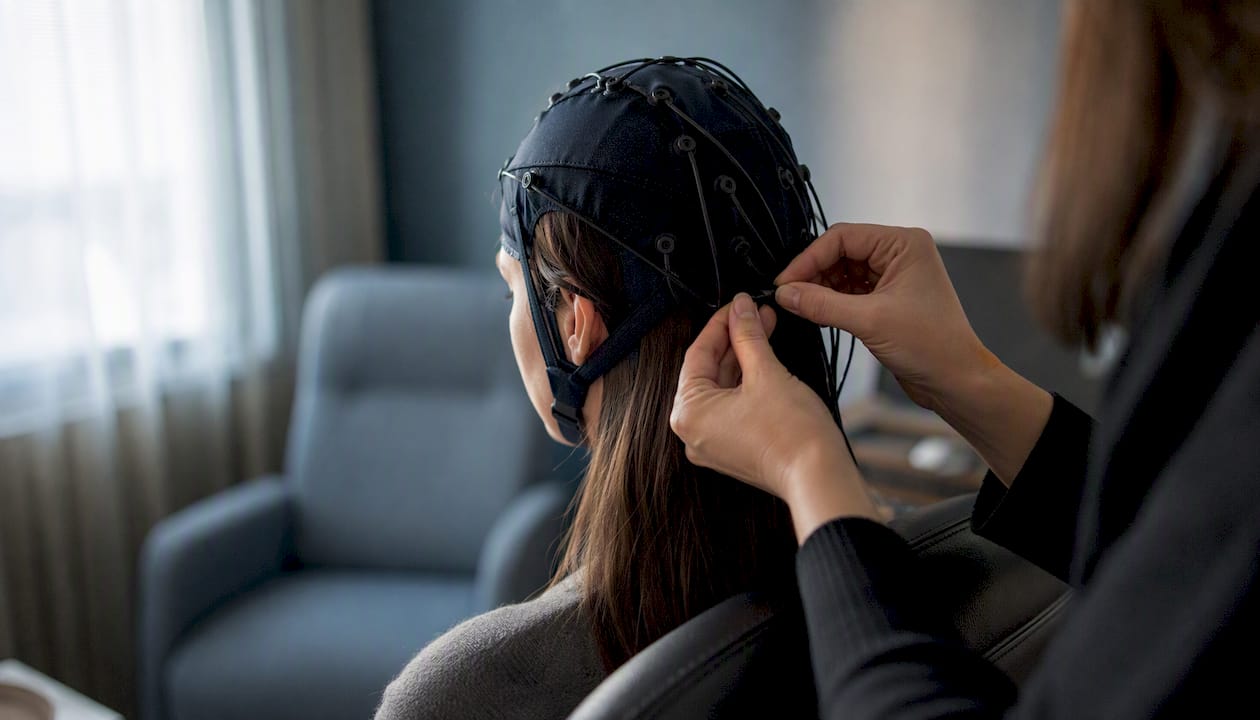
Neurofeedback trains self-regulation by applying contingent positive reinforcement to target neural patterns, making operant conditioning the primary learning mechanism that drives every protocol decision from threshold setting to session cadence. Understanding this mechanism is not just academically satisfying. It directly changes how you design sessions, set expectations with patients, and interpret outcomes.
Three immediate implications worth holding onto:
Operant conditioning is the primary learning mechanism in neurofeedback, and every protocol decision, from threshold setting to reinforcement schedule, should follow from that fact.
| Point | Details |
|---|---|
| Contingency is the core mechanism | Feedback must be contingent on the target neural event; non-contingent feedback does not produce the same learning effect. |
| Latency window matters | Feedback latency should stay within 250–350 ms to preserve the temporal contiguity that makes conditioning work. |
| Shaping beats automatic thresholds | A clinician-designed shaping plan with defined breakpoints produces more reliable learning than rolling automatic thresholds. |
| Transfer requires deliberate design | In-session gains do not automatically generalize; transfer trials and home practice must be built into every protocol. |
| Brainrestoremeridian applies these principles | The clinic uses QEEG-informed target selection, explicit shaping plans, and validated outcome tracking for patients in Meridian, Idaho. |
Operant conditioning, also called instrumental conditioning, describes a learning process in which a behavior increases or decreases in frequency based on the consequences that follow it. The core terms matter here because they map directly onto neurofeedback software settings and session decisions.
Core operant terms as they apply to neurofeedback:
Neurofeedback qualifies as operant conditioning because the feedback is contingent on a neural event. The brain produces a measurable electrical signal, the software detects it in near real time, and a consequence follows. That contingency is what separates neurofeedback from simple relaxation or biofeedback that lacks a specific neural target. HelpGuide’s overview of neurofeedback therapy describes this as training the brain with real-time brainwave feedback, which is accurate as far as it goes, though the operant structure underneath is what makes the training work.
Mapping neural signal to feedback consequence:
| Neural Feature | Feedback Delivered | Hypothesized Outcome |
|---|---|---|
| Increased SMR (12–15 Hz) | Auditory tone or visual reward | Reduced hyperactivity, improved sleep architecture |
| Decreased theta/beta ratio | Game score advance | Improved sustained attention (ADHD protocols) |
| Increased alpha (8–12 Hz) | Pleasant visual display | Reduced anxiety, enhanced calm alertness |
| Decreased high-beta (above 20 Hz) | Positive auditory cue | Reduced rumination, lower arousal |
Translating learning theory into a session means specifying each operant component before the patient sits down. Leaving any one of them undefined is how protocols drift into inconsistency.
The five core components:
The contrast between automatic rolling thresholds and clinician-designed shaping is worth dwelling on. Rolling thresholds adjust automatically to maintain a fixed reinforcement rate, which sounds efficient. The problem is that they can mask real learning by continuously recalibrating the target, making it impossible to tell whether the patient’s brain is actually changing or the software is just chasing a moving average. Shaping, by contrast, holds the threshold stable long enough to confirm acquisition before advancing, which is how operant learning principles actually work.
Too easy and there is no learning signal; too hard and extinction sets in before acquisition begins.*
A practical protocol flow looks like this:
Comprehensive assessment: QEEG or clinical EEG to identify the neural feature most relevant to the patient’s presentation.
Target selection: Choose one primary frequency band or connectivity metric based on assessment findings and clinical goals.
Threshold setting: Establish a baseline and set the initial threshold at a level that produces a 60–70% reinforcement rate.
Reinforced training blocks: Run 20–30 minute blocks with contingent feedback, monitoring reinforcement rate in real time.
Threshold review: After each block or session, evaluate whether the reinforcement rate has shifted. If the patient is consistently above 75–80%, raise the threshold.
Transfer trials: Brief periods with feedback removed to test whether the neural change persists without external reinforcement.
Generalization exercises: Homework tasks or mental strategies the patient practices outside the clinic to promote transfer to daily life.
Timing is not a technical footnote. It is the variable that most directly determines whether the brain receives a coherent learning signal or noise.
The latency between a target neural state and the reinforcing feedback should ideally not exceed 250–350 ms. Beyond that window, the temporal contiguity between the neural event and its consequence degrades, and the brain’s ability to associate the two weakens. Reviews citing Sherlin et al. recommendations consistently land in this range as a practical upper bound for EEG neurofeedback as a cognitive modulation tool.
This constraint has direct implications for software selection and hardware setup. Processing pipelines that introduce filtering delays, artifact rejection steps, or rendering latency can push total latency well above 350 ms without the clinician realizing it. Checking the actual end-to-end latency of your system is not optional.
Continuous vs. intermittent reinforcement in neurofeedback:
Post-reinforcement synchronization (PRS) is a related concept worth understanding. After a reinforcing event, there is a brief period during which the neural system appears to consolidate the preceding state. Discrete reinforcement schedules that include short pauses after each reward may support this consolidation window better than a continuous stream of feedback that never gives the brain a moment to “lock in” what just happened. Recent work on timing and reinforcement schedules in neurofeedback supports using discrete feedback with break periods to allow PRS and consolidation.
One more practical constraint: the frequency band you are training determines the appropriate temporal window for signal detection. Training a slow cortical potential (0.1–1 Hz) requires a much longer detection window than training SMR (12–15 Hz). Latency recommendations designed for higher-frequency targets may not translate directly to slow-frequency protocols.
Pro Tip: After the first three to five sessions, consider shifting from continuous to a variable-ratio intermittent schedule. Patients often report that the feedback feels more meaningful when it is not constant, and the neural data tends to show more stable between-session retention.
The operant-conditioning framework for neurofeedback is not a theoretical imposition. It has an empirical history that runs from single-neuron recordings in primates to modern human EEG and fMRI studies.
The canonical timeline:
These foundational neurofeedback studies share a common structure: contingent reinforcement of a specific neural feature produces measurable, directional change in that feature, and that change correlates with behavioral or clinical outcomes.
The neurophysiological mechanism runs through reward circuitry. When contingent reinforcement is delivered, dopaminergic pathways signal prediction error, which in turn modulates synaptic plasticity in the circuits generating the target oscillation. Repeated reinforcement strengthens those circuits, shifting the brain’s resting-state distribution toward the target pattern. This is not fundamentally different from how operant conditioning shapes any other learned behavior. The difference is that the operant response is a neural oscillation rather than a motor act.
That caveat from Strehl is clinically significant. Operant conditioning explains the reinforcement contingency, but it does not fully account for the role of instruction, expectancy, two-process learning theory, or the therapeutic relationship. A recent systematic review covering neurofeedback in psychiatry from 2015 to 2025 confirms this picture: mechanistic rationale is solid, but clinical efficacy varies across disorders and trial designs, and larger controlled trials are still clarifying where effects are specific to the contingency rather than to non-specific factors.
No two patients learn at the same rate, and the reasons are not mysterious. Several well-characterized variables modulate acquisition speed and durability.
Patient-level variables:
Protocol and task variables:
Testing and control variables:
Pro Tip: At the start of treatment, ask patients to rate their motivation and expectancy on a simple 0–10 scale each session. Tracking these alongside neural performance metrics lets you identify when a plateau is a learning issue versus a motivational one.
Active cognitive strategies, such as mental imagery or focused attention paired with contingent reinforcement, tend to accelerate acquisition compared to fully passive approaches. Encouraging patients to develop a personal mental strategy for reaching the target state is one of the highest-leverage interventions a clinician can make.

Good protocol design is not about choosing the right software. It is about specifying each operant variable before the session starts and having a plan for adjusting each one as learning progresses.
Protocol design checklist:
Recommended protocol parameter ranges:
| Parameter | Recommended Range | Notes |
|---|---|---|
| Session cadence | 1–3 sessions per week | More frequent early in training; taper as gains consolidate |
| Session length | 20–60 minutes of active training | Shorter for pediatric or cognitively fatigued patients |
| Initial reinforcement rate | 60–70% of feedback opportunities | Adjust threshold to maintain this range |
| Target reinforcement rate (shaping) | Raise threshold when rate exceeds 75–80% | Prevents plateau without overshoot |
| Feedback latency goal | 250–350 ms | Verify end-to-end, not just software-reported |
| Minimum session count for clinical aims | 20–40 sessions | Disorder-dependent; some protocols require more |
Transitioning from continuous to partial reinforcement is not a one-time event.
Pro Tip: Track both neural performance metrics (threshold trajectory, reinforcement rate per session) and validated symptom scales at baseline, mid-treatment, and post-treatment. Neural change without symptom change, or symptom change without neural change, each tells you something different about what is driving the outcome.
Documentation matters more than most clinicians realize. A written shaping plan with defined decision points protects against the common drift where thresholds get adjusted by feel rather than by data, making it impossible to replicate a successful protocol or diagnose a failing one.
The benefits of neurofeedback are real in specific contexts, but the evidence base is uneven across disorders and trial designs.
Where evidence is relatively stronger:
The main limitations:
A systematic review of neurofeedback in psychiatry covering 2015 to 2025 confirms that the mechanistic rationale is solid but clinical efficacy varies, and larger controlled trials are still clarifying disorder-specific effects. The most defensible clinical position is that neurofeedback is a promising adjunct with a coherent mechanism, not a guaranteed cure.
The strongest clinical claims come from studies where neural change and symptom change co-occur and correlate. When a patient’s theta/beta ratio decreases over the course of training and their ADHD symptom scores improve, that co-occurrence strengthens the case that the operant conditioning mechanism is driving the clinical benefit. When only symptoms improve without measurable neural change, non-specific factors deserve more weight in your interpretation.
Practically, neurofeedback works best as part of a broader therapeutic framework. Pairing it with neurological rehabilitation or psychotherapy, managing expectancy actively, and building in transfer exercises all improve the probability of durable clinical benefit.
Whether you are a clinician auditing a colleague’s protocol or a patient choosing where to receive care, the same questions apply.
Questions to ask any provider:
Outcome measures that matter:
Red flags to watch for:
Pro Tip: Ask the provider to show you a graph of your reinforcement rate and threshold trajectory from your first session onward. A provider who cannot produce that data is not tracking the operant learning process, which means they cannot tell you whether training is working.
For patients considering neurofeedback for chronic pain or anxiety, these same evaluation criteria apply. The underlying operant mechanism does not change with the clinical indication, but the target, threshold logic, and outcome measures do.
Translating operant-conditioning theory into a clinical workflow requires structure at every stage, from the first patient contact through the final follow-up.
Reinforcement modality selection:
The operant-conditioning framework is the most precise tool we have for understanding why neurofeedback works when it works. But there is a version of this field that treats the framework as a complete explanation, and that version consistently underdelivers.
What the conditioning model captures well: the contingency structure, the timing requirements, the shaping logic, and the reinforcement schedule trade-offs. These are not soft suggestions. They are the engineering specifications of the learning process, and ignoring them produces inconsistent outcomes.
What the model does not capture: the patient sitting in the chair is not a pigeon in a Skinner box. Their expectancy, their relationship with the clinician, their understanding of what they are trying to do, and their capacity to generate active mental strategies all modulate the conditioning process in ways that a pure reinforcement account cannot fully predict. Strehl’s argument that neurofeedback requires psychotherapeutic framing is not a soft add-on to the science. It is a recognition that human operant learning is embedded in a motivational and relational context that shapes every parameter of acquisition.
The ethical implication is specific: using reinforcement contingencies without attending to the patient’s understanding and engagement is not just less effective. It risks producing learned helplessness if the target is set too high, or superficial compliance if the patient learns to game the feedback without genuinely modulating the target state. The clinician’s job is to make the operant contingency legible to the patient, not just to the software.
For patients and clinicians in the Meridian, Idaho area who want neurofeedback delivered with the protocol rigor described in this article, Brainrestoremeridian offers a structured pathway from assessment to outcome. The process begins with a comprehensive evaluation, including QEEG brain mapping where indicated, to identify the specific neural targets most relevant to your situation. From there, the clinical team builds an individualized shaping plan with defined reinforcement goals, latency-optimized feedback, and scheduled transfer trials.
Whether you are managing anxiety, attention difficulties, or cognitive recovery, the clinic’s approach integrates neurofeedback within a broader brain health framework rather than as a standalone session series. To learn more about how neurofeedback for anxiety relief is delivered at the clinic, or to schedule an initial evaluation, contact Brainrestoremeridian directly and ask about current availability for new patients.
The sources below are the primary references for the claims and recommendations in this article. Each is noted for its most useful contribution.
This article is general information, not a substitute for advice from a qualified doctor. Consult a qualified healthcare professional about your own circumstances before acting on anything here.
Questions about your next step?
Our Meridian team can help you understand the evaluation process and which care options may fit your needs.
Schedule a Brain Health ConsultationPrefer to speak with our team? Call 208-639-1397