How the Cervical Spine Affects Concussion Symptoms
July 2, 2026

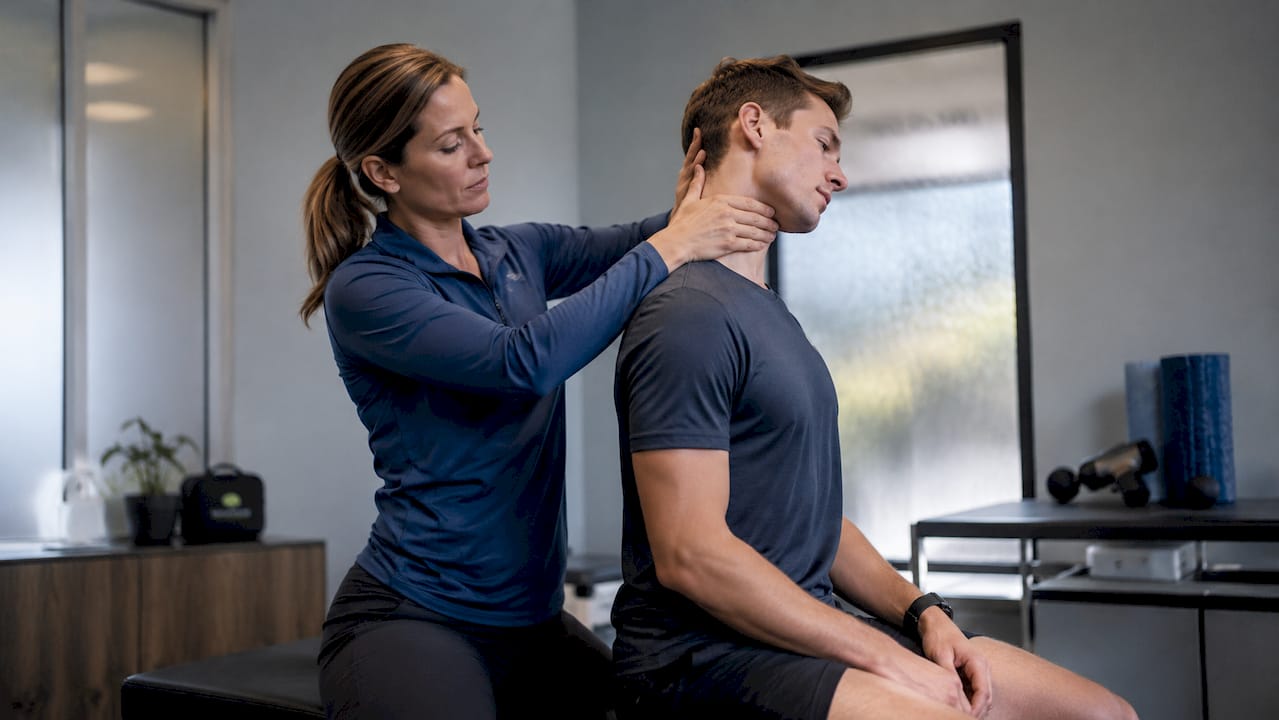
The cervical spine is a direct driver of persistent concussion symptoms, producing headaches, dizziness, and cognitive fog that are clinically indistinguishable from brain injury effects. Understanding how cervical spine affects concussion symptoms matters because approximately 60% of concussion patients report neck pain alongside their injury, and 45% of those patients experience major impairments in daily functioning. That overlap is not coincidental. The neck and brain sustain forces together during the same traumatic event, and dysfunction in one system reliably worsens the other. Clinicians now recognize that failing to evaluate the cervical spine can unnecessarily prolong post-concussion recovery.
Cervical spine dysfunction produces symptoms through three well-documented pathways: musculoskeletal pain referral, vestibular disruption, and oculomotor interference. Each pathway generates symptoms that look and feel identical to brain-driven concussion effects. This is why patients who feel stuck in recovery often have an unaddressed neck component driving their experience.
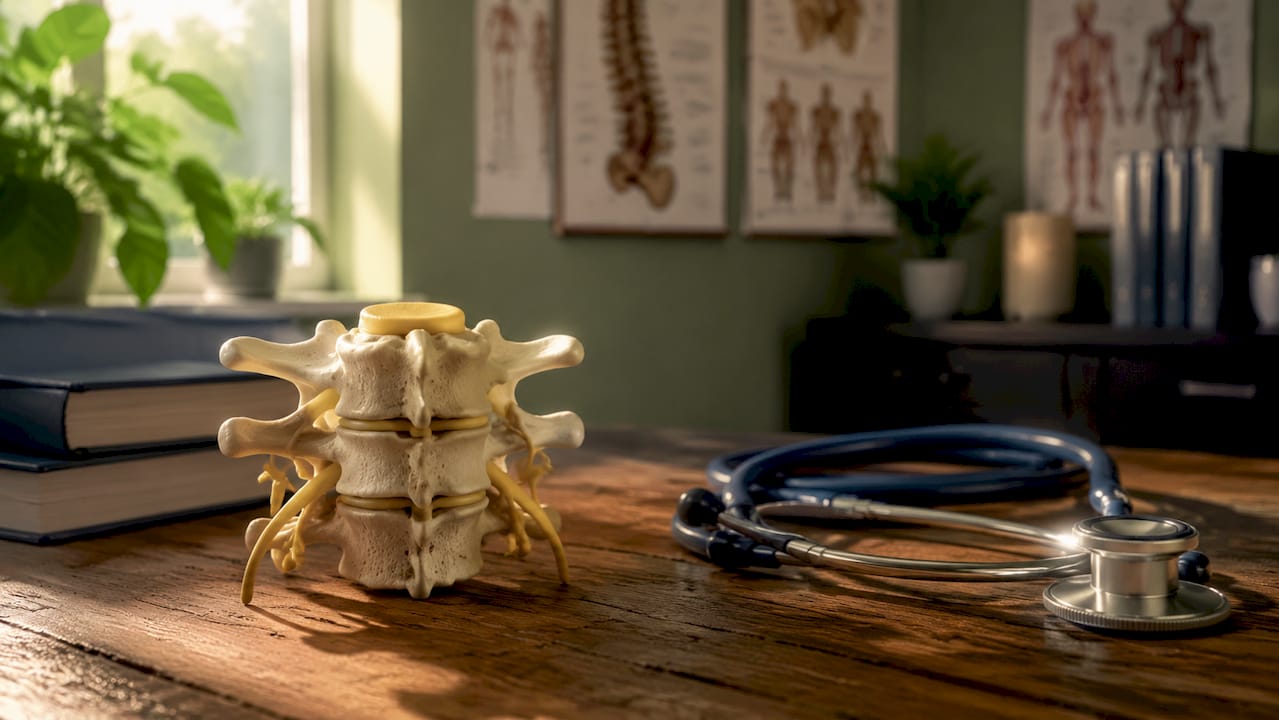
The upper cervical spine, specifically the C1 and C2 vertebrae, sits at the base of the skull and directly influences blood flow, nerve signaling, and proprioception to the brain. When these joints are restricted or inflamed after a head injury, the brain receives faulty positional signals. The result is dizziness, balance problems, and a sense of mental cloudiness that no amount of rest resolves on its own.
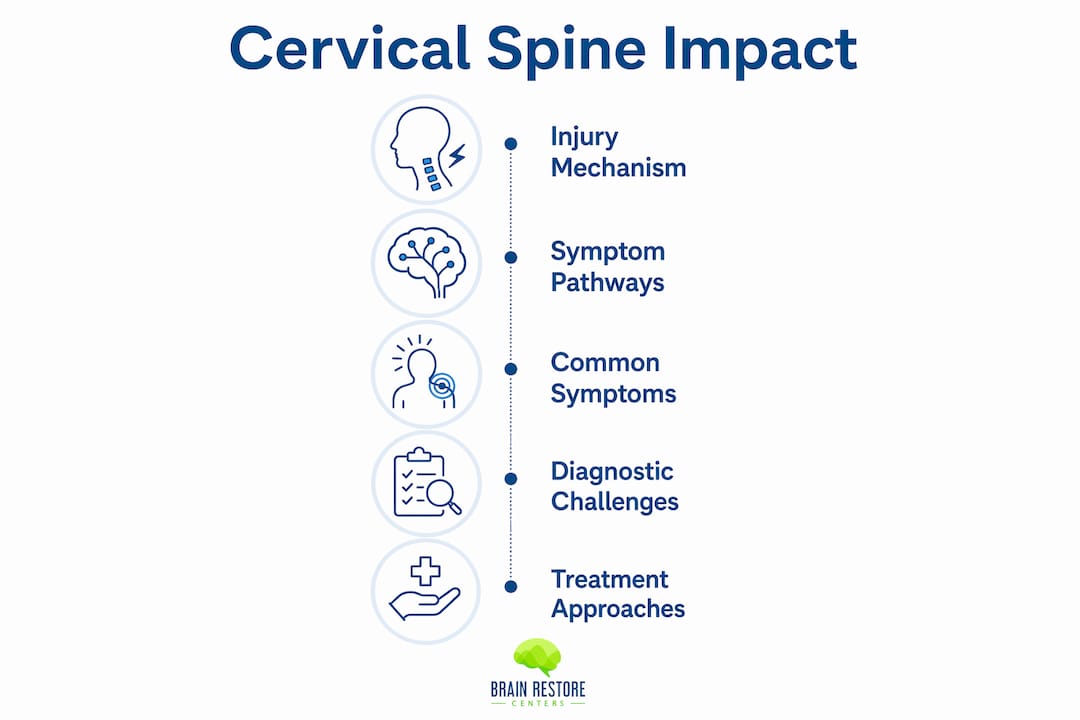
Neck dysfunction after concussion produces headaches, dizziness, visual disturbances, and cognitive fog that overlap with and complicate diagnosis and recovery. That diagnostic overlap is the central challenge. A patient reporting daily headaches and brain fog may be experiencing cervicogenic symptoms, not ongoing brain injury, and the treatment path for each is entirely different.
Cervical spine injury effects produce a recognizable cluster of symptoms that mirror post-concussion syndrome. Recognizing them helps you and your care team target the right source.
Pro Tip: If your concussion symptoms worsen when you turn your head or sit at a desk for long periods, cervical spine involvement is a strong possibility worth raising with your provider.
The concussion recovery checklist at Brainrestoremeridian includes neck assessment as a standard step precisely because these symptoms are so commonly missed in routine evaluations.
Concussions and cervical spine injuries share the same injury mechanisms. The most common is acceleration-deceleration force, the same physics behind whiplash. When the head snaps forward and back rapidly, the brain experiences rotational stress while the cervical soft tissues stretch beyond their normal range.
Neck sprains from acceleration-deceleration forces cause pain, headaches, dizziness, and cognitive symptoms that overlap directly with concussion. About 25% of patients develop chronic pain after whiplash-related cervical sprain. That statistic underscores why early management of the neck matters as much as brain rest.
The diagnostic picture is complicated by imaging limitations. Standard CT scans detect fractures and bleeds but miss soft tissue damage entirely. Between 5% and 10% of blunt trauma patients have a cervical spine injury, and 17.5% of those have injuries missed on MRI despite a negative CT scan. That gap in detection alters management in about 5% of cases.
| Diagnostic method | What it detects | Key limitation |
|---|---|---|
| CT scan | Fractures, bleeds | Misses soft tissue and functional injuries |
| MRI | Ligament and disc damage | Can still miss functional joint restrictions |
| Clinical exam | Movement, pain patterns, proprioception | Requires a trained cervical assessor |
| Functional assessment | Joint restriction, muscle tension | Not standard in most ER protocols |
The practical takeaway: a normal CT scan does not rule out a cervical spine injury. A thorough clinical exam by a trained provider remains the most reliable tool for detecting the functional injuries that drive prolonged symptoms.
Cervical spine problems prolong concussion symptoms through functional injuries that standard imaging never captures. Myofascial pain, joint restrictions, and ligament laxity all produce ongoing neurological interference without showing up on a scan. This is the most frustrating reality for patients who are told their imaging is normal but still feel terrible.
“Persistent post-concussion symptoms involve dysregulation across multiple systems, including neck-related musculoskeletal dysfunction affecting headaches and dizziness. Treatment requires addressing neck, vestibular, and cognitive aspects together.” — Barrow Neurological Institute
Functional cervical injuries causing concussion-like symptoms often elude standard imaging and require clinical diagnosis and targeted therapy to resolve. This is why patients sometimes spend months cycling through treatments that address only the brain while the neck continues to generate symptoms unchecked. A multidisciplinary approach to patient outcomes consistently outperforms single-discipline care in these complex cases.
Effective treatment for concussion symptoms involving the cervical spine requires addressing both systems at the same time. Treating only the brain while ignoring the neck, or vice versa, produces incomplete results.
Randomized trials show that combining cervical manual therapy with vestibular and oculomotor rehabilitation improves symptom resolution and medical clearance rates within 8 weeks in young patients. Cervical plus vestibular rehab consistently outperforms isolated approaches. That finding has shifted clinical practice toward integrated protocols.
| Treatment approach | Target | Evidence level |
|---|---|---|
| Cervical manual therapy | Joint restriction, muscle tension | Randomized trial support |
| Vestibular rehabilitation | Balance, dizziness, motion sensitivity | Strong clinical evidence |
| Oculomotor rehabilitation | Visual tracking, eye-movement coordination | Emerging trial support |
| Graded activity progression | Overall function, fatigue | Guideline-recommended |
| Neurofeedback | Brain dysregulation, cognitive symptoms | Growing evidence base |
Pro Tip: Ask your provider about combining cervical manual therapy with vestibular rehab from the start of treatment. Waiting to address the neck until brain symptoms resolve often delays the entire recovery.
Graded activity means returning to physical and cognitive demands gradually, guided by symptom response. It prevents the deconditioning that worsens both neck pain and brain fog over time. Coordination between your chiropractor, physical therapist, and neurological care provider produces the fastest and most durable results.
Chiropractic care for brain function works by restoring normal cervical joint mechanics, which reduces aberrant nerve signaling and allows the brain’s own recovery processes to proceed without interference. Spinal decompression after head trauma addresses disc and joint compression that can sustain symptoms long after the initial injury has healed. Both therapies work best as part of a coordinated plan rather than standalone interventions.
The cervical spine directly generates or worsens concussion symptoms through musculoskeletal dysfunction, vestibular disruption, and oculomotor interference, and recovery requires treating both systems together.
| Point | Details |
|---|---|
| Neck pain is common after concussion | Approximately 60% of concussion patients report neck pain, with 45% experiencing major daily impairments. |
| Imaging misses functional injuries | CT scans and even MRI can fail to detect soft tissue and joint injuries that drive prolonged symptoms. |
| Symptoms overlap significantly | Cervicogenic headaches, dizziness, and brain fog are clinically indistinguishable from brain-driven concussion effects. |
| Combined therapy outperforms isolated care | Cervical manual therapy paired with vestibular and oculomotor rehab improves clearance rates within 8 weeks. |
| Early cervical screening matters | Requesting a cervical assessment at your first follow-up prevents weeks or months of misdirected treatment. |
I have seen the same pattern repeat itself more times than I can count. A patient comes in weeks or months after a concussion, still struggling with daily headaches and brain fog, and their previous providers focused entirely on the brain. Nobody assessed the neck. Nobody asked whether the headaches worsened with head rotation or prolonged sitting. The cervical spine was invisible in the care plan.
The uncomfortable truth is that the medical system often separates brain care from spine care in ways that do not reflect how the body actually works. The forces that cause a concussion almost always affect the cervical spine at the same time. Treating one without the other is like fixing a car’s engine while ignoring a bent frame.
What I find most encouraging is that once the cervical component is identified and treated, patients often experience rapid improvement in symptoms they had accepted as permanent. Dizziness that persisted for six months resolves within weeks of targeted vestibular and cervical rehab. That is not a miracle. It is what happens when the right system finally gets addressed.
My advice to anyone dealing with lingering concussion symptoms is to advocate for a full cervical evaluation. Do not accept “your imaging is normal” as a complete answer. Functional injuries are real, they are treatable, and they respond well to the right care. You deserve a provider who looks at the whole picture.
— Chad
Recovering from a concussion when the cervical spine is involved requires more than rest. It requires a coordinated plan that addresses brain dysregulation and neck dysfunction at the same time.
Brainrestoremeridian in Meridian, Idaho offers exactly that kind of integrated care. The clinic combines neurofeedback for chronic pain and cognitive symptoms with chiropractic care, laser therapy, and spinal decompression to address both the neurological and musculoskeletal dimensions of concussion recovery. Each patient receives a personalized evaluation that includes cervical spine assessment as a standard component, not an afterthought. If you are still experiencing headaches, dizziness, or brain fog after a concussion, a thorough evaluation at Brainrestoremeridian can identify what has been missed and build a clear path toward recovery.
Approximately 60% of concussion patients report neck pain that develops concurrently or shortly after injury. Of those, 45% experience major impairments in daily functioning as a result.
Yes. Cervical spine injuries worsen concussion symptoms by generating headaches, dizziness, and cognitive fog through musculoskeletal and vestibular pathways. These symptoms are clinically indistinguishable from brain-driven effects and require separate, targeted treatment.
Normal brain imaging does not rule out functional cervical spine injuries. Myofascial pain, joint restrictions, and ligament damage in the neck produce ongoing symptoms that CT and MRI scans routinely miss.
The upper cervical spine sends proprioceptive signals to the brain’s balance centers. When cervical joints are restricted or inflamed, those signals become faulty, producing dizziness, vertigo, and motion sensitivity that mimic vestibular concussion.
Recovery timelines vary, but randomized trials show that combined cervical manual therapy and vestibular rehabilitation can achieve symptom resolution and medical clearance within 8 weeks in many patients when treatment begins early and addresses both systems together.
Questions about your next step?
Our Meridian team can help you understand the evaluation process and which care options may fit your needs.
Schedule a Brain Health ConsultationPrefer to speak with our team? Call 208-639-1397