Spinal Decompression After Head Trauma: Recovery Guide
June 21, 2026


Spinal decompression after head trauma is a therapeutic approach that relieves pressure on spinal nerves and discs to support neurological recovery and reduce pain. Two distinct forms exist: emergency surgical decompression for acute spinal cord injuries, and non-surgical decompression therapy for managing chronic symptoms after stabilization. Ethos Health Group and clinical research from 2026 both confirm that non-surgical decompression produces meaningful pain relief and functional improvement when applied correctly. Understanding which type applies to your situation, and when to start, is the first step toward reclaiming your quality of life.
Spinal decompression after head trauma refers to any intervention that removes pressure from the spinal cord or nerve roots caused by injury. The term covers two very different treatments that patients frequently confuse. Surgical and non-surgical decompression are not interchangeable. One is a high-risk emergency procedure to prevent paralysis; the other is a low-risk outpatient therapy for chronic symptom management.
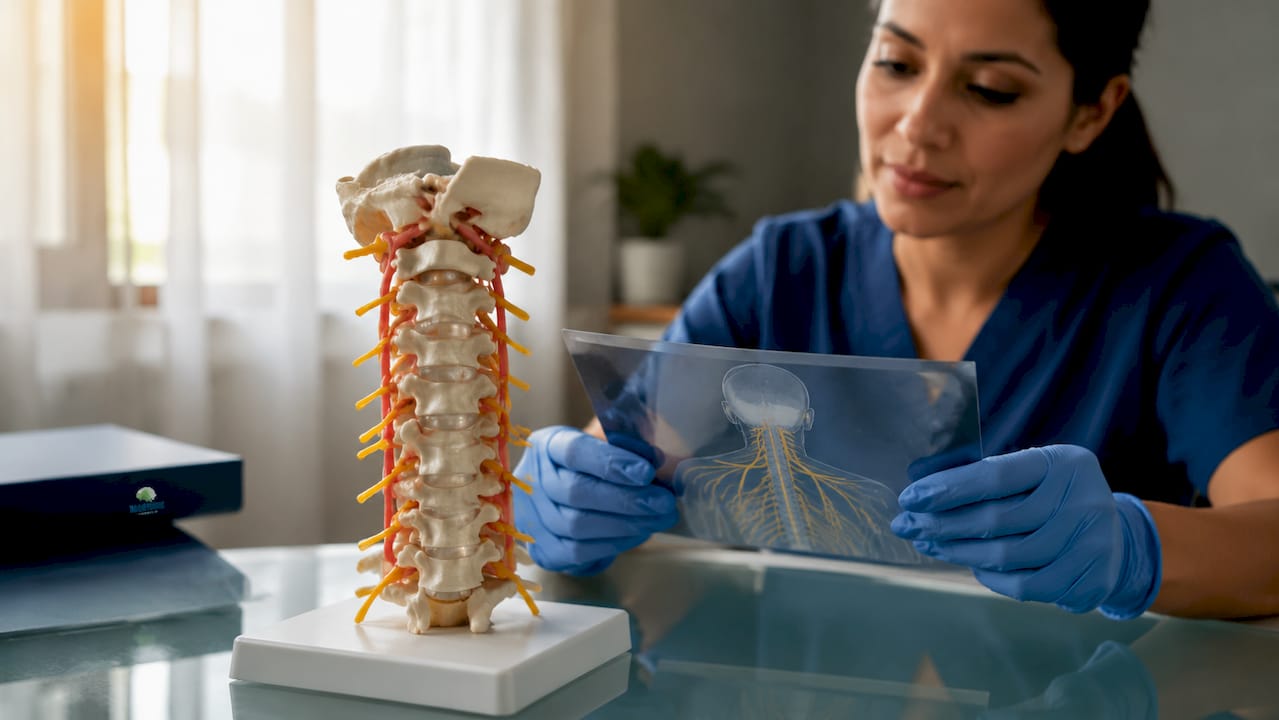
Head trauma often involves more than a brain injury. The cervical spine absorbs significant force during accidents, falls, or collisions. Cervical spine dysfunction frequently contributes to concussion symptoms like headaches and dizziness, and treating the neck is often the missed step in recovery. Recognizing this connection is what makes spinal decompression relevant to so many people recovering from head injuries.
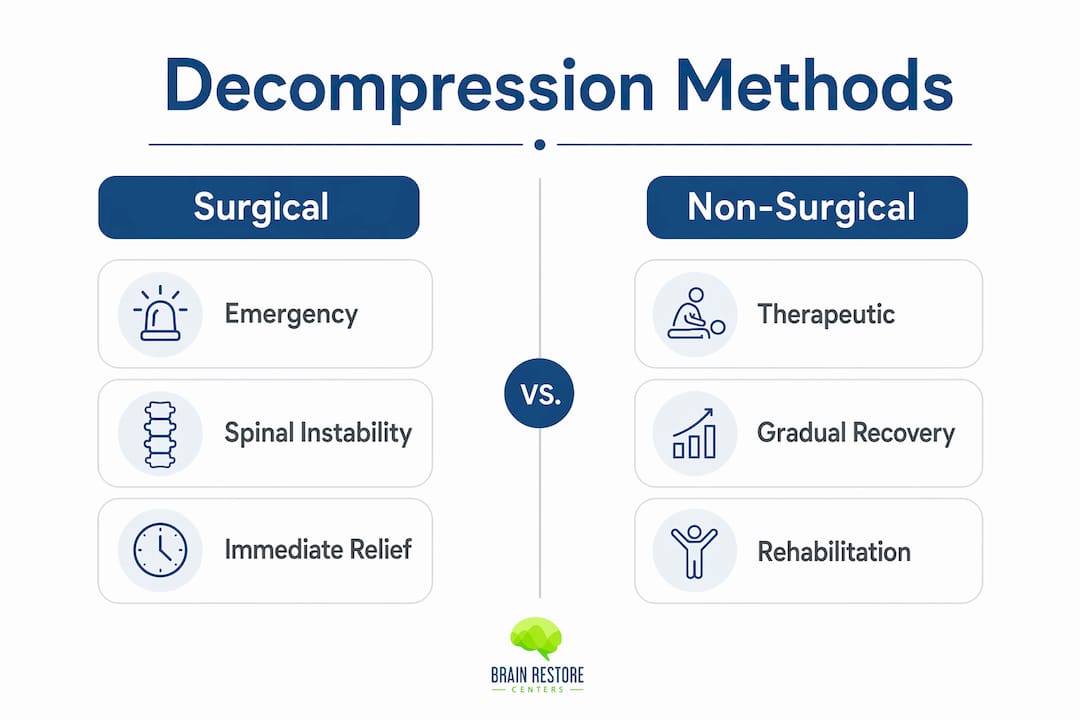
These two treatments share a name but serve entirely different purposes. Knowing the difference protects you from unnecessary fear and sets realistic expectations.
Surgical decompression is an emergency procedure performed when a traumatic spinal cord injury causes instability, compression, or neurological deficits. The goal is to prevent permanent paralysis by removing bone fragments, disc material, or blood that is pressing on the cord. Early surgical decompression significantly improves neurological outcomes and reduces secondary complications compared to conservative management. Recovery from surgery involves hospitalization, intensive rehabilitation, and a timeline measured in months.
Non-surgical decompression is an elective outpatient procedure used after the spine has been stabilized. It uses a computer-controlled traction table to gently stretch the spine, creating negative pressure inside the discs. This vacuum effect pulls herniated material back toward the disc center and promotes rehydration of compressed discs. Sessions last approximately 30 minutes and are generally painless, allowing patients to return to normal activities the same day.
| Feature | Surgical decompression | Non-surgical decompression |
|---|---|---|
| Setting | Hospital, operating room | Outpatient clinic |
| Urgency | Emergency, within 24 hours | Elective, after stabilization |
| Risk level | High (general anesthesia, infection) | Low (non-invasive) |
| Recovery time | Months, intensive rehab | Weeks, normal activity maintained |
| Goal | Prevent paralysis | Relieve chronic pain and nerve pressure |
Pro Tip: If you are unsure which type of decompression applies to you, ask your provider specifically whether your spine has been cleared as stable. Non-surgical therapy is only appropriate after that clearance.
Timing is one of the most consequential decisions in spinal injury recovery. For surgical cases, the evidence is clear. Ultra-early surgery within 24 hours shows a 68.8% probability of optimal motor recovery compared to later interventions. Every hour matters when the spinal cord is actively compressed.
Non-surgical decompression therapy follows a different logic entirely. Starting too early, before the spine is stable and acute inflammation has resolved, can cause harm. The right time depends on several individual factors:
Timing decisions for non-acute decompression should be individualized based on stability and deficits, not fixed guidelines. A rigid “wait six weeks” rule does not serve every patient. Some people are ready sooner; others need longer stabilization periods. Working with a specialist who evaluates your specific imaging and symptoms produces far better outcomes than following a generic timeline.
If you are experiencing persistent post-concussion symptoms like dizziness or headaches, a breakthrough concussion assessment can help identify whether cervical dysfunction is driving those symptoms before therapy begins.
Non-surgical decompression therapy follows a structured process. Understanding each step removes uncertainty and helps you get the most from every session.
The physiological benefit extends beyond pain relief. Rehydrated discs create more space for nerve roots, reducing the radiating pain and numbness that many head trauma patients experience in their arms or hands. This is why cervical spine treatment often resolves symptoms that were previously attributed entirely to the brain injury.
Pro Tip: Pair each decompression session with the therapeutic exercises your provider prescribes. Relief from decompression alone plateaus without addressing the muscular imbalances that contributed to compression in the first place.
Recovery from head trauma and spinal injury is a long process. Several predictable mistakes slow progress or prevent full recovery.
“Recovery is a marathon; while decompression devices aid healing, the real progress comes from active, high-intensity physical therapy and lifestyle integration.” — Shepherd Center rehabilitation research
The transition from passive treatments like decompression to active rehabilitation exercises is where long-term gains are made. Passive therapy creates the conditions for healing; active rehab locks those gains in.
Spinal decompression after head trauma requires distinguishing between emergency surgical intervention and elective non-surgical therapy, then integrating the right approach with active rehabilitation for lasting recovery.
| Point | Details |
|---|---|
| Two distinct treatments | Surgical decompression is emergency care; non-surgical is elective outpatient therapy for chronic symptoms. |
| Timing is critical | Surgery within 24 hours maximizes motor recovery; non-surgical therapy starts only after spinal stability is confirmed. |
| Structured therapy process | Non-surgical decompression runs 20 sessions over 4–6 weeks with documented pain and disc improvements. |
| Exercises are non-negotiable | Decompression without stabilization exercises produces short-lived relief and risks symptom recurrence. |
| Recovery takes time | Neurological gains continue for 12–18 months; stopping active rehab early limits long-term outcomes. |
The most common thing I see in patients recovering from head trauma is surprise. They are surprised that their neck is contributing to their headaches. They are surprised that a non-surgical option exists. And they are surprised that the therapy itself is comfortable and straightforward.
What I have found consistently is that the patients who recover best are not the ones who found the most aggressive treatment. They are the ones who understood their situation clearly and built a plan around it. Spinal decompression is a powerful tool, but it works best when the patient knows why they are doing it, what it can realistically achieve, and what they need to do between sessions to support it.
The cervical spine connection to concussion symptoms is genuinely underappreciated. I have worked with patients who spent months treating brain-based symptoms, only to find that addressing cervical compression resolved headaches and dizziness that nothing else had touched. That is not a miracle. It is anatomy. The neck and brain share neural pathways, and compression at the cervical level creates symptoms that look exactly like concussion symptoms.
My honest advice: do not wait for symptoms to become severe before seeking evaluation. The window for maximum neurological recovery is real, and it closes. Getting a clear picture of your spinal status early, whether through imaging or a specialist consultation, gives you options. Waiting gives you fewer of them.
— Chad
Brainrestoremeridian in Meridian, Idaho specializes in the exact combination of therapies that post-trauma patients need. Spinal decompression, chiropractic care, laser therapy, and neurorehabilitation are available under one roof, coordinated as a single recovery plan rather than disconnected appointments.
If you are dealing with persistent headaches, neck pain, or neurological symptoms after a head injury, the team at Brainrestoremeridian can evaluate whether cervical decompression is right for you. For patients with nerve-related pain that has not responded to other treatments, the clinic’s neuropathy recovery program offers a drug-free path forward. You can also explore how chiropractic care supports brain function as part of a complete neurological recovery plan. Schedule a consultation to get a personalized assessment and a clear plan built around your specific recovery needs.
Non-surgical spinal decompression is a computer-controlled traction treatment that gently stretches the spine to relieve disc pressure and nerve compression. Sessions last approximately 30 minutes and are performed in an outpatient setting without anesthesia or recovery time.
Yes. Cervical spine dysfunction frequently drives concussion symptoms like headaches and dizziness, and treating cervical compression can resolve symptoms that appear to be purely brain-based. A specialist evaluation determines whether the cervical spine is contributing to your symptoms.
Non-surgical decompression therapy begins only after the spine is confirmed stable through imaging and acute neurological deficits have been addressed. There is no universal timeline; your provider determines readiness based on your specific injury and imaging findings.
A standard non-surgical decompression course runs 20 sessions over 4–6 weeks. Broader neurological recovery after trauma continues for 12–18 months, with the greatest gains in the first six months when active rehabilitation is maintained.
Non-surgical decompression is a low-risk therapy when performed after spinal stability is confirmed. It is not appropriate for patients with active fractures, certain types of surgical hardware, or unresolved acute spinal cord compression. A thorough evaluation by a qualified provider determines whether it is safe for your specific situation.
Questions about your next step?
Our Meridian team can help you understand the evaluation process and which care options may fit your needs.
Schedule a Disc Care ConsultationPrefer to speak with our team? Call 208-639-1397