Protect Your Brain During Sports Recovery: 2026 Guide
July 10, 2026

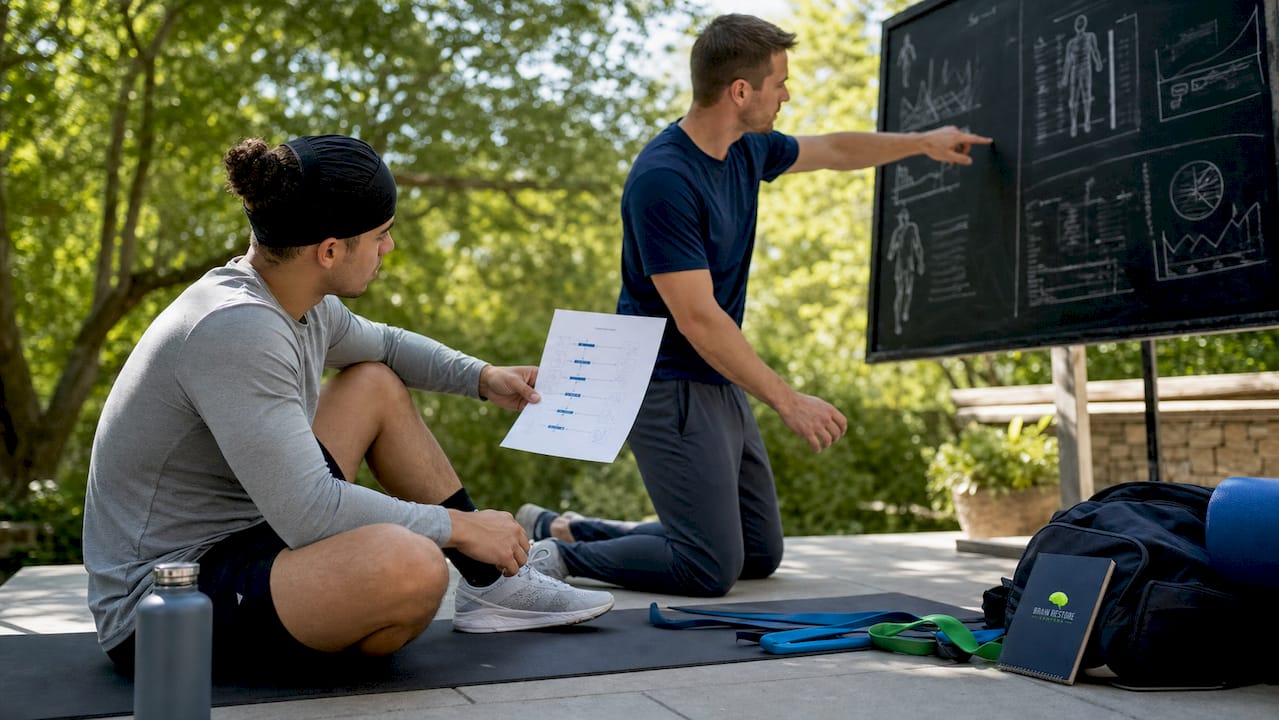
Protecting your brain during sports recovery is defined as the structured process of limiting neurological stress, supporting tissue repair, and preventing secondary injury while the brain heals from trauma. Clinical protocols from the Brain Injury Association of America establish a phased, stepwise return to activity as the standard of care. Recent research confirms that cognitive deficits can persist even after symptoms appear to clear at rest, meaning athletes who feel fine may still be at real neurological risk. The decisions you make in the days and weeks after a head injury directly shape your long-term brain health. Getting this right is not optional.
The safest way to protect brain during sports recovery is to follow a structured, phased progression rather than returning to full activity based on how you feel on a given day. The Brain Injury Association of America outlines a stepwise return-to-sport protocol that requires at least 24 hours symptom-free at each phase before advancing. That 24-hour minimum exists because symptoms can be delayed, and pushing too soon resets the clock on healing.
The phases move in this order:
Each phase is a checkpoint, not a formality. If any symptom returns during a phase, you step back to the previous level and wait another 24 hours before trying again.
Pro Tip: Keep a daily symptom log during recovery. Note headache intensity, concentration difficulty, and sleep quality each morning. This gives your clinician objective data instead of a vague “I feel okay.”
| Phase | Activity Level | Key Requirement |
|---|---|---|
| 1. Rest | None | Symptom resolution |
| 2. Light aerobic | Low-intensity cardio | No symptom return |
| 3. Sport-specific | Skill drills, no contact | 24 hours symptom-free |
| 4. Non-contact drills | Complex movement | Medical monitoring |
| 5. Full-contact practice | Normal training | Medical clearance |
| 6. Return to competition | Full participation | Clinician sign-off |
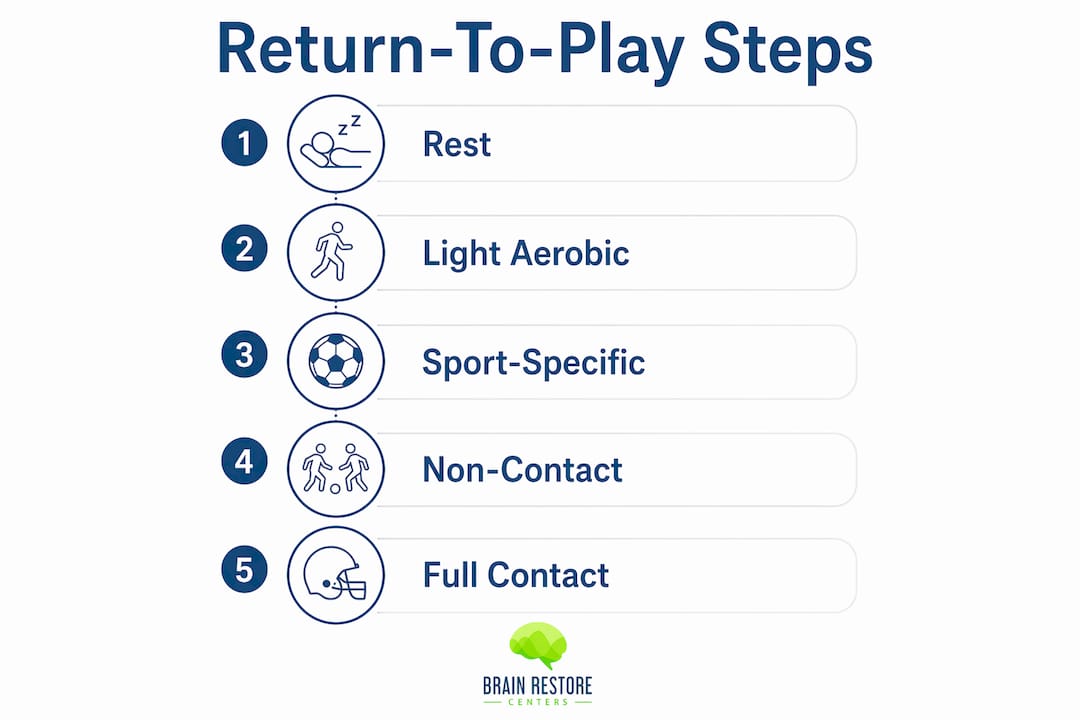
Skipping phases carries serious consequences. Premature return to play exposes a still-healing brain to forces it cannot safely absorb, raising the risk of second-impact syndrome, a rare but potentially fatal condition where a second concussion occurs before the first has resolved.
Nutrition for brain recovery is not about performance. It is about repair. The brain requires a steady supply of calories, antioxidants, and anti-inflammatory nutrients to rebuild damaged tissue and manage the oxidative stress that follows a concussion. Omega-3 fatty acids and antioxidants from foods like salmon, walnuts, blueberries, and leafy greens support decreased inflammation and may aid concussion recovery, though large-scale clinical trials are still ongoing.
Key nutrition strategies during recovery include:
Pro Tip: If solid food triggers nausea in the first 48 hours, try smoothies with banana, spinach, almond butter, and a small amount of protein powder. You get calories, healthy fats, and antioxidants without the texture that can worsen symptoms.
Inflammation is one of the primary obstacles to brain repair after injury. Understanding why inflammation slows TBI recovery and addressing it through diet gives your brain a measurable advantage during the healing window.

Sleep is the body’s primary repair window for brain tissue. Adequate sleep outperforms ice baths, compression boots, and most trendy recovery tools when it comes to neurological restoration. During deep sleep, the glymphatic system clears metabolic waste from the brain, including proteins associated with neurodegeneration. Shortchanging sleep during recovery is not just uncomfortable. It actively slows healing.
Cognitive rest matters just as much as physical rest. Screens, heavy reading, video games, and demanding mental work all increase neurological load on a brain that needs quiet to repair. The risks of cognitive overload include:
Practical steps to protect cognitive function after injury:
The concept of cognitive rest after concussion is well-established in clinical practice. Think of it as giving your brain the same respect you would give a broken bone. You would not run on a fractured leg. You should not tax a concussed brain with a full workday.
Symptom monitoring is the most underused tool in sports recovery protection. Athletes routinely underreport symptoms because they want to return to play, but early symptom reporting is critical to preventing secondary impacts that raise long-term brain injury risks. Repeated head trauma accumulates, and each additional injury compounds the neurological damage from the last.
Common symptoms that require immediate reporting include:
“Athletes often pass rest-based clinical clearance but still show measurable deficits under physical exertion. Post-exertion gait and dual-task cognitive testing reveal neurological gaps that standard sideline assessments miss entirely.”
— UT Southwestern 2026 research on exertion testing post-concussion
This finding matters because it means feeling fine at rest is not the same as being ready to play. Youth athletes in particular showed recovery of multitask sentence completion from 77% pre-exertion to 90% post-exertion during testing, revealing that cognitive deficits persist even after standard clearance. That gap represents real injury risk on the field.
One more critical point: helmets do not prevent concussions. Soft-shell helmets protect against skull fractures but do not reduce the internal brain movement caused by rotational forces. Relying on a helmet as your primary defense against brain injury is a dangerous misunderstanding of how concussions occur. Neck and core strengthening provides a more meaningful layer of protection. Stronger neck muscles absorb impact forces and stabilize the head, reducing the acceleration that causes brain movement inside the skull.
Developing brains carry higher stakes. The cumulative impact of repeated head trauma during childhood and adolescence is linked to long-term neurological issues, including chronic traumatic encephalopathy (CTE). Delaying high-contact sports until age 14 reduces cumulative brain impact exposure by 6–8 years, meaningfully lowering long-term CTE risk. That is not a small margin.
Practical guidelines for parents and young athletes:
| Sport category | Contact level | Brain impact risk |
|---|---|---|
| Swimming, track, tennis | Minimal to none | Low |
| Basketball, soccer | Incidental | Moderate |
| Football, rugby, hockey | High, repeated | High |
Non-contact sports offer a safer developmental path for young athletes to build skills and fitness without accumulating the neurological burden that contact sports carry. The athletic benefits are real. The brain injury risk is not.
Protecting cognitive function after sports injury requires a structured, evidence-based approach that combines phased return-to-play protocols, restorative sleep, anti-inflammatory nutrition, and consistent symptom monitoring.
| Point | Details |
|---|---|
| Follow a phased return-to-play | Advance only after 24 symptom-free hours at each phase, with medical clearance before contact. |
| Prioritize sleep above all recovery tools | Deep sleep activates the glymphatic system, clearing brain waste more effectively than any other recovery method. |
| Use nutrition to reduce inflammation | Omega-3 fatty acids, vitamins C and E, and electrolyte-rich hydration directly support brain tissue repair. |
| Monitor symptoms under exertion | Rest-based clearance misses deficits revealed by post-exertion cognitive and gait testing. |
| Delay contact sports for youth until age 14 | Reducing cumulative impact exposure by 6–8 years lowers long-term CTE risk significantly. |
The hardest part of brain recovery is not the rest. It is the waiting. Athletes are wired to push through discomfort, and that instinct, which serves them well in competition, actively works against them after a concussion. I have seen this pattern repeat more times than I can count: an athlete feels 80% better, convinces themselves that is close enough, and returns to full contact. Then they are back at square one, sometimes worse.
What the 2026 UT Southwestern exertion research confirmed for me is something I had suspected clinically for years. Rest-based clearance is an incomplete picture. A brain can appear recovered in a quiet exam room and still show measurable deficits the moment it is asked to multitask under physical stress. That gap is where the real danger lives.
The athletes who recover best share one trait: they treat the protocol as non-negotiable. They track their symptoms, they sleep without compromise, they eat to support repair rather than performance, and they do not skip phases because they feel good. The ones who struggle are almost always the ones who negotiate with the process.
My honest recommendation is to get a neurological rehabilitation assessment early in recovery, not just when symptoms linger. Knowing your baseline and tracking your progress with objective tools changes the entire recovery experience. It gives you data instead of guesswork, and data is what keeps you safe.
— Chad
Athletes who want more than a standard recovery protocol have options. Brainrestoremeridian in Meridian, Idaho, offers neurofeedback therapy as a direct complement to return-to-play protocols, helping retrain brainwave patterns disrupted by concussion and reduce symptoms like anxiety, sleep disruption, and cognitive fog.
The clinic’s integrative approach combines neurofeedback with photobiomodulation, chiropractic care, and functional medicine to address brain recovery from multiple angles simultaneously. Each program is built around your specific symptom profile and recovery timeline. If you are an athlete in the Meridian area looking for a comprehensive brain health restoration plan that goes beyond rest and time, Brainrestoremeridian offers the clinical depth to support real neurological healing.
Follow a stepwise protocol that requires at least 24 symptom-free hours at each phase before advancing, starting with light aerobic exercise and ending with full-contact practice only after medical clearance.
Yes. Most concussions do not involve loss of consciousness. Symptoms like headache, brain fog, nausea, and balance problems are sufficient indicators of a concussion requiring rest and medical evaluation.
Sleep activates the glymphatic system, which clears metabolic waste and inflammatory proteins from brain tissue. Adequate sleep is the most effective neurological repair tool available during concussion recovery.
Helmets protect against skull fractures but do not prevent the internal brain movement caused by rotational forces. Concussions occur when the brain moves inside the skull, a mechanism helmets are not designed to stop.
Any youth athlete who reports symptoms after a head impact should see a qualified clinician before returning to any physical activity. Post-exertion cognitive testing provides a more accurate recovery picture than rest-based assessment alone.
Questions about your next step?
Our Meridian team can help you understand the evaluation process and which care options may fit your needs.
Schedule a Brain Health ConsultationPrefer to speak with our team? Call 208-639-1397