
Noninvasive Pain Management: Care Options and What to Expect
September 13, 2026

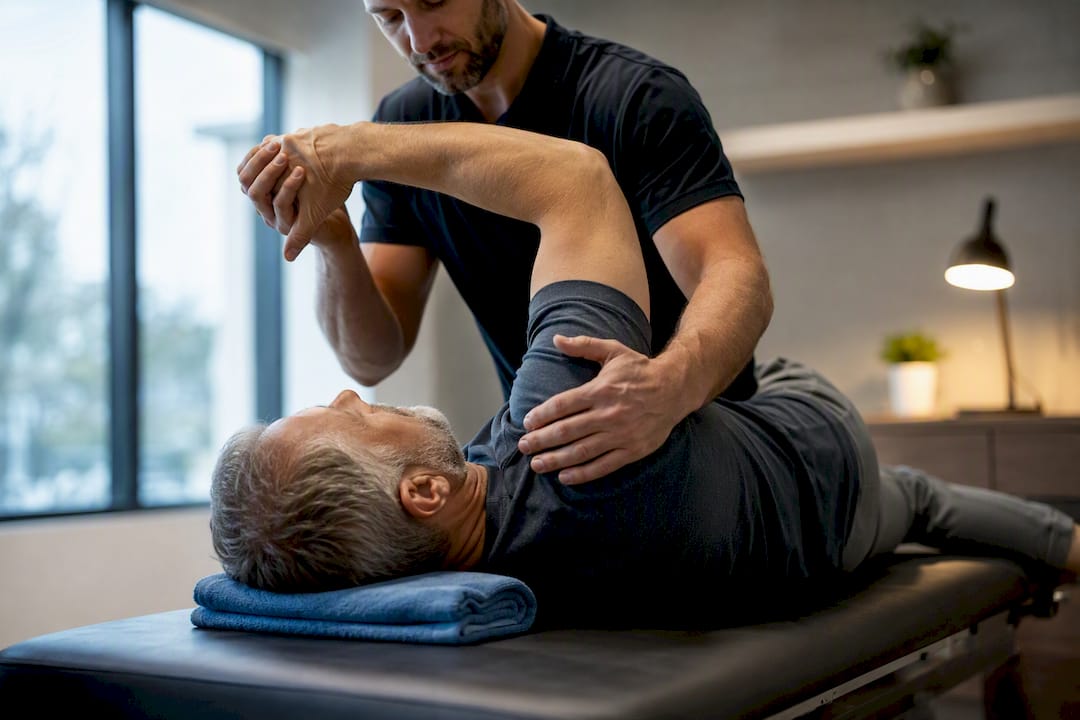
The safest, most effective starting point for chronic pain is a multimodal noninvasive plan, not a single treatment. That means combining exercise and physical therapy with mind-body approaches like mindfulness and manual therapies like massage, rather than betting everything on one fix. This combination is what the strongest evidence supports, and it carries far less risk than surgery or long-term medication. Expect meaningful gains in daily function within a few months, more than a complete end to pain.
TL;DR:
- Combining exercise, manual therapies, and mind-body approaches offers the most evidence-backed, low-risk strategy for managing chronic pain effectively.
- Short-term improvements are supported for therapies like massage, acupuncture, and mindfulness, but long-term results remain uncertain due to limited follow-up data.
- Initial home measures such as heat, cold, gentle stretching, and improving posture can provide quick relief and help determine if more intensive treatments are necessary.
- Personalized multimodal plans should address specific functional goals, with caution advised for therapies requiring contraindication awareness.
- Consistent effort over weeks to months, along with self-monitoring and realistic expectations, is key to managing pain and improving function without medication.
Non invasive pain management works best when you match the method to the problem, not the other way around. Here’s a practical rundown of what tends to help, and where the evidence is strongest.
Pro Tip: Start with the lowest-risk option that fits your condition. If heat, gentle movement, or a topical gel eases things within a week or two, you may not need to layer on anything more intensive right away.
A 2020 systematic review update found moderate strength of evidence that exercise, massage, yoga, acupuncture, mindfulness-based stress reduction, and multidisciplinary rehabilitation improve function or pain in the short term, generally one to under six months, for conditions including low back pain, neck pain, and fibromyalgia. That same review found LLLT carries moderate short-term evidence for some neck and low back pain cases too.
Moderate strength of evidence means researchers have reasonable confidence in the finding, but future studies could still shift the estimate. Low strength of evidence means the finding is less certain and more likely to change as better trials come in.
The CDC advises clinicians to prioritize nonpharmacologic and nonopioid therapies for subacute and chronic pain specifically because these approaches can improve pain and function while avoiding the risks tied to opioids.
The honest caveat: most of this evidence comes from small trials with limited follow-up beyond twelve months. That’s not a reason to dismiss these therapies. It’s a reason to set realistic expectations and track your own progress rather than assuming any single treatment is a permanent fix.
Start by naming a functional goal, not a pain score. “I want to walk the dog for twenty minutes without my back locking up” gives you and any clinician something concrete to measure against.
From there, layer your approach:
Before committing to any provider, ask a few direct questions:
Watch for red flags that mean noninvasive care isn’t enough on its own: progressive weakness or numbness, fever alongside back pain, or new loss of bowel or bladder control. Those need urgent medical evaluation, not another round of stretching.
On cost and timeline, expect weeks to months of consistent effort before you notice a real functional shift. Many therapies fall into insurance coverage gaps, particularly acupuncture and massage, so ask about self-pay rates upfront if that’s a concern.
The noninvasive methods described above aren’t offered as isolated services. They’re mapped onto a personalized plan built around your specific condition and goals.
The reasoning here follows the biopsychosocial model: pain rarely has one cause, so a plan that only addresses one layer, whether that’s muscle, joint, or nervous system, tends to underdeliver. An initial evaluation typically includes a functional assessment, a review of prior treatments, and a proposed timeline built around your specific goals.
Posture and workstation setup matter more than most people assume. A monitor set too low forces your neck into a forward-tilted position for hours, which compounds into chronic tension over months. Raising your screen to eye level and keeping your elbows at roughly 90 degrees while typing reduces strain on the neck, shoulders, and wrists.

Sleep position affects pain too. Side sleepers with a pillow between the knees keep the spine more neutral than those sleeping flat on their stomach, which tends to strain the lower back and neck simultaneously.
Movement breaks count as much as any formal exercise routine. Sitting for 90 minutes without moving lets muscles stiffen and circulation slow, both of which amplify pain sensitivity. Standing up every 30 to 45 minutes, even for a short walk to refill a water glass, keeps tissue from tightening into the same guarded position all day.
Footwear matters more than people expect, especially for anyone with hip, knee, or low back pain. Worn-out or unsupportive shoes change how force travels up through the joints with every step, and that repetitive misalignment adds up.
None of these changes work like a switch you flip once. They work because they remove small, repeated stressors that would otherwise undo the progress you’re making with exercise, manual therapy, or clinic-based treatment. Think of ergonomic adjustments as the maintenance layer underneath everything else on this list.
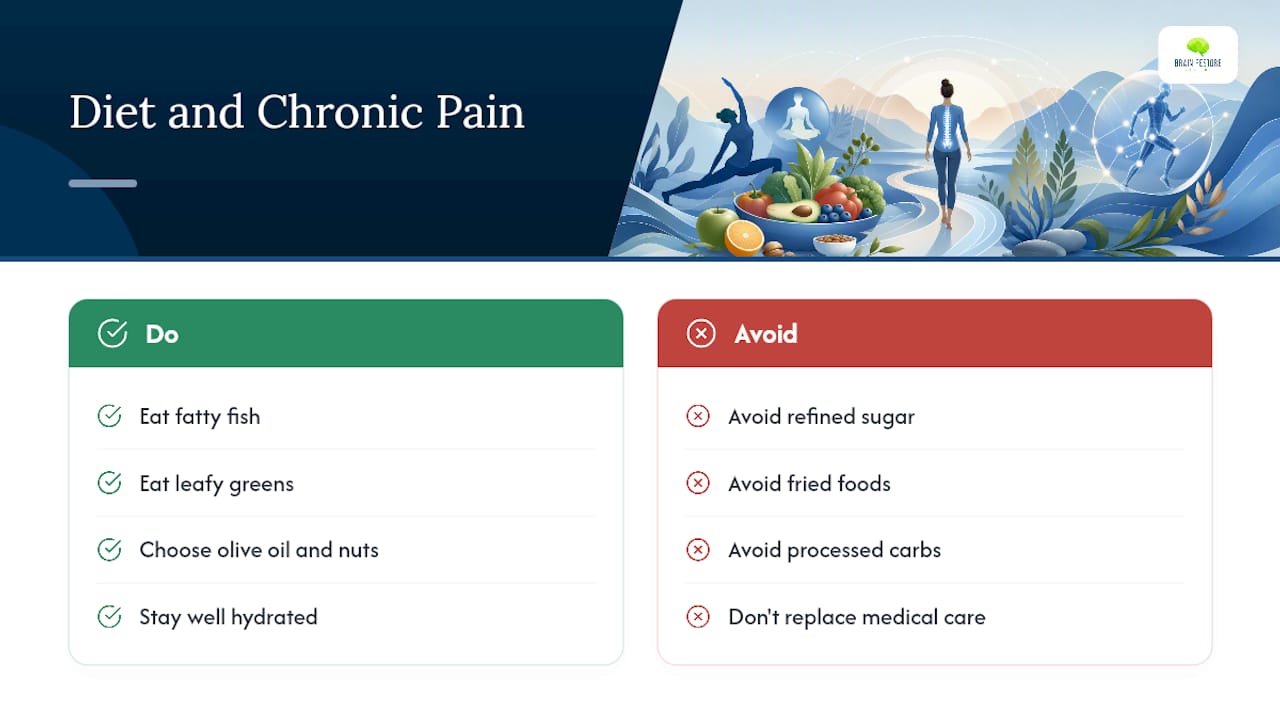
Diet doesn’t cure chronic pain, but certain eating patterns can turn down the inflammatory background noise that makes pain worse. Diets heavy in refined sugar, fried food, and processed carbohydrates tend to promote low-grade systemic inflammation, which can amplify pain sensitivity over time.
An anti-inflammatory eating pattern, built around fatty fish, leafy greens, berries, olive oil, and nuts, gives the body the building blocks to manage inflammation more effectively. Omega-3 fatty acids in particular have a well-documented role in modulating inflammatory pathways.
Hydration plays an underrated role too. Dehydrated soft tissue and spinal discs lose some of their cushioning capacity, which can make mechanical pain feel worse by the end of the day.
For people managing weight alongside joint pain, even modest weight loss reduces mechanical load on the knees and hips substantially, easing pain during walking and stair climbing. This is one of the more actionable levers available, since it directly changes the physical stress placed on already irritated joints.
None of this replaces medical nutrition therapy for a diagnosed condition. But small, consistent dietary shifts often complement the physical therapies above rather than compete with them, and they cost nothing beyond a grocery list adjustment.
Non invasive doesn’t mean risk-free. A handful of precautions apply across most of the therapies covered here.
Heat therapy should be avoided over areas with reduced sensation, active inflammation, or open skin. Cold therapy carries similar cautions for anyone with circulatory conditions like Raynaud’s phenomenon, where cold exposure can trigger painful vasospasm.
Spinal manipulation and chiropractic adjustments require extra caution for anyone with osteoporosis, spinal fractures, or certain inflammatory arthritis conditions, since these conditions change how much force the spine can safely tolerate. Anyone on blood thinners should mention it before deep tissue massage or acupuncture, since both increase bruising and bleeding risk at treatment sites.
Electrotherapy devices like TENS units carry contraindications for people with pacemakers or other implanted electrical devices, and they shouldn’t be placed directly over the front of the neck or a pregnant abdomen.
Mind-body approaches carry the fewest physical contraindications, though severe untreated mental health conditions may need coordinated psychiatric care alongside a program like CBT or MBSR rather than instead of it.
The safest approach is disclosure, not guesswork. Tell every provider about medications, implants, recent surgeries, and existing diagnoses before starting a new therapy, even one that sounds gentle on paper.
Understanding your own pain patterns is one of the most underused tools in noninvasive care. A simple pain journal, noting activity, sleep, stress, and pain intensity, often reveals triggers that aren’t obvious in the moment. Someone might discover their worst flares follow poor sleep more reliably than they follow physical exertion.
Pacing prevents the boom-and-bust cycle that derails a lot of home programs: overdoing it on a good day, then paying for it for the next three. Breaking activities into smaller chunks with built-in rest protects the progress you’re making elsewhere.
Setting graded, functional goals rather than chasing a pain score of zero keeps motivation realistic. “Climb the stairs without holding the rail” is a goal you can actually measure and celebrate.
Self-management works best as a partnership, not a solo project. Bring your pain journal and functional goals to appointments so your clinician can adjust the plan based on real data instead of a vague “it still hurts” update.
The goal here is better function, not zero pain. Chasing complete pain elimination sets people up to feel like every plan failed, even when they can suddenly walk further or sleep through the night. Progress in noninvasive care tends to be gradual and layered, not a single breakthrough moment.
Your role matters as much as any treatment on this list. Show up, report what’s working and what isn’t, and expect some trial and adjustment before you land on the right combination. That’s not a sign the plan is failing. It’s how personalized care is supposed to work.
— Chad
Reading about exercise, manual therapy, and laser treatment is useful, but building the right combination for your specific pain takes an actual evaluation, not a checklist. These noninvasive options are put together into one coordinated plan instead of leaving you to piece them together on your own across separate providers.
An initial visit typically includes a functional assessment, a review of what you’ve already tried, and a proposed treatment timeline built around your specific goals, whether that’s chronic back pain, joint pain, or nerve-related discomfort that hasn’t responded to rest. If chronic pain has been running your schedule instead of the other way around, scheduling an evaluation is the next concrete step toward a plan built around your actual daily goals, not a generic protocol.
These are the primary guidelines and reviews behind the claims in this article. Bring specific findings to your own clinician for a conversation grounded in your medical history.
This article is general information, not a substitute for advice from a qualified doctor. Consult a qualified healthcare professional about your own circumstances before acting on anything here.
Combining exercise or physical therapy with manual therapies like massage, mind-body practices like mindfulness, and modalities like TENS or LLLT gives you multiple ways to reduce pain without a prescription. The CDC recommends this nonpharmacologic-first approach for subacute and chronic pain specifically because it avoids opioid-related risks.
Common options include NSAIDs, acetaminophen, and in some cases opioids, though opioids carry meaningful dependency risk for long-term use. Nonopioid alternatives like topical NSAID gels, capsaicin cream, and the noninvasive therapies described above can manage pain and function while sidestepping those risks.
Yes. TENS units and peripheral nerve stimulation interrupt pain signals electrically, while acupuncture and mind-body practices work by influencing the nervous system’s own pain-processing pathways. None of these “block” pain the way an anesthetic does, but they can meaningfully dial down signal intensity.
Aerobic activity, resistance training, and aquatic therapy all show moderate evidence for improving function in low back pain, osteoarthritis, and fibromyalgia. Working with a physical therapist to match intensity and type to your specific condition tends to produce better results than a generic workout plan.
Most evidence points to meaningful improvement within a few months of consistent therapy, though timelines vary by condition and modality. Some approaches, like hypnosis-based techniques, often need around eight sessions before lasting benefit shows up.
Questions about your next step?
Our Meridian team can help you understand the evaluation process and which care options may fit your needs.
Schedule a ConsultationPrefer to speak with our team? Call 208-639-1397


