RCT Backed: Laser Therapy for Diabetic Neuropathy in 10–12 Sessions
September 12, 2026

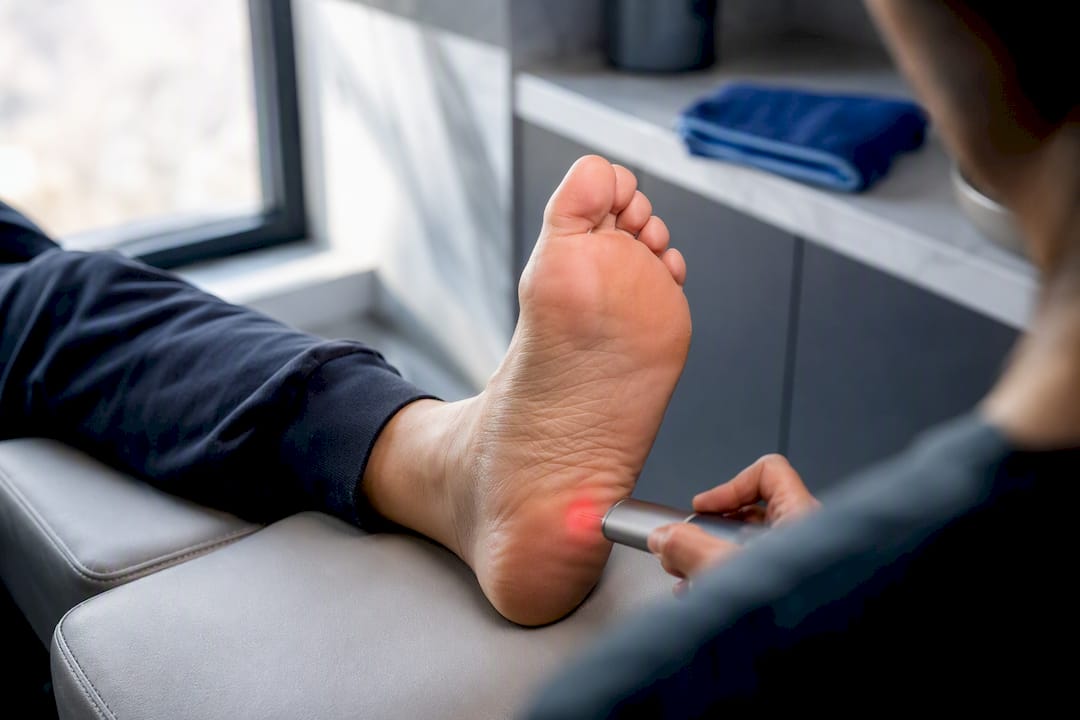
Laser therapy, especially low-level photobiomodulation and some deep-tissue Class IV protocols, has reduced pain and improved nerve-related symptoms in multiple small trials, particularly for diabetic peripheral neuropathy. Evidence is promising but not definitive: study sizes are small and protocols vary widely. If your neuropathy symptoms haven’t responded well to standard care, it’s reasonable to ask your provider whether you’re a candidate and which device protocol they use.
TL;DR:
- The strongest evidence supports low-level laser therapy, particularly at wavelengths between 630 and 860 nanometers, with device protocols varying widely across studies.
- Candidates with painful diabetic peripheral neuropathy not responding to medication are most likely to benefit, but certain conditions like pregnancy, active malignancy, or implanted devices exclude some patients.
- Treatment typically involves 10 to 12 sessions over 4 to 6 weeks, using techniques like scanning or targeted contact, with most patients experiencing mild warmth or comfort during sessions.
- Costs range from $50 to $150 per session, but insurance coverage is inconsistent, and it’s crucial to verify coverage terms before starting therapy.
Laser therapy for neuropathy works through a process called photobiomodulation. Low levels of light energy penetrate skin and tissue, where they get absorbed by mitochondria inside your cells. That absorption boosts ATP production, the energy currency your cells run on, and triggers a release of nitric oxide that widens blood vessels and improves circulation to the area. The combined effect appears to calm local inflammation and give damaged nerve tissue a better environment to repair itself.
That’s the theory behind every device on the market. In practice, “laser therapy” covers a surprisingly wide range of equipment, and the differences matter for what you’ll experience in a treatment room.
The main categories you’ll encounter:
Delivery technique varies too. Some clinicians use a scanning method, sweeping the laser head across a wider area like the sole of the foot. Others use direct contact application over specific nerve entry points, such as the popliteal fossa behind the knee or the fibular neck. A few programs use intravascular laser irradiation of blood (ILIB), though this is far less common in mainstream neuropathy protocols.
Of these, LLLT has the deepest evidence base specific to painful diabetic peripheral neuropathy, with Class IV and MLS devices building a smaller but growing trial record. The 10.6-μm infrared approach is newer to peer-reviewed testing but has already produced a well-designed randomized trial worth knowing about which we’ll get to next.
The strongest evidence for laser therapy and neuropathy centers on painful diabetic peripheral neuropathy (DPN), and the numbers from individual trials are genuinely striking, even if the overall body of research is still thin.
By the numbers: In a 2015 observational study, patients receiving 10 days of low-level laser therapy saw average VAS pain scores fall from 6.47 (±0.84) at baseline to 1.21 (±0.78) after treatment, using dosages of 3.1 J/cm² for scanning technique and 3.4 J/cm² for contact application.
That’s a substantial within-group drop, though it’s worth noting this was an observational study without a control arm, so some of that improvement could reflect factors beyond the laser itself. Randomized trials give a more reliable picture of cause and effect, and several now exist.
A 2019 pilot randomized clinical trial tested deep-tissue laser therapy in older adults with type 2 diabetes and painful peripheral neuropathy. It found significant pain reduction and measurable improvement in quality of life compared with the control group. Because it randomized patients rather than simply tracking one group over time, this trial carries more weight than the earlier observational data, even though its sample size was small, which is typical for pilot studies.
More recently, a double-blind randomized controlled trial tested 10.6-μm infrared laser moxibustion against a sham treatment over a 12-treatment protocol. Patients receiving the real laser showed improved scores on the Michigan Neuropathy Screening Instrument (MNSI) and better diabetes-specific quality of life measures than the sham group, with no serious adverse events recorded. A double-blind, sham-controlled design is about as rigorous as small-trial neuropathy research gets. This makes it one of the more convincing single studies in the field.
Broader reviews add useful context. A review of clinical effectiveness data on low-level laser treatment for peripheral somatosensory neuropathy found genuinely promising results but flagged a problem that shows up across this entire body of research: heterogeneity. Studies differ in:
That variability doesn’t mean the treatment doesn’t work. It means researchers haven’t yet converged on one optimal protocol, which makes it harder to say with confidence exactly how much benefit a given patient should expect. A 2023 overview from Medical News Today put it plainly: laser treatments can stimulate nerve cells and promote regeneration, but results vary study to study because of these same protocol inconsistencies and small cohorts.
The bottom line on evidence: diabetic peripheral neuropathy has the most robust and most recent trial support, including randomized, sham-controlled data. Evidence for other forms of peripheral somatosensory neuropathy is real but comparatively thinner, and no large-scale, multi-center trial has yet settled the question of optimal dosing.
The best-supported candidates are people with painful diabetic peripheral neuropathy, particularly those whose pain hasn’t fully resolved with medication alone. Some peripheral somatosensory neuropathies outside of diabetes also show early positive signals, though the trial base there is smaller.
Laser therapy isn’t right for everyone, and a responsible clinic will screen for these factors before treatment:
Reported adverse events across the trials cited above are rare and minor, typically mild warmth or temporary redness at the treatment site. No serious complications turned up in the RCTs discussed here.
Pro Tip: Before booking, ask your provider two direct questions: what device and wavelength they use, and how much training the operator has with that specific equipment. A legitimate clinic will answer both without hesitation.
Expect a course of sessions, not a single visit. Trials testing laser therapy for nerve pain used regimens ranging from 10 daily sessions to 12 treatments spread across 4 to 6 weeks, and clinical practice generally mirrors that pattern.
Representative protocols from the research include:
Wavelength choice affects how the treatment feels and how deep it reaches. Most LLLT studies fall in the 632 to 860 nanometer range, which penetrates several centimeters into soft tissue. Class IV devices operate at higher power, allowing clinicians to treat deeper structures in less time per session, which is one reason some clinics prefer them for thicker areas like the calf or lower back nerve roots.
During a session, most patients describe a mild warming sensation, sometimes nothing at all if the power setting is low. It’s not uncomfortable, and there’s no downtime afterward. What varies more is technique: a scanning pass across the sole of the foot takes just a few minutes, while targeted contact work over a specific nerve entry point, like the fibular neck, might take longer per site but cover less total area.
Clinicians typically track progress with the same tools used in the trials themselves: the Visual Analog Scale (VAS) for pain, the Michigan Neuropathy Screening Instrument (MNSI) for functional symptoms, and occasionally nerve conduction studies for objective changes in nerve signaling speed. Most protocols reassess somewhere around the six to twelve week mark, since meaningful improvement tends to build gradually across a full course rather than appear after one or two visits.
Laser therapy for nerve pain is rarely presented as a replacement for standard care. It’s most often added when medication alone hasn’t brought pain down enough, or when a patient wants to reduce reliance on drugs that carry their own side effect profiles.
Direct comparison trials are starting to answer the “does it actually beat the alternatives” question. A 2026 single-center randomized controlled trial compared low-level laser therapy against transcutaneous electrical nerve stimulation (TENS) and standard care alone in patients with refractory diabetic peripheral neuropathy. Across 60 randomized patients receiving 12 sessions over six weeks, the laser group showed greater improvement in both clinical and electrophysiological measures than the TENS group or control.
That’s one trial, and it shouldn’t be read as laser therapy universally outperforming every alternative. But it does support what clinicians who use both technologies often observe: laser therapy tends to add benefit on top of standard treatment rather than simply duplicating what other noninvasive tools already provide.
How the options stack up in practice:
The practical pattern in clinics that offer laser therapy for chronic pain is to layer it on: keep the medication regimen a physician has already established, add physical therapy for strength and mobility, and bring in laser sessions specifically to target localized pain and circulation at the nerve level.
Session pricing for cold laser and Class IV treatments in the United States commonly runs from roughly $50 to $150 per session, depending on the device, session length, and region. A full course of 10 to 12 sessions can add up, so it’s worth asking for a total course estimate rather than just the per-visit price.
Insurance coverage is inconsistent. Medicare and most private insurers historically classify laser therapy for neuropathy as investigational or not medically necessary, though coverage decisions vary by plan and by the specific CPT code billed.
Before starting treatment, it helps to:
Laser therapy at some clinics does not happen in isolation. Evaluation often starts with objective baseline measures, pain scales and neuropathy screening tools similar to what clinical trials use, so progress can be tracked rather than guessed at.
From there, device and protocol choice gets personalized: wavelength, energy density, and whether scanning or targeted contact technique fits your specific symptom pattern better. That decision often depends on where the pain concentrates and how deep the affected tissue sits.
Laser therapy is often integrated with other services, such as chiropractic care and functional medicine, when a patient’s neuropathy overlaps with structural or metabolic contributors. The goal is a care plan customized around actual test results rather than a one-size protocol applied to every patient.
Search around for laser therapy and neuropathy, and you’ll find plenty of clinic marketing implying it’s a cure. It isn’t, and the trials cited throughout this guide don’t support that claim. What they support is more modest and, frankly, more useful: a noninvasive option that reduces pain and improves function for a meaningful share of patients, especially those with diabetic peripheral neuropathy, when delivered as part of a real care plan rather than a standalone gimmick.
The biggest thing conventional coverage gets wrong is treating all “laser therapy” as one product. A cold laser device running at 630 nanometers and a Class IV system running at much higher power are different tools with different evidence bases, and lumping them together in a single verdict does readers a disservice.
If you’re weighing this option, prioritize finding a provider who can explain their specific protocol and point to why it fits your case, over chasing the lowest price or the flashiest device name. The heterogeneity in the research isn’t a reason to dismiss laser therapy. It’s a reason to demand specifics before you commit.
— Chad
Some clinics offer laser therapy for neuropathy as one piece of a coordinated care plan, not a standalone quick fix sold on its own. This distinction matters if medication or physical therapy hasn’t provided full relief: evaluations often start with objective baseline testing rather than a generic sales pitch.
An evaluation typically includes a review of your pain and neuropathy symptoms, screening measures similar to those used in the clinical trials referenced above, and a conversation about whether laser therapy, alone or combined with chiropractic care or functional medicine, fits your specific situation. If insurance coverage is uncertain for your case, some clinics can provide guidance on what documentation to request from your provider before committing to a full course. You can learn more about how laser therapy relieves pain or go ahead and schedule an initial evaluation to find out whether your specific neuropathy pattern is a good match for treatment.
This article is general information, not a substitute for advice from a qualified doctor. Consult a qualified healthcare professional about your own circumstances before acting on anything here.
Sessions generally run $50 to $150 each in the United States, and a full course of 10 to 12 sessions should be estimated as a total, not priced one visit at a time.
Protocols aren’t standardized, so wavelength, dosage, and session count vary by clinic, making outcomes harder to predict. It also usually requires multiple sessions over several weeks rather than delivering relief after one visit.
No single treatment works best for everyone. The strongest current evidence favors combining standard medical care with adjunct therapies like laser treatment, particularly for diabetic peripheral neuropathy, where randomized trials show the clearest benefit.
Coverage is inconsistent and often classified as investigational, so check with your Medicare Administrative Contractor directly using your specific diagnosis and CPT codes before assuming any coverage.