How Functional Medicine Supports TBI Healing
July 12, 2026


Functional medicine supports TBI healing by treating traumatic brain injury as a metabolic and hormonal condition, not just a structural one. Standard imaging rarely captures the biochemical disruptions driving chronic fatigue, brain fog, and mood changes months after an injury. The Millennium TBI Protocol, developed by Dr. Mark Gordon, targets neuroinflammation and hormonal deficiencies using advanced blood panels covering more than 50 markers. Brainrestoremeridian applies this same philosophy in Meridian, Idaho, combining nutritional therapy, photobiomodulation, neurofeedback, and circuit-specific neurological rehabilitation to support meaningful brain repair and long-term recovery.
Functional medicine identifies TBI as a condition that disrupts the body’s hormonal and metabolic systems, not just its physical structure. Neuroinflammation suppresses hypothalamic function, cutting off production of hormones like testosterone, DHEA, and pregnenolone that the brain needs to repair itself. This explains why so many patients experience fatigue, cognitive impairment, and depression long after the initial injury has “healed” on a scan.
Chronic microglial activation damages neurons and impairs neurotransmitter function, creating a cycle of ongoing symptoms that can persist for months or years. Mitochondrial dysfunction compounds the problem by starving neurons of the ATP energy they need to fire and recover. Without addressing these root causes, symptom management alone produces limited results.
Key biochemical disruptions functional medicine targets in TBI patients:
Pro Tip: Standard blood work ordered by most primary care physicians will not detect these deficits. Ask specifically about advanced hormonal and inflammatory panels that assess 50 or more biomarkers.
The brain requires specific raw materials to rebuild after injury, and most American diets fall short of supplying them. Omega-3 fatty acids, B vitamins, magnesium, and zinc all play direct roles in neuronal membrane repair, myelin production, and neurotransmitter synthesis. Deficiencies in any of these nutrients slow the cellular repair process that functional medicine aims to accelerate.

Gut microbiota produce neurotransmitters including serotonin, dopamine, and GABA, which directly influence mood and cognitive function after TBI. A disrupted microbiome reduces this production, worsening anxiety, depression, and brain fog. Increasing dietary fiber feeds beneficial bacteria that restore this output. This gut-brain connection is one reason why inflammation slows TBI recovery and why dietary changes are a non-negotiable part of a functional medicine TBI treatment approach.
Practical nutritional strategies used in functional medicine for TBI:
Functional medicine for TBI goes well beyond diet and supplements. It incorporates therapies that directly address the cellular and neurological deficits driving persistent symptoms.
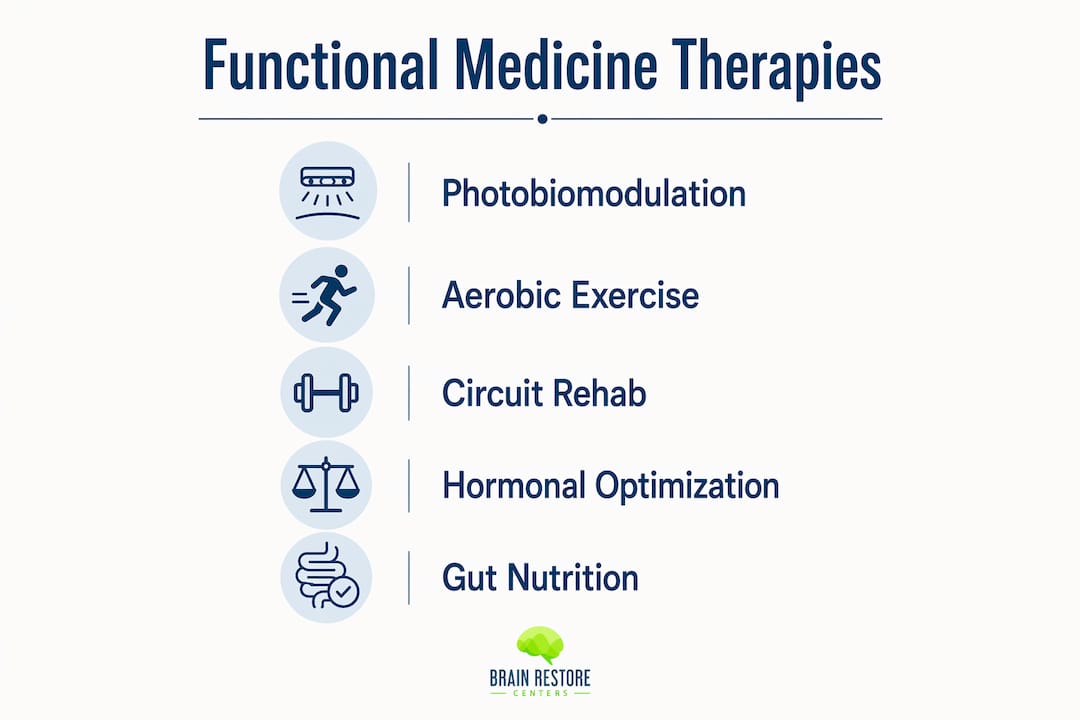
No FDA-approved pharmacological treatment currently exists for cellular repair of TBI. Photobiomodulation (PBM) fills that gap by using specific wavelengths of light to reactivate mitochondrial ATP production. It works by photodissociating nitric oxide from cytochrome c oxidase, restoring the enzyme’s ability to drive cellular energy. Studies backed by 15 years of clinical research show PBM improves brain volume, functional connectivity, cerebral perfusion, memory, and processing speed. Brainrestoremeridian offers laser therapy for neurological stress as part of its integrated brain health program.
Circuit-specific exercises, aerobic training, and autonomic rehab produce measurable improvements in dizziness, vision, and cognitive function. The brain retains neuroplasticity throughout life, which means these gains are achievable even in chronic cases. You can learn more about what neurological rehabilitation involves and how it applies to TBI recovery.
Active rehabilitation including sub-symptom-threshold aerobic exercise within days to weeks of injury speeds recovery and prevents autonomic dysregulation. The Buffalo Concussion Treadmill Test protocol identifies the exact heart rate threshold at which symptoms worsen, then builds exercise prescriptions just below that point. This prevents the boom-bust cycle that keeps many TBI patients stuck. Safe exercise after head injury is a structured process, not a guessing game.
| Therapy | Mechanism | Primary Benefit |
|---|---|---|
| Photobiomodulation | Restores mitochondrial ATP via cytochrome c oxidase | Improved memory, processing speed, brain volume |
| Neurological rehab | Circuit-specific exercises targeting deficits | Reduced dizziness, better vision, cognitive gains |
| Aerobic exercise | Sub-symptom-threshold cardiovascular training | Prevents autonomic dysregulation, speeds recovery |
| Neurofeedback | Real-time brainwave training | Improved focus, sleep, and emotional regulation |
Pro Tip: Combine photobiomodulation sessions with neurofeedback on the same day when possible. The cellular energy boost from PBM may enhance the brain’s responsiveness to neurofeedback training.
Personalization is the defining feature of the functional medicine TBI treatment approach. Standard imaging misses metabolic and hormonal dysfunction driving persistent symptoms entirely. Advanced biomarker panels detecting 50 or more markers reveal the specific deficits each patient carries, making targeted treatment possible.
Regular monitoring with hormonal and inflammatory lab panels guides adjustments over time. Hormone replacement therapy using testosterone, DHEA, pregnenolone, or thyroid hormones is calibrated to each patient’s lab results, not population averages. Nutraceuticals and peptide therapies are added or removed based on objective markers, not symptom reports alone.
Key elements of a personalized functional medicine TBI protocol:
Many patients report significant improvement in chronic TBI symptoms within 8–12 weeks of targeted hormonal and anti-inflammatory treatment. That timeline reflects how quickly the brain can respond when its biochemical environment is corrected. Healing from TBI is non-linear, though. Tracking sleep quality, mood stability, and cognitive endurance gives a more accurate picture of progress than day-to-day symptom fluctuations.
Environmental factors like poor indoor air quality and chemical exposures increase total inflammatory load and directly impede brain healing after TBI. A brain already fighting neuroinflammation cannot afford additional toxic burden from mold, volatile organic compounds, or pesticide residues. Reducing these exposures is not optional in a serious recovery plan.
Sleep is the brain’s primary repair window. During deep sleep, the glymphatic system clears metabolic waste products, including inflammatory debris, from brain tissue. Poor sleep quality after TBI is both a symptom and a driver of slower recovery. Addressing sleep through behavioral strategies, neurofeedback, and when appropriate, targeted supplementation, accelerates the entire healing process.
Lifestyle modifications that support TBI recovery:
Integrative care experts stress TBI recovery as a multidimensional process, combining psychotherapy, biofeedback, toxin reduction, and lifestyle changes to lower overall nervous system stress. No single intervention produces full recovery. The combination of reduced inflammatory load, restored hormonal balance, and targeted rehabilitation creates the conditions where the brain can genuinely heal.
Functional medicine supports TBI healing by correcting the hormonal, metabolic, and inflammatory disruptions that standard care misses, making personalized biochemical treatment the most direct path to lasting recovery.
| Point | Details |
|---|---|
| TBI is metabolic, not just structural | Neuroinflammation and hormonal deficits drive chronic symptoms that imaging cannot detect. |
| Advanced panels guide treatment | Biomarker panels covering 50+ markers reveal specific deficits for targeted intervention. |
| Nutrition and gut health matter | Omega-3s, fiber, and probiotics restore neurotransmitter production and reduce brain inflammation. |
| Photobiomodulation restores cellular energy | PBM reactivates mitochondrial ATP production, improving memory, processing speed, and brain volume. |
| Recovery is non-linear | Track sleep, mood, and cognitive endurance over weeks, not day-to-day symptom changes. |
The patients who struggle most are not the ones with the worst injuries. They are the ones who were told their scans looked fine and sent home with no further plan. That gap between “normal imaging” and very real, disabling symptoms is where functional medicine does its most important work.
What I have seen repeatedly is that hormonal optimization changes the trajectory faster than almost any other single intervention. When testosterone, DHEA, and thyroid levels are corrected, patients often describe it as “the fog lifting” for the first time since their injury. That is not a placebo effect. That is the brain finally getting the biochemical environment it needs to repair.
Patience is genuinely hard to maintain when symptoms are affecting your work, your relationships, and your sense of self. The non-linear nature of recovery means you will have bad days that feel like setbacks. They are rarely setbacks. They are the normal rhythm of a brain reorganizing itself. Tracking objective markers like sleep depth, reaction time, and mood stability week over week tells a more honest story than how you feel on any given Tuesday.
Functional medicine does not replace conventional care. It fills the gaps that conventional care leaves open. If you are still struggling months or years after a TBI, the answer is not to accept that this is simply how you are now. The answer is to look deeper.
— Chad
Brainrestoremeridian’s comprehensive brain health restoration program in Meridian, Idaho, brings together neurofeedback, photobiomodulation, functional medicine, and chiropractic care under one roof. Each patient receives an individualized protocol built from advanced biomarker testing, not a generic treatment menu.
The clinic’s practitioners work with patients experiencing post-concussion syndrome, chronic cognitive impairment, and TBI-related mood disorders. If you have been told your imaging is normal but you still do not feel like yourself, Brainrestoremeridian offers the deeper evaluation that standard care skips. Reach out to schedule a consultation and find out which combination of therapies fits your specific recovery needs.
Functional medicine treats TBI as a hormonal and metabolic condition, not just a structural injury. It uses advanced biomarker panels to identify neuroinflammation, hormonal deficiencies, and mitochondrial dysfunction, then targets each with personalized interventions.
Many patients report meaningful improvement in chronic TBI symptoms within 8–12 weeks of targeted hormonal and anti-inflammatory treatment. Recovery is non-linear, so tracking sleep, mood, and cognitive endurance over weeks gives a more accurate picture than daily symptom checks.
Yes. Photobiomodulation restores mitochondrial ATP production by reactivating cytochrome c oxidase, and 15 years of clinical research support its use for improving memory, processing speed, and brain volume after TBI.
Nutrition directly affects TBI recovery. Omega-3 fatty acids support neuronal membrane repair, and gut microbiota produce serotonin, dopamine, and GABA, all of which influence mood and cognitive function after brain injury.
Standard imaging misses the metabolic and hormonal dysfunction driving persistent symptoms. Neuroinflammation suppresses hypothalamic hormone production, and mitochondrial dysfunction starves neurons of energy, neither of which appears on a standard MRI or CT scan.
Questions about your next step?
Our Meridian team can help you understand the evaluation process and which care options may fit your needs.
Schedule a Brain Health ConsultationPrefer to speak with our team? Call 208-639-1397