
Frozen Shoulder: Treatment Options and Recovery Expectations
September 17, 2026


Most people recover from frozen shoulder through guided physical therapy and pain control, not surgery. Corticosteroid injections and sometimes hydrodilatation can shorten the painful freezing phase when exercise alone stalls. Manipulation under anesthesia or arthroscopic capsular release is generally reserved for stiffness that persists after genuine conservative effort. Recovery tends to move faster when treatment matches the shoulder’s current stage, though conditions like diabetes can slow the timeline considerably.
TL;DR:
- Non-surgical treatment that matches the shoulder’s current stage, including physical therapy and pain control, offers the best chance for recovery within one to three years.
- Corticosteroid injections and hydrodilatation provide short-term relief during the freezing phase, especially when pain inhibits progress.
- Aggressive stretching during the freezing phase can worsen symptoms, so therapy should be carefully calibrated to avoid provoking more inflammation.
- Surgery such as manipulation under anesthesia or arthroscopic release typically yields similar long-term outcomes, with choice depending on patient risk tolerance and recovery urgency.
- Individualized, stage-aware care combining conservative methods and precise interventions accelerates recovery, especially for patients with conditions like diabetes that slow progress.
Frozen shoulder, medically called adhesive capsulitis, happens when the capsule surrounding your shoulder joint thickens and tightens, restricting movement in every direction. It’s not the same as a rotator cuff tear or simple shoulder pain from overuse. It’s a distinct condition that moves through three predictable phases, and knowing which one you’re in changes everything about how you should treat it.
The freezing phase brings gradual, often severe pain, especially at night, with slowly worsening stiffness. This stage can last two to nine months.
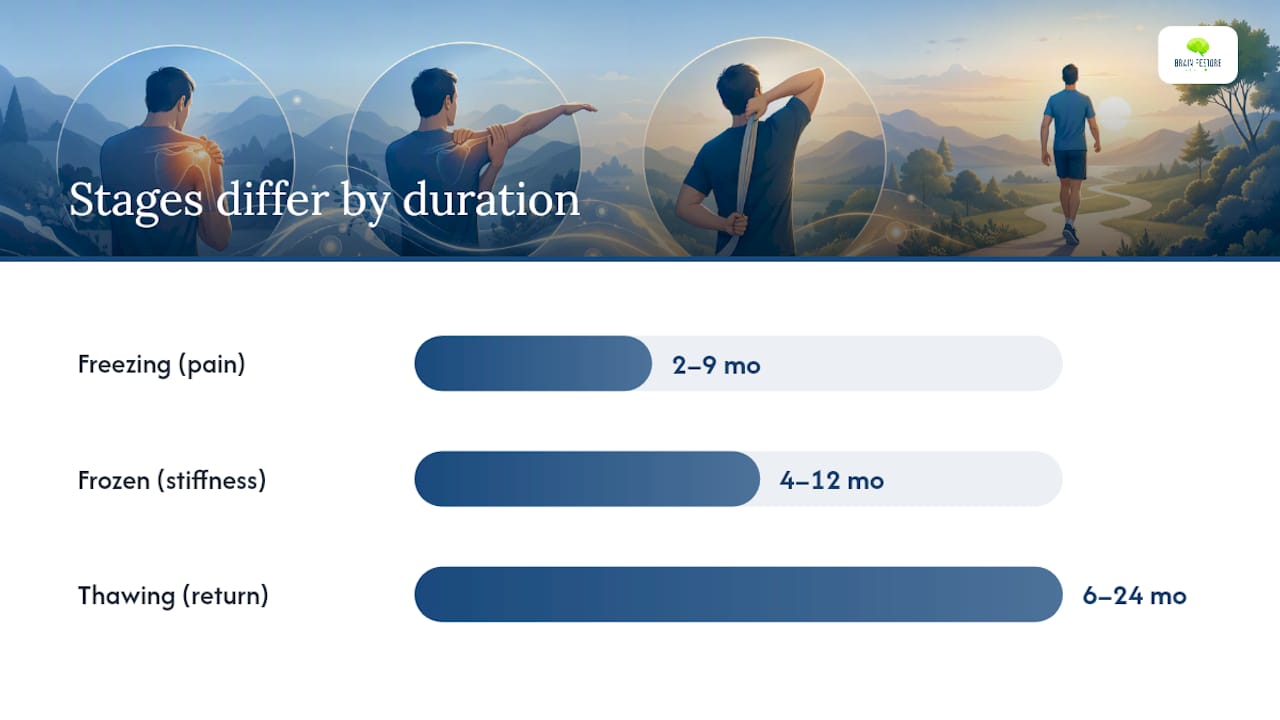
The frozen phase is when pain often eases but stiffness peaks. Reaching overhead, tucking in a shirt, or reaching for a back pocket becomes genuinely difficult. This stage typically runs four to twelve months.
The thawing phase brings gradual return of motion, sometimes taking six months to two years to fully resolve.
What causes frozen shoulder in the first place? The capsule’s connective tissue develops inflammation that gradually shifts into fibrosis, essentially scar tissue that binds the joint. You don’t need a dramatic injury to trigger it. Risk factors include:
Here’s something that surprises a lot of patients: aggressive stretching during the freezing phase can backfire. When the capsule is actively inflamed, forcing range of motion often provokes more pain and more protective muscle guarding, which can slow progress rather than speed it. Treatment strategy reviews specifically caution that therapy needs to be calibrated to the stage the shoulder is actually in, not pushed uniformly hard from day one.
Physical therapy is the foundation of frozen shoulder treatment, and for good reason. Clinical guidance consistently identifies structured, individualized range-of-motion work as the primary intervention, with patient adherence to the physical therapy program directly tied to better outcomes.
A typical physical therapy plan for frozen shoulder progresses through three stages:
Home exercise fills the gaps between clinic visits, and dosing matters more than most people assume. A reasonable rule is multiple daily sessions with several repetitions per stretch, holding each for several seconds. The pain-guidance principle is simple. Mild discomfort during a stretch is expected and fine. Sharp or severe pain means back off immediately.
Pain control runs alongside the exercise program rather than replacing it. NSAIDs like ibuprofen or naproxen, acetaminophen, and topical analgesics all have a place, and heat before stretching (to loosen tissue) paired with ice afterward (to calm inflammation) is a combination worth trying. Sleep positioning matters too. Many patients find a slight recline or a pillow wedged under the affected arm reduces the night pain that defines the freezing phase.

Pro Tip: Keep a simple pain and motion log for two weeks. Note your pain level before and after each exercise session and how far you can reach overhead. It sounds tedious, but it’s the fastest way for you and your clinician to tell whether a treatment is actually working or just feels like it is.
Modalities like ultrasound and electrical stimulation show up in a lot of clinic brochures, but the evidence behind them as standalone treatments is thin. They’re reasonable as adjuncts alongside real exercise and manual therapy, not as a substitute for either.
Intra-articular corticosteroid injections are usually the first step-up when physical therapy alone isn’t cutting the pain enough to allow real progress. Timing matters here: injections tend to deliver the most benefit during the freezing phase, when inflammation, not just fibrosis, is driving the pain.
Clinical reviews consistently note that corticosteroid injections work best paired with an active rehab plan rather than used alone, since the pain relief creates a window where therapy can actually make headway. That combination tends to outperform injection by itself for short-term functional gains.
Hydrodilatation (also called hydrodistension) involves injecting a larger volume of fluid, usually saline mixed with a steroid and sometimes a local anesthetic, directly into the joint capsule under ultrasound guidance. The idea is to mechanically stretch the tightened capsule from the inside. Evidence suggests it can produce earlier mobility gains than a standard injection, though longer-term superiority over other approaches remains inconclusive, and protocols vary quite a bit between clinics.
Other procedural options clinicians sometimes consider:
Roughly 80% of frozen shoulder patients regain near-normal function with timely, appropriate management, while 10 to 20% carry some residual stiffness or discomfort long-term. Ultrasound guidance for any of these injections isn’t just a nice touch. It meaningfully improves needle placement accuracy, and the minor risks involved (brief pain flare, temporary blood sugar elevation in diabetics, rare infection) are lower when the injection actually lands where it’s supposed to.
When conservative care and injections haven’t restored functional motion after a fair trial, two procedural options come into play: manipulation under anesthesia (MUA) and arthroscopic capsular release (ACR).
MUA involves the surgeon forcibly moving the shoulder through its full range while you’re under general anesthesia, physically tearing through the adhesions that have formed inside the capsule. It’s quick, doesn’t require incisions, and patients typically go home the same day. The tradeoff is a small risk of fracture or rotator cuff injury from the forceful manipulation, particularly in patients with weaker bone.
Arthroscopic capsular release takes a more controlled approach. A surgeon uses small incisions and a camera to selectively cut the tightened portions of the capsule under direct visualization. Many surgeons prefer it specifically because they can see exactly what they’re releasing, which theoretically reduces the risk of an uncontrolled tear elsewhere in the joint.
Here’s the part that surprises a lot of patients expecting a clear “best option.” High-quality randomized trial evidence, including the UK FROST trial and related systematic reviews, found no clinically important long-term difference among physical therapy with steroid injection, MUA, and arthroscopic release. All three groups ended up in roughly similar places a year or two out. That finding reshapes the whole decision:
Frozen shoulder treatment follows a step-up model, and understanding the sequence helps you know what to expect and what to ask for at each visit.
Clinicians weigh specific functional markers, not just time elapsed: can you dress yourself, reach a shelf overhead, manage basic hygiene tasks, or sleep through the night without shoulder pain waking you? Persistent severe night pain or an inability to perform daily activities after a genuine conservative trial is a reasonable trigger for specialist referral.
Pro Tip: Before a specialist appointment, write down exactly which daily tasks your shoulder is stopping you from doing, along with dates you started each treatment tried so far. Surgeons and physiatrists make faster, better decisions with a concrete functional timeline than with “it still hurts.”
Between clinic visits, a short daily routine keeps the joint from stiffening further. These five exercises, recommended by Harvard Health, are simple enough to do at home with no equipment beyond a towel.
Use heat, a warm shower or heating pad, before stretching to loosen tissue, and switch to ice afterward if soreness flares. Pace your daily activities rather than pushing through a bad day; overdoing it on a good day often triggers a setback the next.
Stop immediately and contact your clinician if you notice sudden sharp pain, new numbness or tingling down the arm, visible swelling, or a sudden loss of motion that wasn’t there before.
Treatment on paper is one thing. What actually happens in a clinic, week to week, is another. Kelly’s frozen shoulder recovery is a documented example worth noting, though it’s a single case, not a typical timeline, and most patients need considerably longer.
Conservative, stage-aware programs for shoulder and joint issues generally combine several approaches rather than relying on one alone:
Structured nonsurgical plans, often built around an eight to twelve week arc similar to programs used for other joint conditions like nonsurgical knee treatment, give conservative care a real chance to work before anyone discusses a procedure. Outcomes vary by individual, but the sequencing itself reflects the evidence: exhaust well-run conservative treatment before considering anything more invasive.
The biggest mistake I see in how frozen shoulder gets discussed online is the search for a single “best” treatment. The trial evidence doesn’t support that framing. When physical therapy with steroid injection, manipulation under anesthesia, and arthroscopic release all land in roughly the same place a year out, the honest answer is that the “best” option depends on your pain tolerance, your job demands, how fast you need function back, and whether you have diabetes or another condition muddying the timeline.
What I’d push back on is treating stiffness as something to grind through with maximum effort from day one. The freezing phase punishes aggressive stretching. Multidisciplinary, staged care, matching intensity to what the joint can actually tolerate right now, respects that biology instead of fighting it. Informed consent matters here too: your clinician should be laying out realistic timelines and letting you weigh speed against invasiveness, not steering you toward whatever procedure is easiest to schedule.
— Chad
Generic exercise handouts and one-size stretching routines don’t account for which phase your shoulder is actually in, and that’s the gap that keeps people stuck longer than they need to be. Shoulder care should be built around an individualized evaluation first, matching hands-on chiropractic work, progressive rehab, and adjunct therapies like low level laser to your specific stage instead of a generic protocol pulled off a handout.
An initial chiropractic evaluation is the starting point for anyone dealing with shoulder stiffness that isn’t responding to home stretches alone. Every case is different, and outcomes vary depending on how long the shoulder has been frozen and whether other health factors are in play, so a real assessment matters more than another generic exercise sheet. If ongoing pain has you managing more than just your shoulder, the clinic’s Brain Restore Program is worth a look too. Consider scheduling an evaluation to determine the current status of your shoulder and discuss realistic recovery options.
This article is general information, not a substitute for advice from a qualified doctor. Consult a qualified healthcare professional about your own circumstances before acting on anything here.
There’s no true shortcut, but early, stage-appropriate physical therapy combined with pain control gives you the fastest realistic path. Adding a corticosteroid injection when pain blocks progress can speed things up further.
Avoid aggressive stretching or forceful range-of-motion work during the painful freezing phase, since it tends to provoke more guarding and pain rather than speeding recovery. Also avoid complete immobilization. Gentle, consistent movement within your pain limits works better than either extreme.
Rotator cuff tears, shoulder impingement, arthritis of the shoulder joint, and referred pain from cervical spine problems are commonly confused with frozen shoulder. A proper evaluation, sometimes including imaging, helps distinguish these before starting treatment, since a chiropractic care assessment can help sort out which structures are actually involved.
The capsule surrounding the shoulder joint becomes inflamed and then fibrotic, tightening around the joint and restricting motion. Diabetes, thyroid disease, prior immobilization, and previous shoulder injury are the most common contributing risk factors.
Full recovery often takes anywhere from one to three years across all three phases, though timely, stage-matched treatment tends to shorten that window.
Questions about your next step?
Our Meridian team can help you understand the evaluation process and which care options may fit your needs.
Schedule a ConsultationPrefer to speak with our team? Call 208-639-1397


