Patients and Caregivers Get HBOT Covered for Medicare's 14 Conditions
September 9, 2026

Yes, Medicare and most commercial insurers cover hyperbaric oxygen therapy, but only when your diagnosis matches one of 14 approved indications and your provider meets specific documentation rules. Off-label uses like traumatic brain injury, long COVID, or general wellness are almost never covered, which means you pay out of pocket. Coverage isn’t a yes-or-no question. It’s a checklist.
TL;DR:
- Insurers only cover HBOT for conditions listed in the approved indications, and off-label uses rarely qualify, leading to out-of-pocket costs for patients.
- Coverage depends on delivery in Class A hard-shell chambers pressurized to 2.0–2.5 ATA, with soft-shell chambers and outpatient clinics often rejected for reimbursement.
- Securing insurance approval involves confirming diagnosis eligibility, verifying facility qualifications, gathering supporting documents, and obtaining prior authorization before treatment.
- Uncovered HBOT courses can cost between $3,000 and $26,000, but options like HSA, FSA, financing, grants, and benefits may help offset the financial burden.
Whether your plan pays for hyperbaric oxygen therapy comes down to one document: CMS National Coverage Determination (NCD) 20.29. It names the conditions Medicare recognizes as medically necessary for HBOT, and most private insurers build their own policies around that same list.
You’ll hear this called an “on-label” use. That simply means the FDA and Medicare both recognize HBOT as appropriate treatment for that specific condition, which is what gives insurers the clinical grounds to reimburse it.
The 14 approved indications include conditions such as:
That’s a partial list. The full NCD 20.29 document spells out every approved condition along with the clinical criteria attached to each one, and it’s worth reading before you schedule anything. If your diagnosis isn’t on it, expect a fight with your insurer, or a bill with your name on it.
Medicare Part B is the backbone most other coverage decisions follow. Once you’re enrolled and your condition is on the NCD list, Medicare confirms you’ll typically pay the Part B deductible first, then about 20% coinsurance on the Medicare-approved amount for each session.
Statistic Callout: Medicare beneficiaries generally cover 20% of the approved cost per HBOT session after meeting the Part B deductible, according to Medicare’s own coverage guidance. For a multi-week course of daily sessions, that coinsurance adds up fast even with coverage in place.
Commercial insurers like Aetna, UnitedHealthcare, Cigna, and Blue Cross Blue Shield largely mirror the Medicare framework, but they layer on their own requirements:
The practical takeaway: coverage is conditional, not automatic. A diagnosis on the approved list gets your foot in the door. Getting the insurer to actually pay requires preauthorization paperwork that matches their clinical policy word for word.
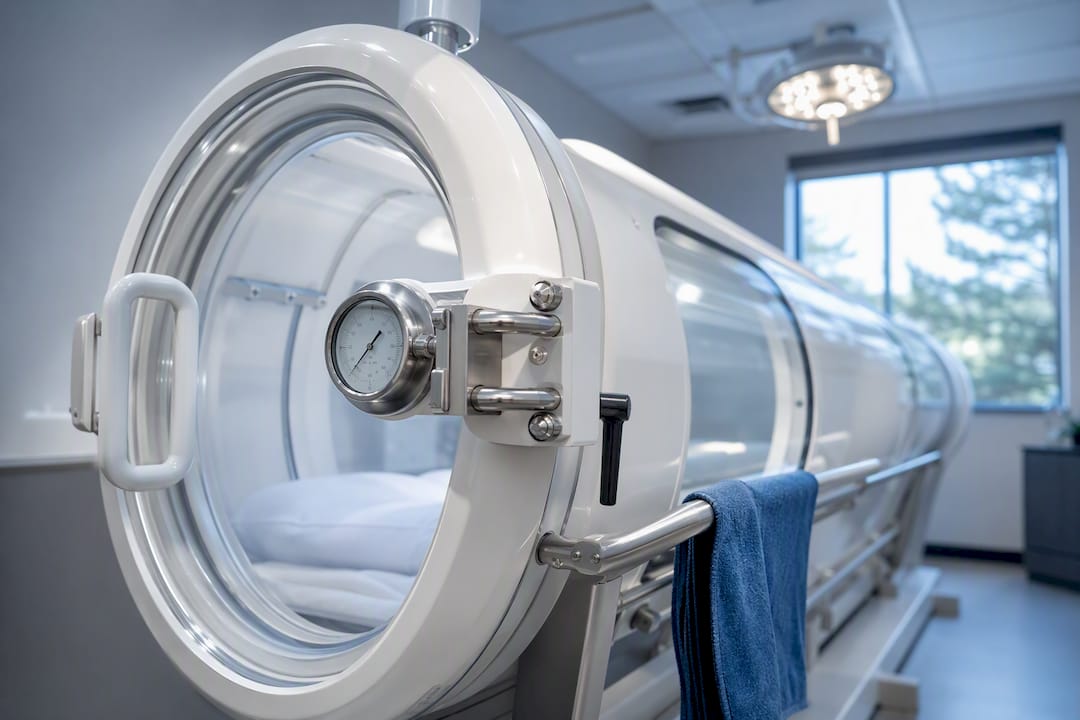
Not every hyperbaric chamber qualifies for reimbursement, and this trips up more patients than the diagnosis rules do. Insurers generally cover systemic HBOT delivered in Class A hard-shell chambers pressurized to 2.0 to 2.5 ATA using 100% oxygen. That’s the therapeutic threshold tied to the clinical evidence behind NCD 20.29.
Soft-shell “mild” HBOT chambers running around 1.3 ATA are a different category entirely. They’re not FDA-cleared for the same indications, and insurers routinely deny claims tied to them.
A few other facility factors matter:
Pro Tip: Ask any facility upfront what chamber class and pressure they use, and get it in writing. A clinic that can’t answer that question clearly is a red flag for your claim, not just your treatment.
Getting from “maybe covered” to “paid for” follows a fairly predictable sequence. Skip a step and you’ll likely get a denial letter instead of an appointment.
Clinics that handle a lot of HBOT cases, including the coding side detailed in this coverage playbook for related therapies, tend to move through this process faster because they’ve already built the paperwork templates insurers expect.
If your case is on-label and covered, the math is manageable. After your Part B deductible, you’re looking at roughly 20% coinsurance per session, and a Medigap policy can absorb much of that remaining share.
Off-label treatment is a different financial picture entirely.
Statistic Callout: A full course of uncovered HBOT sessions typically runs $3,000 to $26,000 out of pocket, depending on session count and facility rates. That range reflects how much variation exists between a short protocol and an extended multi-week course.
Ways to soften that cost include considering compression therapy cost options, which can offer insights into therapy-device costs and payment plans.
If you’re weighing the full financial picture before committing, a breakdown of what HBOT costs session by session is worth reading alongside your insurer’s explanation of benefits.
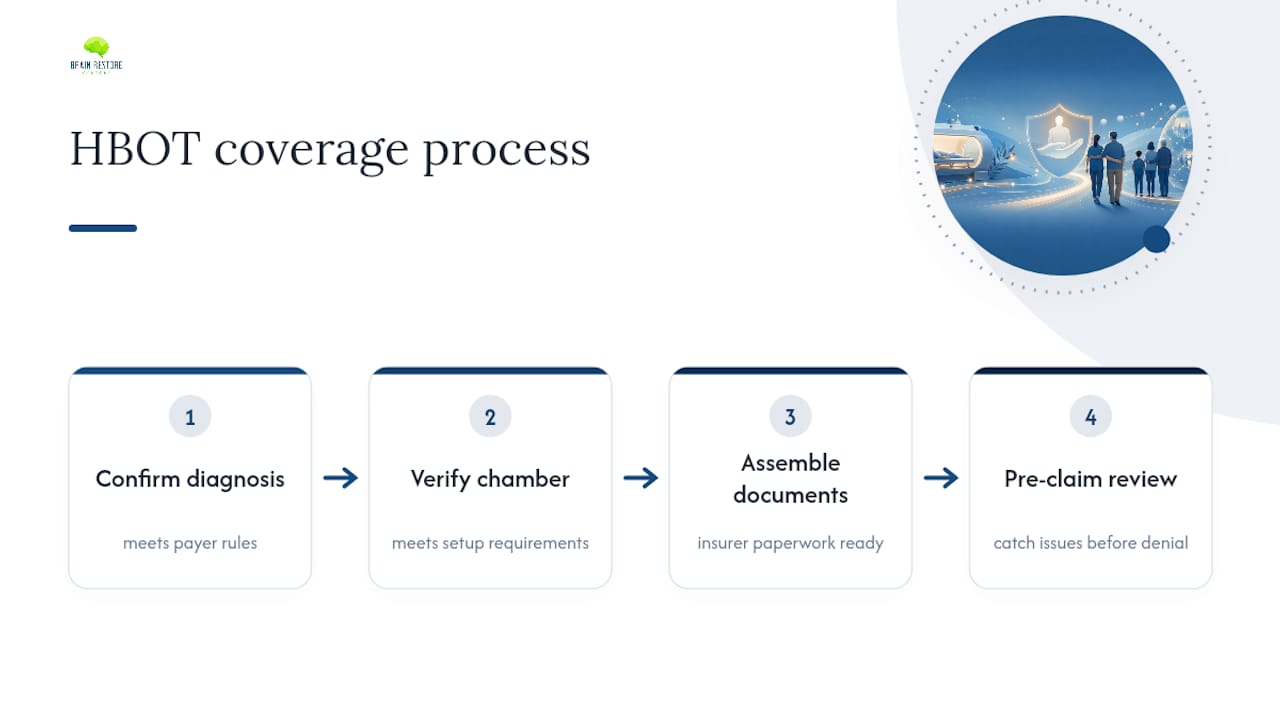
Insurance paperwork shouldn’t be the reason you delay treatment. Some clinics work with patients to confirm whether their diagnosis and chamber setup meet payer requirements, and help assemble the documentation insurers ask for, before a claim gets denied instead of after.
Every case is different, and a quick insurance-check conversation often catches problems paperwork alone would miss.
— Chad
Chasing prior authorization on your own, or gambling that your diagnosis qualifies, is how patients end up with denied claims and unexpected bills. Some clinics offer hyperbaric oxygen therapy alongside assistance confirming whether your case meets Medicare or commercial insurer requirements, before you start a course of treatment you can’t afford to pay for twice.
Bring your prior treatment records and any physician notes to your first visit. The clinic team can review your diagnosis against the current NCD list, check whether prior authorization applies to your plan, and walk you through realistic cost expectations either way. If HBOT isn’t the right fit, or your insurer requires additional documentation first, you’ll know that upfront instead of after a denied claim. Readers dealing with related cognitive or neurological symptoms can also explore how neurofeedback supports anxiety relief as part of a broader recovery plan. Schedule an insurance-check consultation directly through Brainrestoremeridian’s HBOT program to get a clear answer on your specific case.
This article is general information, not a substitute for advice from a qualified doctor. Consult a qualified healthcare professional about your own circumstances before acting on anything here.