Vet HBOT Clinics: Ask About 1.5 ATA and 40 Sessions for Concussion
September 8, 2026

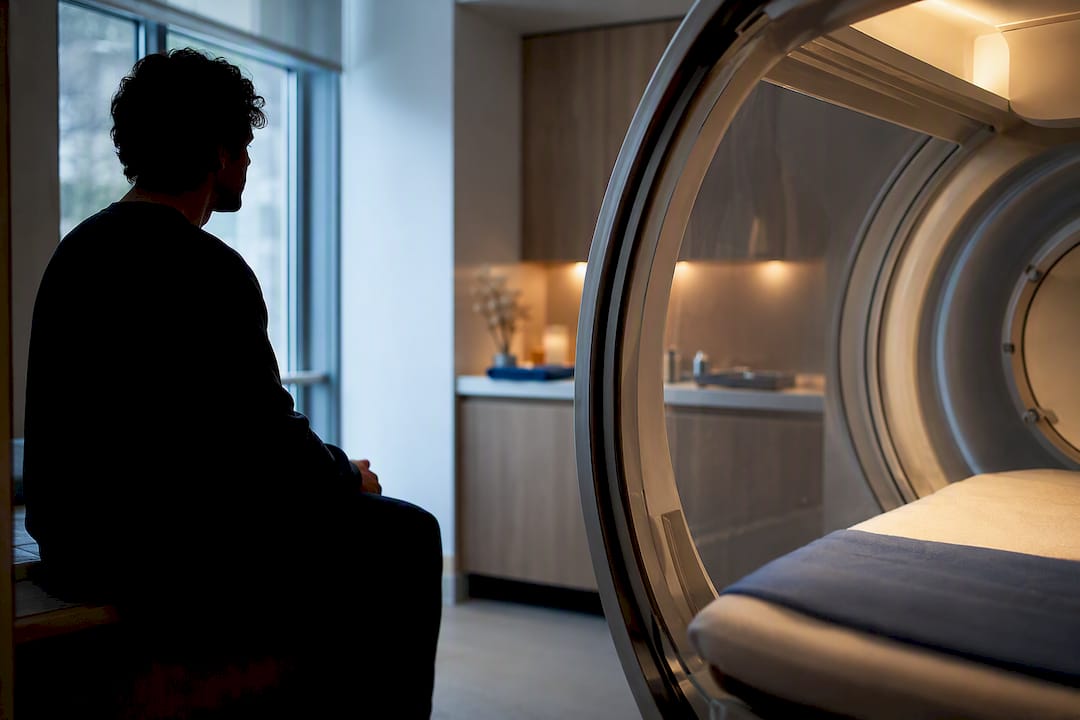
Hyperbaric oxygen therapy has produced measurable, lasting symptom relief for some people with persistent post-concussion syndrome, but the evidence is mixed and highly dependent on protocol. The strongest results come from trials using 1.5 ATA pressure over roughly 40 sessions, not from casual “wellness” chamber visits. If you’re weighing HBOT for lingering concussion symptoms, the right next step is a medical evaluation with a specialist who can walk you through realistic outcomes and appropriate protocols.
TL;DR:
- Effective HBOT protocols for concussion involve 1.5 ATA, nearly 100% oxygen, 60-minute sessions, five days a week, totaling about 40 treatments.
- Positive results are more likely in patients with symptoms persisting beyond three months and who complete the full treatment course.
- Imaging studies show increased brain perfusion correlating with cognitive improvements, but protocol variations and population differences limit universal applicability.
- Side effects are generally mild but can include ear or sinus pressure, temporary vision changes, and rare oxygen toxicity risks, emphasizing the need for medical oversight.
- HBOT should be considered only after medical evaluation and as part of a broader concussion management plan, not a first-line treatment or standalone cure.
The most credible research on hyperbaric oxygen therapy for concussion comes from randomized and crossover trials on persistent post-concussion syndrome (PPCS), the version of concussion where symptoms linger past the typical two-to-four-week recovery window. A randomized controlled crossover trial found that 40 sessions at 1.5 ATA produced meaningful gains in memory, sleep, depression and anxiety scores, and quality of life compared to a control group, with benefits that held up at follow-up. A separate prospective randomized crossover trial published in PLOS One reported improvements across multiple cognitive domains in patients treated years after their original injury, with SPECT imaging changes tracking alongside the cognitive gains.
A systematic review pooling multiple randomized trials found that 40 sessions of HBOT at 1.5 ATA achieved statistically significant symptomatic and cognitive improvement, according to a dose-analysis review of HBOT efficacy in mild TBI. That’s a meaningful signal, but the same review flagged small sample sizes as a real limitation across the field.
The picture isn’t uniformly positive. A few things explain the mixed results you’ll see if you read the full body of research:
The ongoing HOT-POCS trial is trying to settle some of this by comparing 20 sessions at 2.0 ATA against a true placebo gas mixture, with objective MRI perfusion measures as an endpoint rather than self-reported symptoms alone.
If a clinic offers you HBOT for concussion, the parameters matter more than the marketing. The protocol most consistently linked to benefit in trials is 1.5 ATA, breathing close to 100% oxygen, for 60-minute sessions delivered five days a week for around 40 total sessions.
That’s not the only dose tested. Some trials used 1.3 ATA with regular air, and the HOT-POCS pilot is testing 20 sessions at 2.0 ATA. Results vary across these approaches, which supports a dual-component model: HBOT works through both pressure and elevated oxygen, and the pressure range of roughly 1.3 to 1.5 ATA seems to matter as much as oxygen concentration by itself.
Timing also shapes outcomes. Trials have enrolled patients anywhere from three months to several years after injury, and chronic cases (years out) have still shown measurable gains, which is one of the more encouraging findings in this field.
Pro Tip: Ask any clinic offering HBOT for concussion exactly what ATA pressure and oxygen percentage they use, and for how many sessions. If they can’t answer in those specific terms, they aren’t running a trial-grade protocol.
The biological case for HBOT rests on a few connected mechanisms. Elevated pressure combined with high oxygen concentration increases how much oxygen your blood plasma can carry to injured brain tissue, even in areas where blood flow is compromised. That extra oxygen delivery is thought to support angiogenesis (new blood vessel growth), reduce inflammatory signaling, and create conditions favorable for neuroplasticity, the brain’s ability to rewire itself around damaged pathways.
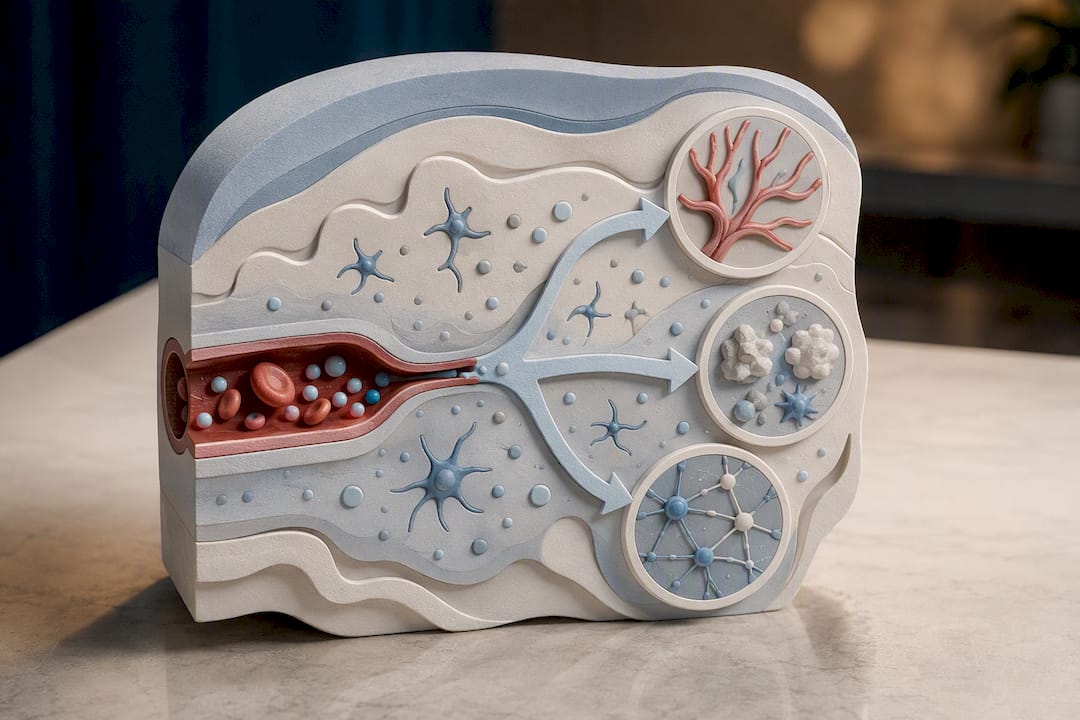
Imaging backs this up to a degree. Several trials used SPECT or perfusion MRI before and after treatment, and found regional increases in brain perfusion that lined up with the cognitive improvements patients reported. That correlation is one of the more persuasive pieces of evidence in this field, because it connects a measurable physical change to a functional one.
None of this guarantees a response for every patient:
The people who show the clearest gains in trials share a few traits, and understanding them helps set realistic expectations before you commit to a course of treatment.
HBOT is not positioned as a substitute for standard acute concussion care. The CDC’s concussion recovery guidance still centers on rest and a graduated return to activity for typical cases, since most concussions resolve without additional intervention. HBOT belongs in the conversation for people who’ve plateaued, not as a first move. If that’s you, a neurologist or brain-injury clinic that runs objective testing, such as the kind described in this breakdown of concussion diagnostic testing, is the right starting point before any chamber time.
Most people tolerate HBOT well, but it isn’t risk-free. The common side effects are ear or sinus barotrauma from pressure changes, temporary nearsightedness that resolves after treatment ends, and claustrophobia inside the chamber. Rarer but more serious risks include oxygen toxicity seizures and pulmonary barotrauma, particularly at higher pressures or longer session counts.
Untreated pneumothorax (a collapsed lung) is an absolute contraindication. Relative cautions include certain lung conditions, uncontrolled seizure disorders, and pregnancy, all of which call for medical screening before starting.
This is why oversight matters. The Undersea and Hyperbaric Medical Society sets accreditation standards for chambers and staff precisely because screening and physician supervision reduce these risks substantially.
A full course modeled on trial protocols, roughly 40 sessions, is a real time and financial commitment, and insurance coverage for concussion-related HBOT is often limited since it isn’t yet an FDA-approved indication for mild traumatic brain injury. Pricing varies considerably by facility and region.
Before booking anything, ask these questions:
Pro Tip: Walk away from any provider selling single “cure” sessions with no baseline testing and no medical oversight. That’s the clearest red flag separating a clinical HBOT program from a wellness gimmick.
Hyperbaric oxygen therapy isn’t offered as a standalone fix. It sits inside a broader assessment pathway that starts with medical screening and objective testing, then builds a protocol around your specific symptom pattern, whether that’s cognitive fog, sleep disruption, or mood changes tied to your injury.
Because concussion recovery is rarely just one problem, treatment often integrates neurofeedback, laser therapy, and rehab support alongside HBOT rather than treating it in isolation. You can read more about how the clinic frames HBOT’s mental health and cognitive outcomes as part of that larger picture. Any decision about whether HBOT fits your situation should follow a clinical evaluation, not a marketing page, and Brainrestoremeridian’s team works from that evaluation first.
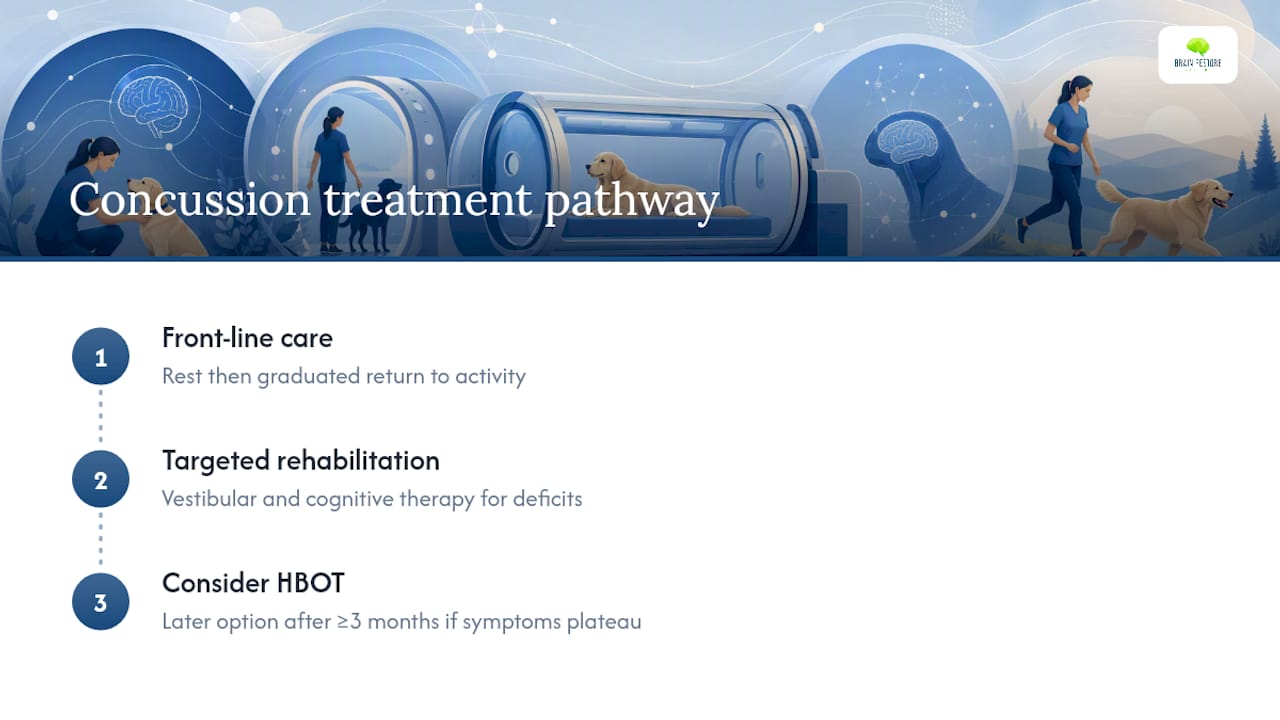
Standard concussion care, rest followed by a graduated return to activity, remains the front-line approach, and it works for most people within weeks. HBOT enters the picture when that standard path stalls and symptoms persist for months. It isn’t a competitor to rest and activity pacing; it’s a later-stage option for a specific subset of patients.
Compared to other adjunctive therapies for persistent symptoms, HBOT stands out for having actual randomized trial data behind it, including imaging correlates. Cognitive rehabilitation and vestibular therapy, by contrast, target specific symptom clusters (balance, visual tracking, processing speed) rather than the broader physiological changes HBOT is theorized to support. Neurofeedback, which trains brainwave patterns through operant conditioning, addresses a different mechanism entirely, self-regulation of neural activity, and is often used alongside rather than instead of HBOT.
None of these approaches has been shown to outperform the others across the board, because trial populations, injury severity, and outcome measures differ too much for a clean head-to-head. What the evidence does support is a layered approach: rest and pacing first, targeted rehab (vestibular, cognitive) for specific deficits, and HBOT considered for patients with persistent, plateaued symptoms three or more months out. Readers weighing standard care against HBOT can get a clearer sense of that first-line approach from this explanation of cognitive rest after concussion, which lays out why rest still comes first for most people.
No major concussion organization currently lists HBOT as standard first-line treatment, and that’s worth stating plainly. The CDC’s clinical guidance on concussion recovery centers on rest, symptom monitoring, and graduated return to activity, with HBOT absent from the routine acute care pathway.
That absence isn’t the same as a rejection. It reflects where the evidence currently sits: promising trial data for a specific, persistent-symptom population, not yet enough consensus for a broad recommendation across all concussion cases. The Undersea and Hyperbaric Medical Society maintains treatment protocols and accreditation standards for hyperbaric medicine generally, which is the relevant body to check when evaluating whether a chamber and its staff meet recognized safety standards, even though UHMS accreditation addresses facility quality rather than endorsing HBOT specifically for concussion.
This is an evolving area. Trials like HOT-POCS are specifically designed to generate the kind of rigorous, sham-controlled data that could eventually shift how authorities frame HBOT’s role in brain injury recovery. Until that data matures, the honest framing is: adjunctive option with real supporting trials, not a guideline-endorsed standard treatment.
Follow-up data is one of the more encouraging pieces of this evidence base. In the randomized controlled crossover trial using 40 sessions at 1.5 ATA, symptom and cognitive improvements persisted at follow-up assessments rather than fading immediately after treatment ended, suggesting the gains weren’t purely a short-term placebo bump.
Perhaps the most striking finding for long-term outcomes comes from a recent retrospective cohort: adults who’d had a traumatic brain injury in childhood showed statistically significant improvements in global cognition, memory, executive function, and attention after completing at least 40 HBOT sessions, according to research on HBOT for adults with childhood TBI. That’s a population treated decades after the original injury, which pushes back against the assumption that there’s a hard cutoff after which brain injury recovery windows close.
Some researchers suggest longer courses, upward of 80 sessions, might produce larger and more durable effects in chronic cases, though that comes with higher cost and a greater need for careful safety monitoring across an extended treatment period. Long-term data still has gaps: most follow-up windows in published trials run months, not years, so how durable these gains are past the one-year mark remains an open question that ongoing trials like HOT-POCS are built to help answer.
Most coverage of HBOT for concussion collapses into one of two camps: miracle cure or complete pseudoscience. Neither holds up against the actual trial data. The honest position is narrower and less satisfying: a specific protocol, 1.5 ATA, around 40 sessions, has produced real, imaging-correlated improvements in a specific population, people with persistent symptoms months or years past their injury.
What gets lost in the noise is how much protocol precision matters. A 20-minute chamber session at a wellness spa and a 40-session, 1.5 ATA medical protocol are not the same intervention, yet they get marketed under the same three letters. That gap is where most of the public confusion, and most of the wasted money, comes from.
If there’s one thing the research supports doing differently, it’s this: stop asking “does HBOT work for concussion” as a yes or no question. Ask whether your specific symptom pattern, timeline, and injury history resemble the populations where trials found benefit. That reframes the decision from hope to evaluation, which is a far better starting point for anyone considering this treatment.
— Chad
If you’ve read this far, you already know HBOT isn’t a quick fix. It’s a specific, trial-backed protocol that works best for people with persistent symptoms who get a proper evaluation first. That’s the gap Brainrestoremeridian is built to close: instead of guessing whether a chamber session might help, you get objective testing and a protocol built around your actual symptom pattern.
The approach to brain injury recovery doesn’t stop at HBOT. Because persistent concussion symptoms often involve overlapping issues, sleep, mood, memory, cognitive pacing, treatment plans frequently combine HBOT with neurofeedback for anxiety relief or other integrated therapies rather than treating hyperbaric sessions as an isolated add-on. If you’re still dealing with concussion symptoms months after your injury, the next step is a consultation to review your history, run objective testing, and map out whether HBOT and complementary therapies fit your case. Reach out to schedule an evaluation and get a clear, individualized plan instead of another round of guesswork.
This article is general information, not a substitute for advice from a qualified doctor. Consult a qualified healthcare professional about your own circumstances before acting on anything here.