Laser Therapy's Role in Brain Health: 2026 Guide
July 11, 2026


Laser therapy for brain health is defined as the clinical application of near-infrared light to stimulate cellular processes that support cognitive function and neurological recovery. The role of laser therapy in brain health has gained serious scientific attention, with 2026 randomized controlled trials demonstrating measurable improvements in mild cognitive impairment, treatment-resistant depression, and healthy cognitive performance. The formal clinical term for this approach is transcranial photobiomodulation, or tPBM. Near-infrared wavelengths in the 810–1064 nm range penetrate the skull and reach brain tissue, where they trigger biological changes at the cellular level. If you are exploring non-invasive brain health treatments, understanding what the evidence actually shows is the right place to start.
The clinical case for tPBM is built on recent, controlled research, not anecdote. A 2026 randomized controlled trial found that individuals with mild cognitive impairment improved their MoCA-K cognitive scores by 3.87 points after 12 weeks of near-infrared laser therapy, while the placebo group declined. That gap represents a clinically meaningful difference in day-to-day memory and thinking ability.
Mental health outcomes are equally compelling. A 2026 pilot study reported a 40.9% clinical response rate in patients with treatment-resistant depression after 12 sessions of 810 nm near-infrared light therapy over four weeks. Treatment-resistant depression is one of the hardest conditions to address, so a response rate approaching 41% in a population that had already failed standard treatments is notable.
The benefits extend beyond clinical populations. Healthy participants who received 20 minutes of 810 nm transcranial photobiomodulation over the prefrontal cortex scored significantly higher on convergent thinking tasks compared to a sham group. This finding suggests that tPBM does not simply compensate for deficits. It actively enhances cognitive performance in brains that are already functioning well.
Key findings from 2026 clinical research at a glance:
The safety profile of tPBM is excellent across studies. Side effects are mild and transient, which matters when you are evaluating a therapy for long-term cognitive support.
Transcranial photobiomodulation works by delivering photons of near-infrared light directly to brain cells. The primary target is mitochondrial cytochrome c oxidase, an enzyme in the mitochondria that absorbs near-infrared light and uses that energy to increase ATP production. ATP is the fuel every cell runs on. When neurons produce more ATP, they function more efficiently and resist the kind of cellular stress that drives cognitive decline.
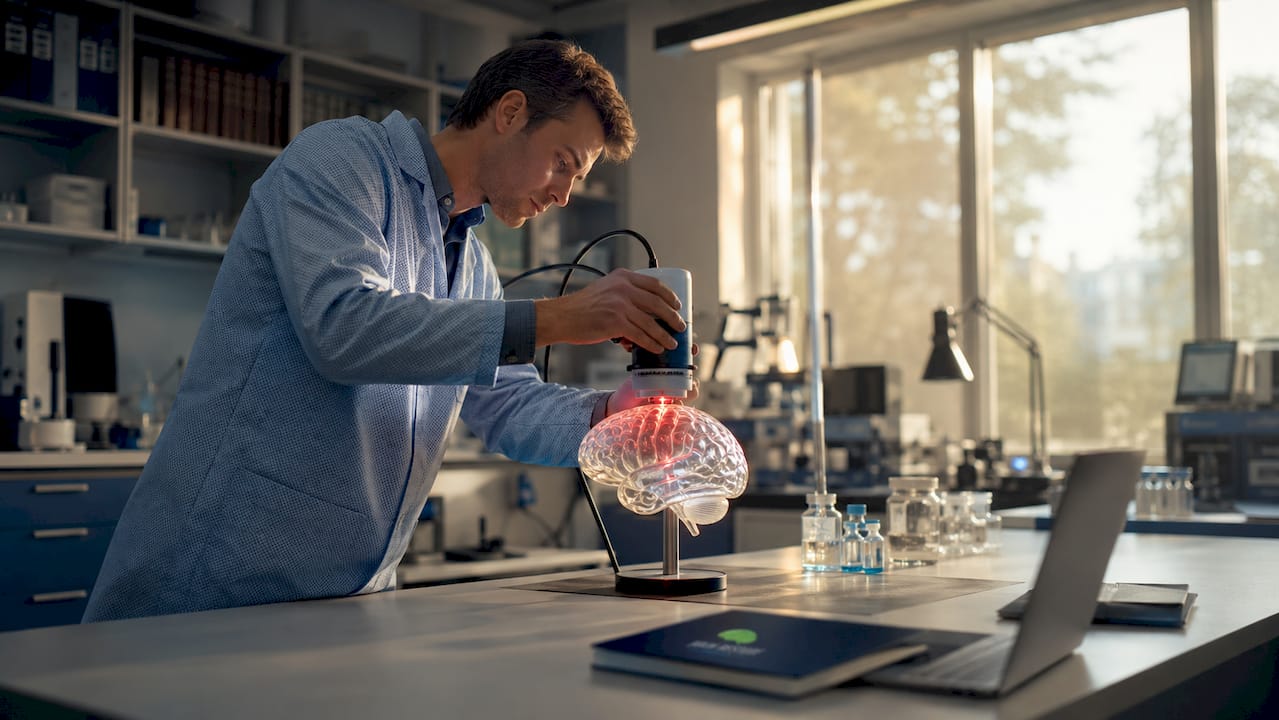
The biological effects do not stop at energy production. tPBM also reduces neuroinflammation by modulating microglia, the brain’s immune cells. Chronic microglial activation is a key driver of neurodegeneration in conditions like Alzheimer’s disease and traumatic brain injury. By calming that inflammatory response, laser therapy creates a more favorable environment for neural repair and function.
Additional mechanisms include:
Think of it this way: tPBM does not override the brain’s natural processes. It gives your neurons the resources they need to do their jobs better.
Pro Tip: Wavelength matters more than most people realize. The 810–1064 nm range is the therapeutic window for brain applications because shorter wavelengths are absorbed by skin and skull before reaching neural tissue. Always confirm the wavelength of any device before starting a protocol.
The way laser therapy is delivered to the brain varies by condition, target region, and clinical setting. Understanding the options helps you ask the right questions when speaking with a provider.
Transcranial near-infrared helmets: These wearable devices distribute light across multiple scalp positions simultaneously. The 2026 MCI trial used a home-based helmet delivering 808 nm light for 20 minutes, six times per week over 12 weeks. This format makes high-frequency treatment practical for patients outside a clinical setting.
Intranasal devices: A small probe placed inside the nostril delivers near-infrared light through the nasal cavity, which has a direct vascular connection to the brain. This method is often combined with transcranial delivery for broader coverage.
Targeted clinical laser devices: In-clinic devices allow a trained provider to direct higher-powered laser energy to specific brain regions. These are particularly useful when imaging data points to a localized area of dysfunction.
Individualized protocols guided by qEEG or fNIRS: Individualized dosing guided by quantitative EEG or functional near-infrared spectroscopy produces better outcomes than standardized protocols. Real-time neurophysiological data tells the clinician exactly where the brain needs support and how much energy to deliver.
The optimal wavelength range for brain applications is 810–1064 nm, with irradiance calibrated carefully to reach cortical tissue without generating excess heat at the scalp. Laser sources and LED sources differ meaningfully in coherence and penetration depth. Clinical experts note that laser versus LED selection should be guided by the specific condition being treated, not by device availability alone.
Treatment frequency in published studies ranges from three sessions per week for four weeks in depression protocols to six sessions per week for 12 weeks in cognitive impairment trials. The right protocol for you depends on your diagnosis, baseline brain function, and how your brain responds over time.
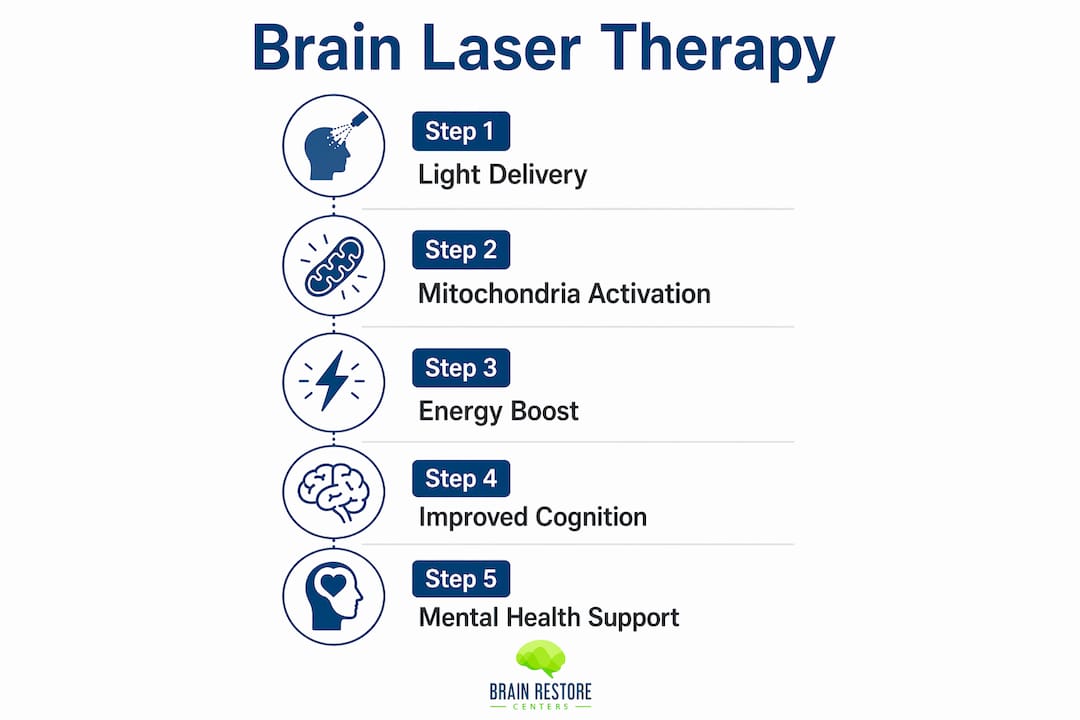
Laser therapy for cognitive function offers a genuinely encouraging set of benefits, but realistic expectations matter. Early clinical feedback consistently reports improvements in patient fatigue and mood alongside cognitive gains. These quality-of-life changes often appear before measurable test score improvements, which can be motivating for patients early in a protocol.
The practical benefits reported across studies include:
The limitations are equally worth knowing. Adherence is the single biggest practical challenge. Effective protocols often require six sessions per week for six to 12 weeks. Patients frequently underestimate how much discipline a home-based regimen demands, and missed sessions reduce cumulative benefit. Larger, standardized trials are still needed to refine protocols across different brain conditions and patient populations.
Laser therapy works best as part of a broader brain health plan. Combining tPBM with neurofeedback for neurological support, functional medicine, and lifestyle interventions produces more durable results than any single modality alone. At Brainrestoremeridian, the clinical team integrates these approaches to address the full picture of each patient’s brain health.
Pro Tip: If you are starting a home-based laser therapy protocol, schedule your sessions at the same time each day and treat them like a medical appointment. Consistency is what separates patients who see results from those who do not.
Laser therapy, formally known as transcranial photobiomodulation, improves brain health by activating mitochondrial energy production, reducing neuroinflammation, and enhancing cerebral blood flow through near-infrared light in the 810–1064 nm range.
| Point | Details |
|---|---|
| Clinical evidence is strong | 2026 trials show 3.87-point cognitive score gains in MCI and a 40.9% depression response rate. |
| Mechanism targets cell energy | Near-infrared light activates cytochrome c oxidase, boosting ATP and supporting neural function. |
| Wavelength and dosing are critical | The 810–1064 nm range is required for cortical penetration; irradiance must be calibrated carefully. |
| Personalized protocols outperform standard ones | qEEG and fNIRS guidance tailors therapy to individual brain physiology for better outcomes. |
| Adherence determines results | High-frequency protocols of up to six sessions per week require consistent commitment to work. |
The research is genuinely exciting, and I say that as someone who has seen a lot of therapies come and go. What stands out about transcranial photobiomodulation is that the mechanism is not speculative. We know what cytochrome c oxidase does. We know that near-infrared light activates it. The 2026 trial data on mild cognitive impairment is the kind of result that makes you sit up straight.
That said, the gap between a promising trial and a life-changing treatment is where most therapies get humbling. The patients I have seen struggle most with tPBM are not the ones who doubt the science. They are the ones who underestimate the commitment. Six sessions a week sounds manageable until week three, when life gets in the way. The discipline of home-based protocols is a real clinical variable, not a footnote.
My honest view is that tPBM is most powerful when it is not standing alone. Pairing it with neurofeedback, functional medicine evaluation, and targeted lifestyle changes gives the brain multiple simultaneous inputs for recovery. That is the model that produces the results worth talking about. If you are considering laser therapy, find a provider who will map your brain first, not just hand you a device and a schedule.
— Chad
Brainrestoremeridian offers integrated brain health restoration that combines transcranial photobiomodulation with neurofeedback, functional medicine, and advanced diagnostics in Meridian, Idaho.
Every patient starts with a thorough brain health evaluation, including qEEG brain mapping, so that laser therapy protocols are calibrated to your specific neurological profile rather than a generic template. The clinic’s team also integrates neurofeedback for cognitive support alongside photobiomodulation, creating a layered approach to cognitive recovery and brain wellness. If you are ready to take a personalized, evidence-based step toward restoring your brain health, contact Brainrestoremeridian to schedule your evaluation.
Transcranial photobiomodulation is the clinical term for applying near-infrared light to the scalp to stimulate brain cell function. It is the formal name for what is commonly called laser therapy for brain health.
Clinical trials report measurable cognitive improvements after 4–12 weeks of consistent treatment. Depression response was observed after four weeks of three-sessions-per-week protocols in a 2026 pilot study.
The safety profile of tPBM is excellent, with mild headache being the most commonly reported side effect. No serious adverse events were recorded in 2026 clinical trials.
Yes. A 2026 pilot study found a 40.9% clinical response rate in treatment-resistant depression using 810 nm near-infrared light, and separate trials confirmed cognitive score gains in mild cognitive impairment patients.
Clinical practice and emerging research both support combining tPBM with neurofeedback and functional medicine. Individualized protocols guided by qEEG produce better outcomes than laser therapy used in isolation.
Questions about your next step?
Our Meridian team can help you understand the evaluation process and which care options may fit your needs.
Schedule a Brain Health ConsultationPrefer to speak with our team? Call 208-639-1397